

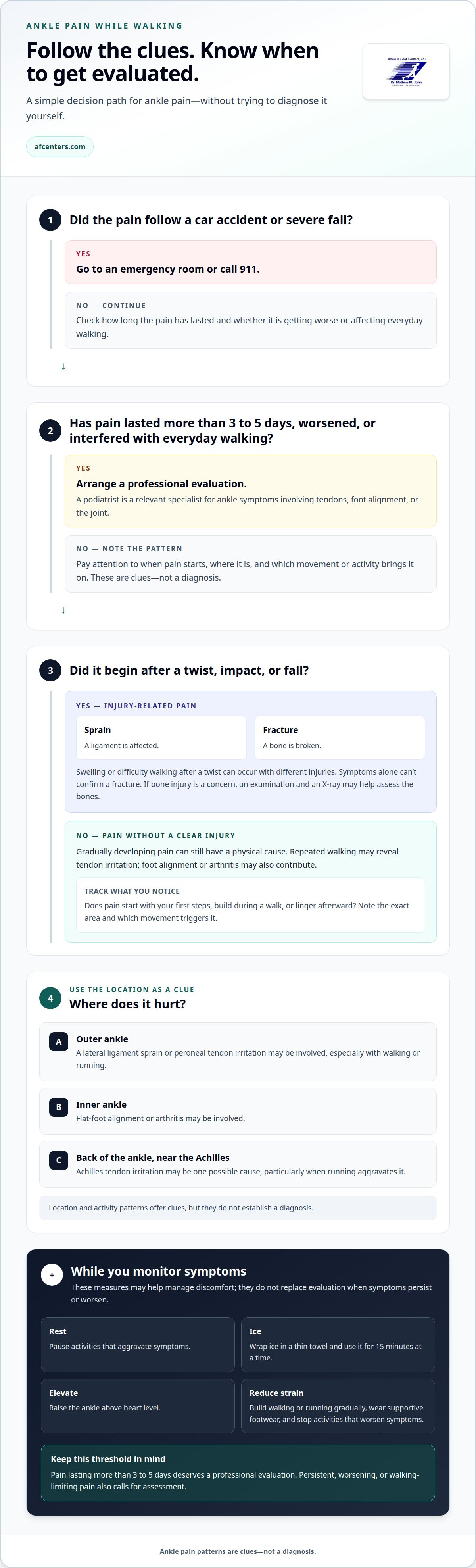
Ankle pain when walking in Marietta can start without a clear injury, but pain that lasts more than 3 to 5 days deserves a professional evaluation. A podiatrist is a relevant specialist for ankle pain, including symptoms that may stem from a tendon, foot alignment, or the joint itself.
When ankle pain when walking in Marietta makes every step uncomfortable, it’s natural to wonder whether to see a podiatrist, an orthopedist, or an orthopedic surgeon. The right specialist depends partly on what’s causing the pain and whether it began after an injury. This article covers common causes of ankle pain, why it can occur without an injury, what to consider at home, and when to seek professional care. You’ll also learn how a podiatrist can assess ankle symptoms and help guide the next steps.
Key Takeaways
- Walking pain can come from sprains, fractures, tendon problems, foot alignment, or arthritis, and the pattern of symptoms can offer clues.
- Ankle pain that starts without an obvious injury can still have a physical cause; persistent symptoms deserve attention.
- Learn how fractures and ankle arthritis differ, and why each may affect walking in its own way.
- Repeated sprains or a feeling that the ankle may give way can point to ongoing instability.
- At-home care may ease discomfort, but know when symptoms call for professional evaluation instead.
What causes ankle pain from running and walking?
Walking and running repeatedly load the ankle joint, formed by the tibia, fibula, and talus. Sprains, fractures, tendon irritation, flat-foot alignment, and arthritis can all make those steps painful.
Pain During Walking or Running
Pain during activity means the ankle hurts as it bears weight or moves through a step. When and where the pain occurs can help distinguish a joint problem from a tendon or ligament issue.
Running may aggravate peroneal or Achilles tendonitis, while walking can make pain related to flat-foot alignment more noticeable. The ankle may also hurt after a lateral ligament sprain or because of joint arthritis. Note whether pain starts with your first steps, builds with distance, or continues after activity. These details can help a podiatrist assess ankle pain when walking in Marietta.
A Marietta podiatrist can evaluate ankle symptoms by reviewing your history and examining your foot and ankle. If a fracture is suspected, an X-ray may help assess the bones. Tendon and ligament problems also require clinical assessment.
Pain Along the Side of the Ankle
Side-of-ankle pain is discomfort along the inner or outer edge of the joint. Which side hurts and what activity triggers the pain matter, because different structures may be involved.
Pain on the outer side may come from a lateral ligament sprain or peroneal tendon irritation, especially during walking or running. A sudden turn can strain a ligament, while repeated loading may irritate a tendon. Inner-ankle pain can occur with flat-foot alignment or arthritis. These patterns offer clues, not a diagnosis, so describe the location and the movement that triggers pain during an evaluation.
Injury-Related Ankle Pain
Injury-related ankle pain follows a specific event, such as a twist, impact, or fall. A sprain affects ligaments; a fracture involves a bone, and both can make weight-bearing painful.
Other common causes include peroneal or Achilles tendonitis, flat-foot alignment, and joint arthritis. Swelling or difficulty walking after a twist can occur with different injuries, so symptoms alone cannot confirm a fracture. An X-ray may be used when bone injury is a concern. After a car accident or severe fall, go to an emergency room or call 911.
Treatment depends on the cause and severity. Rest from aggravating activity, ice wrapped in a thin towel for 15 minutes at a time, and elevation above heart level may help manage symptoms. Recovery time varies with the diagnosis and how the ankle responds to care; a fracture and mild tendon irritation do not follow the same course.
To help prevent pain, build up walking or running gradually, wear supportive footwear, and stop activities that worsen symptoms. These steps may reduce strain, but persistent pain still deserves an evaluation.
Ankle arthritis and fractures
Arthritis and fractures can both cause pain when bearing weight, but they affect the ankle differently. Arthritis involves changes within the joint; a fracture is a break in one of its bones. The pain pattern, how symptoms began, and examination findings help distinguish them. That difference matters because care for joint irritation is not the same as care for a bone injury.
Ankle arthritis may cause aching, stiffness, or swelling around the joint. You may notice discomfort after walking, less ease of movement, or stiffness when you start moving after resting. Because the ankle joint is formed by the tibia, fibula, and talus, arthritis can interfere with everyday steps. Symptoms can resemble tendon or ligament problems, making an assessment important.
A fracture may follow a fall, direct impact, or sudden twist. Pain can be sharp and localized, with swelling or bruising near the injured area. Some fractures make standing or walking difficult; others may feel less dramatic at first. Symptoms alone can’t reliably show whether a bone is broken. An examination and imaging, such as an X-ray when appropriate, can help assess the bones.
Keep track of details that may help distinguish the causes. Note whether pain began after a specific incident, whether swelling appeared, and which movements make symptoms worse. Pain that started after an awkward landing, for example, differs from recurring stiffness after ordinary walks. Share these observations during an evaluation. They give the clinician useful context alongside the physical examination and any imaging findings.
Care depends on the diagnosed cause and the extent of the problem. A fracture may need protection while the bone heals; arthritis care may focus on reducing joint strain and supporting comfortable movement. The right approach depends on the structures affected and how symptoms limit walking. When appropriate, conservative treatment is considered before surgery, and resources such as drhorine.com illustrate how targeted chiropractic care can support patients managing ongoing musculoskeletal pain. Persistent pain or restricted movement calls for an evaluation, not guesswork.
For ankle pain in Marietta, seek an assessment if symptoms persist, worsen, or interfere with everyday walking. After a fall or impact, tell the clinician what happened, where it hurts, and whether swelling or movement has changed. If you suspect a fracture, don’t treat the symptoms as routine soreness. Identifying whether the problem involves arthritis, a fracture, or another structure helps guide care.
Ankle pain without an injury
An ankle can hurt even when you don’t remember a twist, fall, or direct impact. Repeated walking may reveal a problem that developed gradually, such as Achilles or peroneal tendonitis. Flat-foot alignment can also change how the ankle bears weight, while arthritis may cause discomfort during ordinary steps. No single triggering event doesn’t identify the cause. Pay attention to when the pain appears and which movements bring it on.
Notice whether discomfort starts with your first steps, increases during a walk, or lingers afterward. Pain that builds while walking, for example, differs from stiffness after sitting. Record the exact area: the inner or outer ankle, the back near the Achilles tendon, or the joint itself. Swelling, limited movement, and changes in your walking are useful details to share. These observations clarify the pattern, but they can’t establish a diagnosis on their own.
Flat-foot alignment may contribute to pain if the foot’s position puts extra strain on ankle structures. Repeated activity can also irritate a tendon, even without a single injury. Arthritis is another possible source, particularly when discomfort centers on the joint. These conditions can feel similar. A careful evaluation considers your symptoms, walking pattern, foot alignment, and ankle movement, rather than relying on pain location alone.
For Marietta and East Cobb patients, seek a professional evaluation if ankle pain persists more than 3 to 5 days. Make an appointment sooner if pain is worsening, limits ordinary walking, or comes with noticeable swelling or restricted movement. Explain whether symptoms began gradually, which activities make them worse, and whether rest changes them. Mention relevant examples, such as pain during a neighborhood walk or stiffness after sitting, to give a clearer timeline.
Before an evaluation, keep a brief symptom record. Note the day pain began, where it is strongest, and whether walking or rest changes it. Include examples such as discomfort on stairs, pain after a longer route, or stiffness when standing up. Don’t push through activity that clearly aggravates the ankle. Persistent symptoms deserve attention even without a known injury, because tendonitis, alignment changes, and arthritis can all affect comfortable walking. A timely assessment helps identify which structures need attention and guides the next steps.
Ankle sprains and chronic instability
An ankle sprain occurs when a ligament stretches or tears, often after the foot turns unexpectedly. Lateral ligament sprains affect the outer ankle and can make bearing weight painful. A curb, uneven path, or sudden change in direction can cause the twisting movement associated with this injury. Initial pain may ease, but returning to activity before the ankle feels steady can leave symptoms lingering.
After a sprain, watch for recurring swelling, tenderness, or difficulty trusting the ankle. A feeling that the joint might give way on stairs or uneven ground can signal ongoing instability. These symptoms can interfere with everyday walking, not just running or sports. Note which movements trigger them, such as turning quickly or stepping onto an uneven surface.
Chronic instability means the ankle repeatedly gives way or feels unreliable after previous sprains. It may involve lingering weakness or reduced confidence in the joint during movement. A prior sprain is important context, even if it happened long ago. Tell the clinician whether the ankle has rolled more than once and how those episodes affect your walking now.
An assessment considers how the injury happened, where the pain is, and how the ankle moves. A clinician may check tenderness and stability, then decide whether imaging is appropriate. An X-ray can help assess a possible bone injury when a fracture is a concern; a sprain affects ligaments. Swelling and pain alone don’t show which structure is affected, so describe the original twist and your current symptoms.
Care and recovery depend on the injury’s severity and the structures involved. A mild sprain and a more substantial ligament injury may follow different courses. Resuming a long walk, run, or sport while the ankle still feels unstable can aggravate symptoms. Follow guidance on returning to activity, and explain which everyday movements remain difficult. A clinician can consider examination findings and your activity needs when discussing care.
Compare how confident your ankle feels on flat ground with how it feels on a sloped sidewalk. Note whether the joint gives way, hurts, or swells afterward. If repeated sprains disrupt walking, sports, or daily routines, arrange an evaluation in Marietta. Persistent instability can have several causes, so an assessment can help distinguish ligament problems from tendon irritation, fracture, or another ankle condition.
How can I treat ankle pain at home?
For ankle pain, begin with simple measures that limit irritation while you observe symptoms. Wrap ice in a thin towel and apply it for 15 minutes at a time, a few times a day. Keep the ice wrapped rather than placing it directly against your skin. If walking or exercise makes pain worse, pause those activities instead of pushing through discomfort.
Elevating the ankle above heart level can help manage swelling. For example, lie down and support your lower leg with pillows so your ankle rests higher than your chest. Change position if it becomes uncomfortable. You can do this during the day, especially after movement makes the ankle feel more swollen or sore.
Over-the-counter naproxen or ibuprofen can relieve ankle pain and reduce swelling. Follow the product label. Don’t take more than directed or combine medicines without guidance from a healthcare professional. If you already take medication or aren’t sure whether either option is suitable, ask a healthcare professional or pharmacist.
Take a break from sports and intense activity that puts extra stress on the ankle. Avoid running, jumping, or strenuous workouts until a healthcare provider says they’re safe. Don’t ignore symptoms or push through pain during ordinary activities. Let your response to everyday movement guide what you avoid, and don’t resume intense activity if it aggravates the ankle.
- Ice: Use a thin towel as a barrier and apply ice for 15 minutes at a time.
- Elevation: Raise the ankle above the level of your heart while resting.
- Activity: Avoid sports and intense exercise until a healthcare provider says it’s safe.
- Medication: Use over-the-counter naproxen or ibuprofen according to the product label.
Track whether these measures change your symptoms. Note when you applied ice, elevated the ankle, or took medication, then observe how walking feels afterward. A brief record can help you describe what improves or worsens the pain. If symptoms last more than a few days or don’t improve with at-home care, see a healthcare provider. Don’t rely on home measures alone while pain continues to interfere with walking.
If ankle pain persists despite these steps, arrange a professional evaluation in Marietta. An assessment can help identify the cause and guide care beyond home treatment. See a podiatrist if pain continues or isn’t improving.
Ankle & Foot Centers, PC: Reconstructive Foot and Ankle Surgery
Ankle & Foot Centers, PC provides evaluation and care for foot and ankle conditions, including reconstructive foot and ankle surgery. If ankle pain persists or limits walking, an assessment can help identify the affected structures and whether surgical care is appropriate. Surgery may be considered for significant structural problems when other approaches don’t meet the patient’s needs. Dr. Mathew John is a Board Certified Foot Surgeon by the American College of Foot and Ankle Surgery, bringing specialized expertise to surgical care. The next step is a conversation about your symptoms, examination findings, and treatment options. Contact Ankle & Foot Centers, PC or visit afcenters.com to learn more.
Take the Next Step Toward Comfortable Walking
Persistent ankle pain can make you change your stride, avoid familiar routes, or hesitate before returning to activity. Take these changes seriously rather than treating them as a measure of what your ankle can handle long term. If ankle pain when walking in Marietta is affecting your routine, a professional evaluation can help you understand possible causes and discuss a suitable next step.
Ankle & Foot Centers, PC offers reconstructive foot and ankle surgery and care for structural concerns such as bunions and hammertoes. The right approach depends on the condition and your needs. Share which activities have become difficult and what you hope to return to, such as comfortable neighborhood walks or regular exercise.
Take a steady, informed step toward care. Contact Ankle & Foot Centers, PC to discuss your ankle concerns and keep moving toward your goals.
Ankle & Foot Centers, PC for Ankle Pain When Walking
Ankle & Foot Centers, PC treats foot and ankle concerns, including sports injuries, flat feet, heel pain, and conditions requiring reconstructive foot and ankle surgery. If ankle pain when walking is affecting your activities, the practice can help you explore care options.
Depending on your concern, care may include custom orthotics or treatments such as MLS Laser Therapy and Extracorporeal Shockwave Therapy (ESWT). Contact Ankle & Foot Centers, PC when you’re ready to discuss your ankle pain and possible next steps.
Frequently Asked Questions
Should you see a Podiatrist, Orthopedist, or Orthopedic Surgeon for Ankle Pain?
A podiatrist is a good starting point for pain involving the foot or ankle. Podiatrists focus on conditions affecting these areas, while orthopedists treat musculoskeletal concerns throughout the body. Orthopedic surgeons are trained to address conditions that may require surgery. If you’re unsure where to start, consider where the pain is centered and whether you have a known injury. A foot and ankle evaluation can help identify the issue and guide appropriate care.
How do I know if my ankle pain is serious?
Seek prompt medical attention for ankle pain that is severe or worsening, or comes with deformity, an open wound, redness, warmth, or numbness. Difficulty bearing weight is another concerning sign, especially after a twist or fall. Note whether swelling is increasing or your walking has changed to avoid pain. These signs don’t identify the cause, but they can help you recognize when self-care alone isn’t appropriate.
When should I see an ankle pain doctor near me for immediate relief?
Arrange prompt evaluation if pain prevents normal walking, the ankle feels weak or unstable, or swelling is increasing. After a sudden injury, describe exactly how it happened, such as landing awkwardly during a game or stepping off a curb. That context helps guide the examination and whether imaging is needed. If a serious fall or car accident caused the pain, go to an emergency room or call 911.
What causes ankle pain when walking?
Common causes include ligament sprains, fractures, peroneal or Achilles tendonitis, flat-foot alignment, and arthritis. The circumstances offer useful clues: pain after a twist may point to an injury, while discomfort that builds during repeated walks can have other causes. Location matters too, since outer-ankle pain may involve different structures than pain near the Achilles tendon. An evaluation helps distinguish among these possibilities.
When is ankle pain a sign of a serious injury or emergency?
Seek urgent care for severe pain with visible deformity, an open wound, numbness, or inability to bear weight. An ankle that looks misaligned after an impact needs immediate attention. If symptoms follow a severe fall or car accident, go to an emergency room or call 911 rather than trying to walk it off. For other concerning symptoms, prompt assessment can help determine whether a fracture or another injury needs care.
When should I see a doctor for ankle pain?
See a doctor if ankle pain persists, worsens, or disrupts everyday activities such as walking through a store or using stairs. Swelling, weakness, numbness, or a change in the foot’s appearance also warrant evaluation. Share when symptoms began, what movements aggravate them, and whether your walking has changed. These details help the clinician assess your ankle and decide whether an examination or imaging can clarify the cause.
What type of doctor treats ankle pain?
A podiatrist evaluates and treats foot and ankle conditions, including sprains, fractures, tendon problems, and arthritis. Ankle & Foot Centers, PC is based in Marietta and serves patients from Roswell, Woodstock, Kennesaw, Atlanta, and Sandy Springs. Dr. Mathew M. John leads the specialized podiatry practice. For ankle symptoms, a podiatrist can assess the affected area, discuss the findings, and recommend an appropriate care plan.


