

A threatened diabetic foot doesn’t automatically mean amputation. Limb salvage refers to procedures intended to preserve the foot or leg, address infection or damaged tissue, and support a stable, functional foot. An expert in diabetic limb salvage in Kennesaw evaluates the wound, circulation, sensation, and foot structure to understand what care may help protect the limb.
It’s understandable to feel concerned when a sore won’t heal or your foot changes in appearance. Diabetes can damage nerves and reduce blood flow, making injuries easier to miss and harder to heal. A new or worsening wound, signs of infection, or a change in foot shape deserves prompt medical attention.
This guide explains what diabetic limb salvage involves, how clinicians assess wounds and infection, and how neuropathy, circulation, and foot or ankle problems can shape care. You’ll also learn what treatment may involve and what to expect when seeking help in Kennesaw. The goal is to clarify next steps, so you can understand what clinicians assess and make informed decisions about protecting your foot health.
Key Takeaways
- Limb salvage care aims to preserve a usable foot by addressing infection, damaged tissue, and structural problems.
- Notice wounds that aren’t healing, new skin changes, or signs of infection and seek prompt medical attention.
- Neuropathy can make injuries harder to feel, so regular foot checks help you spot changes early.
- Circulation and foot structure can affect wound healing and help shape the treatment approach.
- Learn how coordinated care and foot and ankle surgery may fit into a plan to protect function and support healing.
Foot and ankle surgery
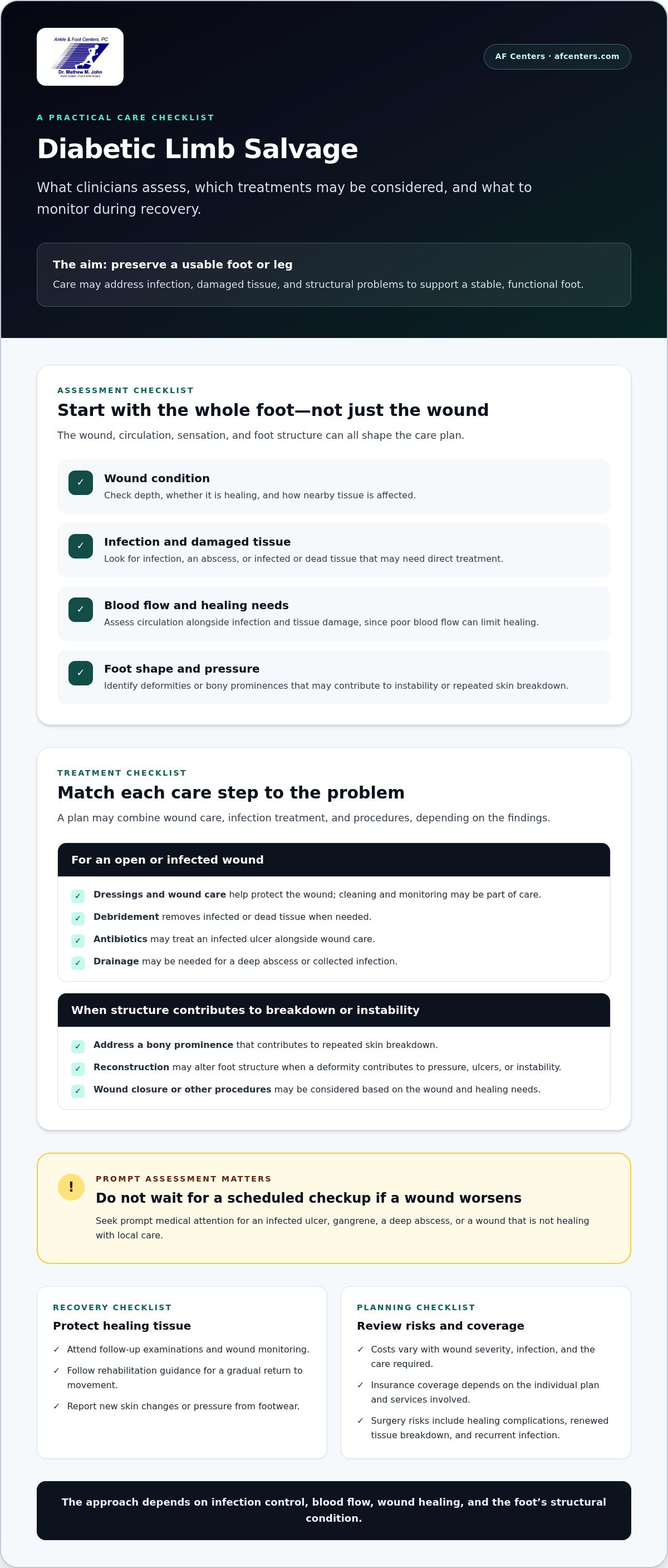
Limb salvage means treating a foot or leg threatened by serious diabetic foot problems, with the aim of preserving it. Treatment may focus on controlling infection, removing damaged tissue, and supporting a stable, functional foot. An expert in diabetic limb salvage in Kennesaw evaluates the wound, foot structure, circulation, and healing needs before recommending an approach. A plan may include wound closure, reconstruction, or other procedures tailored to the problem.
Costs vary with wound severity, infection, and the care required. Coverage also depends on your individual insurance plan and the services involved. Before treatment, review the proposed care and your plan’s coverage details so you understand what applies to your situation.
For a diabetic foot ulcer, clinicians assess its depth, signs of infection, and effects on nearby tissue. Surgery may remove infected or dead tissue, drain an abscess, or address a bony prominence that contributes to repeated skin breakdown. If a deformity puts pressure on the skin, reconstructive techniques may alter the foot’s structure. The goal is to support stability and address factors that prevent the wound from healing.
Charcot foot can cause significant structural changes that alter how the foot bears weight. When a deformity contributes to ulcers or instability, reconstruction may address the affected structure. The procedure depends on the deformity’s location and extent, as well as infection and circulation. Follow-up care and rehabilitation can guide a safe return to movement and footwear.
Antibiotics may treat an infected diabetic foot ulcer alongside wound care, such as dressing changes or debridement. A deep abscess may need drainage, while infected or dead tissue may require surgical removal. Each step addresses a different part of the problem: antibiotics treat infection, while a procedure can drain an abscess or remove tissue that needs direct treatment.
Surgery carries risks, including healing complications, renewed tissue breakdown, and recurrent infection. These problems may require further procedures or, in serious cases, major amputation. Outcomes depend on infection control, blood flow, wound healing, and the foot’s structural condition. Alternatives may include wound care and antibiotics when appropriate. If severe infection or gangrene cannot be controlled, amputation may be needed to protect the patient’s life.
Recognizing infections and non-healing wounds
A diabetic foot wound that stays open or becomes infected needs prompt assessment. Infection, deep tissue damage, and poor blood flow can affect which wound-care steps clinicians consider.
Seek prompt medical attention for an infected ulcer, gangrene, a deep abscess, or a wound that isn’t healing with local care. If a wound worsens, don’t wait for a scheduled checkup to seek help.
Wound Debridement and Infection Drainage
Debridement removes infected or dead tissue from a wound, while drainage addresses an abscess or collected infection. Clinicians assess the wound’s depth and surrounding tissue to decide which treatment is needed. These steps may be part of a broader plan to address infection and protect nearby structures.
Wound care may combine cleaning, dressings, debridement, and antibiotics when an ulcer is infected. Each step serves a different purpose: dressings protect the wound, debridement removes damaged tissue, and antibiotics treat infection. Watch for a wound that remains open despite local care or changes that suggest worsening foot problems, and report them promptly.
Wound Care and Reconstruction
When a wound is linked to a structural problem, wound care may be combined with reconstructive surgery. Procedures can remove infected tissue, address bony prominences, or correct a deformity that contributes to repeated skin breakdown. Clinicians consider the wound’s location, infection, and foot structure when planning treatment.
When poor circulation limits wound healing, assessing blood flow is also part of limb-salvage care. The care team considers circulation alongside infection and tissue damage, rather than focusing only on the wound’s surface. These findings help guide decisions about wound closure, reconstruction, or other steps to protect the foot.
Follow-through is important after a procedure. Rehabilitation can support a gradual return to movement while the wound and foot recover. The plan should account for the wound’s condition and any structural changes, with progress guiding activity. If pressure from walking affects the wound area, tell your care team so they can factor it into your recovery plan.
Because wound care can involve both tissue and foot structure, reviewing foot and ankle treatments can help you prepare focused questions for your evaluation.
Multidisciplinary diabetic limb salvage care
Diabetic limb salvage can involve several professionals because wounds, circulation, and foot structure affect one another. Coordinated decisions help align treatment with the patient’s overall health and recovery needs.
Rehabilitation and Ongoing Care
Rehabilitation supports a return to movement while the wound and foot recover. The care plan may include follow-up examinations, wound monitoring, and guidance on protecting healing tissue during daily activities. Vascular specialists, wound-care professionals, orthopedic teams, and rehabilitation providers may contribute when their expertise suits the patient’s needs. Report new skin changes or pressure from footwear promptly.
People with well-managed diabetes and no foot or ankle concerns should ideally see a podiatrist every six months, or more often if recommended. That schedule can change when a wound, deformity, or circulation concern requires closer attention.
Specialist Qualifications and Experience
For complex diabetic foot problems, look for a podiatric surgeon familiar with wounds, infection, and structural deformity. Limb salvage may involve wound care, vascular surgery, orthopedics, and rehabilitation, so coordination across these areas is relevant. Ask how the proposed plan addresses the wound, circulation, and foot mechanics together. The explanation should clarify what each treatment step is intended to do.
Reviews alone don’t provide a meaningful way to compare specialists’ clinical outcomes. Patient reviews may describe communication and care experiences, while clinical outcomes involve factors such as infection control, wound healing, function, and recurrent breakdown.
Care Providers and Centers Near Kennesaw
Near Kennesaw, diabetic limb salvage care may involve podiatric surgeons and wound-care teams, with vascular surgery, orthopedics, or rehabilitation involved as needed. Hospital-based care may be part of treatment when surgical or coordinated support is needed. The team depends on the wound, circulation, infection, and structural concerns being addressed.
At an appointment, bring a list of current medicines and describe changes in the wound or foot. This information helps the care team understand the timeline and coordinate relevant medical input. Primary care clinicians and other specialists can contribute to treatment decisions when coordination is needed.
Reviews, Outcomes, and Insurance
Use reviews to understand patient experiences, not as a substitute for clinical outcome data. Useful care discussions focus on treatment goals, wound progress, infection control, foot function, and the possibility of further procedures. These factors provide more clinical context than a general rating.
Insurance acceptance and coverage are different questions. A plan may be accepted, while coverage for a specific service depends on the plan’s terms and the treatment involved. Don’t assume Medicare and commercial plans cover the same services. Review your plan’s coverage details for the proposed care before proceeding.
Preventive steps matter between appointments. Inspect your feet daily for cuts, blisters, or sores, and wear supportive footwear that fits well. Break in new shoes gradually, avoid walking barefoot, and protect your feet from extreme temperatures. A podiatrist can trim your nails to reduce injury risk, especially when neuropathy makes small cuts harder to notice.
Diabetes-related neuropathy and poor circulation
Diabetes can damage nerves and reduce blood flow, leaving feet more vulnerable to infection and complications. Neuropathy may dull warning signals, so a blister or shoe rub can go unnoticed. Reduced circulation can limit blood reaching injured tissue. Together, these changes can make a small foot problem harder to recognize and heal, which is why daily foot checks and prompt attention to changes matter.
Look at both feet daily, including the soles, heels, and spaces between your toes. Check for cuts, blisters, color changes, swelling, or a new change in foot shape. If limited flexibility makes inspection difficult, use a mirror or ask someone you trust to help. Note new findings and arrange a podiatry appointment for concerning changes, especially an open sore or signs of infection.
Charcot neuroarthropathy is a diabetes-related condition that can alter foot bones and joints when nerve damage reduces protective sensation. A change in shape can shift pressure to a new area, such as the sole or side of the foot, and contribute to skin breakdown. A newly misshapen foot or unusual swelling calls for prompt assessment, even if pain is mild or absent.
Care for neuropathy-related foot risks starts with identifying what has changed. A podiatry evaluation can assess sensation, skin condition, foot structure, and circulation. The findings help determine whether the concern is an unnoticed injury, pressure from a deformity, or reduced blood flow. In Kennesaw, specialized foot and ankle care can assess these factors together and guide next steps to protect tissue.
Care also includes steps you can take at home. Choose supportive shoes that fit well, and break in new footwear gradually. Avoid walking barefoot and protect your feet from extreme temperatures, since reduced sensation can make heat or pressure harder to notice. Follow your diabetes care plan, including guidance on blood glucose management, and keep scheduled foot examinations. These steps support prevention, but they don’t replace assessment of a new wound or structural change.
Treatment depends on the problem identified, not numbness alone. A wound may need focused care, while a structural change such as Charcot deformity may require evaluation for stabilization or reconstruction. When circulation is reduced, its effect on tissue healing also matters. The goal is to limit further damage and preserve function, reducing risks that can lead to infection or amputation. Don’t wait for severe pain before seeking help.
Peripheral artery disease and reduced blood flow
Peripheral artery disease (PAD) is a circulation concern when reduced blood flow affects diabetic foot health. Circulation matters because healing tissue needs an adequate blood supply. With diabetes, nerve damage and reduced blood flow can leave feet more vulnerable to infection and complications. A wound assessment therefore considers both the skin injury and circulation, not just the wound’s surface appearance.
Tell your care team about a sore that stays open, a change in foot appearance, or new discomfort. Also mention known circulation concerns and changes you’ve noticed in daily activity. These details help clinicians consider the wound’s location and condition alongside the wider foot and ankle picture. Don’t rely on pain alone to judge a wound, since diabetes-related nerve damage may affect sensation.
Blood glucose management is one part of preventing diabetic foot problems. Blood glucose control, periodic foot examinations, and patient education can support a preventive care plan. Keep following the diabetes-management guidance you already receive, and include foot changes in conversations with your medical team. A consistent approach gives clinicians useful context when they assess tissue, circulation, and wound healing together.
When reduced blood flow is a concern, the care team considers it alongside infection, wound condition, and foot structure. Limb-salvage care may include steps to improve blood flow, but the approach depends on the factors affecting the individual wound. The priority is to understand what is limiting healing before selecting wound care or considering surgery.
Debridement may address damaged or infected tissue, while reconstructive surgery may address a structural problem contributing to repeated breakdown. Neither step replaces attention to circulation. If blood flow is limiting tissue healing, it remains an important part of the care plan. Discuss how each proposed step addresses the wound, its cause, and the foot’s overall function.
Follow-through matters once treatment begins. Keep scheduled appointments, follow wound-care directions, and report a wound that worsens or develops new changes. Continue daily foot checks, including the soles and areas between your toes. Supportive footwear can help protect the foot from avoidable pressure. Breaking in new shoes gradually also gives you a chance to notice rubbing early. Ask how circulation findings shape your care plan, and discuss relevant foot and ankle treatments as you consider next steps.
Ankle & Foot Centers, PC: Reconstructive Foot and Ankle Surgery
Ankle & Foot Centers, PC offers reconstructive foot and ankle surgery for structural concerns that may affect diabetic foot health. If a deformity or recurring pressure contributes to tissue breakdown, an evaluation can help clarify whether reconstructive care fits your needs. Dr. Mathew John is a Board Certified Foot Surgeon by the American College of Foot and Ankle Surgery.
Care is tailored to the specific foot or ankle problem. The practice also treats bunions and hammertoes, which can affect foot structure and shoe fit. For diabetic foot concerns, timely assessment can identify changes that need attention and help guide the next step in care.
Take the Next Step Toward Personalized Foot Care
Protecting your mobility starts with a clear, practical conversation about your foot health. Share the changes you’ve noticed, the concerns affecting your daily routine, and any questions you have about treatment. This information can help focus the discussion on your priorities and relevant care options.
If you’re looking for an expert in diabetic limb salvage in Kennesaw, Ankle & Foot Centers, PC offers diabetic foot care and reconstructive foot and ankle surgery. Contact the practice to discuss your foot concerns and arrange an evaluation. The practice is located in Marietta and serves patients in Kennesaw and the surrounding Atlanta Metro area.
Contact Ankle & Foot Centers, PC to start the conversation. Move forward at a pace that feels right for you, with a clearer understanding of your care options.
Ankle & Foot Centers, PC for Diabetic Foot Care
Ankle & Foot Centers, PC offers diabetic foot care and reconstructive foot and ankle surgery. If you’re looking for an expert in diabetic limb salvage in Kennesaw, the practice can evaluate your foot and ankle concerns and discuss appropriate care.
The practice also treats related concerns such as heel pain, ingrown toenails, and fungal toenails, and provides custom orthotics.
Frequently Asked Questions
What Is Limb Salvage?
Limb salvage is care intended to preserve a foot or leg rather than proceed directly to amputation. For someone in Kennesaw, a plan may combine wound treatment, infection management, and procedures that address damaged tissue or foot structure. The right approach depends on the problem affecting the limb and the patient’s health. Severe infection or gangrene may still require amputation if it cannot be controlled safely.
How do you treat diabetes complications in the feet?
Treatment depends on the complication. A new ulcer needs assessment and wound care; an infected area may need antibiotics or a procedure. Deformities such as bunions or hammertoes can also affect pressure and footwear. At home, inspect your feet, wear well-fitting shoes, and follow your diabetes care plan. Arrange a podiatry evaluation for persistent pain, numbness, swelling, an open wound, or a change in foot appearance.
Which services are included in diabetic limb salvage care, such as vascular surgery, podiatry, and wound care?
Care may involve podiatry, wound care, vascular surgery, orthopedics, and rehabilitation, depending on the patient’s needs. Podiatry can assess foot structure and wounds; wound-care professionals address tissue damage, while vascular specialists may evaluate circulation. Orthopedic or rehabilitation input can support structural treatment and recovery. Not every patient needs every service. The care team depends on the wound, circulation, infection, and mobility concerns involved.
How can patients in Kennesaw find a diabetic foot and limb salvage specialist accepting new patients?
Patients in Kennesaw can begin with a local podiatry practice that treats diabetic foot concerns. Ankle & Foot Centers, PC provides diabetic foot care in the wider area, including Marietta, Roswell, Woodstock, Atlanta, and Sandy Springs. If you’re looking for an expert in diabetic limb salvage in Kennesaw, contact the practice to discuss an evaluation for your foot concern.
How do limb salvage specialists assess diabetic foot ulcers, poor circulation, and infection?
Clinicians examine the ulcer’s location and condition, surrounding skin, foot shape, and signs of infection. They also consider circulation and whether the wound is improving with local care. An infected ulcer, gangrene, a deep abscess, deformity, or suspected bone infection can shape the next steps. Share when the wound appeared, what changes you’ve noticed, and any treatments already used to help inform the assessment.
Which Kennesaw-area diabetic limb salvage specialists accept Medicare and major insurance plans?
Ankle & Foot Centers of Georgia accepts most major insurance plans and verifies benefits before treatment. Medicare coverage for custom diabetic shoes and accommodative inserts is noted, but coverage for other services depends on the individual plan.
What are typical costs and insurance coverage for diabetic limb salvage treatment in Georgia?
Costs depend on wound severity, infection control, required procedures, and rehabilitation; pricing is provided after a case-specific quote request. Coverage depends on the individual plan and services involved. Ankle & Foot Centers says it accepts most major insurance plans and verifies benefits before treatment.
What hospitals and wound care centers near Kennesaw offer diabetic limb salvage services?
Ankle & Foot Centers of Georgia - East & West Cobb in Marietta offers diabetic foot care to patients from Kennesaw. Care may also involve wound-care teams and hospital-based support when needed.


