

Plan on wearing your special surgical shoe for 3 to 6 weeks after hammertoe surgery. It protects the toe and helps keep it in position while it heals, so knowing what to wear after hammertoe surgery starts with following your surgeon’s instructions about when to use it and when to transition. Regular shoes may feel uncomfortable while swelling is present.
It’s natural to look forward to wearing your usual footwear and walking more comfortably again. Recovery happens in stages, and the right choices at home can help protect your foot as it heals. This guide explains what to wear after hammertoe surgery, how to care for your foot, manage swelling and discomfort, return to walking gradually, and recognize when you may be ready to move from a surgical shoe to roomy regular footwear.
Key Takeaways
- Wear the surgical shoe for the period your recovery requires; it commonly protects the toe for 3 to 6 weeks.
- Use elevation and ice as directed to help manage swelling and discomfort during early recovery.
- Build walking back gradually, increasing activity as your incision heals and your foot tolerates it.
- Choose roomy, supportive footwear when you transition, and avoid high heels for 3 to 4 months after surgery.
- Learn which changes can be part of healing and which symptoms, such as worsening pain or fever, need prompt attention.
How painful is recovery from hammertoe surgery?
Pain often lasts several days, while stiffness, redness, and swelling can continue longer. Knowing the difference can help you pace recovery and understand why your foot may still feel tender after the initial discomfort eases.
Postoperative stiffness and swelling
Stiffness, redness, and swelling are common healing responses after hammertoe surgery. They may last 4 to 6 weeks, and swelling can continue for several months, sometimes through month six. A toe may feel stiff as tissues heal, especially after rest or at the end of the day. These changes can affect comfort and movement, so track how they change over time.
Swelling around the toe and forefoot may remain for several weeks, then gradually lessen. Mild swelling can come and go for a few months. Residual swelling and stiffness may settle over 3 to 12 months, so progress isn’t always steady from one day to the next. For example, your foot may feel more swollen after activity and calmer after resting with it raised.
Swelling and footwear comfort
Postoperative swelling can make shoes feel tighter, even if they fit comfortably before surgery. Dress shoes may remain uncomfortable until swelling subsides, and your foot may need extra room as it heals. Pressure on a healing toe can make walking less comfortable, so give it space instead of squeezing into familiar footwear.
A surgical shoe protects the toe during early recovery, while regular footwear may not accommodate bandages or swelling. If the shoe presses on your toe or forefoot, limit unnecessary walking and elevate your foot when resting. Don’t force a return to snug shoes just because the incision looks better. Comfort and room around the toe matter as swelling changes.
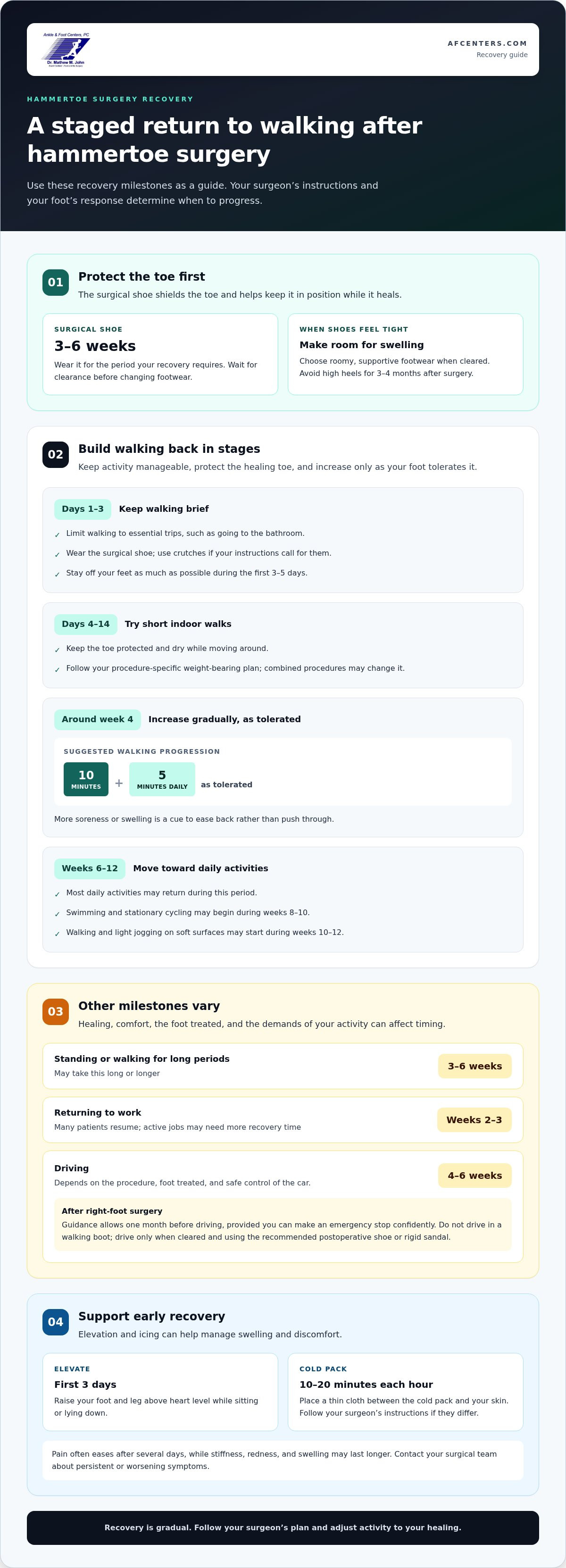
Rest and elevation help control swelling during the first few days. While sitting or lying down, prop up your foot and leg, aiming to keep them above heart level. Apply a cold pack for 10 to 20 minutes each hour, with a thin cloth between the pack and skin. Follow your surgeon’s specific instructions if they differ.
During the first few days, protect your foot, limit avoidable trips, and elevate it while icing. Pain often eases after several days, but swelling may last longer, and the timelines don’t always match. Watch for gradual changes in redness, stiffness, and swelling rather than judging recovery by one uncomfortable afternoon. Contact your surgical team about persistent or worsening symptoms.
Gradual return to walking and other activities
Walking usually resumes in stages, with activity adjusted as your incision heals. Most daily activities may return between weeks 6 and 12, while driving depends on which foot had surgery and your ability to control the car safely.
Limiting activity while the toe heals
Limiting activity means protecting the operated toe from unnecessary pressure while tissues heal. This helps you avoid asking the incision to tolerate more walking than your recovery plan allows. During days 1 to 3, keep walking brief, such as trips to the bathroom, and use your surgical shoe. If your instructions call for crutches, use them to support safer movement.
For the first 3 to 5 days, staying off your feet as much as possible can help protect the toe. Complete non-weight-bearing isn’t usually needed after an isolated hammertoe repair, but combined procedures may change the plan. Follow the weight-bearing instructions for your specific procedure rather than copying another patient’s routine.
Gradually resuming walking
Gradual activity means increasing walking distance as the incision heals and your foot tolerates more movement. It matters because a short, manageable walk gives you a clearer measure of comfort than a long outing. During days 4 to 14, short indoor walks can help you move around while keeping the toe protected and dry.
At around week four, one suggested approach is a ten-minute walk, adding five minutes daily as tolerated. Treat increased soreness or swelling as a cue to ease back, not to push through. Between weeks 6 and 12, people typically transition toward most daily activities. Swimming and stationary cycling may begin during weeks 8 to 10, while walking and light jogging on soft surfaces may start during weeks 10 to 12.
Returning to normal walking and driving
“Normal” walking returns gradually; standing or walking for long periods may take 3 to 6 weeks or longer. Your pace depends on healing, comfort, and the demands of the activity. Returning to work also varies: many patients resume by weeks 2 to 3, while physically active jobs may require more recovery time.
Driving may take 4 to 6 weeks after surgery, depending on the procedure, the foot treated, and your ability to control the car safely. After right-foot surgery, the guidance allows one month before driving and says you should be able to make an emergency stop confidently. Don’t drive in a walking boot; use the recommended postoperative shoe or rigid sandal if you’re cleared to drive.
Build activity around your recovery milestones, not a single calendar date. Wear the prescribed surgical shoe until you’re cleared to change footwear, and avoid sports until your healthcare professional advises otherwise. When you add activity, make one change at a time so you can notice how your foot responds.
Are There Any Potential Complications?
Careful icing, elevation, and attention to new symptoms can support healing after hammertoe surgery. Swelling can be expected, but a clear change in pain, warmth, or your overall condition warrants attention.
Use ice and elevation thoughtfully
During the first 3 days, raise your foot and leg while sitting or lying down, aiming to keep them above heart level. This position helps limit fluid buildup around the healing toe. Use pillows to support your leg, and make sure the heel and calf feel comfortable rather than pressed against a hard edge.
Apply a cold pack for 10 to 20 minutes each hour, with a thin cloth between the pack and your skin. Don’t place ice directly against skin or leave it in place while you sleep. If your bandage becomes wet or shifts during icing, follow your postoperative instructions for protecting the dressing instead of adjusting the surgical area yourself.
Follow weight-bearing instructions
How much pressure you can put on your foot after surgery depends on the procedure. Some isolated hammertoe repairs permit walking in a surgical shoe soon after surgery, while a combined forefoot procedure may require stricter limits. Follow your specific weight-bearing instructions and use crutches if recommended. Avoid walking barefoot, even for a quick trip across the room.
During the first few days, limit activity and elevate your foot between necessary walks. If swelling increases after standing, sit down and raise your leg again. Don’t compensate by changing your gait or putting extra pressure on another part of your foot, as this can make walking less steady.
Recognize symptoms that need attention
Some swelling and redness can accompany healing, but worsening symptoms call for a closer look. Fever above 101°F, chills, persistent warmth in the affected foot, worsening pain, or calf swelling are listed warning signs after surgery. Pay attention to a pattern that is intensifying rather than easing with rest.
Track your symptoms, including when they started and whether they change after elevation. If you develop a warning sign, contact your surgical team promptly for instructions. Don’t wait for your next planned visit if you develop a fever, increasing pain, or calf swelling. Clear details, such as when swelling began, help explain what has changed.
For up to 6 weeks, swelling may still affect comfort, especially after activity. That alone doesn’t establish a complication; the direction and severity of symptoms matter. Continue the prescribed shoe and activity plan, keep the dressing protected, and use only the medicine instructions provided for your recovery. When a symptom feels different from your usual healing pattern, report the specific change rather than trying to diagnose it yourself.
Transitioning to regular footwear
Move from the surgical shoe to regular footwear only when your recovery plan allows it. Roomy shoes help reduce pressure on the healing toe as swelling changes.
Footwear during recovery
The surgical shoe protects your toe while the incision heals, so keep wearing it until you’re cleared to change footwear. Ordinary shoes may press on the toe before swelling settles. A temporary pin or implant can also affect which footwear is comfortable and appropriate.
When regular shoes are allowed, choose athletic shoes or soft, roomy moccasin- or oxford-style footwear. Check that the toe area doesn’t rub the dressing or press against the operated toe. Swelling can make the same shoe feel tighter later in the day, so check comfort after standing and walking briefly, not just while seated.
Dress shoes may remain uncomfortable during weeks 4 to 6, while swelling is still present. Don’t force a snug shoe for an event or short outing. Keep using the protective shoe if that’s still part of your instructions, and let comfort and clearance guide the change.
Roomy footwear for the transition
Roomy transition footwear has a soft, deep toe box and enough width to avoid crowding the healing toe. This space matters because swelling can persist after the incision improves. Supportive athletic shoes are a practical option, and a slightly larger size may feel better while your foot remains swollen.
Between weeks 6 and 12, patients typically transition to wide, soft, deep shoes and return to most daily activities. Around week eight, dress shoes and flats with wide toe boxes may become options. Athletic shoes remain recommended through month three, and it may take up to 12 weeks to wear most of your own shoes.
Avoid high heels for 3 to 4 months after surgery. Narrow toe boxes can crowd the toe, while a roomy fit leaves space for swelling. Try a shoe for a short period at home first. If it rubs, presses, or makes walking uncomfortable, switch back to a more spacious option.
Socks after surgery
You can wear a sock if it fits comfortably without pressing on your toe or disturbing the dressing. Choose a clean, loose-fitting sock rather than one that squeezes your forefoot. Pressure and rubbing can make even protective footwear less comfortable.
Keep the bandage dry, and don’t pull or adjust it to fit a sock. If the sock catches on the dressing, feels tight, or increases pressure, remove it carefully without disturbing the surgical area. Follow your postoperative instructions about covering your foot, especially if a pin is present.
As swelling changes, reassess sock and shoe comfort before standing or walking for longer periods. Regular footwear should feel supportive, with space around the toe, rather than simply matching your usual size. A gradual transition helps you notice pressure early and choose a better-fitting option.
How long to wear a special shoe
Most patients wear a special surgical shoe for 3 to 6 weeks after hammertoe surgery. Yes, instructions can differ after a pin or implant: a boot may be needed for 4 to 6 weeks, and you should keep using the surgical shoe until cleared.
Special-shoe wear duration
A special shoe protects the toe and helps keep it in position while healing. Its firm structure also helps reduce pressure from everyday steps. The usual 3-to-6-week period is a guide, not a signal to switch automatically on a particular day.
Your procedure, the toe’s healing, and any swelling affect when regular footwear becomes comfortable. A shoe that presses on the toe or makes walking uncomfortable may mean the transition is premature. Keep using the prescribed shoe until your surgeon clears a change, even if you feel ready for regular shoes.
Plan around the full recovery period, not a single calendar date. For example, at week four, a swollen toe may still feel tight in a regular shoe. Continuing with the surgical shoe protects the toe while you follow your postoperative instructions. The key is getting clearance, not simply reaching the earliest point in a typical range.
Footwear guidance for pins or implants
A pin or implant can change the footwear plan because it supports the toe while the bone heals. When a pin or implant is used, patients may remain in a boot for 4 to 6 weeks. The toe may also have a pin extending from its end, so avoid footwear that catches or presses on it.
A temporary pin may be removed between weeks three and six, depending on the procedure and healing. Pin removal doesn’t automatically mean you can stop wearing protective footwear. After removal, you may need to continue using the surgical shoe for three additional days while the pin site closes. Follow the specific sequence given for your recovery.
Until you’re cleared, don’t replace the prescribed boot or surgical shoe with a roomy sneaker or soft shoe. Even a comfortable-looking shoe may not protect the toe as your procedure requires. Your doctor’s instructions account for the correction performed and whether hardware is present.
Use your follow-up visits to discuss shoe fit, swelling, and the timing of each transition. If you’re unsure whether a shoe is appropriate, describe where it presses and when discomfort begins. Explore foot and ankle care options if you need support understanding your surgical recovery.
Ankle & Foot Centers, PC: Reconstructive Foot and Ankle Surgery
Ankle & Foot Centers, PC offers Reconstructive Foot and Ankle Surgery, including care for hammertoes. If toe pain affects your walking or you’re considering surgery, a podiatric evaluation can help you understand your treatment options and recovery needs. Dr. Mathew John is a Board Certified Foot Surgeon by the American College of Foot and Ankle Surgery.
If you’ve had surgery and have concerns about swelling, footwear, or returning to activity, discuss those changes with your foot surgeon. Your procedure and healing progress shape the guidance you need, including when to move from a surgical shoe to regular footwear.
Contact Ankle & Foot Centers, PC to discuss hammertoe care and your next steps.
Keep Moving Forward With a Recovery Plan
As you heal, focus on steady progress rather than matching someone else’s timeline. Keep your postoperative instructions easy to find, and note changes that affect your daily routine, such as difficulty getting around your home or pressure from footwear. These details can make follow-up conversations specific and useful.
Deciding what to wear after hammertoe surgery is part of a broader recovery plan, not a test you have to manage alone. If pain, swelling, or shoe comfort raises questions, share what you’re experiencing with your foot care team. Clear guidance can help you make thoughtful choices as you return to the activities that matter to you.
For support with your next step, contact Ankle & Foot Centers, PC. Keep giving your recovery the attention it needs, and take each new step with confidence.
Ankle & Foot Centers, PC for Hammertoe Care
Ankle & Foot Centers, PC offers care for hammertoes and reconstructive foot and ankle surgery. If you have questions about what to wear after hammertoe surgery or need guidance as you recover, the practice can help you discuss your foot and ankle care.
Ankle & Foot Centers, PC also treats bunions, heel pain, plantar fasciitis, and other foot and ankle concerns. Contact the practice in Marietta for help with hammertoe care or another foot and ankle concern.
Frequently Asked Questions
How can you care for yourself at home?
Protect the dressing and follow the specific directions for removing or changing it. A clinician may remove the bandage after several days or give you instructions for home care. Avoid baths during the first 2 weeks unless your doctor says otherwise, and don’t touch the surgical area while caring for the dressing. Keep your postoperative instructions nearby so you can follow the correct care routine.
When should you call for help?
Contact your care team if you develop an open wound, new numbness, or severe, persistent pain. Difficulty bearing weight, a new deformity, or redness and warmth are also reasons to seek prompt advice. Describe what changed and when it began. If you’re receiving care in Marietta, Roswell, Woodstock, Kennesaw, Atlanta, or Sandy Springs, use the contact directions provided by your care team.
How long do you have to stay off your foot after hammertoe surgery?
There isn’t one schedule for when you can put weight on your foot after surgery. Ask which parts of your foot may take weight and whether you should use crutches to move around at home. A repair performed alongside another forefoot procedure can have different restrictions from an isolated toe correction. Before leaving for home, make sure you understand how to move safely between your bed, bathroom, and chair.
How long will it take my foot to get back to normal after my operation?
Full healing can take several months, and a fused toe joint won’t bend after it heals. The toe may also be slightly longer or shorter than before surgery. “Normal” can mean returning to your activities even if the toe feels different. If your procedure included fusion, ask how it may affect movements used for activities such as kneeling or wearing particular shoes.
What can I expect after surgery for hammer toe correction?
Local anesthetic may wear off within six to twelve hours after surgery, so follow your prescribed medicine instructions rather than waiting for discomfort to build. Your first postoperative visit is commonly scheduled within 3 to 7 days. If you have questions about your dressing, write them down before that appointment. A clear record of changes can help you discuss your recovery with the surgical team.
What shoes should I wear after hammertoe surgery?
Choosing what to wear after hammertoe surgery starts with the shoe prescribed for your procedure. Once regular footwear is allowed, look for a soft, roomy toe box and enough length to leave about one-half inch beyond your longest toe. This gives your toes space instead of pressing them together. Check for rubbing around the operated toe before wearing a shoe for a longer outing.
How long should I wear the surgical shoe or boot after hammertoe surgery?
Follow the endpoint in your postoperative instructions rather than switching shoes because your foot feels better one day. If a pin was used, its removal and the condition of the pin site can affect how long protection continues. At follow-up, ask whether you should keep wearing the surgical shoe while walking at home, not just when leaving the house.
When can I wear regular shoes after hammertoe surgery?
The transition to regular shoes depends on clearance and whether the shoe fits without crowding your toe. Try a roomy option while seated, then check for pressure when standing. When deciding what to wear after hammertoe surgery during this transition, choose footwear that accommodates the toe rather than a favorite pair that feels tight. If fit is difficult to judge, bring a shoe you hope to wear to a follow-up visit.


