

Small foot changes can make walking and daily routines less comfortable for older adults. For foot care for elderly parents in Marietta, build in daily checks for redness, swelling, blisters, cracks, or sores, and arrange a podiatrist’s foot inspection twice a year. Bunions, arthritis, nail problems, and changes in foot shape are common concerns that deserve attention when they cause pain or affect mobility.
It can be hard to know which changes need professional care and which habits help protect your parent’s feet at home. This guide covers supportive shoes, gentle daily care, and signs that call for a podiatry visit. You’ll also learn how local foot and ankle care can help manage chronic concerns, including diabetes-related risks, so your parent can move through the day with greater comfort and confidence.
Key Takeaways
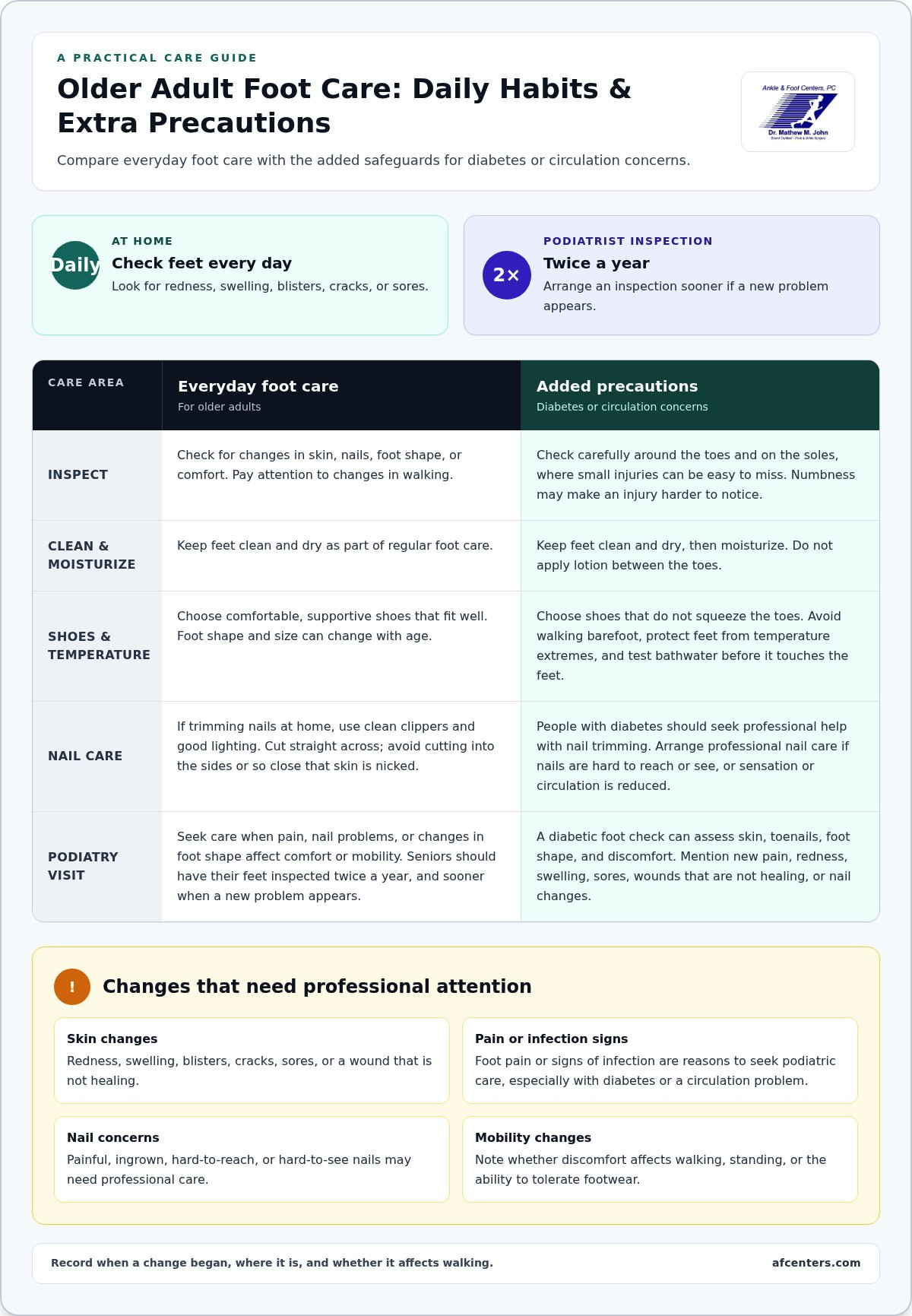
- Check older adults’ feet daily for changes such as redness, swelling, blisters, cracks, or sores, and arrange a podiatrist’s inspection twice a year.
- Choose supportive shoes that fit comfortably, since foot shape and size can change with age.
- For diabetes-related foot care, keep feet clean and moisturized, avoid lotion between the toes, and don’t walk barefoot.
- Protect feet from extreme temperatures and test bathwater before letting it touch the feet.
- Seek podiatry care when foot pain, nail problems, or changes in foot shape interfere with comfort or mobility.
Foot and ankle care for bunions, arthritis, and diabetic foot care
Bunions, arthritis, and diabetes can affect comfort, balance, and the ability to care for feet. Pay attention to changes in walking, skin, or nails, and note them before a podiatry visit.
Diabetic Foot Checkups and Screenings
A diabetic foot check can assess skin, toenails, foot shape, and areas of discomfort. Preventive screening may identify changes that need attention, such as sores or wounds that aren’t healing. Mention new pain, redness, swelling, or nail changes so the clinician can consider them alongside your parent’s diabetes history.
Medicare coverage differs for routine foot care and treatment of a medical foot problem. Whether a visit or service is covered depends on the care involved and the patient’s circumstances. Don’t assume routine nail trimming and treatment for a foot condition have the same coverage.
Neuropathy and Circulation Concerns
Diabetes can cause nerve damage and reduced blood flow, making feet more vulnerable to injury, infection, and complications. Numbness may make it harder to notice a blister or cut, while poor circulation can affect healing. Check the skin carefully, especially around the toes and on the soles, where small injuries can be easy to miss.
People with diabetes or circulatory conditions should take foot changes seriously. A non-healing wound, signs of infection, or foot pain are reasons to seek podiatric care. Consistent care can help reduce the chances of severe complications, including toe or foot amputation.
Bunions can affect toe alignment and make shoes uncomfortable. Arthritis may cause pain and stiffness, making walking or standing harder. Notice whether discomfort starts during activity, continues at rest, or makes footwear difficult to tolerate. These details help a podiatrist assess the problem and discuss options, including bunion care or custom orthotics when appropriate.
Caregivers can help with nail care, but diabetes increases the risk of injury. People with diabetes should seek professional help with nail trimming. For other older adults, use clean clippers and good lighting, and cut nails straight across rather than rounding the corners. Avoid cutting into the sides or so close that the skin is nicked. If nails are hard to reach or see, or your parent has reduced sensation or circulation, arrange professional nail care.
Keep diabetic feet clean and dry, then moisturize without applying lotion between the toes. Choose comfortable, supportive shoes that fit without squeezing the toes, as feet can change shape and size with age. If a sore, crack, or painful area appears, note when it started and where it is, then bring it up during a podiatry assessment.
Marietta and East Cobb podiatry services
Podiatry visits can address painful bunions, nail concerns, and diabetes-related foot changes. For foot care for elderly parents in Marietta and East Cobb, start by identifying the concern affecting your parent’s comfort or mobility.
Podiatrist Checkups for Seniors
A podiatrist can examine foot shape, skin, nails, and areas of pain. Seniors should have their feet inspected twice a year, and sooner when a new problem appears. Marietta podiatry care serves patients of all ages, including older adults.
Arrange an appointment promptly if you notice redness, swelling, blisters, cracks, or sores. A wound that isn’t healing, signs of infection, or foot pain also need professional attention, especially for someone with diabetes or a circulation problem. Share when the change began and whether it affects walking.
Common reasons for senior visits include bunions, hammertoes, fungal or ingrown toenails, and foot soreness. A podiatrist evaluates the specific problem and discusses appropriate care. For example, an ingrown nail may need clinical treatment rather than repeated attempts to cut into its painful edge. Marietta practices also provide same-day, in-office ingrown toenail relief in under 30 minutes.
What foot care services for seniors are available in Marietta, Georgia? Podiatry care can include evaluation and treatment for bunions, nail problems, diabetic foot concerns, and other foot or ankle conditions. An examination helps connect the symptoms with appropriate care.
To prepare, write down your parent’s symptoms, concerns, and any changes in walking or footwear. Bring a medication list and relevant medical history, including diabetes or circulation problems. These details help the podiatrist understand the context and focus the examination on areas that need attention.
Community Foot Care Support
Senior centers and home-health agencies can help caregivers coordinate practical support, such as transportation to a podiatry appointment. Ask the organization already involved in your parent’s care about its coordination resources. A podiatrist provides clinical foot examinations and treatment.
Are mobile podiatrists or in-home foot care services available for seniors in Marietta? Ankle & Foot Centers, PC provides podiatry care at its Marietta practice. Caregivers of people who cannot travel can arrange transportation through their existing support network.
What senior centers, home-health agencies, or community programs in Marietta offer foot care support? A senior center or home-health agency already connected to your family may help coordinate appointment logistics. For clinical evaluation, especially when a sore, possible infection, or painful nail needs attention, see a podiatrist.
For a clearer picture of the conditions a podiatrist can address, explore foot and ankle services. Bring any new symptoms to the appointment, even if they seem small; a clear description helps guide the examination.
Chronic condition management
Track ongoing foot concerns rather than relying on guesswork. Note where pain occurs, what activity brings it on, and whether it changes over time. For example, record whether heel pain starts after resting or during a walk. Bring these observations, along with existing diagnoses and treatments, to help focus the discussion with a podiatrist.
Foot wounds need particular attention for people with diabetes or circulation problems. A sore that isn’t healing, signs of infection, or new foot pain calls for prompt podiatric assessment. Note when the wound appeared and where it is. Dated notes can help describe changes between appointments without relying on memory.
Wound care starts with recognizing when a problem needs professional attention. Don’t treat an open sore as an ordinary dry patch or cover a worsening area without guidance. Mention changes in appearance, discomfort, or healing at the visit. If your parent has reduced sensation, your observations can provide details they may not feel.
Corns and calluses can make standing or wearing shoes uncomfortable, but over-the-counter removers carry risks. Their acids may burn or further damage the skin. Avoid these products, especially when diabetes or circulation problems complicate foot care. Describe the thickened area and any tenderness to a podiatrist rather than trying to remove it with an acid product.
Persistent heel pain may involve chronic plantar fasciitis. The Marietta practice states that 90% to 95% of patients with chronic plantar fasciitis recover without surgery. That figure can help frame a conversation about care, but it doesn’t identify the cause of an individual’s heel pain. Share how long it has lasted and which activities make it worse.
For chronic pain, track how symptoms affect everyday activities. Note whether heel or forefoot discomfort interrupts a usual walk, makes standing difficult, or changes how your parent moves around the home. Bring these notes and relevant footwear to the appointment. Practical examples help a podiatrist relate the complaint to daily function and discuss suitable next steps.
Keep the care plan easy to follow. Write down the concerns discussed, home-care instructions, and signs that should prompt another visit. If a wound remains open or foot pain continues, update the podiatrist rather than relying on a callus remover or routine nail care. Following the plan helps caregivers notice changes and communicate them clearly.
Avoiding barefoot walking and temperature extremes
For older adults, comfortable shoes and careful temperature habits help protect feet during daily routines. Choose supportive footwear that fits well, and avoid walking barefoot, especially when diabetes or reduced sensation makes injuries harder to notice. These steps can also limit rubbing and pressure that may contribute to sores.
Check shoe fit while your parent is standing. Their toes should have room and not feel squeezed against the front or sides. Feet can change in size and shape with age, so don’t assume last year’s shoes still fit. Shop later in the day, when feet may have swollen, and check comfort in both shoes.
Introduce new shoes gradually. Start with short periods of wear, then check for pressure marks, redness, or discomfort before increasing use. If a shoe rubs a bunion or presses on a toe, stop wearing it until the fit is addressed. For a parent with diabetes, well-fitting, supportive shoes are particularly important; avoid footwear that constricts the toes.
Keep shoes and suitable indoor footwear within easy reach. Even a short walk across a room can expose bare feet to sharp objects, rough flooring, or hot surfaces. People with diabetes should avoid walking barefoot and protect their feet from extreme temperatures. Check that footwear stays in place and doesn’t bunch during normal movement.
Take care around bathwater, heating pads, and hot surfaces. Test bathwater before your parent puts their feet in, particularly if diabetes has reduced sensation. Use a hand or another area with normal sensation to judge the water. Don’t rely on the feet to detect heat accurately.
Cold can also affect comfort. Keep feet covered in cool conditions, but don’t place them directly against a heater or another intense heat source. Choose socks and shoes that feel comfortable without squeezing. If your parent has diabetes or circulation concerns, protect their feet from temperature extremes and look for skin changes afterward.
For fall prevention, combine footwear checks with a simple home routine. Keep shoes close to the bed or favorite chair, clear walking paths, and check that shoes are secure before standing. Look inside for a pebble, folded lining, or another object that could irritate the skin. Replace footwear that has become uncomfortable or no longer fits.
If a new shoe leaves a sore, blister, or persistent red area, stop wearing it and seek podiatric guidance. Don’t cover a developing problem by switching shoes without checking the skin. A caregiver can note which shoe caused pressure and where it occurred, giving the podiatrist a useful example to assess.
Daily foot inspections
A daily check helps caregivers notice changes early. For someone with diabetes, inspect both feet for cuts, blisters, or sores. Choose a regular time, such as after dressing, and use good lighting. If your parent can’t see the soles or between the toes, use a mirror or help with the check.
Check the tops, soles, heels, sides, and spaces between the toes. Look for cracks, redness, swelling, blisters, sores, or changes in skin appearance. Notice whether a toenail looks ingrown or a familiar shoe leaves a new mark. Compare both feet, as a change on one side may be easier to spot this way.
Make the inspection comfortable and unhurried. Have your parent sit securely, remove shoes and socks, and check one foot at a time. Ask whether anything feels tender, but don’t rely on pain alone. Diabetes can reduce sensation, so a person may not feel a small cut or blister. Record what you see and where it appears.
Keep a simple written log with the date and a short description. For example, note “crack near the heel” or “red spot beside the big toe.” If the area changes, record what you observe rather than guessing at a cause. Clear notes give the podiatrist useful details about when the change appeared and how it developed.
Contact a podiatrist promptly about redness, swelling, blisters, cracks, or sores. A wound that isn’t healing, signs of infection, or foot pain also need professional attention, particularly for someone with diabetes. Don’t wait for a routine appointment if a new concern appears. Share its location and any changes noted during daily checks.
After checking the feet, keep them clean and dry. For diabetes care, avoid soaking, which can dry the skin, and apply moisturizer without putting it between the toes. Check that socks and shoes don’t leave pressure marks. If your parent has reduced sensation, use visual checks to guide daily care instead of relying on how their feet feel.
A steady routine makes foot checks easier to remember. Pair the inspection with an existing habit, such as getting dressed, and keep a mirror and notes nearby. If you notice a concerning change, arrange professional diabetic foot care rather than trying to treat a wound at home. Clear observations help focus the next steps.
Custom orthotics may help with some foot concerns, while gentle stretches can be part of a daily routine. For arthritis-related discomfort, discuss appropriate options with a podiatrist. Continue regular visual checks and note any concerning changes to share during professional care.
Ankle & Foot Centers, PC: Reconstructive Foot and Ankle Surgery
Ankle & Foot Centers, PC provides care for older adults with bunions, hammertoes, fungal toenails, and other foot concerns. When a condition causes persistent discomfort or makes walking difficult, a podiatry evaluation can help clarify care options. Dr. Mathew John is a Board Certified Foot Surgeon by the American College of Foot and Ankle Surgery, and the practice offers Reconstructive Foot and Ankle Surgery when surgical care is appropriate.
Bring notes about symptoms, mobility changes, and treatments already tried. These details help guide a focused discussion about your parent’s foot health and next steps.
For guidance on a specific foot concern, contact Ankle & Foot Centers, PC or visit the practice’s website.
Make the Next Step Feel Manageable
Supporting an older parent’s foot health doesn’t require changing everything at once. Start with one practical step, such as adding foot checks to an established routine or noting a concern that affects comfortable movement. A clear record of what has changed can make a future care conversation more focused.
For foot care for elderly parents in Marietta, professional guidance can help when a concern persists or makes daily activities harder. Ankle & Foot Centers, PC provides care for bunions and hammertoes, as well as reconstructive foot and ankle surgery. A podiatry evaluation helps connect the condition with appropriate next steps.
Keep the goal simple: help your parent stay comfortable, supported, and engaged in daily life. If you’re ready to discuss a foot concern, contact Ankle & Foot Centers, PC. A thoughtful next step can help you support your parent with greater confidence.
Ankle & Foot Centers, PC for Foot Care
Ankle & Foot Centers, PC provides foot and ankle care for older adults in Marietta. If your parent has ongoing discomfort or a concern that needs attention, the practice treats diabetic foot problems, fungal and ingrown toenails, heel pain, plantar fasciitis, bunions, and hammertoes, and provides custom orthotics.
The practice also treats neuromas, warts, flat feet, and sports injuries, and offers MLS Laser Therapy, Sonic Shockwave Therapy for Heel Pain (ESWT), and reconstructive foot and ankle surgery. Contact Ankle & Foot Centers, PC to discuss your parent’s foot care needs.
Frequently Asked Questions
Which podiatrists in Marietta specialize in elderly foot care and accept Medicare?
Ankle & Foot Centers, PC is a Marietta podiatry practice serving patients of all ages, including older adults. Medicare is listed among its in-network plans. Dr. Mathew M. John leads the practice. Families arranging foot care for elderly parents in Marietta can discuss age-related concerns with a podiatrist. Medicare coverage depends on the specific service and circumstances, so distinguish a medical evaluation from routine foot care.
What foot problems are common in older adults, especially those with diabetes or poor circulation?
Older adults commonly experience changes in foot shape, bunions, arthritis, nail problems, and soreness. Diabetes may reduce sensation and blood flow, so a patient might not notice a small injury promptly. For example, a shoe rubbing against a bunion can cause a sore, while a minor cut may be hard to detect. Mention changes in walking, footwear tolerance, or skin condition during a podiatry visit.
What warning signs of foot infection or circulation problems require urgent medical care?
Seek prompt medical assessment for a foot wound, spreading redness, warmth, swelling, numbness, or worsening pain. A visible deformity or inability to bear weight also needs timely attention. If you’re arranging foot care for elderly parents in Marietta, don’t wait for pain to become severe, since reduced sensation can mask an injury. Note when the change began and whether it is worsening, then share those details with the clinician.


