

Bunion care doesn’t automatically mean surgery. A bunion forms when the big toe angles toward the second toe, shifting the joint and creating a bump along the foot. A bunion specialist serving Roswell, GA, can assess the bump, your symptoms, and how the toe joint moves.
If the bump makes shoes uncomfortable or walking painful, it’s natural to wonder what may ease the pressure. Non-surgical options, such as wider shoes, padding, and custom orthotics, may help reduce irritation and discomfort. This article explains factors that can contribute to bunions, how a specialist evaluates them, and which conservative approaches may suit your needs. You’ll also learn when ongoing pain or limited movement warrants an evaluation, so you can make a more informed decision about your foot health.
Key Takeaways
- Learn how family history, foot structure, and footwear can contribute to bunion development.
- Understand how a medical history, physical examination, and X-rays can help identify a bunion.
- Explore practical ways to reduce pressure and irritation, including roomier shoes, padding, and inserts.
- Recognize symptoms such as pain while walking or difficulty wearing shoes that may call for professional evaluation.
- See how care can be matched to your symptoms, from conservative options to a discussion of surgical treatment when appropriate.
What are the Conservative Treatments for Bunions?
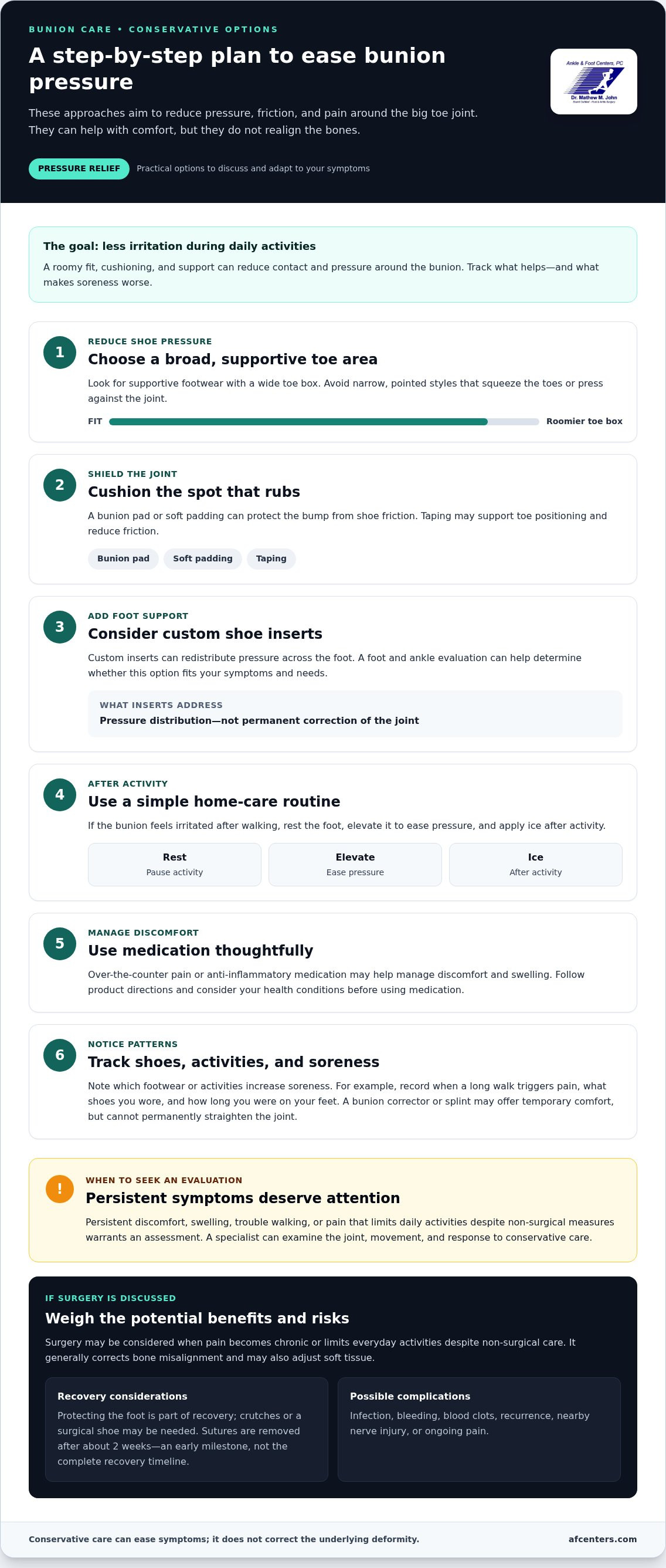
Conservative treatment aims to reduce pressure, friction, and pain around the big toe joint. It may help you stay comfortable during daily activities, but it won’t realign the bones. Start with your shoes: choose supportive footwear with a wide toe box, and avoid narrow, pointed styles that squeeze your toes. A roomy fit reduces contact between the shoe and the bunion.
For a small bunion that feels irritated after walking, try a simple home-care routine. Rest the foot, elevate it to ease pressure, and apply ice after activity. A bunion pad or cushion can shield the bump from shoe friction. Over-the-counter pain or anti-inflammatory medication may help manage discomfort and swelling. Follow product directions and consider your health conditions before using medication.
Other non-surgical options focus on fit and support:
- Use a bunion pad or soft padding to cushion the joint.
- Try taping to support toe positioning and reduce friction.
- Consider custom shoe inserts to redistribute pressure across the foot.
- Choose supportive shoes with a broad toe area for everyday wear.
These steps address symptoms, not the underlying deformity. A bunion corrector or splint may offer temporary comfort, but it can’t permanently straighten the joint. Track which shoes and activities increase soreness. For example, if a long walk triggers pain, note the footwear and how long you were on your feet. Those details can help guide a practical treatment plan.
A foot and ankle evaluation considers how bunion pain affects movement and whether other conditions may be involved. Persistent discomfort, swelling, or trouble walking warrants an assessment. A foot specialist can examine the joint and discuss whether conservative care remains appropriate. If pain becomes chronic or limits daily activities despite non-surgical measures, surgery may be considered. Surgery generally corrects bone misalignment and may also adjust soft tissue to improve alignment.
How long is bunion surgery recovery, and what does it involve? Recovery includes protecting the foot, and patients may need crutches or a surgical shoe. Sutures are removed after about 2 weeks, an early recovery milestone rather than a complete timeline.
Bunion surgery aims to relieve pain and improve the big toe’s position and function. It also carries possible complications, including infection, bleeding, blood clots, recurrence, nearby nerve injury, or ongoing pain. Discuss these considerations alongside your symptoms, movement, and response to conservative care. The decision depends on how the bunion affects everyday life, not appearance alone.
What are the Common Causes of Bunions?
Bunions often reflect inherited foot structure rather than one isolated cause. Family history may point to alignment or joint features that make the big toe angle toward its neighbor. Flat feet, low arches, and other structural differences can also change how pressure travels across the foot during walking. These traits may increase the likelihood of a bunion, but they don’t mean every family member will develop one.
Footwear can add pressure to a vulnerable joint. Narrow shoes squeeze the toes together, while pointed toes and high heels can push the big toe inward. If a shoe’s toe box presses against the joint, repeated friction may irritate the area. A roomier fit can reduce this external pressure, though footwear alone doesn’t explain every bunion.
Other foot and ankle conditions may also be relevant. Arthritis, including rheumatoid arthritis, and joint injuries can affect the big toe joint. Gout and other inflammatory diseases may also be associated with bunions. A podiatrist or foot and ankle specialist considers these factors alongside family history, arch shape, footwear, and symptoms. This broader assessment helps distinguish a structural tendency from other joint concerns.
A surgical consultation doesn’t mean surgery is the only option. The specialist reviews your symptoms, walking limitations, foot structure, and response to conservative care. If pain interferes with daily activities or the deformity is severe, the conversation may include surgery. It should cover the procedure’s purpose, possible complications, and alternatives, including continued non-surgical care.
Patient reviews can offer insight into others’ experiences, but ratings vary by platform and reflect individual visits. Look for comments about bunion evaluations, communication, and follow-up rather than relying on a star score alone.
There’s no objective, universal ranking that establishes one Roswell specialist as “top-rated.” A foot and ankle surgeon’s training can be relevant when considering surgical care as a bunion specialist Roswell GA.
Podiatrists and foot and ankle surgeons treat bunions. Dr. Mathew M. John at Ankle & Foot Centers, PC provides comprehensive bunion care and surgical consultations; the appropriate treatment depends on your symptoms and goals.
The Roswell office is at 2790 Sandy Plains Road on the corner of Post Oak Tritt and Sandy Plains. Its phone number is (770) 383-1883.
Whether a specialist is accepting new patients can change. Call the office to request an appointment and describe your bunion symptoms and walking concerns.
Accepted insurance plans vary by practice and plan. Review your plan’s in-network podiatry information and coverage terms for bunion evaluation and treatment.
To arrange an appointment, call the office and explain what you’re experiencing. Ask whether your insurance plan requires a referral, and bring relevant medical records or imaging if available.
How are Bunions Diagnosed?
A bunion is a change in alignment, not simply a bump on the skin. As the big toe leans toward the second toe, the joint shifts and forms a prominence along the foot. This changed position can make the joint press against shoes and surrounding tissue. The resulting friction and pressure may cause discomfort while walking or wearing snug footwear.
Diagnosis usually combines your medical history, a physical examination, and X-rays. Each step answers a different question. Your history helps establish when discomfort began, which activities affect it, and whether family members have bunions. During the examination, the clinician assesses the toe joint, visible bump, tenderness, and movement. Together, these details show how the foot’s shape relates to its function.
X-rays show the bones and joint alignment, helping the clinician assess the bunion’s structure. Imaging complements the examination; the visible bump alone doesn’t explain every source of pain. If symptoms suggest soft-tissue or nerve involvement, additional imaging such as ultrasound or MRI may help evaluate those areas. The choice depends on your history and examination findings.
Risk factors provide context for the examination findings. Family history, flat feet, low arches, and other foot structures can affect alignment. Narrow or poorly fitting shoes may squeeze the toes and increase pressure. Arthritis, inflammatory disease, or a joint injury may also be relevant. Tell the clinician about these factors, as well as footwear and activities that worsen discomfort, so the assessment reflects your experience.
Diagnosis also considers how the bunion affects everyday function. Note whether pain occurs while walking, whether the toe feels stiff, or whether shoes rub the bump. A clear description helps distinguish occasional irritation from symptoms that interfere with routine activities. Bring a list of concerns to your appointment, including changes you’ve noticed in toe position or joint movement.
After reviewing the examination and imaging, a foot specialist can explain treatment options tailored to you. The plan may focus on relieving pressure and discomfort while considering how the joint’s position affects movement. Surgery may be considered when pain persists or movement becomes limited. Bunion surgery aims to improve alignment and the big toe’s position and function. An accurate diagnosis connects the treatment discussion to the joint findings, your symptoms, and daily needs.
Bunion symptoms and possible complications
A bunion may look like a bony bump beside the big toe, but symptoms involve more than appearance. The joint may feel sore, tender, warm, swollen, or red. Shoe pressure can irritate the area, making ordinary walking uncomfortable. Some people notice changes in toe position or find the big toe harder to move.
Pay attention to how discomfort changes with activity. After prolonged standing or walking, pain may become sharp or burning. A stiff big toe may grind during movement, while swelling can make familiar shoes feel tight. Track what triggers symptoms, such as particular shoes or a long walk. These examples help explain how the bunion affects your daily routine.
- A visible bump beside the big toe joint.
- Swelling, redness, warmth, or tenderness around that joint.
- Pain during walking or difficulty wearing usual shoes.
- Reduced big-toe movement or a toe turning toward its neighbor.
Arrange an appointment if a visible bump comes with persistent swelling, pain while walking, or difficulty wearing shoes. Describe when symptoms began and which movements make them worse. Mention prior foot injuries, arthritis, or changes in your walking. These details help a foot specialist assess the joint and consider whether another condition contributes to your discomfort.
Unaddressed symptoms can affect more than shoe comfort. A bunion may contribute to bursitis, arthritis, calluses, or hammertoes. Changes in how you walk may also create gait abnormalities. For example, shifting weight away from a sore big toe can change pressure across other parts of the foot. Persistent pain or limited movement is worth discussing during an evaluation.
Bunion surgery is generally considered when pain interferes with daily activities, conservative care no longer brings relief, or the deformity is severe. The goal is to improve alignment and the big toe’s position and function. Surgical techniques vary with the bone misalignment and may include soft-tissue correction. Discuss potential complications, such as infection, bleeding, blood clots, recurrence, nearby nerve injury, or ongoing pain.
Whether you live in Roswell or elsewhere in the Atlanta area, use changes in your symptoms to guide your next step. Note swelling, shoe pressure, walking limitations, and toe stiffness before your appointment. Clear examples help the specialist connect your symptoms with examination findings and discuss care suited to your foot.
Non-surgical bunion care
Non-surgical care focuses on reducing pressure around the big toe joint and supporting comfortable movement. It doesn’t realign the bones, but it may help manage irritation during walking and daily activities. Build a routine around the triggers you notice, such as shoe pressure, swelling after activity, or soreness after standing. A podiatry assessment can connect those patterns with practical treatment choices.
Start with footwear. Choose shoes with a broad toe box and supportive soles, leaving room around the bunion rather than pressing the joint against the shoe. Avoid narrow, pointed styles and high heels that crowd the toes. Check the fit while standing, when your foot bears weight. If a familiar pair rubs the bump, change shoes before friction causes more irritation.
Padding can create a soft barrier between the bunion and the shoe. Place a bunion pad or cushion where it reduces rubbing, not where it pushes the toe into a painful position. Taping may also support toe positioning and limit friction. Remove padding that increases pressure or discomfort. These adjustments can help you identify which sources of contact affect comfort most.
- After activity, rest and elevate the foot to reduce pressure.
- Apply ice to the irritated area to ease inflammation and discomfort.
- Use shoe inserts or cushions to distribute pressure more evenly.
- Consider over-the-counter pain or anti-inflammatory medicine, following its directions.
Custom orthotics can offer more tailored support than a basic cushion. Their purpose is to change how pressure is distributed, not to erase the bunion. A clinician considers your foot shape, symptoms, and footwear when discussing whether orthotics suit your needs. Keep a short record of which shoes, activities, or inserts make walking easier. Those observations help refine a personalized approach.
Give each adjustment a clear purpose. For example, try roomier shoes to reduce pressure on the side of the foot, then assess whether padding helps with rubbing. Changing several things at once makes it harder to identify what improves comfort. Conservative measures may be combined, with comfort and mobility as practical guides. A bunion corrector or splint may offer support, but it won’t permanently straighten the joint.
If pain continues, swelling persists, or movement becomes limited despite these steps, a clinic can assess your bunion and discuss next options. An evaluation can clarify whether continued non-surgical care suits your symptoms or whether surgery merits discussion. For a focused podiatry assessment, arrange an appointment for bunion care.
Ankle & Foot Centers, PC: Reconstructive Foot and Ankle Surgery
Ankle & Foot Centers, PC provides care for bunions and reconstructive foot and ankle surgery. Consider an evaluation if bunion pain continues despite wider shoes and padding, or if it limits walking or toe movement. Dr. Mathew John is a Board Certified Foot Surgeon by the American College of Foot and Ankle Surgery. An appointment can help you review your symptoms, examination findings, and appropriate care options, including whether surgery merits discussion. The goal is to understand how the bunion affects your daily function and make an informed next-step decision. Visit Ankle & Foot Centers, PC to learn about care, or contact the practice to arrange an appointment.
Take Your Next Step Toward Comfortable Movement
Make your next step practical: notice what affects your comfort, then bring those observations to a foot care appointment. If you’re looking for a bunion specialist in Roswell, GA, Ankle & Foot Centers, PC provides bunion care, hammertoe treatment, and reconstructive foot and ankle surgery. An appointment can help you understand your options and decide how to move forward.
You don’t have to wait until walking becomes difficult to seek guidance. Reach out when the bunion starts changing your routines, footwear choices, or confidence in staying active. A clear discussion of your concerns is a useful first step toward a care plan shaped around your goals.
Contact Ankle & Foot Centers, PC to take the next step. Keep moving toward greater comfort with attentive support.
Frequently Asked Questions
What Is a Bunion on Your Foot?
A bunion is a change in the big toe joint’s alignment that creates a bump along the foot. The big toe gradually angles toward the second toe, shifting the joint. For example, the bump may press against the inside of a shoe even when the rest of the foot feels comfortable. A foot specialist can distinguish a bunion from other causes of a bump by examining the joint and its alignment.
What are the Complications of Bunion Surgery?
Possible complications include infection, bleeding, blood clots, recurrence, nearby nerve injury, and ongoing pain after surgery. The procedure and your health history affect which risks are most relevant to you. Before deciding, discuss how the operation addresses joint alignment, what alternatives remain, and how recovery may affect daily tasks. Understanding these points helps you weigh potential benefits against surgical risks.
What are the Symptoms of Bunions?
Symptoms can include a visible bump, redness, swelling, tenderness, and difficulty moving the big toe. You might also notice that a once-comfortable shoe now presses against one spot, or that walking changes how you place your foot. Symptoms vary: one person may mainly notice shoe irritation, while another experiences stiffness or discomfort during movement. Persistent swelling, pain while walking, or trouble wearing shoes warrants an evaluation.
What Does Bunion Pain Feel Like?
Bunion pain may feel sore, tender, warm, or achy near the big toe joint. Footwear pressure can make the area more sensitive. After prolonged walking or standing, discomfort may become sharp or burning; a stiff joint can also grind as you move the toe. Notice when the sensation starts and what eases or aggravates it. Sharing those details helps explain how the problem affects daily activities.
What is the Prognosis for Bunions?
Bunions can enlarge and become more painful, though symptoms and progression differ between people. Roomier shoes, padding, and other conservative measures may reduce irritation, but they don’t restore joint alignment. The outlook depends partly on the deformity, discomfort, and effects on walking or footwear. If symptoms remain limiting despite conservative care, an evaluation can clarify treatment choices, including whether surgery merits discussion.
What treatments for bunions do Roswell specialists offer besides surgery?
Non-surgical options may include wide-toe-box shoes, supportive soles, padding, taping, inserts, rest, ice, elevation, and pain or anti-inflammatory medication. Custom orthotics may help redistribute pressure when foot structure contributes to symptoms. A bunion specialist serving Roswell, GA, can assess your foot and discuss options suited to your symptoms and routine. The aim is to reduce irritation and support comfortable movement, not permanently straighten the joint.
What types of bunion surgery are available near Roswell, GA?
Bunion correction may use traditional or minimally invasive techniques, with the approach guided by the bone alignment and soft tissues involved. Some procedures cut and realign bone near the big toe joint; others address deformity closer to the joint’s base. Lapiplasty® 3D is another bunion-correction technique available in the Roswell area. A surgical consultation helps explain which procedure matches the specific joint findings and goals.
What are the risks and success rates of bunion surgery?
Risks include infection, bleeding, blood clots, recurrence, nerve injury, and ongoing pain. A single success rate can’t predict an individual result; outcomes depend on factors such as the deformity, procedure, and recovery. Surgery aims to relieve pain and improve toe alignment and function, but can’t promise a particular outcome. Ask the surgeon to explain the relevant risks and recovery considerations for the proposed procedure.


