

Geriatric foot care in Roswell starts with an appointment to discuss the foot or mobility concern affecting daily life. Aging can bring changes such as thinner skin, reduced circulation, and limited mobility, so new or persistent foot problems deserve attention rather than guesswork.
It’s understandable to want to know what to expect before scheduling, especially if foot pain, nail changes, or balance concerns are making everyday routines harder. This guide explains how to prepare for an appointment and what an evaluation may cover, from skin and toenails to common foot conditions and mobility. You’ll also learn which changes to watch for and how podiatric care can support comfortable, steady movement.
Key Takeaways
- Notice changes in skin, circulation, sensation, or mobility, and bring persistent foot concerns to a podiatry appointment.
- Before scheduling, note your main concern and relevant health conditions so you can explain what’s changed and how it affects walking.
- People with diabetes benefit from daily foot checks and regular clinical attention to help catch problems early.
- Learn how pressure from corns and calluses, nail changes, and other common conditions can affect comfort and movement.
- Simple habits, such as keeping feet clean and dry and trimming toenails straight across, can support ongoing foot health.
Age-related changes in foot health and mobility
Foot changes can affect balance, comfort, and independence as people age. Reduced circulation, thinner skin, and limited mobility can make small problems harder to notice or manage. Diabetes, arthritis, and other health conditions may also contribute to foot symptoms, so include them in conversations with your doctor.
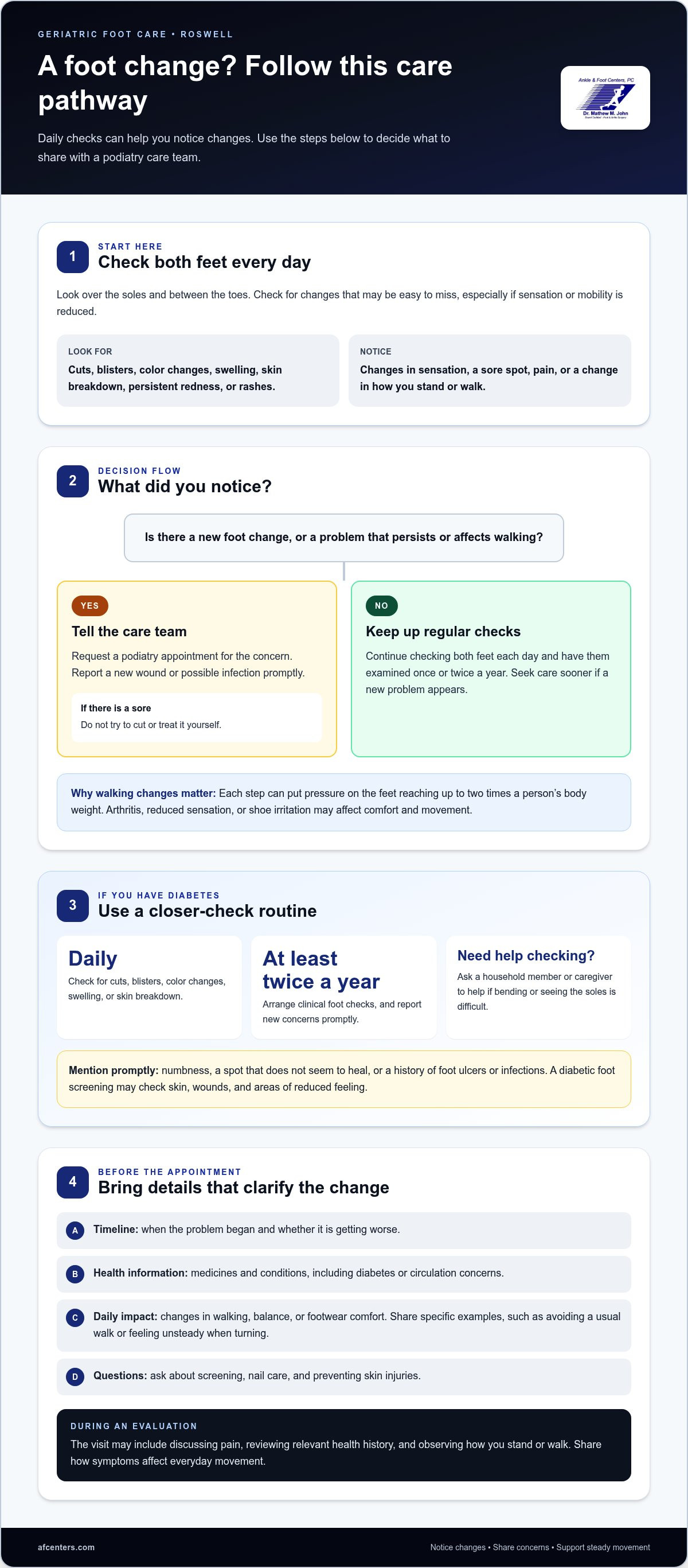
Walking puts substantial pressure on the feet, reaching up to two times a person’s body weight with each step. Arthritis may make joints stiff or painful, while reduced sensation can make it harder to notice irritation from shoes. A sore spot, swelling, or change in walking deserves attention, especially if it persists or limits daily activities.
Regular checks help connect foot health with mobility and overall wellness. Examine both feet every day, including the soles and spaces between toes. Look for cuts, swelling, persistent redness, rashes, or changes in sensation. People with diabetes should arrange foot checks at least twice a year and report new concerns promptly.
A mobility assessment can show how foot symptoms affect everyday movement. A podiatry visit may include discussing pain, reviewing relevant health history, and observing how you stand or walk. Share specific examples, such as needing to hold a railing, avoiding a usual walk, or feeling unsteady when turning. These details help the doctor understand where support may be useful.
To support steadier movement, wear shoes that fit securely and avoid walking barefoot if foot sensation is reduced. Keep walkways clear of loose rugs and clutter, and use handrails on stairs. Sole inserts may be recommended for added support. A caregiver can help with daily foot checks if bending or seeing the soles is difficult.
How do Roswell podiatry clinics compare on accessibility, reviews, and senior care? Healthgrades lists 35 geriatric-medicine specialists in Roswell, with an overall average rating of 4.2 stars; those figures aren’t a podiatry-clinic ranking. For accessibility, compare practical needs such as transportation, entrance access, and support during movement, alongside whether the clinic addresses older adults’ foot and mobility concerns.
Does Medicare cover podiatry and routine foot care in Roswell? Medicare Part B covers doctor visits, preventive care, medical equipment, and outpatient services. That general coverage doesn’t establish that every routine nail or callus service is covered, so review your Medicare plan’s coverage details for the specific service.
People should have their feet examined once or twice a year, and sooner if a new problem appears. For geriatric foot care in Roswell, bring a list of symptoms, health conditions, and mobility changes to help make the appointment focused and useful.
How Do I Schedule a Geriatric Care Appointment?
Start by requesting a podiatry appointment for the foot concern affecting daily life. Tell the scheduler if diabetes, numbness, a sore, or difficulty walking is involved. For seniors with diabetes, mention any previous foot ulcers, infections, or changes in sensation. These details help the care team understand why you’re coming and prepare for a focused visit.
Before the appointment, gather useful information so you can describe your symptoms clearly:
- Write down when the problem began and whether it is getting worse.
- List medicines and health conditions, including diabetes and circulation concerns.
- Note any changes in walking ability, balance, or footwear comfort.
- Bring questions about screening, nail care, and preventing skin injuries.
Diabetes can increase the risk of foot ulcers and infections, making daily preventive care important. Check both feet each day for a cut, blister, color change, swelling, or skin breakdown. If bending is difficult or vision makes inspection challenging, ask a household member to help. Keep feet clean and dry, and avoid trying to cut or treat a sore yourself.
A diabetic foot screening can include a careful examination for skin changes, wounds, and areas of reduced feeling. Tell the doctor about numbness or a spot that doesn’t seem to heal, even if it isn’t painful. People with diabetes should visit the clinic at least twice a year. Prompt attention to a new wound or infection matters, while daily checks help identify changes between visits.
Which podiatrists in Roswell specialize in older adults? Look for podiatry care that addresses age-related concerns such as diabetes, reduced sensation, nail changes, and walking difficulty. Share your health history and daily-care needs when scheduling so the appointment can focus on what affects your ability to move comfortably.
Which Roswell foot care providers accept Medicare and common insurance plans? Medicare Part B covers doctor visits, preventive care, medical equipment, and outpatient services. Coverage and provider participation depend on the plan and service, so distinguish a medically necessary visit from routine foot care when reviewing benefits.
Are home-visit or mobile podiatry services available for seniors in Roswell? Mobile and home visits differ from clinic appointments, and availability depends on the service. If travel is difficult, explain the mobility or transportation barrier when arranging care.
Personalized diabetic foot care can help seniors build practical routines around their lifestyle and health needs. A caregiver or family member can join the appointment, take notes, and help carry out home-care instructions. Explore diabetic foot care services for support with screening and ongoing foot health.
Callus and corn management
A callus is an area of thickened skin that often forms where repeated pressure or rubbing occurs. A corn is a smaller, more defined thickened spot, often over a toe or another pressure point. For example, a shoe pressing against the little toe may create a painful area that changes how you stand or walk. Note where it hurts and which shoes make it worse.
At an appointment, describe how long the spot has been present and whether its size or discomfort has changed. An assessment can distinguish a corn or callus from another skin concern and identify pressure points. The clinician may consider toe position, shoe fit, and how your foot meets the ground. These details help guide care toward the source of irritation, not just the visible skin.
Don’t cut thickened skin with a blade or use medicated corn products without professional guidance, especially if you have diabetes, reduced feeling, or trouble seeing your feet. A small injury can be difficult to notice when sensation is limited. If memory is a concern, ask a family member or caregiver to help track the spot and follow care instructions.
Practical steps at home can reduce rubbing while you arrange an assessment:
- Choose shoes that leave room for toes and don’t press on the sore area.
- Check the skin for redness, a crack, drainage, or a change in appearance.
- Note which activity, such as walking or standing, brings on discomfort.
- Use a mirror or ask a trusted person to inspect areas you can’t see easily.
These steps don’t replace medical care if pain persists or the skin breaks. A corn that changes your stride can affect balance and make usual activities more challenging. Mention any altered walking, tenderness, or footwear pressure during your visit. If you have diabetes, report a skin break or new sore promptly rather than treating it as routine thick skin.
Ongoing management may involve addressing the pressure that contributed to the thickened area. A clinician can discuss suitable footwear and whether additional support may help. Don’t assume every hard spot is a callus: a painful or changing area deserves an examination, particularly if sensation is reduced. Keep notes about the spot’s location and how it responds to footwear.
Good care is specific to the person and the cause of pressure. Toe deformity, shoe fit, daily activity, and the ability to inspect the feet can all shape the plan. If self-care is difficult, involve a caregiver and share those concerns with the medical team. Tell your primary care doctor about recurring skin problems as part of coordinated wellness care.
Foot conditions treated in older adults
Foot problems can change how older adults walk, stand, and manage daily routines. Common concerns include arthritis-related pain, ingrown toenails, fungal nails, corns, and diabetic ulcers. Persistent numbness or reduced feeling in the feet, ankles, or calves also deserves medical attention. Describe where symptoms occur and how they affect activities, such as putting on shoes or walking to the mailbox.
Arthritis may cause stiffness or discomfort around foot and ankle joints. A clinician can assess the painful area, ask when symptoms appear, and consider how movement is affected. For example, note whether pain increases on stairs or after standing. This context helps clarify whether you’re dealing with a recurring mobility challenge or a sudden change needing prompt evaluation.
What geriatric foot care services are available in Roswell, Georgia? Podiatry care for older adults may include foot examinations, diabetic foot screening, nail care, wound assessment, callus and corn management, and mobility assessments. The appropriate care depends on the concern, such as a thickened nail, skin wound, or difficulty walking.
Diabetes can make foot sores and infections especially important to address. Watch for a new wound, redness, swelling, or changes in skin color, and report them promptly. Reduced sensation may mean an injury causes little pain, so appearance matters too. Caregivers can help observe hard-to-see areas and share changes during an appointment.
Different symptoms call for different next steps:
- Ingrown toenails: Report tenderness, redness, or swelling along a nail edge, especially if walking or footwear worsens discomfort.
- Fungal nails: Thickened, discolored, or misshapen nails can signal a fungal infection and merit an examination.
- Corns and calluses: Describe the pressure point and shoes associated with discomfort so the cause can be assessed.
- Reduced sensation: Mention persistent numbness in the feet, ankles, or calves, even without pain.
Bring a current medication list and relevant health history to help the doctor consider possible interactions and related conditions. Tell the clinician about earlier ulcers, recurring nail problems, and changes in walking. If memory makes details difficult to recall, write down your observations or invite a caregiver to help describe the timeline.
Early assessment can clarify what is causing a symptom and which treatment approach may fit. Don’t try to remove a deeply painful nail edge or manage an open wound yourself. For older adults with diabetes, a new wound or infection warrants prompt attention. A clear description of symptoms helps the care team focus on comfort, skin health, and safe movement.
Adults, mention any nail changes alongside other foot concerns during an examination. Fungal nail infections are more common in seniors and adults than in children. Diabetes, a weakened immune system, and the normal aging process are associated with fungal nail infections. These details may be useful when describing a thickened, discolored, or misshapen nail, while the clinician assesses it and considers an appropriate approach.
Podiatrists treat diabetic foot complications, ingrown toenails, and circulation concerns in seniors. Include any concern about circulation or a diabetic foot complication when describing what has changed, and explain how the problem affects walking or footwear. This gives the clinician a clearer picture of the issue and keeps the discussion focused on the symptoms that prompted care.
Foot hygiene and toenail care
A consistent foot-care routine helps you notice changes before they interfere with walking. Wash your feet gently, dry them carefully, and check the skin around each toenail. Look for discoloration, thickening, tenderness, or a nail edge pressing into nearby skin. These observations give you useful details to share at an appointment.
Toenails can become harder to manage when flexibility, eyesight, or hand strength changes. If trimming is difficult, don’t force a cut or dig into a nail corner. Trimming straight across helps avoid rounding the edges. Stop if you notice pain, bleeding, or irritated skin, then arrange an assessment.
Where can seniors in Roswell get routine nail and callus care? A podiatry appointment can address fungal or ingrown toenails and assess painful calluses. Describe the specific issue when scheduling, especially if it affects shoes, walking, or other physical activities.
- After washing, dry between the toes to avoid leaving damp skin.
- Choose socks and shoes that don’t rub or press on toenails.
- Use a mirror or ask a caregiver to help inspect hard-to-see areas.
- Write down when a nail or callus became painful and what worsens it.
Thickened, discolored, or misshapen nails may be signs of a fungal infection. An examination can help identify the concern and discuss suitable treatment. An ingrown nail may cause tenderness along one edge, particularly when footwear presses against it. Don’t try to remove a painful nail corner yourself, since that can injure nearby skin.
Diabetes, reduced sensation, and circulation problems call for extra care with nail tools. A small cut may be difficult to feel or see, so avoid cutting skin or using sharp tools around a sore area. If a caregiver helps, ask them to stop if the skin becomes irritated or bleeding begins. Share any skin break promptly with a medical professional.
A foot-care routine should fit your physical ability and daily habits. Keep nail clippers within easy reach, use good lighting, and choose a time when you can sit comfortably. If memory makes regular checks difficult, use a written reminder or ask a trusted person to help. These steps support prevention and make it easier to notice changes as they develop.
If nail changes or ingrown toenails need professional attention, explore care for fungal and ingrown toenails and arrange an appointment.
Toenail fungus can cause thickened, discolored, or misshapen nails. Trimming toenails straight across rather than rounding them can help prevent painful ingrown toenails. Keep feet clean and dry, use powder as needed, and keep toenails neat and trimmed. Proper hygiene is one preventive measure suggested for reducing the risk of foot complications.
Checking your feet at the end of the day is a useful way to look for changes. Ankle & Foot Centers, PC provides patients and caregivers with education on foot hygiene, footwear selection, and home safety.
Ankle & Foot Centers, PC: Reconstructive Foot and Ankle Surgery
Ankle & Foot Centers, PC provides podiatric care for older adults with foot and ankle concerns. Dr. Mathew John is a Board Certified Foot Surgeon by the American College of Foot and Ankle Surgery. If a bunion or hammertoe is affecting comfort or mobility, an evaluation can help identify appropriate treatment options, including reconstructive foot and ankle surgery when indicated.
The practice also treats fungal toenails and ingrown toenails. Bring a list of symptoms and explain how they affect walking, footwear, or daily routines. This information helps focus the appointment on your concern and available care options.
For help with a foot or ankle concern, contact Ankle & Foot Centers, PC.
Keep Moving Toward the Life You Want
Foot comfort can influence how freely you take part in the routines and connections that matter to you. Choosing geriatric foot care in Roswell is a practical step toward addressing concerns that may otherwise limit your movement. Give yourself permission to seek guidance when a foot problem changes how you walk, dress, or enjoy everyday activities.
Care is personal. The right conversation starts with what you want to keep doing and what is getting in the way. Ankle & Foot Centers, PC can discuss foot and ankle concerns, including bunions and hammertoes, and provide reconstructive foot and ankle surgery. You can decide on a path forward with a clearer understanding of the available care.
Take the next step when you’re ready. Contact Ankle & Foot Centers, PC to discuss your foot or ankle concern, and keep building toward steadier, more comfortable days.
Ankle & Foot Centers, PC for Geriatric Foot Care in Roswell
Ankle & Foot Centers, PC provides foot and ankle care for concerns that may arise with age, including fungal or ingrown toenails, heel pain, bunions, hammertoes, and diabetic foot care.
If foot discomfort or a change in your feet is affecting daily activities, turn to Ankle & Foot Centers, PC to discuss care options. Services also include custom orthotics, reconstructive foot and ankle surgery, MLS Laser Therapy, and Extracorporeal Shockwave Therapy (ESWT).
Frequently Asked Questions
How can seniors book a geriatric podiatry appointment in Roswell?
Call Ankle & Foot Centers, PC at 770-977-3668 to request an appointment. Explain that the visit concerns an older adult and briefly describe the foot problem, such as nail pain or a change affecting walking. Have your insurance information, medication list, and relevant medical history ready. Many insurance plans allow direct access, while some HMOs require a primary-care referral. The practice serves Roswell and nearby Marietta, Woodstock, Kennesaw, Atlanta, and Sandy Springs.
What foot care risks should older adults with diabetes or poor circulation watch for?
Watch for a new sore, skin color changes, swelling, persistent redness, or reduced feeling, since diabetes and circulation problems can make foot changes harder to notice. Check shoes before putting them on for an object or rough seam that could rub the skin. If vision or movement makes self-checks difficult, ask a caregiver to help. Report a new wound or infection promptly, even if it causes little discomfort.


