
You may be able to wear high heels again after bunion surgery in Roswell as early as six weeks, but the calendar is not the only guide. Swelling may make it more comfortable to wait three to six months, and you should avoid heels until your surgeon approves them. Your healing, comfort, and type of surgery all affect the transition.
It is understandable to look forward to wearing your favorite shoes again while also protecting your recovery. This guide explains what can affect your timeline and how supportive shoes, a gradual return to heels, and practical home care can help you make the transition more comfortably.
You will also learn which signs deserve attention as you heal, and why recovery guidance should reflect your procedure and progress. The goal is to help you return to the footwear you enjoy without rushing your recovery.
Key Takeaways
- Wait for your surgeon’s approval before returning to heels, and let healing, comfort, and swelling guide the transition.
- During recovery, a roomy toe box, sturdy sole, and good arch support can help protect your foot.
- Ease back into dress shoes gradually, paying attention to discomfort or increased swelling rather than pushing through it.
- Follow your post-surgery instructions for elevation and icing, and watch for redness, warmth, or drainage around the incision.
- The procedure and your foot’s healing can affect which heel styles feel comfortable, so consider both when planning your return to heels.
Recovery after minimally invasive bunion surgery
Recovery moves through several stages, from protected rest to regular shoes. High heels usually wait until healing, swelling, and comfort allow a safe return.
Minimally invasive recovery considerations
Minimally invasive bunion surgery uses small incisions to correct the bunion, but recovery still takes time and protection. During the first week, elevation and limiting time on your feet can help manage swelling while the small wounds heal. Your progress through recovery matters more than choosing a date based only on the calendar.
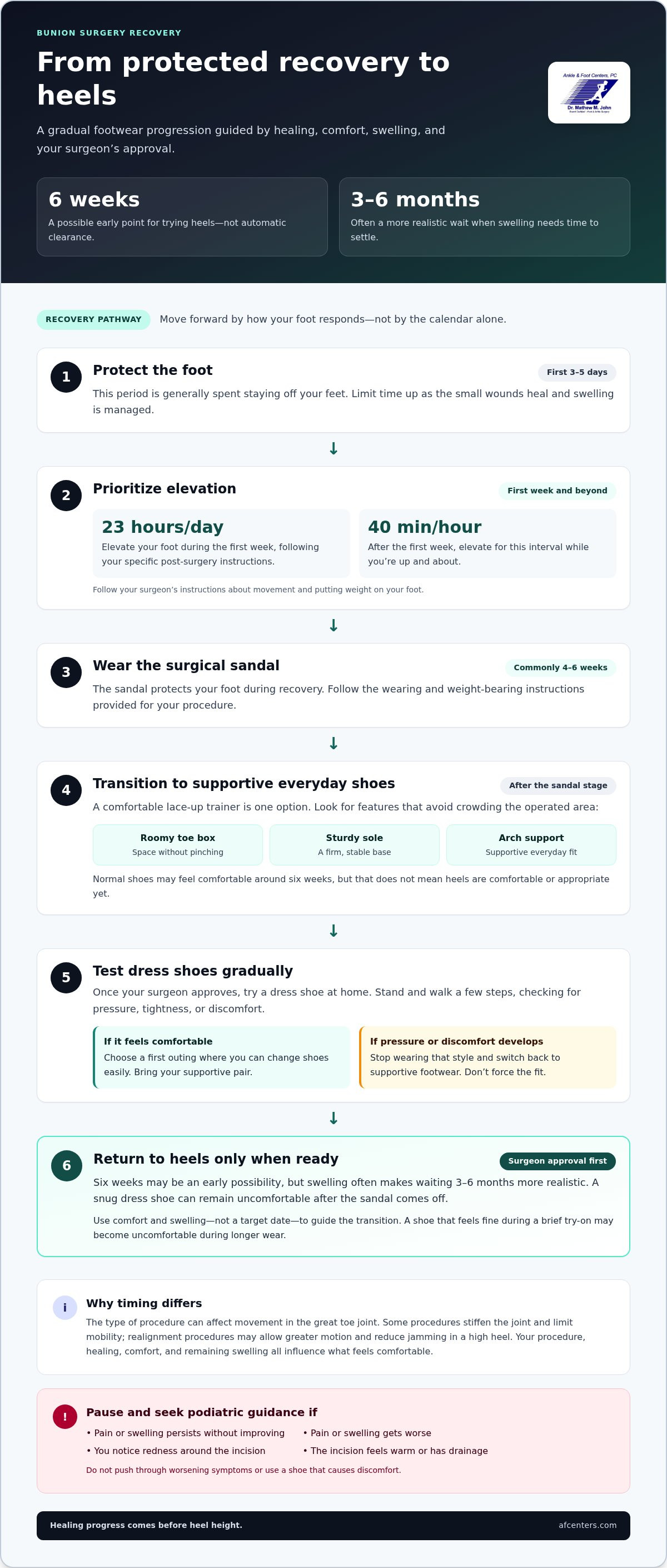
Plan for a gradual shift in footwear. The first 3 to 5 days after surgery are generally spent staying off your feet. A surgical sandal is commonly worn for 4 to 6 weeks, followed by a comfortable lace-up trainer. That change marks a move toward everyday shoes, not automatic readiness for high heels.
During the first week, elevate your foot 23 hours a day. After that, elevate it for 40 minutes per hour while you’re up and about. These intervals support swelling management during different stages of recovery. Follow the specific instructions you receive about moving and putting weight on your foot.
Surgery type and heel-wearing timing
The procedure can affect movement in the great toe joint, which may change how a heel feels after surgery. Some procedures stiffen the joint and limit mobility, while realignment procedures may allow greater motion and reduce jamming in a high heel. This helps explain why people may reach comfortable heel-wearing at different times.
Six weeks is a possible early point for returning to heels, but swelling often makes waiting 3 to 6 months more realistic. Normal shoes may be comfortable around six weeks, yet heels place the foot at a different angle. A shoe that fits while standing briefly may feel uncomfortable during longer wear.
Use comfort and swelling as practical signals, alongside your surgeon’s approval. Swelling can take 3 to 6 months to settle, so a snug dress shoe may remain uncomfortable after the surgical sandal comes off. If pain or swelling persists without improving, or gets worse, seek podiatric guidance rather than trying to push through it.
In Roswell, plan to wear high heels again after bunion surgery by treating the timeline as a range, not a deadline. Keep wearing supportive shoes as you recover, and return to heels only after your surgeon approves. The procedure, joint mobility, and any remaining swelling all affect what feels comfortable.
Footwear features that support healing
After surgery, prioritize a sturdy sole, ample arch support, and a spacious toe box. No single heel height suits every recovery. Return to heels only after approval, and choose a style that feels comfortable without crowding your toes.
Supportive shoe features
A supportive shoe has a firm sole, arch support, and room around the toes. These features can help protect your foot as you move from surgical footwear to everyday shoes. Fit matters: a shoe that presses on the surgical area or squeezes your toes can make walking less comfortable.
When trying on a shoe, check the fit while standing and walking. Your toes should have room, and the shoe should not pinch around the bunion correction. A comfortable lace-up trainer is one everyday option after the surgical sandal stage. Laces also let you adjust the fit as your foot changes during the day.
Heel heights and shoe styles
There is no recommended heel height that suits everyone after bunion surgery. Start with a supportive, comfortable shoe, and wait for your surgeon’s approval before trying heels. The right style depends on how your foot has healed and whether the shoe allows comfortable movement.
When you are ready to test a dress shoe, compare its fit with your supportive everyday footwear. A narrow toe box may press on the forefoot, while a roomier shape gives your toes more space. A sturdy sole and arch support remain useful features as you try different styles.
Think of footwear as a gradual progression, not a choice between a surgical sandal and your highest heels. A comfortable lace-up shoe is a practical option as you resume everyday routines. Later, assess a dress shoe for fit and comfort before wearing it for longer periods.
Before leaving home, try a simple fit check: stand, take a few steps, and notice whether the shoe feels tight or uncomfortable. Stop wearing that style if it causes discomfort, and switch back to a supportive shoe. If you continue to have difficulty finding comfortable shoes as you recover from bunions, Ankle & Foot Centers, PC offers bunion care to help guide your next steps.
Gradually introducing footwear
Your foot may be ready for high heels when your surgeon approves the change, swelling is settling, and supportive shoes feel comfortable. Persistent or worsening pain and swelling are reasons to seek podiatric guidance before progressing.
Phasing in different footwear
Gradually introducing footwear means moving from supportive everyday shoes toward dressier styles in stages. This lets you notice how your foot responds before wearing a shoe for a full day out.
Start with the comfortable lace-up shoe you have worn during recovery, then try a dress shoe at home. Check the fit while standing and walking. A roomy toe area and stable feel matter more than appearance. If pressure or discomfort develops, switch back to supportive footwear rather than forcing the fit.
Choose a first outing where you can change shoes easily. For example, bring your supportive pair when attending an event in dress shoes. This gives you a practical option if walking or standing makes the operated foot uncomfortable. Do not assume that one comfortable try-on means the same shoe will feel fine throughout a longer occasion.
Signs of readiness for high heels
Signs of readiness include steady progress, comfortable movement, and approval to resume heels. These matter because a calendar date alone cannot show how your foot responds during daily activities.
Before trying heels, consider whether you can wear your usual supportive shoe without increased discomfort. Notice whether swelling is settling rather than persisting or worsening. Also consider how your foot feels after ordinary walking and standing, not just while seated. These observations can help you describe your progress clearly at a follow-up.
- Comfort: Your supportive shoe fits without pinching or causing pain during routine walking.
- Swelling: Swelling is trending down rather than persisting or getting worse.
- Approval: Your surgeon has cleared you to try heels.
- Response: You can assess comfort during a brief try-on and change back if discomfort appears.
Consider these signs together rather than relying on just one. A shoe that feels comfortable during a short try-on may create pressure after a longer period of standing. After testing a style, notice how your foot feels later. If discomfort or swelling increases, return to supportive shoes and discuss the change at your next follow-up.
Keep your first attempt simple: choose a familiar setting, wear a comfortable dress shoe, and have your supportive pair nearby. Let your foot’s response guide your progress, not the schedule of a special occasion. If pain or swelling worsens, pause the transition and seek podiatric guidance.
Home care after bunion surgery
Home care supports healing as your foot adjusts after bunion surgery. Elevation, periodic icing, and attention to the surgical site help you follow recovery instructions and notice changes that need attention.
Initially, keep your foot elevated as directed to help reduce swelling. During the first week, the recovery guidance described earlier calls for elevation 23 hours a day. After that week, elevate for 40 minutes per hour while getting about. These periods can shape your day: arrange a comfortable place to rest before walking around your home.
Ice packs can help manage pain and swelling in the weeks following surgery. Apply them periodically for 15 to 20 minutes, following your surgical instructions. Plan each application around a rest period instead of using ice while walking. If you’re unsure how to apply ice safely around your surgical site, follow the directions provided for your procedure.
- Before moving around: Set up a resting place where you can elevate your foot afterward.
- During rest: Use an ice pack for 15 to 20 minutes periodically, as directed.
- As you get up: Follow your instructions for movement and weight on the operated foot.
- When checking the incision: Notice any redness, warmth, or oozing.
Check the surgical site as part of your regular home-care routine. Redness, warmth, or oozing can be signs of infection after bunion surgery and deserve prompt attention. Do not treat them as ordinary swelling or wait for a shoe-fitting milestone before raising them with your care team.
Track how your foot responds to everyday activity. For example, note whether swelling eases after rest or becomes more noticeable after time on your feet. Persistent pain or swelling that does not improve, or that worsens, is a reason to see a podiatrist. These changes matter more than whether you can fit into a particular dress shoe.
Home care also plays a role in your return to regular footwear. Keep following your recovery instructions rather than using a heel try-on to test whether healing is complete. If the surgical site becomes red, warm, or starts oozing, or pain and swelling worsen, pause footwear changes and seek medical guidance. Continue paying attention to elevation, ice, and changes to the incision so your decisions reflect your recovery, not a special event.
Does the type of bunion surgery affect when you can wear heels again?
Yes. The procedure can affect movement in the great toe joint, which influences how a heel feels. Some operations stiffen the joint, while realignment procedures aim to restore its position and allow greater motion. Knowing which approach was used can help explain why your recovery and shoe comfort may differ from someone else’s.
A stiffened great toe joint has less mobility, which may limit comfortable shoe choices and heel heights. A high heel changes the foot’s position, so reduced joint movement may affect how the toe sits in the shoe. For example, even if a pointed pump fits, limited movement can make its shape or angle uncomfortable.
Realignment surgery addresses the position of the great toe joint. Greater motion after realignment may help prevent the joint from jamming in the position created by a high heel. That does not mean every heel will feel comfortable. The operation is one factor; healing, swelling, and shoe fit also matter.
Use details about your procedure to guide a focused conversation at follow-up. Ask which joint movements the operation was designed to preserve or limit, and how that may affect footwear. Then describe a specific shoe, such as a narrow pump or a roomier dress heel. Concrete examples help connect the surgical goals with any pressure or discomfort you notice.
Timing still depends on how your foot heals. Heels may be possible from six weeks, but swelling can make waiting three to six months more comfortable. These milestones are not interchangeable: returning to regular shoes does not automatically mean a heel will feel suitable. Notice how your foot responds to walking and standing in supportive shoes before trying a different shape.
When you eventually try a heel, pay attention to the joint and the overall fit. A shoe that forces your toe into a cramped position may feel uncomfortable, especially if joint mobility is limited. Choose comfort over a particular style, and stop if pain or swelling worsens. Your procedure helps explain what to expect, while your recovery shows how footwear feels in practice.
Ankle & Foot Centers, PC: Reconstructive Foot and Ankle Surgery
Ankle & Foot Centers, PC provides Reconstructive Foot and Ankle Surgery and care for bunions. Dr. Mathew John is a Board Certified Foot Surgeon by the American College of Foot and Ankle Surgery. If you have questions about your bunion procedure, lingering discomfort, or returning to specific shoes, a podiatric evaluation can help relate your recovery and foot function to your footwear goals.
Bring details about your surgery and describe which shoes feel uncomfortable, such as a narrow pump or dress heel. This gives your care team practical context for discussing joint movement, swelling, and next steps. Guidance can also help you understand when to continue supportive footwear and how to approach heels as you recover.
Contact Ankle & Foot Centers, PC to discuss bunion care and your recovery questions.
Make Your Next Step About Comfortable Movement
As you plan to wear dress shoes again, make comfort part of the goal, not an afterthought. Deciding when to wear high heels again after bunion surgery in Roswell means connecting your footwear plans with your recovery and the way your foot moves. Your procedure and healing shape what feels comfortable, so use your next follow-up to discuss specific shoes or activities you hope to return to.
Bring a clear example, such as a work shoe you need for standing or a heel you hope to wear to an event. This conversation can help you understand how your progress relates to your plans and what to prioritize next. You deserve guidance that respects both your recovery and the activities that matter to you.
Connect with Ankle & Foot Centers, PC to discuss your bunion recovery and footwear goals. Keep moving forward at a pace that supports your comfort and confidence.
Ankle & Foot Centers, PC for Bunion Care
Ankle & Foot Centers, PC offers bunion care and reconstructive foot and ankle surgery. If you are considering wearing high heels again after bunion surgery in Roswell, contact the practice to discuss your foot care and next steps.
The practice also offers custom orthotics and care for hammertoes, heel pain, and other foot and ankle concerns.
Frequently Asked Questions
After Bunion Surgery, Can I Wear High Heels?
Yes, some people can return to heels after bunion surgery once their surgeon approves. Consider how your foot feels in supportive shoes and whether swelling is settling. A heel can change pressure across the forefoot, so a narrow style may feel different from a roomier dress shoe. Choose comfort over a particular look, and stop if wearing a shoe causes pain.
How Long is the Recovery After Surgery?
Recovery unfolds over weeks and months, with timing shaped by the procedure and your healing. After minimally invasive surgery, the early period includes rest, followed by surgical footwear and a transition to regular shoes. Swelling can continue for several months. For example, fitting into a regular shoe does not automatically mean you are ready for a heel, which changes your foot’s position and pressure.
How long after bunion surgery can you wear high heels?
Some people may try heels around six weeks after surgery, while others find it more comfortable to wait three to six months. The later timeframe allows for swelling that can linger. If you are in Roswell and wondering when you can wear high heels again after bunion surgery, use your recovery progress and your surgeon’s approval, rather than a special-event date, to guide your decision.
When is it safe to wear heels after bunion surgery, according to orthopedic surgeons?
Resume heels only after your surgeon approves and your recovery supports the change. The type of procedure matters: some surgeries limit great toe joint movement, while realignment may allow more motion. At a follow-up, describe a specific shoe and activity, such as wearing pumps for work. That context helps connect your healing and joint movement with your footwear plans.
Can wearing high heels cause a bunion to return after surgery?
A high heel alone does not show that a bunion has returned. Bunions involve the big toe shifting toward the second toe, and a new or persistent bump should be assessed in context. Notice whether the toe appears to shift again, shoes cause renewed pressure, or discomfort changes. Share those observations with a podiatrist rather than assuming footwear caused a recurrence.
What are the risks of wearing high heels too soon after bunion surgery?
Heels worn before approval can put pressure on a foot that is still healing and may feel uncomfortable if swelling remains. A tight toe area can crowd your toes, while the heel changes how your foot sits inside the shoe. If you notice increased pain or swelling after trying a style, take it off and return to supportive footwear. Report symptoms that persist or worsen.
What is the typical recovery timeline for bunion surgery, including return to regular shoes?
After minimally invasive surgery, patients may wear a surgical sandal for four to six weeks, then transition to a comfortable lace-up trainer. Regular shoes may be manageable around six weeks, but swelling can last three to six months. For instance, a roomy everyday shoe may fit before a structured dress shoe feels comfortable. Treat each change of shoe as a separate test of fit and comfort.
What bunion surgery recovery and high heels advice can podiatrists offer in Roswell, Georgia?
Podiatrists can relate your procedure, joint mobility, swelling, and shoe discomfort to your return to heels. Bring a specific example, such as a pump that presses near the big toe or a shoe you need for work. Patients in Roswell, Marietta, Woodstock, Kennesaw, Atlanta, and Sandy Springs can discuss recovery goals and bunion care with a podiatrist at Ankle & Foot Centers, PC.


