
A surgical recommendation isn’t the only response to foot or ankle pain. Avoiding unnecessary foot surgery in Kennesaw starts with a specialist evaluating your symptoms, foot structure, health, activity level, and goals, then considering appropriate nonsurgical care. Reconstruction may be considered when a serious deformity, injury, or ongoing pain significantly interferes with walking or daily life.
It’s understandable to want a clear explanation before deciding about surgery. This article explains which symptoms and structural problems may warrant specialist attention, how conservative treatments can fit into a care plan, and what may lead to a discussion about reconstruction. Persistent pain, progressive deformity, or difficulty bearing weight calls for careful evaluation, helping you make an informed decision about next steps.
Key Takeaways
- Seek specialist evaluation for persistent pain, a changing foot shape, or difficulty bearing weight, especially when symptoms interfere with everyday movement.
- Conservative care can be part of the decision process; treatment choices depend on the cause of your symptoms and how your foot responds.
- A gait and biomechanical evaluation can help identify how foot structure and movement may contribute to pain or recurring strain.
- A second opinion can help you better understand the diagnosis, proposed procedure, alternatives, and expected recovery before deciding.
- Ask how surgery could address your specific problem, what nonsurgical options remain, and what recovery may involve.
When to seek specialist evaluation for foot and ankle pain
Arrange a specialist evaluation if pain persists, a deformity progresses, or walking becomes difficult. An assessment connects your symptoms with your foot structure and daily demands before treatment decisions are made.
Individualized Specialist Assessment
An individualized assessment considers your symptoms, medical history, activity level, imaging, and overall health. The same pain can have different causes, so treatment needs to fit your anatomy and goals. For example, a runner with recurring ankle instability may need a different plan from someone whose severe flatfoot makes ordinary walking difficult. Seek podiatry evaluation when symptoms persist or limit your activities.
Conditions and Surgical Recommendations
Foot and ankle surgery may be considered for severe flatfoot, advanced arthritis, complex fractures, tendon ruptures, chronic instability, or progressive bunions and hammertoes. Surgery may also address deformities that interfere with normal movement. A recommendation depends on the severity of the problem and its effect on walking, not just the diagnosis. Delaying evaluation may leave a progressing deformity or injury unassessed.
Before a procedure, ask what non-weightbearing means. It means placing no weight on the operated foot, even briefly after surgery. Putting weight on it too soon can damage the repair. Follow the surgeon’s instructions exactly; some patients need crutches or a knee scooter while healing.
Wrong-site surgery is a serious safety concern, though population-level statistics don’t predict an individual patient’s risk. According to the American Academy of Orthopaedic Surgeons, an orthopedic surgeon has a one-in-four chance of performing wrong-site surgery at least once during a 35-year career. A 2009 survey by the organization found that 15% of reported wrong-site errors in orthopedic surgery involved the foot, ankle, or both.
Second Opinions and Preoperative Questions
A second opinion gives you another specialist’s assessment of the diagnosis and proposed procedure. Bring imaging and relevant medical history, and note when pain occurs, such as during running or standing. Ask what the procedure is intended to correct, which conservative options remain, and how your activity level affects the plan. Clear answers help you compare the reasoning, not just the recommendations.
Surgeon Credentials and Patient Reviews
To assess a Kennesaw foot surgeon’s credentials, compare the stated specialty certification with information from the named certifying organization. Read multiple patient reviews, looking for recurring comments about explanations, communication, and follow-up rather than relying on one account. Reviews reflect individual experiences, so consider them alongside your consultation. Ask how the surgeon’s training relates to your specific injury or procedure.
Surgery as a treatment after conservative care
Treatment often moves from symptom relief toward structural repair only when the problem calls for it. A foot or ankle specialist considers what is causing pain, how it affects movement, and whether conservative care can address the underlying issue. To avoid unnecessary foot surgery in Kennesaw, understand why each treatment is being considered and what the next step aims to achieve.
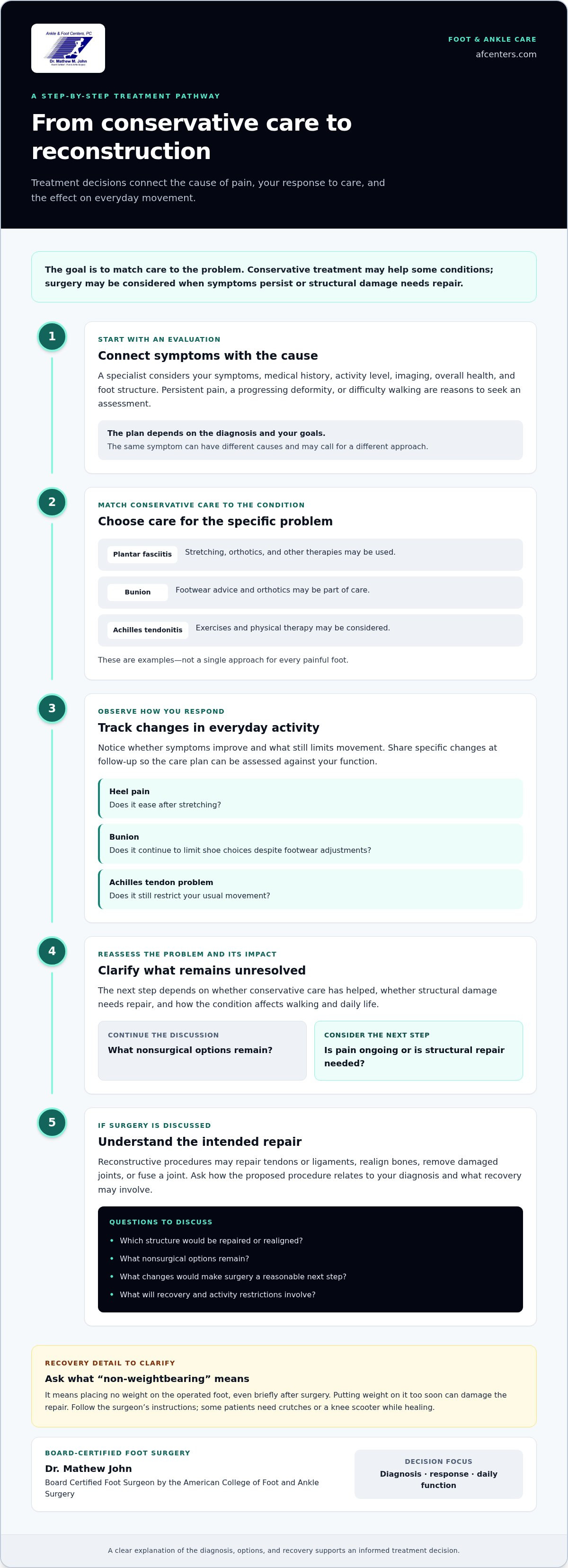
Conservative care can target different causes in different ways. Plantar fasciitis may be treated with stretching, orthotics, and other therapies. Bunion care may include footwear advice and orthotics. Achilles tendonitis may be managed with exercises and physical therapy. These examples show why a plan should match the diagnosis rather than apply one approach to every painful foot.
Notice how symptoms respond during everyday activities. Does heel pain ease after stretching? Does a bunion still limit shoe choices despite footwear adjustments? Does an Achilles tendon problem continue to restrict your usual movement? Share specific changes at follow-up to help clarify whether care is supporting function and what concerns remain.
Before considering a treatment described as regenerative, ask what it involves. Find out which diagnosis it addresses, what outcome it aims to support, and how progress will be evaluated. Ask about alternatives and potential risks, too. The term alone doesn’t explain the procedure or how it fits your needs, so request a plain-language explanation tied to your symptoms.
Surgery may be considered when conservative care hasn’t resolved the problem or structural damage needs repair. Reconstructive procedures can repair tendons or ligaments, realign bones, remove damaged joints, or fuse a joint. A deformity that interferes with normal movement, for example, raises different considerations from heel pain that improves with stretching and supportive footwear.
Ask the specialist to explain how your diagnosis relates to the proposed operation. Which structure would be repaired or realigned? What role could continued nonsurgical care play? What changes would make surgery a reasonable next step? These questions help you understand the purpose of an operative plan and compare it with other options.
Avoiding unnecessary foot surgery in Kennesaw means weighing the condition, response to treatment, and impact on daily activity together. Conservative care and surgery each have a role, depending on the problem. If you’re comparing approaches, foot and ankle care options can help frame a discussion about treatment choices and goals.
Achilles tendonitis may be treated with exercises, physical therapy, and other interventions. Podiatrists may also recommend stretches, orthotics, and other therapies for plantar fasciitis. The right approach depends on the diagnosis and your needs.
Foot reconstruction surgery may involve removing damaged joints or performing joint fusion. Foot and ankle surgeons can operate to repair bones and tissues, decompress nerves, and realign bones. Arthroscopy minimizes trauma to healthy tissue and may result in less postoperative pain and faster recovery.
Gait and biomechanical evaluation
A gait and biomechanical evaluation considers how your foot structure and movement work together during activity. Walking, standing, and bearing weight can reveal patterns that aren’t obvious while seated. For example, pain after a walk may relate to the demands placed on your foot with each step. This information adds context to your symptoms and helps guide decisions about function.
A specialist may observe how you walk and compare movement on each side. Share specific examples, such as whether discomfort starts after running, on stairs, or after standing at work. Explain what changes your symptoms and which activities you’ve reduced. These details connect the physical examination with your everyday experience, rather than treating one painful moment as the whole picture.
Repetitive activity can contribute to foot and ankle strain. Running, jumping, and intense exercise may lead to overuse injuries. If pain follows repeated workouts, describe your routine and when symptoms begin. The timing can help distinguish an activity-related pattern from pain that also occurs during ordinary walking. Consider any training changes alongside your symptoms and movement.
Footwear is another useful topic to discuss. Shoes without adequate support can contribute to foot and ankle injuries, so describe what you wear for work, exercise, and daily errands. For example, pain during long walks in one pair but not another is a practical observation. It doesn’t establish a diagnosis, but it gives the specialist useful context.
Movement findings don’t automatically mean surgery is needed. A gait review can clarify how symptoms relate to activity and whether conservative treatment may help. A foot-strengthening program, for example, may improve balance and help with some foot conditions. The right plan depends on the assessment and how symptoms affect your function.
Ask what the evaluation suggests about your movement pattern. Which activity appears to aggravate the pain? How could treatment support normal movement, and what changes should you monitor? These questions connect examination findings with practical goals, such as returning to regular walks or doing your job with less disruption.
Track your recovery and activity between visits. Note which movements cause discomfort, how long it lasts, and whether everyday tasks become easier or harder. If pain changes after you adjust footwear or exercise, share that example. These observations help the specialist assess how your foot responds and whether the care plan needs to change.
How can I get a second opinion before foot surgery in Kennesaw, GA?
A second opinion is another specialist’s assessment of your diagnosis and proposed foot or ankle procedure. If you’re in Kennesaw, prepare your records and explain what you hope treatment will help you do, such as walking comfortably or returning to an activity. A focused review can clarify the reasons for surgery and which options fit your condition.
Gather the information behind the recommendation. Bring imaging and reports, a list of previous treatments, and notes about your symptoms. Include when pain began, where it occurs, what makes it worse, and how it affects daily tasks. For example, note whether a bunion makes certain shoes uncomfortable or ankle pain limits your usual walk. Specific details help the second specialist understand the problem in context.
At the appointment, describe the original recommendation in your own words and ask the specialist to explain the diagnosis independently. Ask whether the imaging matches your symptoms, which structures are affected, and what the proposed procedure is meant to change. If the assessment differs, ask what finding led to that conclusion. The goal is to understand the clinical reasoning, not simply get a different answer.
Discuss the relevant care options. Ask which conservative treatments may still apply, what response would show they’re helping, and what could make surgery appropriate. For example, ask how footwear advice or orthotics might fit a bunion plan, or how stretches and other therapies relate to plantar fasciitis. If surgery is recommended, ask what may happen if you wait and what limitations could follow during healing.
Use these questions to guide the conversation:
- What diagnosis explains my pain or deformity?
- Which examination or imaging findings support that diagnosis?
- What is the procedure intended to repair, realign, or relieve?
- Which nonsurgical options remain, and how will progress be assessed?
- What will recovery involve, including weight-bearing instructions and follow-up?
Compare explanations by looking for clear links between your symptoms, examination findings, and treatment plan. If specialists recommend different approaches, ask each to explain the expected benefits, limitations, and recovery demands in light of your goals. A recommendation should address your anatomy and health, not just the name of a condition.
Before deciding, summarize what you understand: the diagnosis, why the operation is proposed, available alternatives, and recovery expectations. Ask the specialist to correct any misunderstanding. This can reveal unanswered questions while you still have time to consider the information carefully.
What questions should I ask a podiatrist before agreeing to foot surgery?
Before agreeing to a foot procedure, ask how the diagnosis, treatment goal, and recovery plan connect. A recommendation should address the problem identified in your examination, such as a bunion that changes your walking or an injury affecting joint function. Clear answers help you understand what surgery aims to change and what to expect afterward.
Start by asking about the proposed operation. Which bone, joint, tendon, or ligament needs treatment, and what will the procedure do? Find out why this approach fits your condition, whether alternatives are appropriate, and what could happen if you continue with nonsurgical care. For example, ask how footwear advice or orthotics fit into a bunion treatment plan.
Questions about surgical approach can clarify important tradeoffs:
- Would an open or minimally invasive approach suit my specific anatomy?
- What benefits and limitations apply to each approach for my condition?
- Could the procedure change joint movement or require a fusion?
- What findings would make me unsuitable for immediate weight-bearing?
- How will the surgical team confirm the correct foot and site?
These distinctions matter. Not every patient or condition qualifies for immediate weight-bearing or minimally invasive surgery. Minimally invasive procedures may use incisions about half an inch or less, while traditional surgery usually involves one longer incision. A minimally invasive bunion correction may reduce pain and recovery time, while open bunion surgery is associated with a lower likelihood of recurrence. Ask how those tradeoffs apply to your case.
Make recovery part of the decision. Ask when you may put weight on the operated foot, what protective boot, cast, or brace you might need, and which activities you’ll need to limit. Traditional recovery protocols may require six to eight weeks before normal activities resume; healing after surgery involving bones can take up to three months. Follow-up during a two-to-three-month recovery may include imaging to assess healing.
Clarify how progress will be monitored. Ask what symptoms need prompt attention, when follow-up visits occur, and whether rehabilitation exercises may help restore strength, flexibility, and movement. If you drive, work on your feet, or care for someone at home, explain those responsibilities. The surgeon can discuss how recovery instructions may affect your daily demands.
Before deciding, ask for a plain-language summary of the procedure, alternatives, and recovery expectations. To explore reconstructive foot and ankle surgery, review the treatment information alongside your questions and goals.
Ankle & Foot Centers, PC: Reconstructive Foot and Ankle Surgery
Ankle & Foot Centers, PC can help you understand whether a foot or ankle problem calls for continued nonsurgical care or a discussion about reconstruction. Led by Dr. Mathew M. John, DPM, Board Certified by the American Board of Foot and Ankle Surgery, the practice evaluates conditions such as bunions and hammertoes that may affect movement or daily activities.
If pain persists, a deformity progresses, or a previous recommendation leaves you with questions, an evaluation can clarify your diagnosis and treatment options. Reconstructive Foot and Ankle Surgery may be considered when the underlying problem and its effect on function support that approach. The goal is to connect the care plan to your specific needs and concerns.
For an evaluation or to discuss your foot and ankle concerns, contact Ankle & Foot Centers, PC.
Move Forward With a Clear Plan
A thoughtful decision about foot surgery starts with knowing what you want to regain. Before your next appointment, write down the activities you hope to return to, the daily tasks pain disrupts, and the concerns you want addressed. This record can help keep the conversation focused on your goals, not only the name of a diagnosis or procedure.
Avoiding unnecessary foot surgery in Kennesaw means understanding why a treatment is recommended and how it fits your needs. You deserve a clear discussion of the problem, the options, and what each path may involve. Take time to consider the explanation, then choose a next step that supports your long-term mobility and health.
If you’d like to discuss foot or ankle concerns with Ankle & Foot Centers, PC, contact the practice. A clear conversation can help you move forward with greater confidence and care that reflects your goals.
Ankle & Foot Centers, PC for Foot and Ankle Care
Ankle & Foot Centers, PC provides foot and ankle care, including custom orthotics, MLS Laser Therapy, Extracorporeal Shockwave Therapy (ESWT), and reconstructive foot and ankle surgery. If you’re looking to avoid unnecessary foot surgery in Kennesaw, the practice can help you consider care options for your foot or ankle concern.
Turn to the practice for issues such as bunions, hammertoes, heel pain, plantar fasciitis, neuromas, flat feet, or sports injuries. It also provides diabetic foot care and treatment for fungal toenails, ingrown toenails, and warts.
Frequently Asked Questions
What foot conditions can be treated without surgery?
Several foot conditions may respond to nonsurgical care, including plantar fasciitis, heel pain, bunions, hammertoes, flat feet, and some sports injuries. Ingrown or fungal toenails also have treatment options that don’t involve reconstructive surgery. For example, a podiatrist may consider footwear changes or orthotics for a bunion, while fungal toenail care may involve topical or oral antifungal treatment. The right approach depends on the condition and its effect on your daily activities.
What nonsurgical treatments help foot pain and how effective are they?
Options may include supportive footwear, medication, immobilization, physical therapy, custom orthotics, injections, stretching, and extracorporeal shockwave therapy. For example, plantar fasciitis care may involve supportive shoes, stretching, or orthotics. Custom orthotics can help with certain conditions, but their usefulness depends on your diagnosis and foot mechanics. Track how pain responds during activities such as walking or standing, then share those changes with your podiatrist to help guide treatment decisions.
When is foot surgery medically necessary?
Surgery may be considered when pain or deformity disrupts daily activities, conservative care hasn’t addressed the problem, or certain fractures or tendon injuries need repair. A bunion that makes walking or wearing shoes difficult is different from a painless change in appearance. Your symptoms, examination, and any needed imaging help clarify the reason for an operation. In Kennesaw, Marietta, Roswell, Woodstock, Atlanta, and Sandy Springs, a podiatry evaluation can connect your diagnosis with your treatment options.


