
What if the shoes in your closet weren't a source of dread, but an invitation to the active life you're ready to reclaim? If you're living with a painful bump at the base of your big toe, you likely understand the frustration of limiting your movements and carefully choosing footwear just to get through the day. Many people in our community delay seeking help because they worry about long recovery times or intense post-operative pain. Exploring your options for bunion surgery Marietta is a vital step toward a more comfortable, energetic lifestyle where your feet no longer dictate your daily plans.
We agree that your foot health is the foundation of your overall vitality, and you shouldn't have to settle for simply managing chronic pain. This article will show you the reality of modern bunion correction, ranging from conservative care to advanced, minimally invasive procedures. You'll learn how Dr. Mathew John, a Board Certified Foot Surgeon by the American College of Foot and Ankle Surgery, uses his expertise to provide personalized relief. We'll preview the latest surgical advancements and explain what you can expect during your journey toward pain-free movement at our practice, located at 2790 Sandy Plains Road on the corner of Post Oak Tritt and Sandy Plains.
Key Takeaways
- Understand that a bunion is a structural misalignment of the bone rather than just a growth, requiring a professional approach to restore your foot's natural function.
- Discover how non-surgical options like shoe modifications and custom orthotics made with 3-D impressions can provide relief before considering more advanced interventions.
- Learn the difference between traditional methods and modern minimally invasive bunion surgery Marietta, which prioritizes smaller incisions and a faster return to your active lifestyle.
- Gain clarity on the post-operative journey, including the use of a protective surgical shoe to ensure a steady and safe recovery during those first critical weeks.
- Trust your health journey to Dr. Mathew John, a Board Certified Foot Surgeon by the American College of Foot and Ankle Surgery, at 2790 Sandy Plains Road on the corner of Post Oak Tritt and Sandy Plains.
Understanding Bunions: More Than Just a Bony Bump
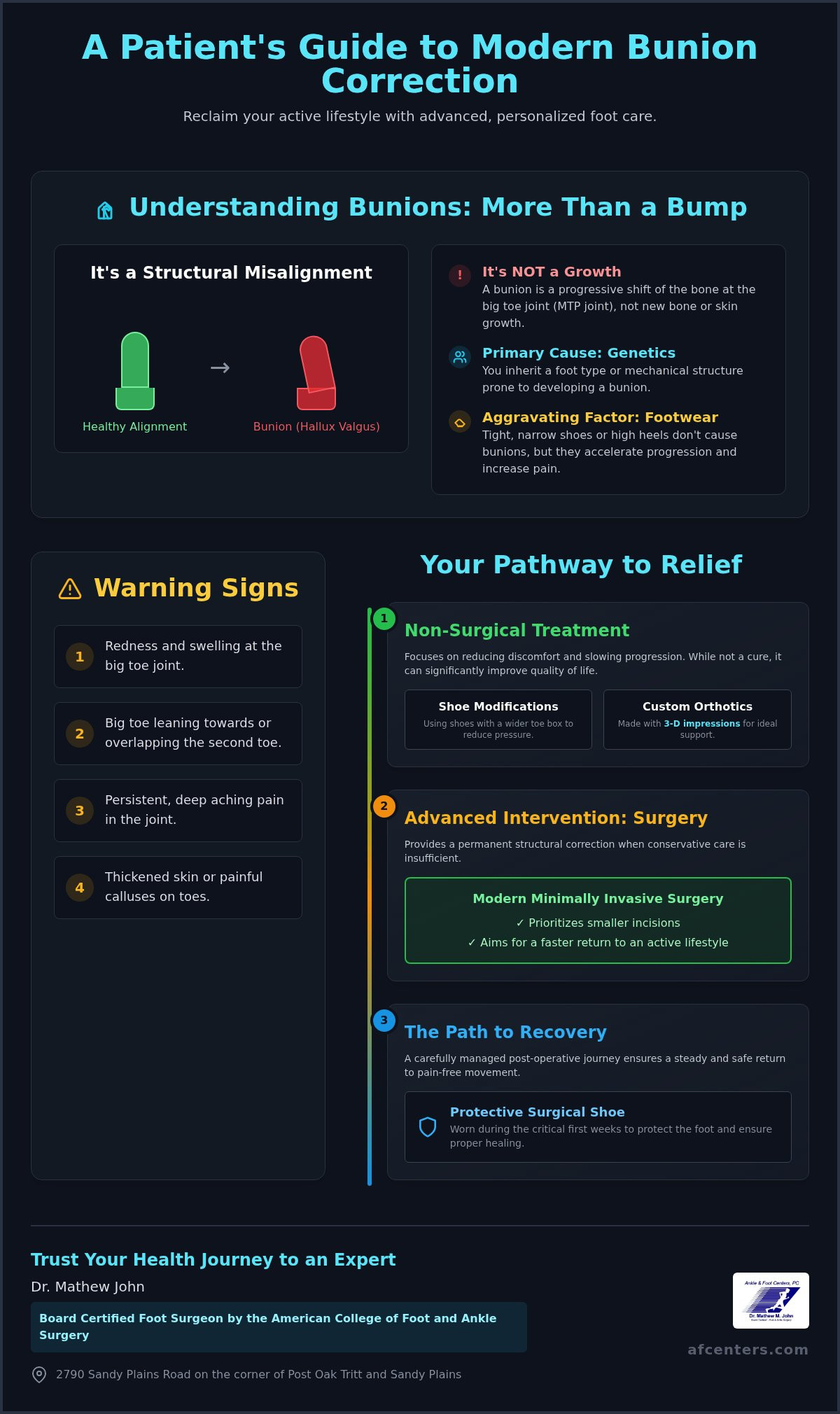
A bunion is much more than a cosmetic irritation or a simple bump on the side of your foot. Medically known as Hallux Valgus, this condition represents a progressive structural shift of the metatarsophalangeal (MTP) joint at the base of the big toe. Many people mistake the protrusion for a growth of new bone or skin, but it's actually the result of the big toe leaning inward toward the smaller toes. This shift forces the head of the first metatarsal bone to poke outward, creating the characteristic "bump." A bunion is a structural misalignment of the metatarsophalangeal joint.
When you're Understanding Bunions, it's helpful to know that while your choice of shoes matters, they aren't usually the primary cause. Genetics play a significant role in your foot's health journey. You don't necessarily inherit the bunion itself, but you do inherit a foot type or mechanical structure that's prone to developing one. Tight, narrow shoes or high heels don't create the deformity from scratch; however, they certainly act as a catalyst, accelerating the progression and making the symptoms much more painful. If you've reached the point where everyday activities are difficult, it might be time to discuss bunion surgery Marietta with an expert who understands the nuances of foot mechanics.
Professional guidance is essential because the joint deformity affects the way you distribute weight across your entire foot. As the big toe loses its ability to track straight, other parts of the foot must overcompensate for the lack of stability. This often leads to secondary issues like hammertoes or painful calluses on the ball of the foot. By seeking a consultation early, you can explore the best ways to protect your mobility and prevent the condition from reaching a stage where it limits your daily life.
Common Symptoms and Warning Signs
Recognizing a bunion early can help you manage the condition before it becomes debilitating. You'll likely notice specific changes that indicate the joint is under stress. Pay attention to these warning signs:
- Redness and swelling concentrated at the base of the big toe.
- The "leaning toe" effect, where the big toe begins to press against or even overlap the second toe.
- Persistent, deep aching in the joint that remains even after you've removed your shoes.
- Thickened skin or painful calluses where the toes rub together.
Why Bunions Get Worse Over Time
Bunions are progressive, meaning they won't get better without professional intervention. The issue starts with a mechanical breakdown of the foot arch. As the arch loses its stability, the pressure on the MTP joint increases, pushing the bones further out of alignment. If left neglected, the constant friction and misalignment can cause arthritis to settle into the joint, making every step a challenge. What begins as a minor cosmetic concern often evolves into a functional disability, making it hard to find shoes that fit or enjoy a simple walk through the neighborhood. Dr. Mathew John, a Board Certified Foot Surgeon by the American College of Foot and Ankle Surgery, emphasizes that early evaluation is key to preventing long-term damage to your foot's mobility. You can find our specialized care at 2790 Sandy Plains Road on the corner of Post Oak Tritt and Sandy Plains.
Non-Surgical Bunion Treatment in Marietta
Choosing to address your foot pain doesn't always mean heading straight to the operating room. For many of our neighbors, conservative management serves as the essential first line of defense. These treatments focus on reducing your daily discomfort and slowing the progression of the joint shift. While non-surgical methods won't "cure" the underlying bone misalignment, they can significantly improve your quality of life. If your symptoms are mild or you're not yet ready to schedule bunion surgery Marietta, these approaches offer a supportive path toward wellness without immediate downtime.
Immediate relief often begins with simple modifications. Switching to shoes with a wider toe box and using specialized padding can take the pressure off the sensitive MTP joint. While you might eventually explore bunion removal surgery to achieve a permanent structural fix, starting with these non-invasive steps allows you to stay active while we monitor your progress. Dr. Mathew John, a Board Certified Foot Surgeon by the American College of Foot and Ankle Surgery, works closely with each patient to determine when conservative care is sufficient and when more advanced intervention is needed.
Custom Orthotics and 3-D Impressions
Generic, store-bought inserts often fail because they don't account for the unique contours of your feet. At our office, we utilize detailed 3-D impressions to create a high-precision map of your foot structure. These custom orthotics are superior because they're designed to redistribute pressure away from the big toe joint, providing the specific support your arch needs to function correctly. By correcting your gait and stabilizing the foot, these devices help protect the joint from further mechanical breakdown. This professional guidance ensures you aren't just guessing with your foot health.
Managing Inflammation and Pain
For active residents who want to stay on the move, MLS Laser Therapy offers a powerful, non-invasive way to target deep tissue pain and swelling. This technology uses specific wavelengths of light to stimulate healing and reduce inflammation in the musculoskeletal system. It's important to distinguish this from fungal laser therapy, which is used for toenail conditions; MLS Laser is specifically for pain and inflammation around the joint. If you're ready to see how a personalized plan can help you reclaim your stride, we invite you to explore our comprehensive services at our clinic located at 2790 Sandy Plains Road on the corner of Post Oak Tritt and Sandy Plains.
Minimally Invasive Bunion Surgery: What to Expect
When conservative measures aren't enough to manage your pain, modern surgical advancements offer a sophisticated way to restore your foot's function. Minimally invasive surgery (MIS) has transformed the experience of Bunion Surgery for many patients. Unlike traditional methods that require large incisions, MIS uses specialized tools and tiny openings to realign the bones. This approach focuses on precision while protecting the delicate structures of your foot. If you are considering bunion surgery Marietta, understanding these technological leaps can help ease your anxiety about the procedure.
Traditional "open" surgery often involves a long incision along the side of the foot; this can lead to significant swelling and a longer healing period for the soft tissues. Modern MIS techniques prioritize the preservation of blood supply and muscle integrity. By working through smaller portals, your surgeon can achieve the same structural correction with much less disruption to your body. When you are researching options for bunion surgery Marietta, the difference in techniques is often a deciding factor. This evolution in care means less post-operative discomfort and a more streamlined path back to your favorite activities.
The Benefits of Modern Bunion Correction
The primary advantage of MIS is the reduced trauma to the soft tissues surrounding the big toe joint. Because the incisions are much smaller, the surgical footprint is minimal, resulting in better aesthetic outcomes and less noticeable scarring. For our busy Marietta patients, one of the most exciting benefits is the potential for a faster return to weight-bearing. Many people find they can begin walking in a protective boot much sooner than they expected. This allows them to maintain their independence and keep up with daily responsibilities throughout the recovery process.
Why ACFAS Board Certification Matters
Your choice of surgeon is just as important as the technique used. Dr. Mathew John is a Board Certified Foot Surgeon by the American College of Foot and Ankle Surgery, which represents the highest standard of specialized training in the field. This certification requires years of rigorous clinical experience and successful completion of comprehensive examinations. When you visit our office at 2790 Sandy Plains Road on the corner of Post Oak Tritt and Sandy Plains, you aren't just getting a procedure; you're receiving care from a specialist who has mastered complex reconstructive techniques. This level of expertise provides the peace of mind that your journey toward pain-free living is guided by a steady, highly qualified hand.
The Path to Recovery: Your Post-Op Journey
You might have heard that bunion surgery Marietta involves months of being confined to a bed, but that simply isn't the reality of modern podiatric care. Thanks to the advanced techniques used by Dr. Mathew John, our patients often find that their recovery is much more manageable than they initially feared. While you'll certainly need to take it easy at first, the goal is functional restoration, not total immobility. Understanding what happens after you leave our office at 2790 Sandy Plains Road on the corner of Post Oak Tritt and Sandy Plains is the best way to ensure a smooth, successful outcome.
The first 48 hours are focused on managing inflammation and giving your body the rest it needs to start the healing process. You'll spend most of this time with your foot elevated above your heart level and using ice packs to keep swelling down. During this early phase, the protective surgical shoe becomes your best friend. This specialized footwear protects the surgical site while allowing for early, controlled weight-bearing. It's a critical tool that bridges the gap between the procedure and your return to normal footwear, ensuring the correction remains stable as the bone heals.
Week-by-Week Recovery Timeline
- Week 1: Your primary focus is elevation and icing. Movement should be limited to short trips within your home to manage swelling.
- Weeks 2–4: You'll typically return for a follow-up visit to have your dressings changed. During this time, you'll begin transitioning to partial weight-bearing while still utilizing your surgical shoe.
- Week 6 and Beyond: Most patients can begin returning to athletic shoes. This is often when you'll start gentle physical therapy to restore range of motion and strength to the joint.
Tips for a Comfortable Recovery at Home
Preparing your living space before your procedure can make a world of difference. Set up a "recovery station" on the main floor with plenty of pillows, water, and entertainment so you don't have to navigate stairs frequently. Managing pain effectively is also easier when you follow the specific protocols provided by Dr. Mathew John, a Board Certified Foot Surgeon by the American College of Foot and Ankle Surgery. Following these post-op instructions precisely is the most important factor in preventing complications and ensuring your foot heals in its new, healthy alignment. If you're ready to reclaim your active lifestyle, schedule your consultation today to discuss your options.
Expert Bunion Surgery at Ankle & Foot Centers in Marietta
Our Marietta clinic serves as a vital hub for advanced podiatric care, providing a welcoming space where your health and mobility are our top priorities. We're deeply committed to returning our patients to a pain-free life, emphasizing long-term wellness over temporary fixes. Our comprehensive approach ensures that all your foot health needs are met under one roof. For instance, we provide specialized Heel Pain Relief alongside our surgical offerings. You'll find our expert team at 2790 Sandy Plains Road on the corner of Post Oak Tritt and Sandy Plains, ready to guide you through every stage of your recovery. Choosing bunion surgery Marietta means choosing a path toward a more active and fulfilling lifestyle.
We believe that high-quality care should be accessible and supportive. Our practice avoids high-pressure tactics, opting instead for a steady hand that helps you navigate your personal health goals. Whether you're dealing with the early signs of joint misalignment or seeking a permanent surgical solution, we provide the professional environment you deserve. Our goal is to ensure that you never feel like you're navigating this journey alone. We focus on progress and long-term vitality, helping you reclaim the activities you love without the burden of chronic foot pain.
Meet Dr. Mathew M. John, DPM, FACFAS
Dr. Mathew M. John brings a unique blend of sophisticated expertise and a human, friendly touch to our practice. As a Board Certified Foot Surgeon by the American College of Foot and Ankle Surgery, he has met the most rigorous standards in the field of reconstructive foot and ankle surgery. This certification ensures that your care is in the hands of a specialist with proven clinical excellence. Dr. John acts as a reliable mentor in your health journey, prioritizing patient education so you fully understand your treatment options. His approach emphasizes clarity and motivation, framing your recovery as a rewarding opportunity for personal growth.
Visit Us at Our Sandy Plains Road Office
Our facility at 2790 Sandy Plains Road on the corner of Post Oak Tritt and Sandy Plains is a sophisticated resource for the entire community. We proudly serve our neighbors in Roswell, Woodstock, and Kennesaw, providing a local destination for high-end podiatric services. Beyond bunion surgery Marietta, we offer advanced solutions like custom orthotics designed with precision 3-D impressions. For those struggling with stubborn skin conditions, we also provide Swift Treatment for recalcitrant warts. This microwave ablation technology typically involves four sessions spaced one month apart, and it's a popular choice because it requires no downtime for patients. We invite you to schedule your initial consultation and join a community focused on your long-term health and vitality.
Reclaim Your Active Lifestyle Today
Reclaiming your stride begins with the realization that you don't have to live with chronic foot pain. We've explored how modern advancements in bunion surgery Marietta prioritize your comfort and a fast return to the activities you love. From conservative management using custom orthotics made with 3-D impressions to sophisticated minimally invasive techniques, you have a variety of paths toward wellness. Your foot health is the foundation of your vitality; taking the first step toward correction is a rewarding investment in your long-term quality of life.
You deserve the peace of mind that comes with professional guidance from a reliable mentor. Dr. Mathew John is a Board Certified Foot Surgeon by the American College of Foot and Ankle Surgery, offering a blend of surgical expertise and compassionate care. Our clinic is conveniently located at 2790 Sandy Plains Road on the corner of Post Oak Tritt and Sandy Plains, serving as a localized hub for advanced podiatric resources. Don't let a bunion dictate your daily plans any longer.
Schedule Your Bunion Consultation with Dr. Mathew John and rediscover the joy of movement. We're here to support you at every stage of your journey toward a pain-free future.
Frequently Asked Questions About Bunion Relief
Is bunion surgery painful with modern techniques?
Modern bunion surgery Marietta is designed to be much more comfortable than traditional methods. Minimally invasive techniques involve smaller incisions; this leads to less tissue trauma and swelling. Dr. Mathew John, a Board Certified Foot Surgeon by the American College of Foot and Ankle Surgery, prioritizes advanced pain management protocols to keep you comfortable during your recovery. Most patients find their discomfort is well-managed with elevation and prescribed care.
How long do I need to be off work after bunion surgery?
Your return to work depends on the physical demands of your position and the specifics of your procedure. Patients with sedentary desk jobs often return within one to two weeks. If your role requires significant standing or walking, you might need six weeks or more to ensure the bone has healed sufficiently. We'll provide a specific timeline based on your personal healing progress.
Will my bunion come back after surgery?
Recurrence is rare when the underlying structural cause is correctly addressed by a specialist. Modern surgical techniques focus on realigning the bone rather than just shaving off the bump. By choosing an expert like Dr. John, you ensure that the mechanical issues leading to the deformity are corrected. This approach significantly reduces the chance of the bunion returning in the future.
Does insurance cover bunion surgery in Marietta?
Most major insurance providers cover bunion surgery Marietta when it's deemed medically necessary due to chronic pain or functional limitations. Because every plan is different, we recommend contacting your insurance carrier to verify your specific coverage details. Our team at 2790 Sandy Plains Road can assist you with the necessary documentation for your claim and help you understand your benefits.
Can I drive myself home after the procedure?
You'll need to arrange for a friend or family member to drive you home following your procedure. Because surgery involves anesthesia and your foot will be in a protective dressing or boot, it isn't safe for you to operate a vehicle immediately. Dr. John will provide specific guidance on when it's safe for you to resume driving during your follow-up visits.
What is the Swift Treatment I heard about for foot issues?
Swift Treatment is an advanced technology used specifically for stubborn or recalcitrant plantar warts. It utilizes microwave ablation technology to target the root of the wart. The process typically involves four sessions spaced one month apart. One of the biggest benefits for our patients is that there's no downtime after the procedure; this allows you to return to your normal routine immediately.
What is the difference between 3-D impressions and traditional foot molds?
3-D impressions offer a much higher level of precision compared to traditional plaster molds. This technology creates a perfect map of your foot's unique structure without the mess of plaster. These detailed impressions allow us to create custom orthotics that fit more accurately; they provide superior support and pressure redistribution for your big toe joint to prevent further pain.
Do I need a referral to see Dr. Mathew John for bunion pain?
Most patients don't need a formal referral to schedule a consultation at our office on the corner of Post Oak Tritt and Sandy Plains. However, some specific insurance plans, like HMOs, may require one from your primary care physician. It's always a good idea to check your individual policy requirements before your visit to ensure a smooth and efficient appointment process.


