
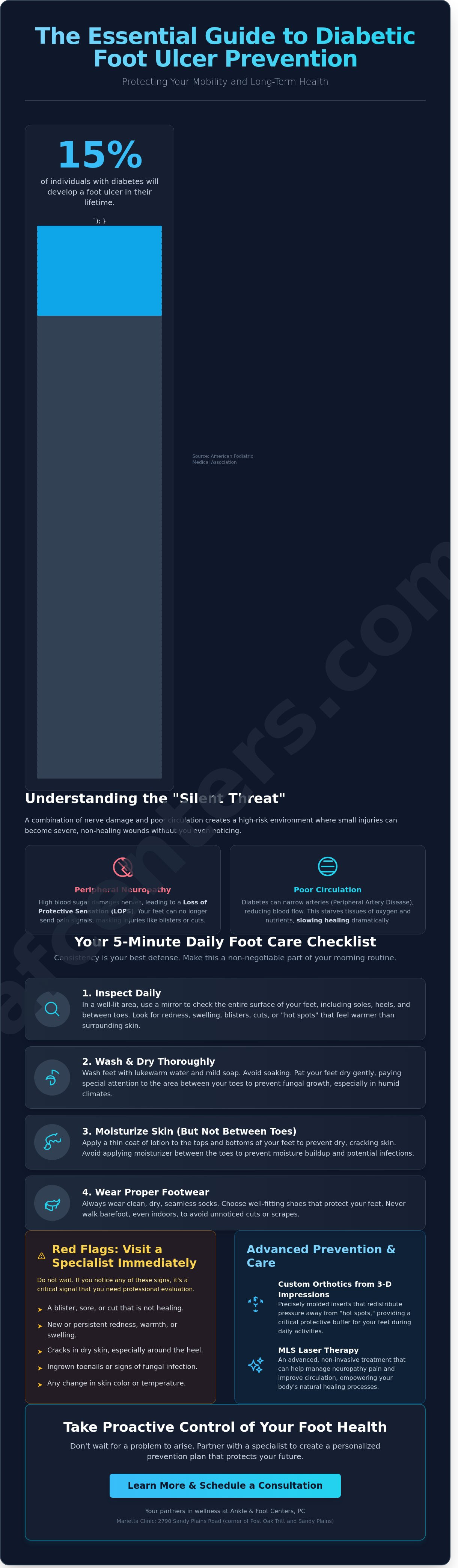
Did you know that according to the American Podiatric Medical Association, roughly 15% of people with diabetes will experience a foot ulcer at some point in their lives? This reality makes diabetic foot ulcer prevention a top priority for anyone living with the condition in the Atlanta Metro area. You likely feel the weight of this responsibility every morning, especially if limited mobility makes it difficult to inspect your own feet or if you're tired of hearing conflicting advice about footwear. It's natural to feel overwhelmed, but you don't have to manage these risks alone.
We're here to empower you with a clear, manageable plan that fits your daily lifestyle and protects your mobility. You'll learn the exact steps to safeguard your health and discover how professional tools like custom orthotics made from 3-D impressions can transform your comfort. This guide outlines a complete checklist for your morning routine, the specific signs that mean it's time to call a specialist, and why our team at 2790 Sandy Plains Road on the corner of Post Oak Tritt and Sandy Plains is your dedicated partner in long-term wellness.
Key Takeaways
- Understand how "silent" nerve damage masks pain and why proactive monitoring is your best defense against non-healing sores.
- Master a simple five-minute morning routine designed to catch minor issues before they become major threats to your mobility.
- Discover how professional diabetic foot ulcer prevention strategies, including custom orthotics made from 3-D impressions, provide a protective buffer for your feet.
- Learn the critical red-flag symptoms that require an immediate visit to our clinic at 2790 Sandy Plains Road on the corner of Post Oak Tritt and Sandy Plains.
- Explore advanced wellness treatments like MLS Laser therapy that empower you to manage neuropathy pain and maintain long-term health.
Understanding the Risks: Why Diabetic Foot Ulcer Prevention is Critical in Marietta
A Diabetic foot ulcer is a complex, non-healing sore that typically develops due to a combination of sustained pressure, poor circulation, and nerve damage. For the residents of Marietta, staying proactive about your foot health isn't just a recommendation; it's a necessity for maintaining your active lifestyle. Statistics from the American Podiatric Medical Association indicate that between 15% and 25% of individuals with diabetes will face a foot ulcer during their lifetime. Because these wounds can lead to severe infections or even limb loss, diabetic foot ulcer prevention is the most powerful tool you have to protect your long-term wellness.
Georgia’s unique environment plays a role in your foot health too. Our local humidity levels frequently climb above 70% during the summer months, which can soften the skin and make it more susceptible to breakdown. This moisture also creates an ideal breeding ground for fungal risks. When fungal infections take hold, they often cause tiny cracks in the skin that allow dangerous bacteria to enter. At our center located at 2790 Sandy Plains Road on the corner of Post Oak Tritt and Sandy Plains, we focus on helping you identify these subtle changes before they escalate into serious medical concerns.
To better understand this concept, watch this helpful video:
The Role of Peripheral Neuropathy
High blood sugar levels act like a slow toxin to your nervous system, damaging delicate nerve fibers over several years. This damage often results in a condition called Loss of Protective Sensation (LOPS), which is the hallmark of the "Silent Threat." When you lose this sensation, your feet can no longer send pain signals to your brain to warn you of injury. Neuropathy is the primary driver behind unnoticed foot injuries. You might walk for miles with a sharp object in your shoe and never feel the damage occurring until you remove your socks at night. This lack of feedback allows simple blisters to transform into deep, infected wounds without any warning at all.
Circulation and Healing Challenges
Diabetes frequently impacts the vascular system by causing Peripheral Artery Disease, which narrows the arteries leading to your lower extremities. This restricted blood flow means your feet receive less oxygen and fewer nutrients required for cellular repair. Reduced oxygenation slows the body’s natural repair mechanisms to a crawl, turning a minor scratch into a chronic wound that refuses to close. Ulcers typically form at "hot spots" like the balls of the feet or the tips of the toes where pressure is highest during daily movement. If you're looking for specialized care to manage these risks, you can explore our services to see how we support your personal health journey.
The Ultimate Daily Diabetic Foot Care Checklist for Atlanta Metro Residents
Your journey to long-term wellness begins with a proactive start. A dedicated "5-Minute Morning Routine" helps you spot minor changes before they escalate into serious complications. By making this a daily habit, you empower yourself to maintain mobility and vitality. Consistency is your best defense in diabetic foot ulcer prevention. It's much easier to manage a small "hot spot" today than a complex wound next month.
Step-by-Step Self-Inspection
Find a well-lit spot in your home and grab a handheld mirror. Use it to examine the soles of your feet and the back of your heels closely. Look for any new redness, swelling, or blisters. Pay close attention to "hot spots" that feel warmer than the surrounding skin, as these often signal underlying pressure issues. In our humid Marietta climate, fungal infections can thrive in damp shoes. Check between every toe for white, peeling skin or signs of maceration. If you notice a cut or a blister that hasn't shown signs of healing within 48 hours, it's time to seek professional guidance.
In addition to monitoring your foot health, being prepared for unexpected health emergencies is a vital part of a proactive wellness strategy; Dyvine Medical & Wellness provides BLS and Heartsaver classes to help you gain essential life-saving skills.
Hygiene and Moisture Management
Wash your feet daily in lukewarm water to keep the skin clean and healthy. Always test the water temperature with your elbow first. This simple step prevents accidental burns that you might not feel due to neuropathy. In the Georgia heat, moisture is often your enemy. Drying your feet thoroughly, especially between the toes, is the most critical step to prevent skin breakdown. Apply a high-quality moisturizer to the tops and bottoms of your feet to prevent cracks and fissures. Don't put lotion between your toes, as this trapped moisture creates a breeding ground for bacteria. Following proven strategies for prevention of diabetic foot ulcer ensures your skin remains a strong, resilient barrier.
Safe Nail and Callus Care
Never attempt "bathroom surgery" on calluses or corns. Using sharp tools at home increases your risk of infection by more than 50% compared to professional care. Trim your toenails straight across and file the edges gently with an emery board. This technique prevents painful ingrown nails that frequently lead to ulcers. If your nails are too thick to manage safely on your own, our team can help you maintain them. We provide expert care and comprehensive podiatric services to keep you moving comfortably. If you notice persistent pain, drainage, or an odor, visit our office at 2790 Sandy Plains Road on the corner of Post Oak Tritt and Sandy Plains immediately. Our specialists support your health journey with advanced tools like the MLS Laser to promote healing and reduce inflammation.
Selecting Protective Gear: Custom Orthotics and Diabetic Footwear
Selecting the right gear is a vital step in your journey toward long-term health and vitality. While retail shoe inserts are easy to find, they often lack the structural integrity needed for true diabetic foot ulcer prevention. Think of professional footwear as a protective buffer. It guards your skin against the constant friction and shearing forces that occur during a simple walk. Without this protection, small irritations quickly turn into serious medical concerns.
By utilizing professional offloading techniques, you distribute your body weight away from vulnerable areas of the foot. This ensures no single spot takes too much pressure, which is a leading cause of skin breakdown. In the humid Atlanta heat, moisture-wicking socks are just as essential as the shoes themselves. They keep your feet dry and prevent the bacterial growth that thrives in damp environments. Keeping your feet cool and dry is a simple yet powerful way to maintain skin integrity throughout the year.
The Science of 3-D Impressions for Orthotics
Our team at 2790 Sandy Plains Road on the corner of Post Oak Tritt and Sandy Plains uses high-precision 3-D impressions to map your foot's unique architecture. Unlike generic foam molds that can collapse or lose detail, 3-D impressions capture every contour with extreme accuracy. This precision allows us to create custom-molded devices that target diabetic foot ulcer prevention by reducing peak pressure points. We've seen these tailored solutions reduce localized pressure by up to 30 percent compared to standard footwear. You get a level of protection that retail products simply can't provide, ensuring your feet stay safe during every activity.
Choosing the Right Diabetic Shoe
A proper diabetic shoe provides extra depth to accommodate orthotics and features a seamless interior to prevent irritation. Breathable materials are a must for staying comfortable in the Georgia climate. You should never have to "break in" a medical shoe. It must fit perfectly the moment you leave our office to avoid immediate blister risks. We offer a wide selection of these specialized options through our Durable Medical Equipment (DME) services.
Our staff guides you through the selection process, ensuring your gear supports your active lifestyle while keeping your feet safe. This professional guidance ensures you aren't navigating your health path alone. We take pride in being your partner, providing the tools you need to move with confidence and security. High-quality footwear isn't just a purchase; it's an investment in your continued mobility and wellness.
In addition to physical mobility, maintaining professional requirements is essential for many active adults; Dyvine Medical & Wellness provides the necessary fingerprinting and I-9 verification services to help you stay compliant in your career.
Professional Prevention: When to Visit Our Marietta Podiatry Clinic
Managing your health is a team effort. While daily home checks are your first line of defense, professional oversight is the cornerstone of effective diabetic foot ulcer prevention. You don't have to navigate this path alone. Our team at 2790 Sandy Plains Road on the corner of Post Oak Tritt and Sandy Plains acts as your expert partner, ensuring small changes don't become major obstacles. We recommend a comprehensive professional exam at least once every 12 months to maintain your vitality and mobility; additionally, understanding your genetic predispositions through Dyvine Medical & Wellness can provide a more complete picture of your long-term health.
The Annual Comprehensive Foot Exam
Your yearly visit is more than a simple checkup. It's a detailed roadmap for your wellness. We use precise monofilament and vibration tools to test for sensation loss, which is a key factor in 78 percent of diabetic foot complications. Our specialists conduct a thorough vascular assessment to verify that your feet receive the oxygen-rich blood they need to heal. We also perform a biomechanical evaluation. By identifying structural shifts like bunions or hammertoes early, we can use 3-D impressions to create custom orthotics that redistribute pressure and prevent skin breakdown.
Identifying Emergency Warning Signs
Prompt action saves limbs. If you notice a wound that doesn't show improvement within 24 hours, schedule an appointment immediately. Watch for skin color changes like deep blue, black, or persistent bright red spots. Foul odors are also a sign that requires urgent attention. Sudden swelling or localized heat can indicate an infection or the onset of Charcot foot, a serious condition where bones weaken. We provide advanced treatments, including MLS Laser therapy, to manage inflammation and accelerate the healing process for our neighbors in Marietta and Roswell.
Your podiatrist and primary care physician work in tandem to protect your health. We share findings and coordinate care plans to ensure your blood sugar management and foot health are perfectly aligned. This coordination often relies on consistent lab monitoring, and services like those provided by Dyvine Medical & Wellness can help bridge the gap between your diagnostic needs and daily routine with mobile phlebotomy options. This collaborative approach reduces the risk of major complications by up to 50 percent according to clinical studies. We're here to empower you with the tools and knowledge needed for a long, active life.
Advanced Diabetic Care at Ankle & Foot Centers, PC: Your Path to Long-Term Health
Managing your foot health requires more than just a checklist; it requires a dedicated partner. Dr. Mathew M. John brings over 20 years of clinical expertise to our Marietta community, focusing on complex cases where diabetic foot ulcer prevention is the top priority. We don't just treat symptoms. Our team looks at your overall wellness to ensure you stay active and mobile for years to come. We act as a mentor in your health journey, providing the professional guidance needed to avoid complications before they start. We believe in progress over perfection, helping you make small, sustainable changes that protect your feet while maintaining your lifestyle.
If you are also prioritizing your oral health as part of your diabetes management plan, visit Smiley Dental Beverly to learn more about their preventative and cosmetic services.
Similarly, those in the Greater Lowell community can rely on Smiley Dental Lowell for family-oriented dental services that support a holistic approach to wellness.
Furthermore, for those seeking expert dental support in the San Antonio area, Colony Dental Care provides personalized oral healthcare that is vital for individuals managing systemic conditions like diabetes.
For those looking into advanced restorative options, EAP® Abutments provides a patented, hybrid solution designed to improve the anatomical fit and long-term success of dental implants.
Similarly, for those interested in exploring high-quality orthopedic and rehabilitation products that enhance physical mobility, you can discover Ortopedia Suiza and their commitment to improving quality of life.
Likewise, for individuals focused on monitoring their metabolic health, Dyvine Medical & Wellness offers professional phlebotomy and wellness panels to provide a complete picture of your wellbeing.
MLS Laser Therapy for Diabetic Patients
Chronic pain and poor circulation often hinder the recovery process for those living with diabetes. We utilize MLS Laser Therapy to address these issues without the need for invasive procedures or heavy medications. This technology uses specific wavelengths of light to stimulate cellular activity and speed up the body's natural healing response. Clinical data indicates that 90% of patients experience a significant reduction in inflammation and neuropathic pain after a consistent series of sessions. By improving blood flow and nerve function, this treatment becomes a vital tool in your diabetic foot ulcer prevention strategy. It's a safe, painless way to enhance your quality of life while avoiding the risks associated with surgery. Most sessions take less than 15 minutes, allowing you to return to your daily routine immediately.
Schedule Your Consultation in Marietta
Our primary Marietta office is located at 2790 Sandy Plains Road on the corner of Post Oak Tritt and Sandy Plains. This facility serves as a hub for advanced diagnostics and personalized care plans. During your visit, we can create custom orthotics using 3-D impressions to ensure a perfect fit for your unique foot structure. This precision helps eliminate the pressure points that often lead to skin breakdown. We also maintain a strong presence across the Atlanta Metro area to provide regional convenience for all our patients. Our offices in Roswell, Woodstock, Kennesaw, and Sandy Springs offer the same high level of expert care and welcoming atmosphere. You can explore our full range of podiatric services to see how we support your long-term health goals. Don’t wait for a small blister or a patch of dry skin to become a major concern. We are ready to help you move forward with confidence. Contact us today to schedule your preventative consultation and join a community that puts your mobility first.
Take the Next Step Toward Lasting Foot Health
Your journey toward lasting mobility starts with the small, daily choices you make at home and the professional support you choose in your community. Prioritizing diabetic foot ulcer prevention isn't just about avoiding a diagnosis; it's about protecting your independence and staying active for years to come. By following our daily checklist and utilizing protective gear like custom-molded orthotics, you're taking proactive steps to minimize risks.
At Ankle & Foot Centers, PC, we combine high-level expertise with a welcoming environment to ensure you never walk this path alone. Led by Dr. Mathew M. John, DPM, FACFAS, our team utilizes advanced 3-D impressions to create orthotics tailored specifically to your unique foot structure. You'll find our Marietta clinic conveniently located at 2790 Sandy Plains Road on the corner of Post Oak Tritt and Sandy Plains. Whether you need an annual checkup or specialized care using advanced tools like the MLS Laser, we're here to empower your progress. You deserve a partner who values your long-term health as much as you do; for instance, you can learn more about Colony Dental Care and their commitment to providing personalized oral healthcare that supports systemic wellness.
As you manage your comprehensive care plan, you may also require assistance with legal health documents; Dyvine Medical & Wellness offers professional notary and apostille services to help you secure your medical directives and other essential paperwork.
Schedule Your Comprehensive Diabetic Foot Exam Today
We look forward to supporting your wellness goals and keeping you moving forward with confidence.
Frequently Asked Questions
How often should a person with diabetes check their feet?
You should inspect your feet at least once every 24 hours to maintain optimal wellness. Daily checks are the foundation of diabetic foot ulcer prevention because they allow you to catch small changes before they transform into serious complications. Use a mirror to see the soles of your feet or ask a family member for help. According to the American Diabetes Association, daily inspections can reduce the risk of foot-related hospitalizations by 47 percent.
Can I prevent a diabetic foot ulcer once a blister has already formed?
You can prevent a blister from becoming an ulcer by seeking professional care within 24 hours of discovery. Don't pop or peel the skin, as this creates an open door for infection. Cover the area with a sterile bandage and schedule an appointment at our center at 2790 Sandy Plains Road on the corner of Post Oak Tritt and Sandy Plains. Prompt intervention reduces the chance of infection by 50 percent compared to delayed treatment.
What are the first signs of a diabetic foot ulcer developing?
The first signs often include unusual swelling, redness, or drainage on your socks. You might also notice a foul odor or a localized increase in skin temperature. Because 60 percent of diabetic patients experience some form of neuropathy, you may not feel pain even if a wound is present. Pay close attention to any skin discoloration that persists for more than 2 days, as this is a clear signal to contact your wellness team.
Are custom orthotics covered by insurance for diabetic patients?
Most insurance providers, including Medicare Part B, offer coverage for custom orthotics and therapeutic shoes for patients with a documented diabetes diagnosis. Medicare typically covers 80 percent of the approved amount for one pair of custom-molded shoes and inserts per calendar year. Our team at 2790 Sandy Plains Road on the corner of Post Oak Tritt and Sandy Plains can help you navigate your specific benefits. These tools are essential for your long-term health journey.
Why should I avoid walking barefoot even inside my home?
You should wear shoes at all times because even small household objects can cause significant injuries that lead to infection. Walking barefoot increases the risk of punctures or scrapes that 15 percent of diabetic patients may not feel due to nerve damage. Hardwood or tile floors also create high-pressure zones on your soles. Protecting your feet with supportive slippers or indoor shoes ensures your wellness journey stays on track without unnecessary setbacks.
What makes 3-D impressions better than standard foot molds?
3-D impressions provide a more accurate representation of your foot's unique architecture than traditional plaster casts. This technology captures the exact contours of your feet to create orthotics that distribute pressure evenly. Research indicates that precision-fit orthotics can reduce peak plantar pressure by 30 percent. By choosing 3-D impressions at our facility, you empower yourself with high-end equipment designed to support your specific movement patterns and prevent future complications.
How does MLS Laser Therapy help with diabetic foot health?
MLS Laser Therapy uses specific wavelengths of light to stimulate cellular repair and improve local circulation. This non-invasive treatment reduces inflammation by 40 percent in many clinical cases, which is vital for preventing minor irritations from becoming ulcers. It's a key part of a modern wellness plan that prioritizes painless recovery. Our professionals use this state-of-the-art technology to help you maintain vitality and keep your feet healthy for the long term.
When should I see a podiatrist in Marietta for a diabetic foot exam?
You should schedule a comprehensive diabetic foot exam at least once every 12 months to monitor your nerve health and circulation. If you have a history of previous ulcers, your specialist may recommend visits every 3 to 6 months. Visit us at 2790 Sandy Plains Road on the corner of Post Oak Tritt and Sandy Plains to start your preventive care. Regular professional guidance is the most reliable way to ensure you're navigating your health journey with confidence.


