

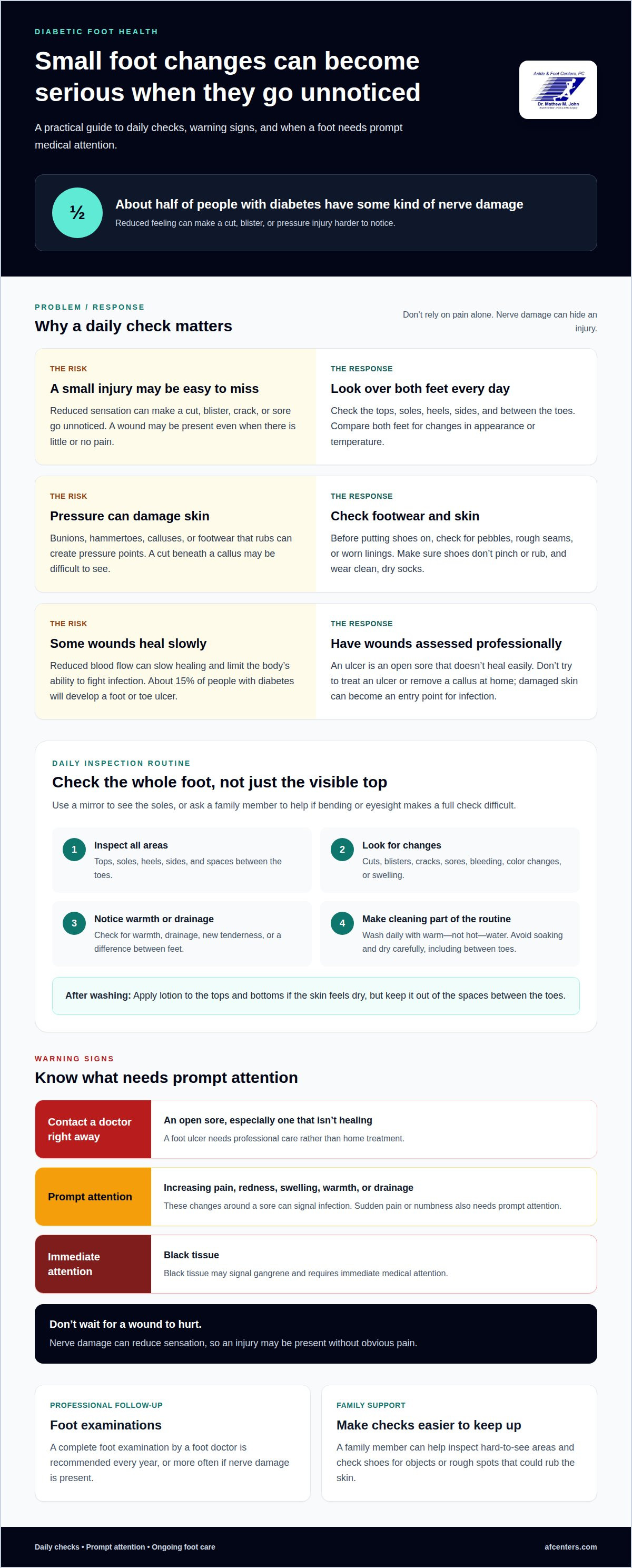
Diabetic nerve damage can make a foot injury difficult to feel. About half of people with diabetes have some kind of nerve damage, according to the National Institute of Diabetes and Digestive and Kidney Diseases. Explaining diabetic foot risks to family members starts with this point: a small cut or blister can become serious if it goes unnoticed.
Visible wounds are only part of the picture. Changes in sensation and circulation can also put foot health at risk. This article explains conditions diabetes can cause or worsen, how nerve damage affects the feet, and which signs call for prompt medical attention. Daily checks and regular foot care help families recognize concerns early and support healthier routines.
Key Takeaways
- Learn which changes in a foot need prompt medical attention and what to look for during daily checks.
- Understand how nerve damage can reduce sensation, making injuries easier to miss.
- See why reduced circulation and foot-shape changes can make wounds harder to heal.
- Find out why foot ulcers need professional care rather than home treatment.
- Explore how regular foot examinations and care for structural problems can help protect foot health.
What Are the Warning Signs of a Diabetic Foot Emergency?
A daily foot check can reveal changes that are easy to miss during ordinary activities. Look at the tops, soles, heels, sides, and spaces between the toes. Use a mirror to see the soles, or ask a family member to help. Check for cuts, blisters, cracks, sores, color changes, swelling, warmth, drainage, and new tenderness. Compare both feet, since differences in appearance or temperature may point to a change.
Contact a doctor right away about an open sore, especially one that isn’t healing. Increasing pain, redness, swelling, warmth, or drainage can signal infection. Sudden pain or numbness also needs prompt attention. Black tissue may signal gangrene and requires immediate medical attention. Don’t wait for a wound to hurt: nerve damage can reduce sensation, so an injury may be present without obvious pain. Don’t try to treat a diabetic foot ulcer at home.
- Look for a new cut, blister, ulcer, crack, or bleeding spot.
- Notice redness, warmth, swelling, drainage, or a sudden color change.
- Check whether one foot looks different from the other.
- Tell a doctor promptly about numbness, sudden pain, or a wound that won’t heal.
Wash feet every day with warm, not hot, water. Avoid soaking them, which can dry or damage the skin. Dry each foot carefully, including between the toes, because trapped moisture can cause skin problems. Apply lotion to the tops and bottoms if the skin feels dry, but keep it out of the spaces between the toes. Clean, dry feet make daily care easier and help families notice changes.
Make inspection part of a steady routine, such as after washing. If bending or eyesight makes a full check difficult, use a mirror or ask someone you trust to examine the soles and spaces between the toes. Families can also check shoes daily for pebbles, rough seams, or worn linings. An object inside a shoe can rub repeatedly without being felt, creating a blister or open sore.
Keep shoes comfortable and check inside them before putting them on. Look for sharp objects and rough spots, then make sure the footwear doesn’t pinch or rub. Wear clean, dry socks to reduce friction. A podiatrist can assess foot problems, sensation, and circulation, then guide ongoing diabetic foot care. A complete foot examination by a foot doctor is recommended every year, or more often if nerve damage is present.
What are diabetes-related foot conditions?
Diabetes can raise the risk of foot ulcers and other problems. Understanding how these conditions develop helps families see why even small changes deserve attention.
Foot and Toe Ulcers
A foot ulcer is an open sore or wound that doesn’t heal easily. It can appear on the sole, heel, side, or toes, where pressure and rubbing may repeatedly affect the skin. About 15% of people with diabetes will develop a foot or toe ulcer. An ulcer can start with a small break in the skin, such as a cut or blister.
These wounds matter because even a small ulcer can become a serious infection. Infection may threaten a limb, particularly when a wound is ignored or care is delayed. Neuropathy can make an injury harder to notice, while reduced blood flow can slow healing. A family member can help by noticing a dressing, a new mark, or a change in how someone walks.
Infection and Other Foot Problems
A foot infection occurs when germs enter damaged skin, such as through an ulcer or cut. Diabetes can make foot problems more concerning because wounds may heal slowly and infection can become serious. Redness, swelling, warmth, or drainage around a sore can signal a problem that needs prompt medical attention. Black tissue may signal gangrene and also needs immediate medical attention.
Other conditions can create or worsen pressure on the skin. Bunions and hammertoes change foot shape, while calluses form where repeated pressure or friction affects the skin. These pressure points can contribute to skin breakdown and create an opening for infection. Toenail problems, including fungal or ingrown toenails, can also affect comfort and deserve attention if they cause pain or skin irritation.
A cut beneath a callus may be difficult to see, and neuropathy can limit pain signals. Families shouldn’t rely on discomfort alone to judge whether a wound matters. Notice changes in skin, footwear comfort, and walking. A sore that stays open, or a wound that appears to worsen, needs professional care rather than home treatment.
Diabetic foot care can help assess ulcers, skin changes, and other foot problems. A podiatrist can examine a wound and evaluate the surrounding foot, including pressure areas affected by bunions or hammertoes. Ankle & Foot Centers, PC provides diabetic foot care to help assess ongoing concerns. Don’t try to remove calluses or treat an ulcer yourself: damaged skin can become an entry point for infection.
Why Is Foot Care So Important for People With Diabetes?
In the United States, diabetic foot care costs vary by service and clinical needs; insurance coverage depends on plan benefits. High blood sugar can damage nerves and blood vessels, while pressure from bunions or calluses can injure skin.
Nerve Damage and Circulation Changes
Diabetes-related neuropathy is nerve damage that can reduce feeling in the feet. About half of people with diabetes have some kind of nerve damage, according to the National Institute of Diabetes and Digestive and Kidney Diseases. Reduced sensation can hide pressure or injury. Over time, nerve damage can also change foot shape, making familiar shoes rub or press against the skin.
Diabetes can narrow and harden blood vessels, reducing circulation to the feet. Less blood flow can limit the body’s ability to fight infection and repair damaged tissue. For people with Type 2 diabetes, an A1C over 7% for at least 3 years is associated with increased risk of diabetes-related neuropathy. That makes steady blood sugar management important for reducing foot complications, leading many patients to consult root-cause healthcare providers like Rooted Functional Medicine to help optimize overall metabolic health.
Impaired Healing and Serious Foot Problems
Poor circulation can slow healing, allowing a small sore to worsen if ignored. Bunions, hammertoes, and calluses can create pressure points that break down skin. When reduced sensation and slower healing occur together, a person may not notice damage early, and the body may have more difficulty repairing it. A doctor can assess these risks and guide appropriate care.
Movement can support circulation, but activity should fit the condition of the feet. Tailoring safe exercises with guidance from rehabilitation providers such as RED Physiotherapy can help individuals stay active while protecting vulnerable areas. Ten to 20 minutes of physical activity a day is better than an hour once a week. People with open foot sores should not walk on them. A family can help by supporting suitable activity and keeping floors clear of loose rugs and clutter that could cause injury.
Care also includes habits that support blood flow and skin health. Follow the care team’s advice for managing blood sugar, blood pressure, and cholesterol, and for quitting smoking. Trim toenails carefully and file sharp edges to help prevent ingrown nails. Keep shoes and socks dry, and choose footwear that doesn’t pinch or rub. These steps complement regular professional foot examinations.
For ongoing concerns, diabetic foot care can help assess sensation, circulation, and foot structure. Early attention matters because blood flow, nerve function, and pressure points can combine to make foot problems harder to heal.
Diabetes-related nerve damage and loss of feeling
Diabetes-related nerve damage, also called neuropathy, can reduce your ability to feel pain, heat, and cold. Someone may not notice a blister, sharp object, or overheated surface touching the foot. The injury can continue unnoticed because the body’s usual warning signal feels weaker or disappears.
Imagine a family member walking indoors without slippers. A small object on the floor could press against the skin yet cause little pain. Repeated pressure may damage the area before anyone sees a mark. Reduced sensation changes how families think about ordinary activities, not just obvious injuries.
Heat can also be hard to judge. Someone with reduced feeling may not recognize that bathwater is too hot. Use warm, not hot, water for washing and avoid soaking the feet. A family member can help keep the routine safe without assuming the person would feel excessive heat right away.
Nerve damage may also affect foot shape and toes. Changes can make familiar shoes uncomfortable, even if the person doesn’t feel the usual rubbing or pinching. A shoe may press repeatedly on one spot, stressing the skin. Notice a new fit problem, a visible shape change, or footwear that suddenly feels difficult to wear.
- Wear shoes and socks or slippers indoors, rather than walking barefoot.
- Check footwear for sharp objects before putting it on.
- Choose shoes that fit without pinching or rubbing.
- Don’t remove corns or calluses yourself or use over-the-counter removal products; they can burn skin.
These steps matter because neuropathy can hide the early stages of foot problems. A blister may look minor while repeated friction keeps irritating it. Redness, broken skin, or a change in foot shape deserves attention, even if the person reports little discomfort.
Families can keep conversations specific and calm. Instead of asking only, “Does your foot hurt?” ask whether shoes feel different or walking has changed. Compare what you see with the person’s usual appearance, and mention any new concern to their doctor. Less pain doesn’t mean the skin is unharmed.
Regular professional foot examinations help assess sensation and foot structure. A foot doctor can identify changes that are difficult to judge at home and explain what they mean for daily care. If nerve damage is present, examinations may need to happen more often than the usual yearly check. Keep the care plan clear for everyone involved.
Types of diabetes-related foot conditions
Diabetes-related foot conditions include nerve damage, circulation problems, ulcers, infections, and structural changes. These conditions can overlap, so one unnoticed problem may contribute to another. Recognizing the type of change helps families describe what they notice and understand why a foot appointment matters.
Neuropathy affects sensation. A person may not feel a blister caused by a shoe, a cut from walking barefoot, or heat against the skin. The injury can worsen because discomfort no longer provides a reliable warning. Check for visible changes, even when the person says the foot feels fine.
Circulation problems develop when diabetes narrows and hardens blood vessels. Reduced blood flow can make it harder to fight infection and heal wounds. A small break in the skin may therefore become more serious than expected. Nerve damage can occur alongside poor circulation, combining reduced awareness with slower healing.
Ulcers and infections involve breaks in the skin and the problems that can follow. A diabetic foot ulcer is an open sore or wound that doesn’t heal easily. Even small cuts and ulcers can lead to serious infection and, in severe cases, limb loss. Notice drainage, warmth, redness, or swelling around a wound, and seek prompt medical attention.
Structural changes include bunions, hammertoes, and Charcot foot. Bunions and hammertoes can create pressure points, increasing the chance of skin breakdown. Charcot foot can weaken foot bones and lead to deformity. A change in shape may alter how shoes fit, causing repeated rubbing in a new place. Report a visible change or unusual fit at an appointment.
Skin and nail problems can add pressure or create openings in the skin. Calluses form where friction or pressure repeatedly affects the skin. Fungal toenails change the nails, while an ingrown toenail can irritate nearby skin. Don’t cut into an ingrown nail or remove a callus yourself. These areas deserve careful attention, especially when sensation is reduced.
These conditions have different causes, but they can connect. Neuropathy, for example, can hide rubbing from a hammertoe; the rubbing can break the skin, and poor circulation can slow healing. A foot that looks healthy may still have reduced sensation or blood flow. Track new sores, shape changes, nail concerns, and changes in walking. Share those details during a professional foot examination.
Ankle & Foot Centers, PC provides diabetic foot care to assess diabetes-related foot changes and discuss concerns with a foot-care professional.
Ankle & Foot Centers, PC: Reconstructive Foot and Ankle Surgery
Ankle & Foot Centers, PC provides Reconstructive Foot and Ankle Surgery for foot and ankle conditions that may need surgical evaluation. If diabetes-related changes include a painful bunion, hammertoe, or altered foot structure, an assessment can help clarify the condition and appropriate care. Dr. Mathew John is a Board Certified Foot Surgeon by the American College of Foot and Ankle Surgery. The practice also treats fungal toenails, which can affect nail appearance and comfort. For a wound, new redness, swelling, warmth, or drainage, seek prompt medical attention rather than waiting for a routine appointment. If you have concerns about a foot condition or want to discuss whether surgical evaluation is appropriate, contact Ankle & Foot Centers, PC.
Make Foot Health a Shared Routine
Talking openly about foot health can help families offer support without taking away a person’s independence. Explaining diabetic foot risks to family members can make it easier to discuss concerns, agree on practical ways to help, and communicate calmly and respectfully. Choose an approach that feels comfortable for everyone, whether that means sharing observations or offering help with routine care.
If a foot concern needs professional attention, Ankle & Foot Centers, PC can help you understand the next step. Its care includes reconstructive foot and ankle surgery, including treatment for bunions and hammertoes. Contact the practice to discuss your concerns and move forward with informed support.
Contact Ankle & Foot Centers, PC to take the next step for your foot health. You and your family can approach care together, one conversation at a time.
Ankle & Foot Centers, PC for Diabetic Foot Care
Ankle & Foot Centers, PC provides diabetic foot care for people managing diabetes. If explaining foot risks to family has raised questions about your own care, a podiatry visit can help you discuss your concerns.
The practice also treats fungal and ingrown toenails, heel pain, and wounds or deformities that may need surgical attention. Turn to Ankle & Foot Centers, PC for professional guidance about diabetic foot care or another foot or ankle concern.
Frequently Asked Questions
How Can Families Encourage Compliance With Treatment Plans?
Support consistency by making the plan easier to follow, not by policing it. Ask what would help, such as a reminder tied to an existing routine or help arranging transportation to an appointment. Explaining diabetic foot risks to family members can help everyone understand why the care plan matters. Keep written instructions accessible, and encourage the person to discuss confusing steps with their care team. Respectful support can make practical barriers easier to address.
What are the warning signs of diabetic foot ulcers or infection?
Watch for an open wound, a blister that breaks, or skin that changes around an injury. Redness, warmth, swelling, drainage, or worsening pain can indicate infection. A sore that stays open deserves prompt medical attention, even if it seems small. Note when you first saw the change and whether it has spread or altered walking; those details can help describe the concern clearly during a medical assessment.
How does diabetes-related nerve damage affect foot injury awareness?
Nerve damage can reduce the ability to feel pain, heat, or cold, so an injury may not trigger the expected warning. Someone may keep wearing a shoe that rubs a blister because it feels normal. Families can ask about changes in footwear comfort or walking, rather than relying only on reports of pain. A visible mark matters, even when sensation seems unchanged.
How does poor circulation increase diabetic foot risks?
Reduced circulation means less blood reaches foot tissues, making it harder for the body to fight infection and repair a wound. A scrape from a shoe may therefore need more attention than expected, especially if healing appears slow. Keep the care team informed about a wound’s progress and any new skin changes. Managing blood sugar, blood pressure, and cholesterol according to the care plan also supports vascular health.
How often should people with diabetes check their feet and get professional foot exams?
Check feet every day, choosing a routine that makes the habit easy to remember, such as after washing. A complete examination by a foot doctor is recommended every year, or more often when nerve damage is present. Feet should also be checked at every primary-care visit. If eyesight, flexibility, or mobility makes self-checks difficult, ask a trusted family member to inspect hard-to-see areas.
What daily foot-care steps help prevent diabetic foot complications?
Wash feet daily with warm, not hot, water, and avoid soaking. Dry carefully, especially between the toes, and apply lotion to dry skin on the tops and bottoms, not between the toes. Trim nails straight across and gently file sharp edges. Wear socks and well-fitting shoes, then check inside each shoe for objects or rough spots before putting it on. Don’t remove corns or calluses yourself.
When should a diabetic foot problem receive urgent or emergency medical care?
Contact a doctor right away for an open sore, a wound that isn’t healing, sudden numbness or pain, or signs such as redness, warmth, swelling, or drainage. Black tissue also needs immediate medical attention. Don’t wait for pain to become severe, since reduced sensation can hide the extent of damage. Avoid walking on an open sore, and describe the changes clearly when seeking care.
How can family members support someone with diabetes in preventing foot problems?
Offer specific, respectful help: check shoes for pebbles, rough seams, or worn linings, and help clear loose rugs or clutter from walking areas. Explaining diabetic foot risks to family can connect prevention with shared routines, such as checking footwear together. If the person has trouble seeing or reaching their feet, ask whether they’d like help inspecting them. Support their independence while following the care team’s advice.


