
Insurance for a bunionectomy in Marietta may cover some or all of the surgery when it is considered medically necessary. Coverage depends on factors such as the bunion’s severity, the recommended procedure, and your plan’s terms. It is not automatic, but surgery may qualify when symptoms or functional problems persist despite conservative care.
It’s understandable to want a clearer picture before making decisions about treatment. This article explains what can affect insurance coverage, how Medicare Part B generally applies, and why bunionectomy costs vary across Marietta, Cobb County, and the Atlanta area. You’ll also learn how symptoms, clinical evaluation, and treatment choices fit into the decision, so you can better understand the financial questions to consider alongside your foot health.
Key Takeaways
- Insurance may cover bunion surgery when it’s considered medically necessary; the bunion’s severity and recommended procedure can affect coverage.
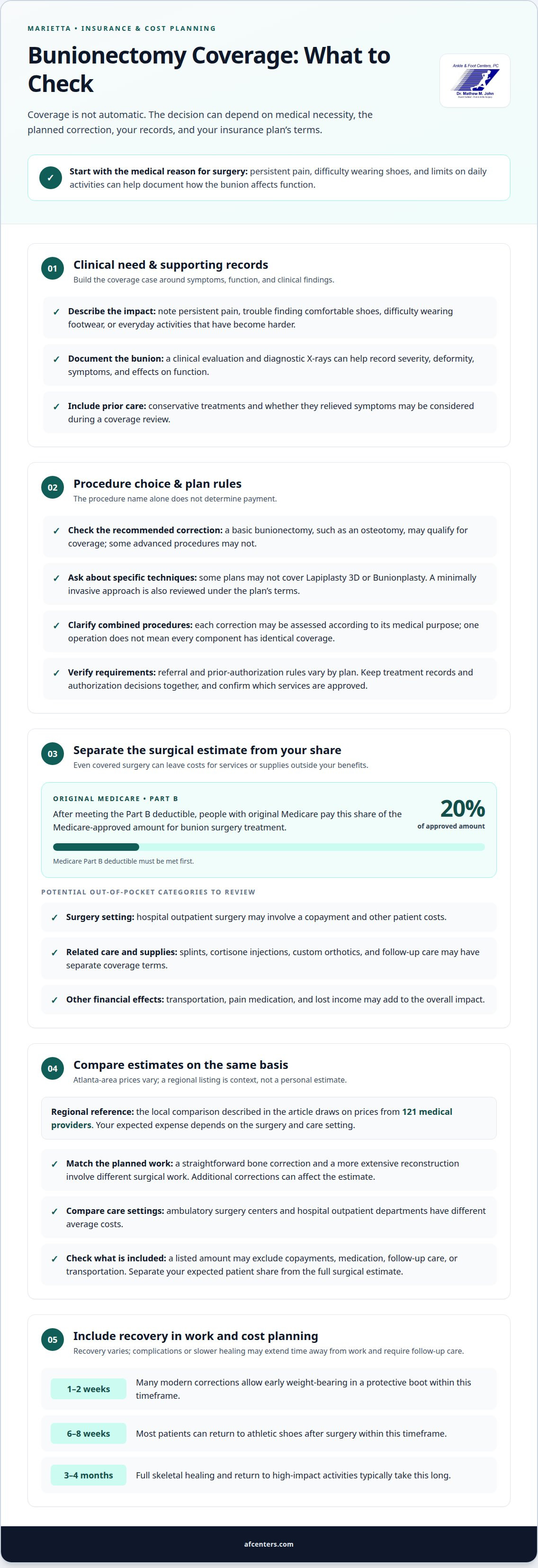
- According to the Centers for Medicare & Medicaid Services, people with original Medicare pay 20% of the Medicare-approved amount for bunion surgery treatment after meeting the Medicare Part B deductible.
- Atlanta-area bunionectomy costs vary, so understand which costs relate to the procedure and which may come from related care.
- A physical exam and X-rays can help assess bunion severity and guide decisions about treatment in Marietta and Cobb County.
- Ankle & Foot Centers, PC provides bunion care and reconstructive foot and ankle surgery, with Dr. Mathew John, a Board Certified Foot Surgeon by the American College of Foot and Ankle Surgery.
Does insurance cover bunion treatment?
Health insurance may cover bunion surgery when it is considered medically necessary. Coverage depends on the procedure, documented symptoms, and your plan’s terms. Insurance for a bunionectomy in Marietta can vary according to the recommended correction and your clinical records, so the procedure name alone does not determine payment.
Basic and Advanced Procedure Coverage
A basic bunionectomy, such as an osteotomy, may qualify for coverage, while some advanced procedures may not. The correction recommended for your foot can affect how the plan assesses coverage.
For example, some plans may not cover Lapiplasty 3D or Bunionplasty. A minimally invasive approach still receives review under your plan’s terms. The bunion’s severity, other conditions requiring correction, and the medical reason for surgery help shape the coverage decision.
When procedures are combined, each part may be assessed according to its medical purpose. Ask how the treatment plan documents each correction, including care for another condition. A combined operation does not necessarily mean every component has identical coverage.
Potentially Uncovered Costs
Out-of-pocket costs are expenses your insurance does not pay, even when surgery is covered. Knowing the possible cost categories can help you plan beyond the operation itself.
Hospital outpatient surgery may involve a copayment as well as other patient costs. Bunion splints, cortisone injections, custom orthotics, follow-up care, transportation, pain medication, and lost income may add to the financial impact.
Review which services fall under your plan’s surgical benefit and which may be billed separately. Follow-up care or an orthotic, for example, may have distinct coverage terms. People with original Medicare pay 20% of the Medicare-approved amount for bunion surgery treatment after meeting the Medicare Part B deductible, according to the Centers for Medicare & Medicaid Services.
Medical Necessity and Accepted Plans
Medical necessity means the records support surgery as treatment for the bunion, rather than a preference for a particular result. Coverage may depend on the bunion’s severity, symptoms, and any related conditions requiring correction.
Persistent pain, difficulty wearing shoes, and limits on daily activities can help explain the need for treatment. Your policy defines covered procedures and participating clinicians or facilities. Understanding insurance for a bunionectomy in Marietta means considering both medical documentation and plan-specific benefits, not just the surgical technique.
Recovery affects work planning. Many modern corrections allow early weight-bearing in a protective boot within 1 to 2 weeks. Most patients can return to athletic shoes 6-8 weeks after surgery. Full skeletal healing and return to high-impact activities typically take 3 to 4 months. Complications or slower healing may extend time away from work and require follow-up care.
Coverage Requirements and Documentation
Coverage requirements may include rules for referrals, prior authorization, and supporting records. Understanding those requirements helps connect the requested procedure with its medical purpose.
Referral and prior-authorization rules vary by plan. A clinical evaluation and diagnostic X-rays can document the bunion for an insurance authorization request, including its symptoms, deformity, and effect on function.
Conservative treatments may also inform a coverage review, since plans can consider whether nonsurgical care relieved symptoms. Requirements depend on the plan’s terms. Keep treatment records and authorization decisions together so you can see which procedure and related services are approved.
Bunionectomy costs in the Atlanta area
Atlanta-area bunionectomy prices vary, so a regional listing isn’t a personal estimate. A local comparison draws on prices from 121 medical providers, but your expected expense depends on the surgery and care setting. Use regional figures as context, then consider how your own treatment plan shapes the final bill.
The procedure matters. A straightforward bone correction and a more extensive reconstruction involve different surgical work. The bunion’s type and severity, along with any additional condition requiring correction, can change what the surgery involves. If a plan addresses more than the bunion, that additional work may affect the overall estimate.
The facility also affects the total. Bunion repairs in ambulatory surgery centers and hospital outpatient departments have different average costs, so comparisons should account for where care takes place. A listed amount may exclude a copayment, medication, follow-up care, or transportation. Review what each estimate includes before comparing settings.
Insurance changes your out-of-pocket responsibility, not the factors that shape the procedure. Coverage may depend on medical necessity, plan terms, and authorization. Even covered surgery can leave costs for services or supplies outside the plan’s benefits. Separate your expected patient share from the full surgical estimate.
Symptoms and daily needs help explain the purpose of treatment. Pain in footwear, difficulty with everyday activities, or trouble finding comfortable shoes can show how a bunion affects you. These details also help distinguish a medical treatment plan from a price comparison alone. Describe what hurts and which activities have become harder.
For a useful estimate, consider these items together:
- The planned bunion surgery and any additional correction.
- The surgical setting, such as an ambulatory center or hospital outpatient department.
- Insurance terms, authorization, copayments, and covered follow-up care.
- Related expenses, including medication, transportation, and time away from work.
The price depends on the case and is provided after a quote request. The procedure, surgical setting, and related care all affect the estimate. A regional median can provide general context but cannot account for your specific treatment plan. Explore the available care categories for more context on bunion treatment options.
Bunion care in Marietta and Cobb County
A bunion can make everyday movement uncomfortable in Marietta. The bony bump forms near the base of the big toe and may cause pain, swelling, redness, and limited toe movement. Pressure from shoes, for example, can make wearing footwear difficult. Notice which shoes or activities trigger discomfort, and describe how the deformity affects daily life.
A clinical assessment commonly begins with a physical exam and X-rays. The exam helps assess the bump, toe movement, and symptoms. X-rays show the bones and help evaluate bunion severity. Together, these findings clarify the deformity. At your appointment, describe when the pain began and what worsens it. Mention whether walking, standing, or particular shoes limit your routine.
Conservative care can reduce pressure and discomfort, but it does not realign the bone. Options may include over-the-counter pain relievers, orthotic inserts, or bunion pads. A pad, for example, can cushion the area where footwear rubs. Comfortable shoes with adequate toe space can also ease pressure. These approaches focus on relief and fit, not reversing the structural misalignment.
Choose an approach based on your symptoms and clinical assessment. If pain is mild, footwear changes or padding may help manage daily pressure. If toe movement becomes limited or the bunion interferes with routine activities, seek medical advice. A visible bump that hurts in ordinary shoes is another reason to arrange an appointment. Describe affected activities, such as walking or wearing work shoes.
Surgery may be considered when conservative methods do not provide enough relief. The decision depends on the deformity, symptoms, and effect on daily function. Unlike pads or inserts, surgery corrects bone alignment. That distinction matters if the bump continues to cause pain despite footwear changes. A clinical evaluation can help determine whether to continue conservative care or discuss surgery.
For Marietta and Cobb County residents, a useful appointment conversation can cover:
- Where the bunion hurts and whether swelling or redness appears.
- Which footwear causes pressure, rubbing, or difficulty fitting comfortably.
- Whether toe movement, walking, or daily activities have changed.
- Which conservative measures, such as pads or orthotic inserts, you’ve tried.
These observations connect bunion symptoms with practical treatment decisions. They can also clarify whether the goal is to reduce pressure or correct the deformity. If pain or limited movement affects your routine, footwear changes alone may not answer every question. An examination and X-rays can assess the bunion and guide the next treatment discussion.
Bunionectomy cost per foot
Per-foot estimates describe one side, not necessarily the full treatment plan. A bunionectomy may address one foot, while another plan may address both. The total depends on the correction, surgical setting, and related care. Keep these distinctions in mind when comparing estimates for Atlanta-area bunion surgery.
A 2022 paper examined more than 100,000 bunion repairs. That large group reflects varied procedures and care settings, rather than one identical operation. A simple correction and a more extensive reconstruction involve different surgical work. The type and severity of the deformity, plus other conditions requiring correction, can shape the plan for each foot.
Ask whether an estimate covers the surgeon’s work alone or includes facility services. An ambulatory surgery center and a hospital outpatient department are different care settings, and their costs can differ. A listed amount may also exclude follow-up visits, medication, splints, or transportation. Compare the services included, not just the words “per foot.”
For both feet, do not assume the combined estimate equals twice a single-foot figure. The procedure may differ by side, and each foot’s condition informs the correction. One side may need a different approach because its deformity or related concerns differ. Ask for the proposed work to be described separately for each foot, then review the combined plan.
Insurance adds another layer to the comparison. A plan may cover medically necessary surgery while leaving copayments or some related expenses to you. The approved amount and covered services affect your share. Separate the estimate into the procedure, facility, and postoperative care to see how coverage applies to each part.
Recovery planning also affects the practical cost of treatment. A foot that needs more healing time may require additional follow-up and more time away from work. Full skeletal healing and return to high-impact activities typically take 3 to 4 months after bunion surgery. Consider whether your work involves prolonged standing, walking, or footwear that may be difficult during recovery.
Use these points to make a per-foot estimate more useful:
- Identify whether the plan covers one foot or both.
- Compare the correction and setting included for each side.
- Separate facility services from follow-up and related expenses.
- Review insurance coverage alongside the treatment estimate.
In a podiatry discussion, connect the estimate to your foot and ankle findings. Swelling, mobility limits, or arthritis may affect the overall assessment, but each condition needs its own clinical context. A clear estimate should match the planned correction, care setting, and listed services. Explore foot and ankle treatment options to understand the range of care related to bunions.
Bunionectomy provider listings in Marietta
A provider listing in Marietta is a starting point, not a coverage decision. It may describe a clinician’s specialty, location, or bunion-related care, but it does not explain how your insurer handles a specific procedure. A listing that mentions bunions, for example, does not establish that every surgical approach is covered.
Consider the surgeon’s role separately from the facility’s role. A bunionectomy involves a surgeon and a location where the operation takes place. Their names may appear in different parts of a directory or estimate. Plan rules may treat professional and facility services separately, so compare the listing with the planned care rather than treating one entry as the complete picture.
Pay attention to the procedure wording. “Bunion surgery” can mean different corrections, from an osteotomy to a more advanced approach. A minimally invasive description alone does not explain which bone correction is planned. The clinical evaluation and X-rays connect the bony bump with the procedure being considered. This helps explain why listings with similar descriptions may represent different care.
For an appointment in Marietta or Cobb County, keep the relevant details together: the listed clinician, facility, procedure description, and insurer information. Compare them with the treatment plan and authorization documents. If a record names a different facility or procedure, identify the difference before relying on the listing. Clear records help show which part of care each document describes.
Listings may mention nonsurgical care, such as orthotics, alongside surgery. These options serve different purposes: orthotics may help manage pressure, while surgery addresses the bone deformity. A directory entry naming both does not mean they are interchangeable or covered under the same benefit. Your symptoms and clinical findings inform which treatment is being discussed.
Recovery details can affect practical planning, although they do not determine a provider listing’s insurance terms. Bunion surgery recovery may involve rest, pain management, and physical therapy. If your work requires prolonged standing, for example, you may need to plan around recovery needs. Keep these questions separate from coverage questions so each receives a clear answer.
Use provider listings to identify the people and settings connected with the proposed care. Match names and procedure descriptions across the directory, treatment plan, and insurer paperwork. For more information about bunion treatment, consider how the listed care relates to your specific treatment discussion.
Ankle & Foot Centers, PC: Reconstructive Foot and Ankle Surgery
Ankle & Foot Centers, PC provides bunion care and reconstructive foot and ankle surgery. Consider an evaluation if bunion pain or difficulty with daily activities leads you to explore surgery. A clinical assessment can clarify the deformity and treatment options to discuss, including documentation relevant to insurance authorization.
Dr. Mathew John is a Board Certified Foot Surgeon by the American College of Foot and Ankle Surgery. His care focuses on foot and ankle conditions, including bunions and hammertoes. Understanding your symptoms and treatment goals can help guide a thoughtful discussion about next steps.
Contact Ankle & Foot Centers, PC to discuss bunion care and an evaluation.
Take Your Next Step With Confidence
Your next step can be a focused conversation about how foot pain affects your everyday life and what treatment options fit your goals. Expert podiatric care is available for bunions, hammertoes, and reconstructive foot and ankle needs. Board-certified foot surgeons are ready to help you navigate your recovery and treatment options.
Bring your insurance questions and any treatment documents to make the discussion specific to your situation. Understanding insurance for a bunionectomy in Marietta is one part of planning, alongside your symptoms, recommended care, and recovery needs. The goal is to make informed decisions that support comfortable movement and foot health.
Contact our Marietta foot and ankle specialists to discuss your bunion concerns and possible next steps. Take the process one conversation at a time, with your health and goals at the center.
Ankle & Foot Centers, PC for Bunion Care
Ankle & Foot Centers, PC provides care for bunions and offers reconstructive foot and ankle surgery. If you’re checking insurance for a bunionectomy in Marietta, contact the practice to discuss your bunion concerns and the care you may need.
The practice also treats hammertoes, heel pain, plantar fasciitis, and other foot and ankle concerns. Contact Ankle & Foot Centers, PC when you are ready to discuss your bunion and next steps.
Frequently Asked Questions
How do I find out what my health insurance policy will cover?
Start with your plan’s benefits document and search for foot surgery, outpatient surgery, and prior authorization. Then call the member-services number on your insurance card with the proposed procedure name. Ask whether the surgeon and surgical facility are treated separately, whether a referral is required, and what deductible or copayment applies. In Marietta, keep the answers with your treatment paperwork so you can compare them with the planned care.
Does health insurance cover bunionectomy in Marietta, Georgia?
Health insurance may cover a bunionectomy in Marietta when the surgery is considered medically necessary under your plan. Coverage depends on the documented condition, proposed procedure, and policy terms. A plan may assess a bone correction differently from an advanced technique, and coverage can also depend on how the surgeon and facility participate in your plan. Review the procedure name and authorization requirements before scheduling surgery.
What are the medical necessity criteria for bunionectomy coverage by major insurers?
Insurers generally assess whether records support surgery to treat a symptomatic deformity. Relevant details may include persistent pain, difficulty wearing shoes, limits on daily activities, examination findings, and diagnostic X-rays. Records of conservative care can also help explain the treatment decision. Criteria differ by policy, so match the documentation to the requested procedure. A clear account of specific limitations, such as trouble walking in work shoes, helps describe the clinical impact.
Does insurance cover minimally invasive or cosmetic bunion surgery?
Minimally invasive surgery may be assessed differently from a basic bunion procedure. Coverage depends on plan terms and medical necessity, and a cosmetic purpose alone may not meet a plan’s standard. Describe the symptoms and functional limits the surgery is intended to address rather than relying only on the technique’s name. Ask how the specific procedure is classified and whether authorization applies before scheduling.
How much does bunionectomy cost in Marietta without insurance?
Without insurance, the amount depends on the correction, surgical setting, and related care. A case-specific price requires a quote request and depends on the procedure, facility, and services included. Ask for an itemized estimate that separates the surgeon’s procedure from facility services and follow-up care. Include related expenses such as medication, transportation, and time away from work when planning your budget.
Which Marietta podiatrists and orthopedic surgeons accept my insurance for bunionectomy?
There is no single provider list that applies to every insurance policy. Search your insurer’s directory for Marietta and the relevant foot and ankle specialty, then compare the results with the planned procedure. You can also look at nearby locations, including Roswell, Woodstock, Kennesaw, Atlanta, and Sandy Springs. Many plans allow direct access, while some HMOs require a primary-care referral. Your plan determines which rule applies.
How can I check whether a Marietta surgeon, hospital, or surgery center is in network?
Check each name separately in your insurer’s directory: the surgeon, hospital, or surgery center may have different network status. Use the exact names in your proposed treatment paperwork and identify the planned bunion procedure. Ask the insurer to distinguish professional services from facility services. For care near Marietta, repeat this process for any listed facility in Roswell, Kennesaw, Atlanta, or Sandy Springs.
What bunionectomy procedure and anesthesia costs may be billed separately?
Separate billing may involve different parts of care, such as the surgeon’s procedure and facility services. Anesthesia may also appear as a separate estimate or bill, so ask whether it is included in the quoted total. Request an itemized breakdown of the planned procedure, facility, anesthesia, and follow-up services. Compare those items with your policy’s benefits and authorization details to understand which charges may contribute to your out-of-pocket costs.


