
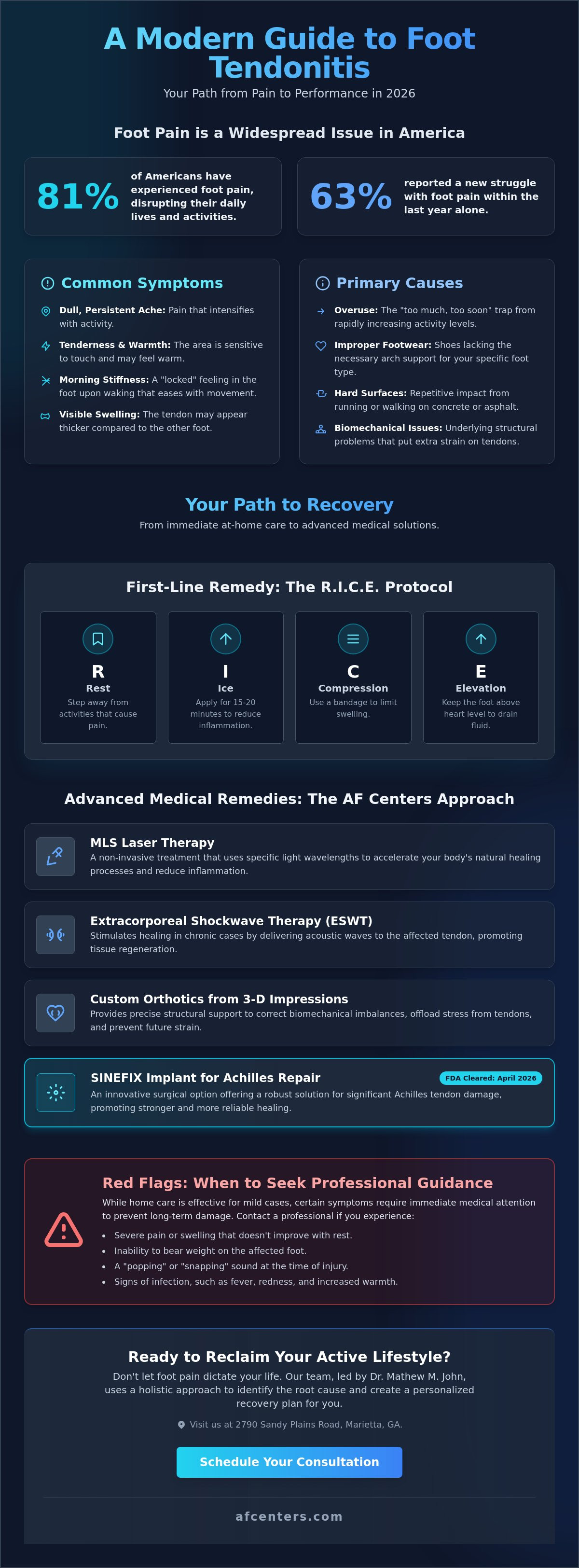
Did you know that 81% of Americans have experienced the frustration of foot pain, with 63% of people reporting a new struggle within the last year? You're likely familiar with that sharp, dull ache that greets you the moment you step out of bed, or the morning stiffness that makes your favorite fitness routine feel like a chore. It's exhausting when your body doesn't keep up with your active lifestyle, but you don't have to navigate this path alone. We're here to empower your recovery with the most effective foot tendonitis remedies, ranging from simple at-home care to the latest medical advancements available in 2026.
Key Takeaways
- Learn how to distinguish between common aches and actual inflammation so you can choose the most effective foot tendonitis remedies for your specific needs.
- Master the RICE protocol and simple anti-inflammatory strategies to soothe irritation at home and protect your long-term mobility.
- Discover advanced, non-invasive treatments like MLS Laser Therapy and ESWT that accelerate healing by stimulating your body's natural recovery processes.
- Understand how custom orthotics created from precise 3-D impressions provide the structural support necessary to prevent future tendon strain.
- Identify the critical "red flag" symptoms that indicate it's time to seek professional guidance from Dr. Mathew M. John at 2790 Sandy Plains Road on the corner of Post Oak Tritt and Sandy Plains.
Identifying Your Foot Pain: Is It Tendonitis?
Foot tendonitis occurs when the thick, fibrous cords that connect your muscles to your bones become irritated or inflamed. This condition often presents as a persistent, dull ache that intensifies when you're active. You might notice localized swelling or a feeling of warmth around the joint. Marietta athletes frequently encounter these symptoms after pushing through a demanding training cycle or participating in local races. While it's tempting to ignore a minor twinge, early detection is vital. Catching the inflammation early helps prevent the tendon from weakening or experiencing a full rupture, which requires a much longer recovery period. Understanding Tendinopathy and its progression allows you to seek professional care before a minor injury becomes a major setback.
To better understand how these conditions develop and how they feel, watch this helpful video:
Distinguishing between a sudden acute injury and a chronic overuse pattern is essential for choosing the right recovery path. Acute tendonitis happens in a moment, perhaps from a misstep or a sudden sprint. Chronic cases develop over weeks or months as repetitive stress builds up. Our team at 2790 Sandy Plains Road on the corner of Post Oak Tritt and Sandy Plains specializes in identifying these patterns to create a personalized plan for you. You can explore our podiatry services to see how we address these specific concerns and offer effective foot tendonitis remedies.
Common Symptoms to Watch For
You might feel significant tenderness directly over the affected tendon when you touch it. Many patients report morning stiffness that feels like the foot is "locked" until they've walked for a few minutes. If you see visible swelling or the tendon looks thicker than the one on your other foot, your body is sending a clear signal. These signs suggest that your current routine is straining your soft tissues beyond their capacity. Ignoring these symptoms can lead to long-term structural changes in the tendon tissue.
Primary Causes of Foot Inflammation
First-Line Remedies: Soothing Pain at Home
Managing the initial discomfort of an inflamed tendon doesn't always require an immediate medical procedure. Many effective foot tendonitis remedies start right in your living room, focusing on calming the irritation and reducing pressure on the affected area. The gold standard for initial care is the RICE protocol: Rest, Ice, Compression, and Elevation. Rest means truly stepping away from the activities that caused the flare-up. Elevation helps drain excess fluid from the area; try to keep your foot above the level of your heart as often as possible during the first few days. These steps provide a supportive foundation for your body's natural healing process.
Temporary immobilization can also play a vital role in your recovery. Using a walking boot or a sturdy brace for a short period limits the range of motion, which prevents the tendon from stretching painfully during daily tasks. While you focus on physical rest, consider anti-inflammatory strategies like a diet rich in omega-3 fatty acids or leafy greens. Over-the-counter options can help manage pain, but you should always consult with a healthcare professional before starting any new medication. It is essential to remember that these home remedies are designed for symptom management. They soothe the pain, but they don't necessarily correct the structural issues that led to the injury in the first place.
The Proper Way to Use Ice and Heat
Apply ice for 15-20 minutes every few hours during the first 48 hours of a flare-up. This window is critical for managing the initial inflammatory response. You should transition to heat only after the initial swelling has subsided, which usually takes about two to three days. Heat helps promote blood flow, which carries vital nutrients to the damaged tissue. Always use a barrier like a thin towel to protect your skin from direct temperature extremes. For a deeper look at these techniques, you can review these At-Home Foot Tendonitis Remedies.
Gentle Stretching for Early Recovery
Advanced Medical Remedies: The AF Centers Approach
MLS Laser Therapy for Pain and Inflammation
MLS Laser Therapy represents a breakthrough in non-invasive care for musculoskeletal pain. This technology uses specific, synchronized wavelengths to penetrate deep into the tissue, effectively reducing inflammation and accelerating cellular repair. It's a completely painless procedure that requires no downtime, making it an ideal choice for busy Marietta residents. It is important to distinguish this from other equipment; we use the MLS Laser strictly for musculoskeletal issues and difficult-to-heal wounds. If you're struggling with fungal conditions, we utilize different specialized tools like the Cutera Genesis Plus NDYag Laser to ensure the most effective results for that specific concern.
Custom Orthotics via 3-D Impressions
Targeted Remedies for Specific Tendon Types
Treating foot pain requires a precise map of your unique anatomy. A "one-size-fits-all" approach often fails because the mechanics of your heel are vastly different from the mechanics of your arch. Understanding the specific location of your discomfort is the first step toward finding the right foot tendonitis remedies. Whether you're feeling a pull behind your ankle or a sharp sting on the top of your foot, your recovery plan must be as unique as your stride. At our clinic located at 2790 Sandy Plains Road on the corner of Post Oak Tritt and Sandy Plains, we prioritize this level of specificity to ensure you aren't just masking pain, but actually correcting the underlying strain.
Remedies for Achilles and Peroneal Tendonitis
Posterior Tibial and Extensor Tendonitis Care
Pain on the inside of your ankle or arch often points to the posterior tibial tendon. This tendon is your arch's primary supporter; when it's inflamed, you risk developing "fallen arches" or flat feet. High-quality arch support is non-negotiable here. We use 3-D impressions to capture the exact height and contour of your arch, ensuring your custom orthotics provide medical-grade stability that generic store-bought inserts simply can't match. This level of accuracy is essential for redistributing pressure away from the medial side of your foot.
If your pain is on the top of your foot, you might have extensor tendonitis. This is frequently caused by shoes that are too tight or tied too snugly across the bridge of the foot. A simple but effective remedy is "window lacing." This technique involves skipping the eyelets directly over the area of maximum sensitivity, creating a "window" that relieves pressure on the tendons. To get a professional assessment and a tailored recovery plan, schedule a consultation for our expert podiatry services today. We'll help you identify exactly which tendon is struggling and provide the targeted care you need to move forward.
When to Visit Our Marietta Podiatry Clinic
Making the choice to see a specialist is a proactive step in your long-term wellness journey. While many people successfully manage minor inflammation with initial at-home foot tendonitis remedies, there comes a point where professional guidance is necessary to ensure you don't face a recurring injury. Dr. Mathew M. John and our dedicated team at AF Centers act as your expert partners, helping you navigate the complexities of foot mechanics with quiet confidence. We prioritize progress over perfection, ensuring your recovery is steady, sustainable, and tailored to your specific fitness goals.
Red Flags: When Home Remedies Aren’t Enough
Sometimes, your body sends signals that require more than just rest and ice. You should seek a professional evaluation if you experience any of the following symptoms:
- Inability to bear weight: If you cannot walk or stand without significant, sharp pain, the structural integrity of your tendon may be at risk.
- Neurological symptoms: Numbness or tingling that accompanies tendon pain often suggests that swelling is affecting nearby nerves.
- Persistent discomfort: Pain that lasts for more than 14 days despite consistent rest and icing indicates that the inflammation has moved beyond the acute phase.
Your Personalized Recovery Journey at AF Centers
Visit us at 2790 Sandy Plains Road on the corner of Post Oak Tritt and Sandy Plains to start your journey back to full mobility. Booking a consultation is the most effective way to gain a clear understanding of your condition and secure a custom treatment plan. We're ready to help you transform your pain into a story of recovery and resilience, ensuring your feet are strong enough for whatever adventure comes next.
Take the First Step Toward Your Pain-Free Future
Our team, led by Dr. Mathew M. John, DPM, FACFAS, is ready to guide you through every stage of your recovery journey. We invite you to visit our neighborhood hub conveniently located at 2790 Sandy Plains Road on the corner of Post Oak Tritt and Sandy Plains. Don't wait for a minor twinge to become a major injury that limits your mobility. Schedule your consultation at our Marietta office today! We're here to help you transform your health and get you back to the active lifestyle you love.
Frequently Asked Questions
Can foot tendonitis go away on its own?
Foot tendonitis rarely resolves completely without some level of active intervention. While minor irritation might feel better after a few days of rest, the underlying mechanical strain often remains. Without proper care, you risk the condition returning or progressing into chronic tendinosis, which involves actual tissue degeneration rather than just simple inflammation.
How long does it take for foot tendonitis to heal?
Recovery timelines typically range from two to six weeks for acute cases. However, if you've been struggling with discomfort for several months, full healing might take 12 weeks or longer. Your progress depends on how strictly you follow your recovery plan and whether you utilize advanced treatments to speed up the cellular repair process.
Is walking good for foot tendonitis?
Walking can be beneficial if it's done within your pain-free range of motion. You should avoid long distances or uneven terrain during the early stages of your recovery to prevent further irritation. If you notice increased stiffness the next morning, it's a sign that you've pushed too far and need to scale back your activity level.
What are the best shoes for someone with foot tendonitis?
The best footwear provides a stable heel counter and a firm midsole that doesn't twist easily. You should look for shoes that offer specific arch support tailored to your foot type. For the highest level of medical accuracy, we recommend custom orthotics made from 3-D impressions to ensure your shoes are working in harmony with your unique anatomy.
Can I use MLS Laser therapy for my foot tendonitis pain?
Yes, MLS Laser therapy is an excellent non-invasive option for reducing musculoskeletal pain and inflammation. It uses specific light wavelengths to reach deep into the tissue and stimulate healing at the cellular level. This treatment is painless, requires no downtime, and is a key component of modern foot tendonitis remedies at our Marietta facility.
How do custom orthotics help with recurring tendon inflammation?
Custom orthotics help by correcting the mechanical imbalances that put excessive strain on your tendons. By using 3-D impressions, we create a device that perfectly supports your arch and realigns your foot. This redistribution of pressure prevents the repetitive micro-trauma that leads to recurring inflammation and long-term discomfort.
Does foot tendonitis require surgery?
What happens if I ignore the pain in my foot tendon?
Ignoring tendon pain can lead to a complete tendon rupture or permanent structural changes in the tissue. What starts as a simple dull ache can transform into a chronic condition that makes even simple daily tasks difficult. Early intervention at our clinic at 2790 Sandy Plains Road on the corner of Post Oak Tritt and Sandy Plains is the best way to protect your long-term mobility.


