

How many months have you spent applying drugstore creams only to watch your fungal foot nail infection stay exactly the same? You likely feel the frustration of hiding your feet during the Georgia summer or the sharp pain of thickened nails pressing against your shoes during a walk around Marietta Square. It's exhausting to invest 90 days into a treatment that fails to deliver results. At our center at 2790 Sandy Plains Road on the corner of Post Oak Tritt and Sandy Plains, we believe you shouldn't have to settle for embarrassment or discomfort.
You deserve a permanent solution that restores your confidence and your vitality. We'll show you why professional fungal laser therapy is the most effective way to treat stubborn infections in the Marietta and Atlanta metro area. By utilizing the Cutera Genesis Plus NDYag Laser, we target the infection with a level of precision that topical creams simply can't match. This guide explores how our expert team helps you achieve clear, healthy looking nails and ensures you're supported throughout your entire wellness journey.
Key Takeaways
- Learn to recognize the early symptoms of a persistent fungal foot nail and understand why these infections require specialized care to fully clear.
- Discover why traditional over-the-counter lacquers often fail to penetrate the nail plate and how professional treatments overcome this biological barrier.
- Explore the benefits of advanced fungal laser therapy using the Cutera Genesis Plus NDYag Laser, a safe and non-invasive alternative to oral medications.
- Gain actionable insights into moisture-wicking habits and shoe hygiene that empower you to maintain clear nails and prevent future recurrence.
- Start your journey toward healthier feet by visiting our supportive team at 2790 Sandy Plains Road on the corner of Post Oak Tritt and Sandy Plains.
Understanding Fungal Foot Nails (Onychomycosis) in Marietta
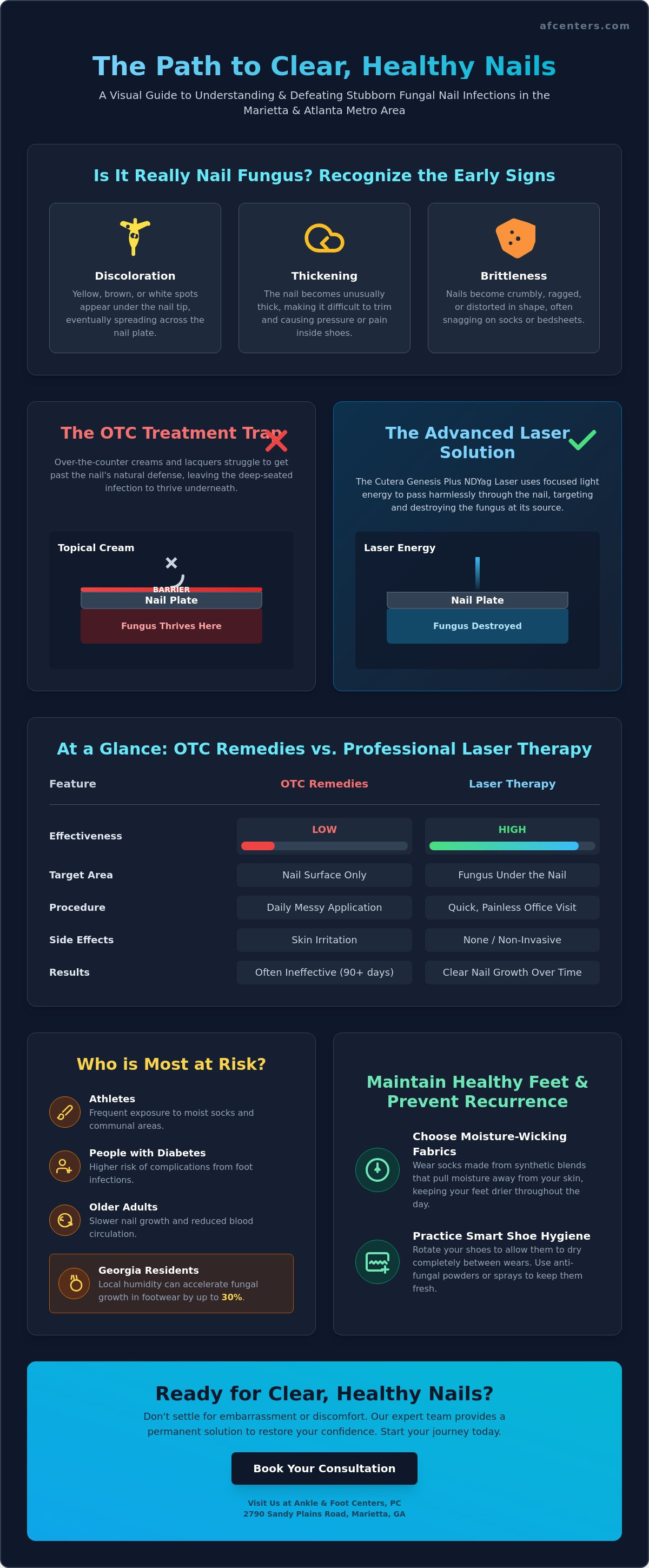
Onychomycosis is a persistent fungal infection that targets the nail bed and the nail plate. It's more than just a change in appearance; it's a medical condition that requires professional attention. You'll often notice your nails becoming brittle, thickened, or discolored. This condition, frequently referred to as Understanding Fungal Nails (Onychomycosis), affects millions of Americans every year. Your toenails are significantly more susceptible than fingernails because they're often trapped in dark, damp shoes. This environment provides the perfect breeding ground for fungi to thrive. In the humid Atlanta metro area, these infections are particularly common due to the high moisture levels in the air.
At Ankle & Foot Centers, PC, we serve as your local experts in podiatric health. We understand how a fungal foot nail can impact your self-esteem and comfort. Our team focuses on providing a supportive environment where you can start your journey toward clearer, healthier nails. We're conveniently located at 2790 Sandy Plains Road on the corner of Post Oak Tritt and Sandy Plains, ready to guide you through effective recovery options.
To help you visualize how these infections develop and how to spot the early signs, watch this helpful video:
How Fungal Infections Take Root
Microscopic fungi known as dermatophytes are the primary culprits behind these infections. These organisms are resilient and enter the skin through tiny, often invisible cracks in the nail or small cuts in the surrounding tissue. If you frequent communal areas like Georgia gyms, local yoga studios, or public pools, your exposure risk increases. These fungi love the heat and moisture of the South. Once they find a home under your nail, they begin to feed on keratin. This is the protein that provides your nails with their structure. Without intervention, the infection can cause the nail to separate from the bed, leading to discomfort during daily walks or exercise routines.
Who is Most at Risk in Georgia?
While anyone can develop a fungal foot nail, certain groups face higher risks. Athletes are often affected because their feet stay in moist socks for extended periods. Older adults also see higher infection rates, as nail growth slows down and blood circulation often decreases with age. People living with diabetes must be especially vigilant, as foot infections can lead to more severe complications. Local humidity levels in Marietta can accelerate fungal growth in footwear by as much as 30% compared to arid climates. Professional podiatric services are essential for these high-risk individuals to ensure the infection doesn't spread. Our clinic utilizes advanced tools like the Cutera Genesis Plus NDYag Laser for fungal laser therapy, ensuring you receive the highest standard of care in a welcoming atmosphere.
Identifying the Symptoms: Is It Really Nail Fungus?
Your feet carry you through every part of your day, so it's vital to pay attention when they begin to change. You might first notice a tiny white or yellow spot under the tip of your toenail. While it seems minor, this is often the earliest warning of a fungal foot nail infection. These organisms are persistent. They don't simply disappear with time; instead, they progress steadily. Clinical data suggests that roughly 10% of the adult population deals with onychomycosis, the medical term for this condition, at any given time. Identifying these changes early empowers you to take control of your health before the problem worsens and affects your daily comfort.
Common Visual Indicators
- Yellow, brown, or white discoloration that covers part or all of the nail plate.
- A noticeable thickening of the nail that makes standard clippers feel ineffective.
- Brittle, crumbly, or ragged edges that snag on your socks or bedsheets.
As the infection takes hold, the nail's texture transforms. It loses its natural shine and takes on a dull, opaque appearance. You'll find that the nail becomes increasingly difficult to manage. Thickened nails aren't just an aesthetic issue. They often indicate that the fungus has moved deep into the nail bed. When the edges become crumbly, small pieces of the nail may even break off during routine activities, leaving the area vulnerable to further irritation.
Physical and Sensory Changes
- A distorted nail shape that may cause the nail to lift away from the skin.
- A slightly foul odor caused by the buildup of infected debris under the nail.
- Discomfort or pressure when wearing closed-toe shoes, especially during physical activity.
You may feel the impact of these changes during a weekend walk through Kennesaw Mountain park. When your toes press against the front of your shoes on a descent, that extra thickness and distortion cause real discomfort. This pressure can lead to inflammation of the surrounding skin. Additionally, the space created when a nail lifts away from the bed becomes a trap for debris, which often results in a distinct, unpleasant smell. These aren't just "aging nails." They're signs of a biological shift that requires professional attention to resolve.
Don't let the progression of symptoms discourage you. Our team at 2790 Sandy Plains Road on the corner of Post Oak Tritt and Sandy Plains provides the expert care you need to restore your nail health. We utilize advanced technology like the Cutera Genesis Plus NDYag Laser for fungal laser therapy to help you achieve clearer results. Understanding these signs is a critical step in Preventing Recurrence and ensuring your feet remain healthy for your next adventure. If you're ready to start your wellness journey, explore our services to see how we can support your path to recovery.
Why OTC Remedies Often Fail Marietta Patients
You’ve likely spent weeks or even months applying drugstore lacquers and creams, hoping for a breakthrough. It’s a common frustration for many in our community. These over-the-counter cures often promise quick results but rarely deliver on the clear nails you deserve. The reality is that a fungal foot nail requires more than a surface-level fix. Your nail is a biological shield designed to keep pathogens and chemicals out. This same protective barrier is exactly why drugstore treatments struggle to work.
Oral medications are another common route, but they carry their own set of challenges. These prescriptions must travel through your bloodstream to reach the nail bed. This process can place significant stress on your internal organs. A 2022 clinical review indicated that approximately 3 percent of patients using certain oral antifungals experienced elevated liver enzymes. Because of these risks, professional supervision is the safest path forward for your long-term wellness.
The Penetration Problem
Topical solutions often fail because they cannot travel through the dense layers of the nail plate. You might spend six months applying a lacquer only to find the infection has moved faster than the medicine. This "waiting game" often results in the fungus spreading to healthy tissue. In our Roswell and Woodstock offices, we move beyond these limitations. We utilize advanced fungal laser therapy, specifically the Cutera Genesis Plus NDYag Laser, to reach the infection without damaging the surrounding skin. This targeted approach is part of the comprehensive services we provide to help you regain your confidence.
Risks of Delaying Professional Care
Ignoring a persistent fungal foot nail doesn't just affect your appearance; it can lead to physical complications. Fungus is opportunistic. It can easily migrate to other nails or cause athlete’s foot on the soles of your feet. Chronic infections often lead to permanent nail thickening and deformity, making it painful to wear your favorite shoes. In some cases, cracks in the skin caused by the fungus allow bacteria to enter, leading to serious secondary infections.
Professional intervention is also vital for an accurate diagnosis. Research shows that about 50 percent of nail discolorations are caused by conditions like psoriasis or repetitive trauma rather than fungus. Treating the wrong issue only delays your healing journey. Our experts at 2790 Sandy Plains Road on the corner of Post Oak Tritt and Sandy Plains provide the clinical evaluation needed to rule out these variables. We are here to act as your steady partner, ensuring you don't have to navigate this path alone.
Advanced Fungal Laser Therapy in Marietta
You deserve to feel confident in your own skin, especially when it's time to wear sandals or walk barefoot. Much like the mission of 512 Aesthetics to enhance natural beauty and skin health, we prioritize treatments that restore your vitality. If you've struggled with a stubborn fungal foot nail, you know that traditional creams and oral medications often fall short. At our Marietta facility, located at 2790 Sandy Plains Road on the corner of Post Oak Tritt and Sandy Plains, we offer a modern solution that prioritizes your health and convenience. Fungal laser therapy provides a safe, non-invasive alternative to systemic pills that can sometimes stress the liver or cause unwanted side effects. We use the Cutera Genesis Plus NDYag Laser to deliver high-level care that fits seamlessly into your busy life. This treatment is quick, typically painless, and requires zero downtime, allowing you to return to your daily wellness routine immediately.
How the Cutera Genesis Plus NDYag Laser Works
The technology behind this treatment is both precise and powerful. The laser light passes directly through the nail plate to reach the infection living underneath. It specifically targets the pigment within the fungi, effectively killing the source of the infection without damaging the surrounding skin or tissue. During the session, you'll likely feel a gentle, therapeutic warming sensation as the energy works to clear the fungal foot nail. This targeted approach ensures the fungus is neutralized while your healthy skin remains untouched. It's a sophisticated way to empower your body's natural healing process, clearing the path for healthy nail production. Our patients appreciate this high-tech approach because it avoids the mess of daily lacquers and the risks associated with long-term medication use.
What to Expect During Your Appointment
Your journey toward clearer nails begins with a comprehensive professional evaluation. Our team takes the time to understand your specific needs and goals in a non-judgmental, supportive environment. If structural support is required to prevent future irritation or pressure on the nail bed, we may take 3-D impressions for custom orthotics. Most patients achieve their desired results through a series of 3 short sessions, each lasting about 15 to 20 minutes. You won't see an instant change in the nail's appearance because the existing damaged nail must grow out naturally. However, as the weeks progress, you'll notice a clear, healthy nail beginning to emerge from the base. This transformation is a gradual process that rewards your commitment to long-term foot health and vitality. Our staff stays by your side throughout this process, providing the professional guidance you need to maintain your results.
Ready to reclaim your confidence and step out in style? Explore our advanced podiatry services and start your journey to clearer nails today.
Preventing Recurrence and Taking the Next Step
Maintaining your results after a successful treatment for a fungal foot nail is just as vital as the procedure itself. You’ve invested time in your wellness, so protecting that progress ensures your feet stay healthy for the long term. Fungal spores are resilient. They can survive in your environment for months if you don't take proactive steps to eliminate them. By following a consistent hygiene routine, you transform your daily habits into a shield for your foot health.
Post-Treatment Maintenance Tips
Your shoes are the most common hiding place for pathogens. We recommend using an antifungal spray inside every pair you own to kill lingering spores. Don't wear the same shoes two days in a row; give them at least 24 hours to air out completely. This simple rotation reduces moisture buildup significantly, creating an environment where fungus cannot thrive. When you visit local spots like East Cobb Park or your neighborhood gym, always wash and dry your feet thoroughly afterward.
Moisture control is your best defense. Moisture-wicking socks made of synthetic blends or merino wool are superior to cotton because they pull sweat away from the skin. This keeps your nail beds dry even during intense physical activity. Consistent professional care helps you prevent recurrence and keeps your toes looking their best. Scheduling regular check-ups allows Dr. Mathew M. John to monitor your progress and catch any early signs of reinfection before they spread. These visits are a proactive part of your wellness journey, ensuring your fungal foot nail concerns remain a thing of the past.
Schedule Your Consultation Today
Reclaiming your confidence starts with a single step toward expert care. You don't have to hide your feet in closed-toe shoes or feel self-conscious during the summer months. Our team utilizes the Cutera Genesis Plus NDYag Laser to target the source of the infection safely and effectively. This specialized fungal laser therapy is a cornerstone of our commitment to your long-term vitality. It represents the high-end, state-of-the-art care we provide to every member of our community.
Visit us at our Marietta clinic located at 2790 Sandy Plains Road on the corner of Post Oak Tritt and Sandy Plains. We've built a supportive, expert environment where your goals are our priority. You’ll find a professional atmosphere that feels like a neighborhood hub, dedicated to guiding you through every stage of your recovery. Our staff is ready to empower you with the tools and treatments necessary for clear, healthy nails. You can trust our expertise to help you move forward with confidence and strength.
Start Your Journey Toward Clearer, Healthier Nails
Living with a fungal foot nail infection can feel like an endless cycle of frustration, especially when store-bought creams don't deliver results. You've learned that effective treatment requires more than surface-level solutions to truly clear the infection. Led by Dr. Mathew M. John, DPM, FACFAS, our team has served Marietta and the Atlanta Metro for over 20 years. We utilize the advanced Cutera Genesis Plus NDYag Laser to target infection at the source without the side effects of oral medications. You'll find us conveniently located at 2790 Sandy Plains Road on the corner of Post Oak Tritt and Sandy Plains. Your path toward clear nails doesn't have to be a solo effort. We're here to provide the expert guidance and state-of-the-art technology you deserve. Don't let discomfort or embarrassment hold you back from the activities you love.
Schedule your fungal laser therapy consultation in Marietta today!
We look forward to welcoming you into our community and helping you achieve the lasting results you've been looking for. Your health and confidence are our top priorities.
Frequently Asked Questions
Is fungal laser therapy painful?
Fungal laser therapy is a comfortable procedure that most patients describe as a gentle, warming sensation on the nail bed. You won't need anesthesia or numbing agents because the Cutera Genesis Plus NDYag Laser targets the infection without damaging the surrounding skin. Each session lasts about 15 to 20 minutes. You can walk out of our office at 2790 Sandy Plains Road on the corner of Post Oak Tritt and Sandy Plains and resume your daily activities immediately.
How many sessions of fungal laser therapy will I need?
Most clinical studies indicate that a series of 3 treatment sessions spaced 4 to 6 weeks apart provides the best results for clearing a fungal foot nail. While some mild cases respond after a single visit, completing the full protocol ensures the laser reaches all dormant spores. We'll monitor your progress at our Marietta facility to determine if your specific condition requires additional care to achieve the clarity you desire.
Can I wear nail polish during or after the treatment?
You must remove all nail polish, decals, and lotions before your appointment so the laser energy can penetrate the nail plate effectively. After the treatment, we recommend waiting 24 hours before applying any polish. Switch to antifungal or breathable nail polish brands to prevent trapping moisture. Keeping your nails clear between sessions allows you to track the 1 to 2 millimeters of healthy new growth that appears each month.
Is toenail fungus contagious to my family members?
Toenail fungus is highly contagious and spreads through direct contact or shared surfaces like bath mats and showers. Research shows that 50 percent of nail infections originate from household transmission. To protect your family, avoid sharing towels or nail clippers and wear flip-flops in common wet areas. Treating your fungal foot nail early at our center helps stop the spread of spores within your home environment.
Will my insurance cover fungal laser therapy in Marietta?
Most private insurance providers and Medicare currently classify fungal laser therapy as a cosmetic procedure, so they typically don't cover the cost. However, you can often use your Health Savings Account (HSA) or Flexible Spending Account (FSA) funds to pay for treatment with the Cutera Genesis Plus NDYag Laser. We provide detailed documentation at our office on 2790 Sandy Plains Road on the corner of Post Oak Tritt and Sandy Plains to help you submit your claim.
How long does it take for the nail to look normal again?
It takes 6 to 12 months for a healthy new nail to grow out completely and replace the damaged tissue. The laser kills the fungus instantly, but the existing discolored nail must grow out naturally. You'll likely see a clear section of new growth at the base of the nail within 8 to 12 weeks. Consistency is key during this journey toward healthier, clearer feet and improved wellness.
What happens if I leave my fungal foot nail untreated?
Leaving a fungal infection untreated often leads to the nail becoming thick, brittle, and painful when wearing shoes. Over time, the infection can spread to all 10 toes or cause secondary bacterial infections like cellulitis, especially for the 37 million Americans living with diabetes. The fungus won't disappear on its own. Taking action now prevents permanent nail bed damage and keeps your feet functional and healthy for your active lifestyle.


