

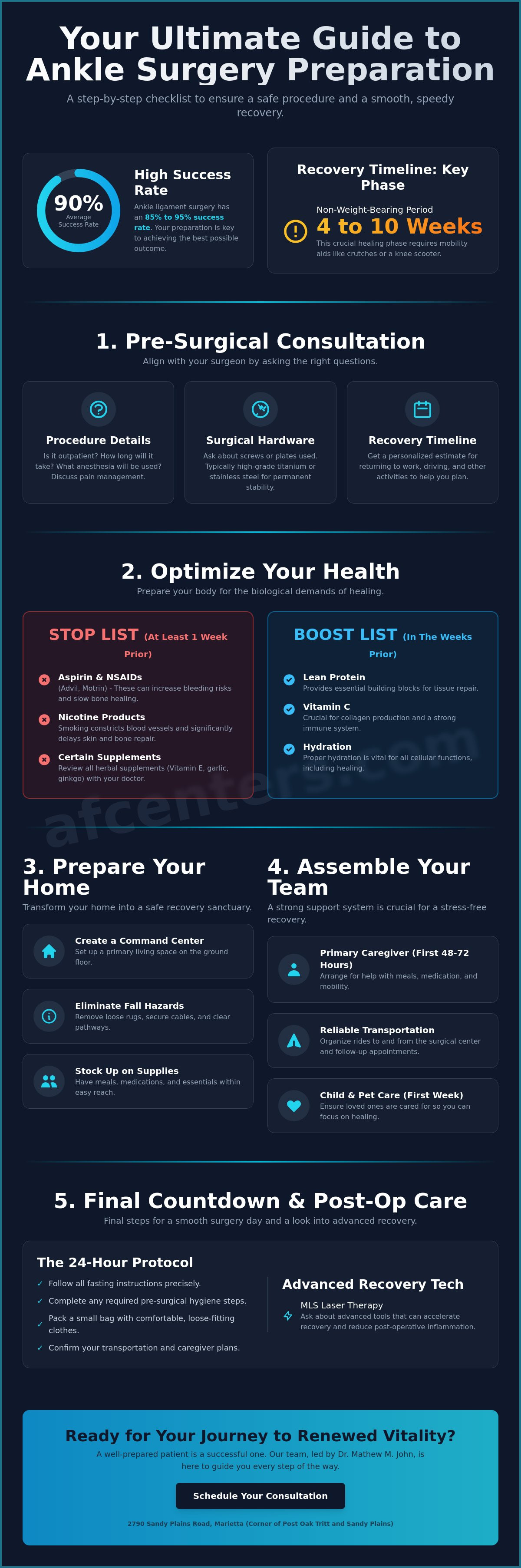
Did you know that while ankle ligament surgery boasts a success rate between 85% and 95%, your long-term results depend as much on your environment as they do on the surgeon's skill? It is completely natural to feel a pinch of anxiety about being non-weight-bearing for 4 to 10 weeks or managing discomfort after the procedure. You want to ensure your home is a sanctuary for healing rather than a series of obstacles. At our clinic located at 2790 Sandy Plains Road on the corner of Post Oak Tritt and Sandy Plains, we believe that a well-prepared patient is a successful one.
This guide will show you exactly how to prepare for ankle surgery by providing expert medical advice and practical home-readiness checklists. We promise to help you master your pre-surgery timeline, giving you the confidence to navigate your recovery journey with ease. You'll find a clear breakdown of what to expect, from organizing your living space to understanding which medications are safe to use. We also preview advanced recovery tools like MLS Laser Therapy for inflammation and explain how our community-focused team supports your personal journey toward renewed vitality.
Key Takeaways
- Identify the essential questions to ask during your pre-surgical consultation to ensure you and your surgical team are perfectly aligned.
- Learn how to prepare for ankle surgery by managing your "Stop List" of medications and lifestyle habits that can impact your healing speed.
- Transform your home into a safe, accessible sanctuary by setting up a ground-floor command center and eliminating common fall hazards.
- Follow a precise 24-hour countdown protocol for fasting and hygiene to minimize infection risks and ensure a smooth surgery day.
- Discover how professional guidance and advanced tools like MLS Laser Therapy can accelerate your recovery and reduce post-operative inflammation.
The Pre-Surgical Consultation: Asking the Right Questions
Your pre-operative visit is the most critical hour of your preparation journey. It is much more than a routine medical checkup; it's your opportunity to build a partnership with Dr. Mathew M. John. During this time, you'll dive into the specifics of reconstructive foot and ankle surgery. Understanding the mechanics of your procedure helps reduce anxiety and sets realistic expectations for your results. Whether you are dealing with chronic instability or Understanding Ankle Fractures, knowing the "why" behind the "how" empowers you to take charge of your health.
Learning how to prepare for ankle surgery begins with a deep dive into your mobility future. One of the most vital topics to discuss is your "weight-bearing" status. This term refers to how much pressure you can safely put on your foot after the procedure. Many patients are surprised to learn they may need to be completely non-weight-bearing for 4 to 10 weeks. This status dictates whether you'll need crutches, a walker, or a knee scooter. Dr. John will also discuss anesthesia options and pain management strategies, ensuring you feel comfortable and informed before you ever step into the operating room.
To better understand the steps involved in your surgical journey, watch this helpful pre-operative educational video:
Essential Questions for Your Surgeon
Don't hesitate to ask about the fine details of your procedure. You should know if your surgery is outpatient and approximately how long it will take. If your surgery requires hardware, ask about the specific screws or plates being used; these are often high-grade titanium or stainless steel designed for permanent stability. Finally, clarify your anticipated timeline for returning to work and driving. Since every recovery is unique, getting a personalized estimate helps you plan your life with confidence. Understanding how to prepare for ankle surgery means knowing exactly when you can expect to get back to your favorite Marietta trails or community events.
Scheduling Your Support System
Success is a team effort. You'll need a dedicated primary caregiver for at least the first 48 to 72 hours to assist with meals, medication, and mobility. You must also arrange reliable transportation to and from our Marietta surgical center. If you have children or pets, coordinate their care for at least the first week of your recovery. By handling these logistics early, you can focus entirely on your body's healing process. Our team is here to guide you every step of the way at our office located at 2790 Sandy Plains Road on the corner of Post Oak Tritt and Sandy Plains.
Optimizing Your Health: Medications and Lifestyle Adjustments
Knowing how to prepare for ankle surgery involves more than just scheduling the date; it requires preparing your body for the biological demands of healing. Your "Stop List" is one of the most important tools in this phase. Dr. John typically asks patients to stop taking Aspirin and non-steroidal anti-inflammatory drugs (NSAIDs) like Advil or Motrin at least one week before the procedure. These medications can increase bleeding risks and may even slow down the essential process of bone healing. By clearing these from your system, you create a safer environment for your reconstructive surgery.
Lifestyle choices play a massive role in how quickly you return to your favorite activities. If you use nicotine, now is the time to pause. Smoking constricts your blood vessels and reduces the oxygen levels in your blood, which significantly delays skin and bone repair. On the positive side, you can actively boost your recovery through nutrition. Focus on increasing your intake of lean protein and Vitamin C. These nutrients provide the building blocks for tissue repair and collagen production. Reviewing resources like the Before Your Surgery guide can help you finalize these health-optimizing steps.
Medication Safety Protocols
You must also review any herbal supplements or vitamins with our team. Common items like Vitamin E, garlic, or ginkgo biloba can thin your blood unexpectedly. If you take chronic medications for blood pressure or other conditions, we'll give you specific instructions on when to take your final dose. For those on prescribed blood thinners, we coordinate directly with your primary care physician to ensure a safe transition. This collaborative approach ensures your vitals remain stable throughout the surgical experience.
Supportive Gear and Orthotics
A key gap in many preparation guides is the role of post-surgical alignment. This is a vital part of learning how to prepare for ankle surgery because it focuses on your long-term comfort. We utilize advanced 3-D impressions to create custom orthotics that support your foot's new structure. Unlike traditional messy molds, 3-D impressions provide a precise, high-definition map of your foot. This ensures your custom supports fit perfectly within your recovery footwear. Getting these impressions taken before your surgery allows us to have your gear ready the moment you begin your weight-bearing transition. If you have questions about which shoes will work best, we can discuss custom orthotics and footwear options during your next visit at 2790 Sandy Plains Road on the corner of Post Oak Tritt and Sandy Plains.
Preparing Your Home for a Non-Weight-Bearing Life
Your home environment plays a massive role in your safety and comfort during the recovery process. Since most patients face a non-weight-bearing period of 4 to 10 weeks, your living space must adapt to your temporary mobility needs. Learning how to prepare for ankle surgery means looking at your house through a new lens; every throw rug becomes a trip hazard and every staircase becomes a mountain. We recommend setting up a "Recovery Command Center" on the ground floor to eliminate the need for climbing stairs during the first few weeks of healing.
Mobility aids are your primary tools for independence during this time. While standard underarm crutches are a common choice and typically cost between $20 and $50, they can be physically taxing. Many Marietta patients prefer a knee scooter or a hands-free crutch for better stability and ease of movement. Higher-end hands-free models can range from $150 to $450, but they allow you to use your arms for daily tasks. Before your procedure at our office at 2790 Sandy Plains Road on the corner of Post Oak Tritt and Sandy Plains, test your chosen device to ensure you feel confident navigating tight corners and doorways.
Nutrition is another vital pillar of home preparation. Stock your "surgical pantry" with easy-to-prepare, anti-inflammatory foods like walnuts, berries, and leafy greens. Prepare and freeze healthy meals in advance so you don't have to worry about standing in the kitchen. Focus on high-protein snacks and hydrating fluids to support the tissue repair process we discussed in the previous section. This proactive approach reduces stress and ensures your body has the fuel it needs to mend.
The Recovery Station Setup
Designate a specific spot, like a recliner or a sturdy sofa, as your primary healing hub. Position a stable chair with an ottoman nearby; keeping your ankle elevated above your heart is crucial for managing swelling. Organize your chargers, medications, and water bottles within arm’s reach on a side table. Set up your entertainment, such as books and remotes, in advance to minimize unnecessary movement and keep your spirits high while you rest.
Bathroom and Safety Modifications
The bathroom is often the most challenging room to navigate after surgery. Install a shower chair and a handheld showerhead to make hygiene routines safe and manageable. Add non-slip mats to all tiled surfaces to prevent falls on wet floors. We also highly recommend purchasing a high-quality cast protector. This simple tool is essential for keeping your surgical incisions and bandages completely dry, which is a non-negotiable requirement for preventing post-operative infections.
The 24-Hour Countdown: Logistics and Surgery Day
The final 24 hours before your procedure are about precision and peace of mind. You've already done the heavy lifting by preparing your home and optimizing your health; now it's time to focus on the final logistical details. Understanding how to prepare for ankle surgery means respecting the "NPO after midnight" rule. NPO is a medical term that means "nothing by mouth." This is a non-negotiable safety standard for anyone receiving anesthesia. Even a small sip of water, a piece of gum, or a breath mint can lead to a surgical delay or even a cancellation. Your stomach must be completely empty to prevent complications during the procedure.
Your morning routine should include a thorough shower using the specialized surgical soap recommended by our team. This antiseptic wash reduces bacteria on the skin and serves as your primary defense against post-operative infection. When you dress, choose your loosest, most comfortable clothing. Wide-leg sweatpants or oversized trousers are the best options because they must fit easily over a bulky post-operative cast or splint. Learning how to prepare for ankle surgery also includes packing a small, efficient bag. Ensure you have your photo ID, insurance card, and a pair of warm, non-skid socks to keep you comfortable in the recovery room.
Navigating to Our Marietta Clinic
We want your arrival to be as smooth and stress-free as possible. We ask that you check in 60 to 90 minutes before your scheduled procedure. This buffer allows our administrative team to finalize your paperwork and gives the clinical staff time to get you settled without any sense of rush. Our facility is located at 2790 Sandy Plains Road on the corner of Post Oak Tritt and Sandy Plains. We provide convenient parking directly near the entrance, which is specifically designed for easy access. If you find that your mobility is limited on the morning of surgery, please let us know so we can assist you from your vehicle to the front desk.
What to Expect in the Pre-Op Suite
Once you are in the pre-op suite, our focus is entirely on your safety and comfort. A nurse will start an IV and verify your medical history one last time. Dr. Mathew M. John will visit you to perform the surgical marking, a standard safety protocol where he initials the exact site of the procedure. You will also meet with your anesthesiology team to review your sedation plan and address any final questions. This is a moment for quiet confidence; you are surrounded by a team that views you as a partner in your own health journey. If you have any last-minute questions about your recovery path, you can review our surgical services to feel fully prepared for the road ahead.
Post-Surgical Care and Advanced Recovery Technologies
Once your procedure is complete, your focus shifts to an active and intentional recovery. The "First 48" protocol is your blueprint for minimizing discomfort and protecting your surgical results. During these first two days, you must keep your ankle elevated above the level of your heart to reduce swelling. Use ice packs behind your knee or around the bandages as directed by our team. While you learned how to prepare for ankle surgery by setting up your home station, now is the time to use it. Staying ahead of pain by following your prescribed medication schedule is much more effective than trying to "catch up" once discomfort becomes intense.
Your journey back to a full, active lifestyle involves more than just rest. We monitor your progress closely through a series of follow-up appointments. It's vital to recognize "Red Flags" that require immediate attention. If you experience a fever over 101 degrees, persistent calf pain, or unusual shortness of breath, call our Marietta office right away. These symptoms are rare, but early communication ensures your safety. As your bone and skin continue to mend, we'll guide you through the roadmap to physical therapy, helping you regain the strength and flexibility needed for your favorite local activities.
Advanced Healing with MLS Laser Therapy
To help you return to your routine faster, we offer MLS Laser Therapy. This sophisticated technology is specifically designed to treat musculoskeletal pain and inflammation. By using synchronized light wavelengths, the laser penetrates deep into the tissue to stimulate cellular repair. We prioritize this non-invasive technology because it significantly accelerates tissue regeneration and aids in closing difficult-to-heal open wounds. It's a painless, rewarding part of your recovery that helps you bridge the gap between surgery and your first steps back into the community.
Long-Term Success and Follow-Up
Your first post-operative visit typically occurs within 7 to 10 days for your initial dressing change. This is a milestone in your journey where Dr. John examines the incision and confirms your healing is on track. Depending on your specific procedure, you'll eventually transition from a cast or splint into a walking boot. This transition is a rewarding opportunity to begin gentle weight-bearing exercises. We are committed to being your expert partner throughout this entire process. We look forward to seeing your progress during your specialized care visits at our office at 2790 Sandy Plains Road on the corner of Post Oak Tritt and Sandy Plains. If you have questions about your long-term recovery plan, review our comprehensive foot and ankle services to see how we support your path to vitality.
Step Toward Your Renewed Vitality
Your journey to a pain-free lifestyle is a partnership between your preparation and our professional expertise. By mastering how to prepare for ankle surgery, you've already laid a foundation for a smoother recovery. You now understand the importance of a ground-floor command center, the role of 3-D impressions for custom support, and the logistics of your surgery day. These proactive steps ensure that your focus remains on healing rather than navigating obstacles. At our facility located at 2790 Sandy Plains Road on the corner of Post Oak Tritt and Sandy Plains, we provide the sophisticated resources you need for long-term success.
Dr. Mathew M. John brings board-certified expertise to every procedure, ensuring you receive the highest level of care. Our on-site MLS Laser Therapy is ready to help reduce post-operative inflammation and accelerate your wound healing. You don't have to navigate this path alone. Our team is here to guide you from your first consultation through your final physical therapy milestone. It's time to reclaim your mobility and get back to the activities you love in our Marietta community. Schedule Your Surgical Consultation at Our Marietta Office today. We look forward to supporting your personal journey toward better health.
Frequently Asked Questions
How long is the recovery time for reconstructive ankle surgery?
Recovery from reconstructive ankle surgery typically requires a non-weight-bearing period of 4 to 10 weeks. While many patients return to former activities within 8 to 12 weeks, full healing is a gradual, rewarding process. Part of knowing how to prepare for ankle surgery is setting realistic expectations for this timeline. Our team provides a personalized roadmap to ensure you feel supported during every stage of your progress.
Can I use a knee scooter immediately after my ankle procedure?
You can typically use a knee scooter as soon as you return home from our clinic. It's a highly effective mobility aid that offers more stability and freedom than standard crutches. We recommend practicing with your scooter before your surgery date so you feel confident navigating your home's recovery station. This proactive step helps you maintain independence while strictly adhering to your non-weight-bearing requirements.
Will I need physical therapy after my ankle surgery in Marietta?
Physical therapy is an essential component of your long-term success and vitality. These sessions focus on restoring strength, flexibility, and balance to your ankle joint once you are cleared for activity. Most patients begin their rehabilitation after transitioning into a walking boot. This professional guidance ensures you don't navigate the path to full health alone while minimizing the risk of future injuries or setbacks.
What is the Swift Treatment for warts, and can I get it during surgery recovery?
Swift Treatment is the latest advanced treatment for stubborn or recalcitrant warts using microwave ablation technology. When you are learning how to prepare for ankle surgery, it's helpful to know about all the specialized care options available at our Marietta hub. You can schedule Swift sessions for warts on your non-surgical foot during your recovery period. Because this technology is highly targeted, it won't interfere with your ankle's healing process.
Is MLS Laser Therapy the same as the laser used for fungal toenails?
MLS Laser Therapy is strictly for treating musculoskeletal pain, inflammation, and difficult-to-heal open wounds. It is quite different from the equipment we use for fungal infections. For those conditions, we utilize fungal laser therapy or the Cutera Genesis Plus NDYag Laser. Maintaining this clear distinction ensures you receive the most effective, specialized technology for your specific needs at 2790 Sandy Plains Road on the corner of Post Oak Tritt and Sandy Plains.
How many Swift Treatment sessions are typically required for recalcitrant warts?
Swift microwave ablation treatment typically requires four treatments to achieve optimal results. We separate these sessions by exactly one month each to allow your immune system to respond effectively to the microwave energy. This structured approach is specifically designed to eliminate stubborn warts that haven't responded to traditional therapies. It is a reliable, sophisticated solution for patients seeking clear skin without the hassle of daily home treatments.
Is there any downtime after a Swift microwave ablation treatment?
There is absolutely no downtime for patients after receiving the Swift microwave ablation treatment. You can walk out of our office and resume your normal daily activities immediately without any restrictions. This makes it an incredibly convenient option for busy individuals. Unlike older methods, there are no bandages or messy acids required, allowing you to focus on your personal goals without any interruption to your routine.
How do I shower while wearing a post-surgical cast or splint?
To shower safely, you must use a high-quality cast protector and a sturdy shower chair. These tools ensure your surgical incisions remain completely dry while preventing slips in the bathroom. Place a non-slip mat on the tiled floor and use a handheld showerhead to maintain your hygiene routine comfortably. Keeping your bandages dry is a non-negotiable requirement for preventing infection and ensuring a smooth, successful recovery.


