

Imagine you are halfway through a morning walk when a sharp, shooting pain radiates between your toes. It feels exactly like a stray marble is stuck in your shoe, but when you stop to check, there is nothing there. This persistent numbness and burning can make even a simple stroll through the neighborhood feel like a chore. You likely feel frustrated that your footwear choices and activity levels are being dictated by discomfort rather than your personal style or fitness goals.
At our clinic located at 2790 Sandy Plains Road on the corner of Post Oak Tritt and Sandy Plains, we understand how these symptoms can limit your life. Dr. Mathew John is a Board Certified Foot Surgeon by the American College of Foot and Ankle Surgery who acts as a dedicated partner in your health journey. Whether your recovery involves precision 3-D impressions, non-invasive MLS Laser therapy, or expert neuroma surgery Marietta, our goal is to restore your vitality. You will learn how advanced diagnostics and surgical excellence can eliminate that "marble" sensation for good. We are here to help you avoid permanent nerve damage and get you back to the hiking, sports, and active lifestyle you love.
Key Takeaways
- Identify the classic signs of Morton’s neuroma, such as sharp shooting pains between your toes and the persistent sensation of walking on a marble.
- Learn how Dr. Mathew John uses specialized physical exams and imaging to pinpoint nerve thickening and rule out other conditions like stress fractures.
- Explore non-invasive relief options, including custom orthotics created with precision 3-D impressions and advanced MLS Laser Therapy for inflammation.
- Understand when neuroma surgery Marietta is the most effective path to permanent relief through expert decompression or excision techniques.
- Discover the benefits of receiving sophisticated care from a surgeon Board Certified by the American College of Foot and Ankle Surgery right in your community.
Understanding Neuromas: Why It Feels Like You Are Walking on a Marble
If you've ever felt like you're walking on a marble or a bunched-up sock that just won't stay flat, you aren't alone. This sensation is the hallmark of a condition known as Morton's neuroma. It specifically targets the nerves in the ball of your foot, most often between your third and fourth toes. While it might feel like a physical object is trapped in your shoe, the pain actually comes from within your foot. It's vital to recognize that this discomfort is a legitimate medical condition rather than just "tired feet" from a long day. At our clinic at 2790 Sandy Plains Road on the corner of Post Oak Tritt and Sandy Plains, we see many patients who have ignored these symptoms for months, hoping they would simply fade away.
To better understand this concept, watch this helpful video:
What Exactly is a Morton’s Neuroma?
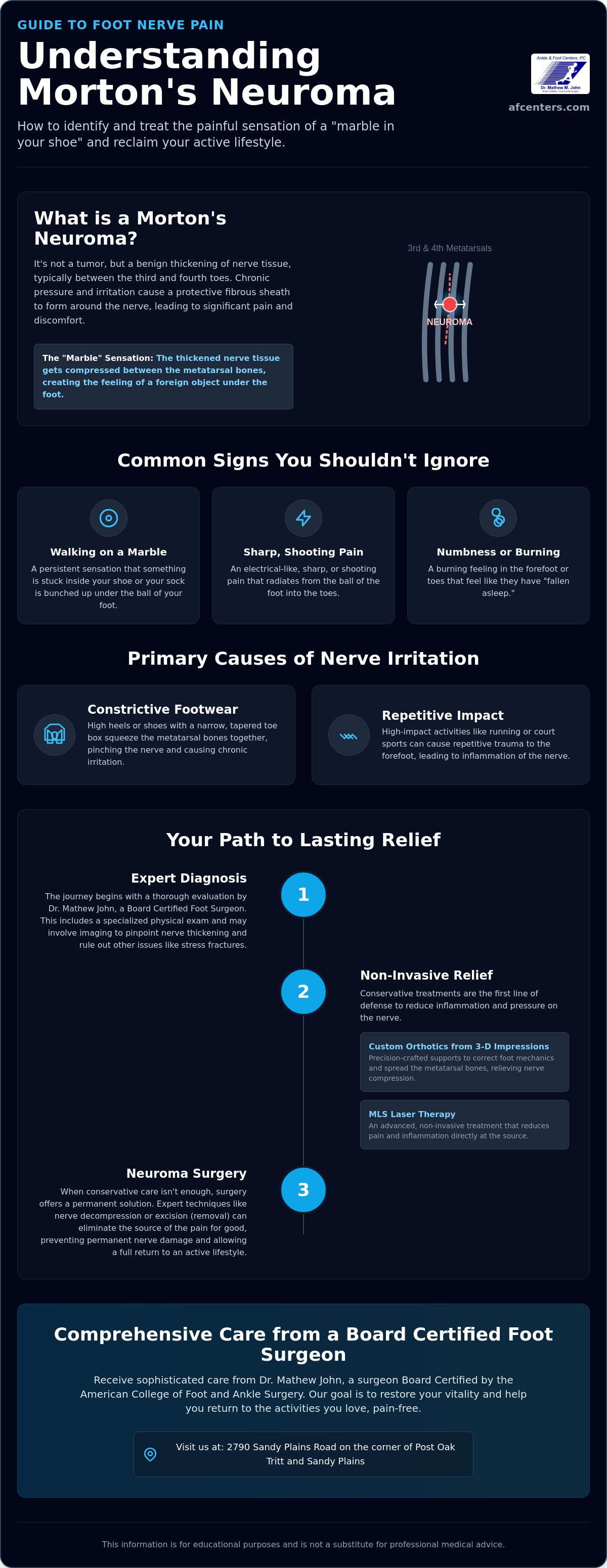
Despite how it sounds, a neuroma isn't a tumor. It's actually a benign but painful thickening of the nerve tissue. Specifically, it affects the plantar digital nerves that provide sensation to your toes. When these nerves are squeezed or irritated, your body responds by building a protective fibrous sheath around the nerve. Think of it like a callous forming on your skin, but this "callous" is inside your foot and presses against sensitive structures. Dr. Mathew John, who is a Board Certified Foot Surgeon by the American College of Foot and Ankle Surgery, emphasizes that this thickening is an inflammatory response to chronic stress. Left untreated, the sheath continues to grow, making the "marble" sensation more prominent and painful.
Why Nerves in the Foot Become Inflamed
Your feet are complex mechanical structures, and the space between the metatarsal bones is quite narrow. Several factors can trigger the inflammation that leads to a neuroma. High-heeled shoes or footwear with a narrow toe box often squeeze the bones together, pinching the nerve in between. For active Marietta residents, repetitive impact from running or court sports can also cause the nerve to rub against nearby ligaments. This constant friction creates a cycle of inflammation and swelling. While we always explore conservative options like MLS Laser Therapy first, understanding these triggers is the first step in your recovery. Early intervention is key because it helps you avoid permanent nerve damage and determines if neuroma surgery Marietta might be a necessary step in your journey back to pain-free movement.
Recognizing Neuroma Symptoms and Causes in Active Marietta Residents
Living an active life in Marietta often means spending hours on your feet, whether you are navigating the shops at the Avenue or hitting the trails. When a neuroma develops, it doesn't just feel like a dull ache. It often presents as a sharp, electrical shooting pain that travels from the ball of your foot into your third and fourth toes. You might also notice a physical sensation known as a "Mulder's Click." This happens when the thickened nerve tissue gets squeezed between the metatarsal bones during movement, creating a distinct, uncomfortable clicking feeling. Understanding the symptoms and causes of Morton's neuroma is the first step toward getting back to your routine without hesitation.
Common Signs You Should Not Ignore
The symptoms of a neuroma are often specific and predictable. You may feel a burning sensation in the forefoot or numbness that makes your toes feel like they've "gone to sleep." These sensations typically intensify during the push-off phase of your stride, which is when the pressure on the nerve is greatest. Many patients find that they can achieve temporary relief by simply removing their shoes and massaging the ball of the foot. This immediate ease is a strong indicator that footwear pressure is a primary factor. If you find yourself constantly stopping to rub your feet during a walk, it is a sign that your nerve tissue is under significant distress. Recognizing these early warning signs can help you seek treatment before the condition requires more intensive neuroma surgery Marietta.
Risk Factors: From High Heels to High-Impact Sports
Your lifestyle and biomechanics play a major role in how neuromas develop. Footwear with narrow toe boxes or high heels are frequent culprits, as they force the metatarsal bones together and pinch the nerve. For our local athletes, high-impact activities like running on the Silver Comet Trail or playing competitive tennis can aggravate the condition through repetitive pressure. Existing foot deformities, such as bunions or hammertoes, also increase your risk by altering how weight is distributed across your foot.
Dr. Mathew John is a Board Certified Foot Surgeon by the American College of Foot and Ankle Surgery who understands how these local activities impact your health. He can help you determine if your pain is a temporary flare-up or a chronic issue that needs professional intervention. If you are ready to address the root cause of your discomfort, you can explore our comprehensive foot care services at our office located at 2790 Sandy Plains Road on the corner of Post Oak Tritt and Sandy Plains. Taking action now can prevent the inflammation from escalating into permanent nerve damage, ensuring you stay active in our community for years to come.
Expert Diagnosis: The Path to Precision Care at Ankle & Foot Centers, PC
Finding relief starts with a precise understanding of your unique foot anatomy. At Ankle & Foot Centers, PC, we don't just look at the symptoms; we investigate the root cause of your discomfort. Our office is conveniently located at 2790 Sandy Plains Road on the corner of Post Oak Tritt and Sandy Plains, where we provide a welcoming environment for your diagnostic journey. While many patients worry that their pain immediately necessitates neuroma surgery Marietta, a thorough evaluation often reveals a variety of conservative paths toward recovery.
Comprehensive Physical Evaluation with Dr. Mathew John
Dr. Mathew John is a Board Certified Foot Surgeon by the American College of Foot and Ankle Surgery. He begins every consultation with a comprehensive physical evaluation designed to put you at ease. During this exam, he uses specific palpation techniques to isolate the exact source of your nerve irritation. By applying gentle pressure to the space between the metatarsal bones, he can often reproduce the "click" or shooting pain that defines a neuroma. Your personal history is just as important as the physical exam. We take the time to discuss your activity levels, footwear, and when the pain first appeared. This holistic approach ensures we recommend the most effective care for your specific lifestyle.
Sometimes, foot pain can be misleading. Research indicates that X-rays are crucial to rule out stress fractures, which can mimic neuroma symptoms in approximately 15% of patients. While a neuroma is soft tissue and won't show up on a standard X-ray, these images help us ensure your bones are healthy and stable. In more complex cases, an MRI or ultrasound might be used to get a clear view of the nerve thickening itself. This diagnostic precision is what sets our practice apart and builds the foundation for your personalized treatment plan.
Utilizing 3-D Impressions for Structural Analysis
Understanding the "why" behind your pain often comes down to your foot's structure. We utilize advanced 3-D impressions to create an exact, three-dimensional model of your foot architecture. This sophisticated method captures the unique contours of your feet with incredible detail, providing a superior level of accuracy. By analyzing this model, we can identify biomechanical imbalances that put extra pressure on your nerves. These detailed models are then used to design custom orthotics that provide targeted support. Correcting these structural issues is a vital step in managing pain and can often delay or even prevent the need for neuroma surgery Marietta.
Advanced Treatment Options for Neuroma Pain Relief
Before moving toward neuroma surgery Marietta, our team at Ankle & Foot Centers, PC prioritizes a "conservative first" approach. We believe in providing the least invasive path to recovery whenever possible. Research suggests that early diagnosis allows up to 80% of patients to recover using non-surgical methods. Your journey to pain-free living often begins with reducing inflammation and correcting the biomechanical issues that caused the nerve to thicken in the first place. By addressing these factors early, we can often stop the progression of the neuroma and help you avoid the operating room entirely.
Non-Invasive Therapies and MLS Laser
One of the most effective tools in our arsenal is MLS Laser Therapy. This advanced technology is a breakthrough for managing musculoskeletal inflammation and nerve-related pain. It works by delivering specific wavelengths of light energy deep into the tissues surrounding the affected nerve. This process stimulates cellular repair and rapidly reduces swelling without the need for needles or medication.
Patients often describe the treatment as soothing and completely painless. Since there is no downtime, you can return to your daily activities immediately after your session. It’s a rewarding opportunity to accelerate your healing process while maintaining your active lifestyle. Dr. Mathew John, a Board Certified Foot Surgeon by the American College of Foot and Ankle Surgery, often recommends this therapy as a primary step for patients experiencing acute shooting pains or numbness.
Custom Orthotics and Footwear Modifications
While laser therapy addresses the inflammation, custom orthotics address the structural "why" behind your pain. Using the precision 3-D impressions we create at our office on 2790 Sandy Plains Road on the corner of Post Oak Tritt and Sandy Plains, we design orthotic inserts tailored exactly to your foot architecture. Unlike generic over-the-counter inserts, these medical-grade devices are engineered to spread the metatarsal bones. This creates more space for the nerve, permanently offloading the pressure that causes the "marble" sensation.
Footwear modifications are equally vital for long-term success. We guide you in selecting shoes with a wide toe box that allows your toes to splay naturally. Avoiding narrow, pointed shoes or high heels can prevent the recurrence of nerve irritation. Small changes in your daily habits, combined with professional support, ensure that your recovery is both effective and lasting. If you are ready to explore these advanced non-invasive options, schedule a consultation for our comprehensive foot care services today. We are here to act as your expert partner in restoring your comfort and mobility.
Comprehensive Care with a Board Certified Foot Surgeon in Marietta
While we prioritize conservative care at Ankle & Foot Centers, PC, there comes a point where surgical intervention is the most reliable path to lasting relief. If persistent numbness or sharp pains continue to limit your daily activity after trying MLS Laser Therapy or custom orthotics, it is time to consider a more permanent solution. Choosing neuroma surgery Marietta allows you to address the structural thickening of the nerve directly. This step prevents the condition from causing further long-term damage to your mobility and ensures you can return to the activities that define your lifestyle.
When to Consider Surgical Intervention
Dr. Mathew John is a Board Certified Foot Surgeon by the American College of Foot and Ankle Surgery. He specializes in reconstructive foot and ankle surgery and understands that every patient's needs are unique. We typically discuss surgery when non-invasive treatments haven't provided the relief necessary for you to walk, run, or work without distress. During a surgical consultation, he will explain the difference between a decompression procedure and a neurectomy. A decompression involves releasing the tight ligaments that are pinching the nerve to create space. A neurectomy involves the precise excision of the inflamed nerve tissue itself. Both methods are designed to restore your comfort and get you back to the vibrant life you love.
Recovery and Returning to an Active Life
Your recovery roadmap is designed to be as smooth and encouraging as possible. Most patients are pleasantly surprised to learn that they can often bear weight in a protective surgical shoe immediately following the procedure. You will likely return to wearing comfortable athletic shoes within three to four weeks. For those who enjoy more intense activities like hiking or competitive sports, a full return to peak performance typically happens within two months. Consistent follow-up care at our office ensures that your healing stays on track and any questions you have are answered by an expert hand.
Don't let the "marble in your shoe" dictate your future. We encourage you to schedule a consultation at our clinic, located at 2790 Sandy Plains Road on the corner of Post Oak Tritt and Sandy Plains. We are here to act as your dedicated partner, providing the sophisticated resources and professional guidance you need to walk pain-free again. Take the first step toward a healthier, more active version of yourself today.
Take Your First Step Toward Lasting Comfort
You don't have to live with the constant sensation of walking on a marble or the sharp pain that halts your active lifestyle. From utilizing advanced 3-D impressions for custom orthotics to offering non-invasive MLS Laser Therapy, our practice provides the sophisticated resources you need. While we prioritize conservative care, Dr. Mathew John is an expert in neuroma surgery Marietta when permanent relief requires a surgical path. As a Board Certified Foot Surgeon by the American College of Foot and Ankle Surgery, he offers the steady guidance and professional expertise necessary for a full recovery.
Our clinic is conveniently located at 2790 Sandy Plains Road on the corner of Post Oak Tritt and Sandy Plains. We are ready to help you return to the hiking trails and social events you enjoy without the burden of nerve pain. Trust in a partner who understands your journey and is dedicated to your long-term health and vitality.
Schedule Your Neuroma Evaluation with Dr. Mathew John Today and rediscover the joy of pain-free movement. We look forward to welcoming you into our community and helping you reach your wellness goals.
Frequently Asked Questions
Is a Morton’s neuroma a type of tumor or cancer?
No, a Morton’s neuroma is not a malignant tumor or a form of cancer. It is a benign thickening of the nerve tissue, specifically an inflammatory response to chronic irritation or pressure. While it can be quite painful and limit your activity, it doesn't spread to other parts of your body. Think of it as a protective but uncomfortable sheath that has formed around a nerve in your foot.
Can a neuroma go away on its own with rest and ice?
Rest and ice can certainly help soothe a temporary flare-up, but they rarely make the thickened nerve tissue disappear. Since neuromas are usually caused by biomechanical issues or footwear pressure, the symptoms will likely return once you resume your normal activity levels. It’s best to visit our office at 2790 Sandy Plains Road on the corner of Post Oak Tritt and Sandy Plains for a professional evaluation to address the root cause.
How does MLS Laser Therapy help specifically with neuroma pain?
MLS Laser Therapy uses specific wavelengths of light to penetrate the tissue and reduce the swelling surrounding the affected nerve. This process stimulates cellular repair and decreases the inflammation that causes the sharp, shooting pains. It is a painless, non-invasive option that requires no downtime, making it an excellent choice for active individuals who want to avoid the long-term need for neuroma surgery Marietta.
Will I definitely need surgery if I have a neuroma?
Surgery is not always the first or only option for treating a neuroma. In fact, many patients find significant relief through conservative treatments like custom orthotics, footwear changes, and laser therapy. Dr. Mathew John, a Board Certified Foot Surgeon by the American College of Foot and Ankle Surgery, only considers surgical intervention when non-invasive methods haven't successfully restored your ability to live a pain-free life.
What kind of shoes should I wear to prevent neuromas from returning?
The best shoes for your feet feature a wide toe box that allows your toes to splay naturally without being squeezed. You should avoid high heels or narrow, pointed shoes that force the metatarsal bones together and pinch the nerve. Opting for footwear with a supportive arch and plenty of cushioning in the forefoot can help distribute your weight more evenly and reduce the risk of future nerve irritation.
How do 3-D impressions differ from standard foot diagnostic methods?
3-D impressions create a highly accurate, three-dimensional model of your foot’s unique architecture. This precision allows us to design custom orthotics that are perfectly tailored to your contours, which is far more effective than generic over-the-counter inserts. By capturing the exact shape of your foot, we can ensure your orthotics provide the specific support needed to offload pressure from the sensitive nerve area.
How can I tell the difference between a neuroma and plantar fasciitis?
The primary difference lies in the location of the discomfort. A neuroma typically causes burning, numbness, or a "marble" sensation in the ball of the foot or between the toes. Plantar fasciitis, on the other hand, usually presents as a sharp, stabbing pain in the heel or along the arch, especially when taking your first steps in the morning. Dr. Mathew John can provide a definitive diagnosis through a physical exam.
Is there downtime after neuroma surgery with Dr. Mathew John?
Downtime is generally minimal, as most patients can bear weight in a protective surgical shoe immediately after the procedure. You will typically transition back into your own athletic shoes within three to four weeks. While you’ll need to avoid high-impact sports for a short period, our goal is to get you back to your active Marietta lifestyle as quickly and safely as possible through personalized follow-up care.


