

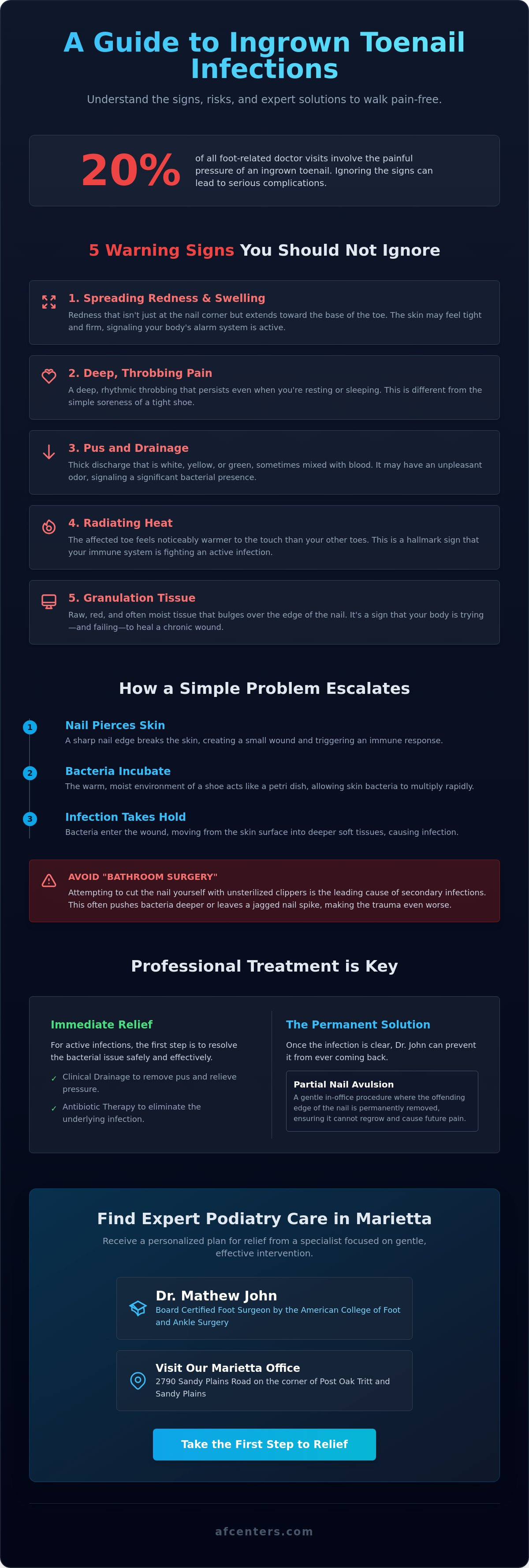
Did you know that nearly 20% of all foot related doctor visits involve the painful, throbbing pressure of an ingrown nail? It's easy to tell yourself the redness will fade, but ignoring the clear signs of ingrown toenail infection can lead to complications that interfere with your daily walk and overall vitality. We understand the anxiety that comes with foot pain, especially when you're unsure if a DIY fix or "bathroom surgery" will only make things worse. You deserve to move through your day without hesitation or discomfort.
You'll gain the confidence to identify when your toe needs professional attention and learn about the advanced, gentle treatments available to keep you active. We'll explore the specific red flags of infection, share safe pain relief strategies, and explain how Dr. Mathew John, a Board Certified Foot Surgeon by the American College of Foot and Ankle Surgery, provides expert care at our office at 2790 Sandy Plains Road on the corner of Post Oak Tritt and Sandy Plains. This is your first step toward understanding professional removal procedures and a healthier journey ahead.
Key Takeaways
- Learn to identify the physical changes that indicate a problem, such as persistent redness and localized swelling, which are primary signs of ingrown toenail infection.
- Understand why home remedies often fail and how professional clinical drainage and antibiotic therapy can safely resolve the underlying bacterial issue.
- Discover why individuals with diabetes or poor circulation must prioritize immediate care to prevent minor toe wounds from becoming serious health risks.
- Explore the benefits of a Partial Nail Avulsion, a gentle and permanent solution performed by Dr. Mathew John, a Board Certified Foot Surgeon by the American College of Foot and Ankle Surgery.
- Find out how our welcoming Marietta office at 2790 Sandy Plains Road on the corner of Post Oak Tritt and Sandy Plains offers the expert guidance you need to walk without pain.
Is My Ingrown Toenail Infected? 5 Warning Signs You Should Not Ignore
Identifying the early signs of ingrown toenail infection is the best way to protect your long term health and mobility. While a minor ingrown nail might feel like a simple grooming nuisance, it can quickly transform into a medical issue if the skin barrier is breached. If you notice redness that doesn't just stay at the corner of your nail but begins to spread toward the base of your toe, your body is likely sounding an alarm. This spreading color, often accompanied by a tight, firm feeling in the skin, suggests that bacteria have found a home in the delicate tissue surrounding your nail.
You should also pay close attention to the nature of your discomfort. Unlike a standard sore toe, an infected ingrown nail often produces a deep, rhythmic throbbing. This pain doesn't stop when you take off your shoes; it persists even while you're resting or sleeping. If you see granulation tissue, which looks like raw, red skin bulging over the edge of the nail, it's a sign that your body is trying to heal a chronic wound. For those in Marietta, seeking professional guidance early at our office located at 2790 Sandy Plains Road on the corner of Post Oak Tritt and Sandy Plains ensures you receive a personalized plan for relief.
Recognizing Pus and Drainage
It’s vital to distinguish between clear serous fluid, which is part of the body's natural inflammatory response, and purulent discharge. Pus is typically thick and may appear white, yellow, or even green. It often carries an unpleasant odor, signaling that the bacterial presence has moved beyond a simple irritation. If you see blood mixed with this drainage, it indicates that the inflammation is advanced and the tissue is increasingly fragile. Any fluid leakage is a clear sign that the skin barrier is no longer intact and requires expert care.
The Significance of Radiating Heat
Localized heat is a hallmark indicator that your immune system is actively fighting a bacterial invasion. You can perform a simple "touch test" at home by comparing the temperature of the affected toe to the others on the same foot. If the area feels significantly warmer, it's a major indicator among the signs of ingrown toenail infection. In some cases, you might even notice thin red streaks extending from the toe. This condition, known as lymphangitis, suggests the infection is spreading through the lymphatic system and requires immediate medical attention from a specialist.
How a Simple Ingrown Nail Becomes a Serious Foot Infection
The journey from a slightly tender toe to a full scale medical concern often happens faster than you might expect. When an Ingrown Toenail pierces the delicate skin of the nail fold, your body doesn't just see a nail; it identifies a foreign invader. This "Foreign Body" effect triggers an immediate immune response. Your white blood cells rush to the site, creating the inflammation and pressure you feel. Because the nail remains embedded, the inflammatory cycle continues, leaving the area vulnerable to the microscopic world living on your skin.
Your footwear often acts as the perfect catalyst for this progression. Enclosed shoes create a dark, warm, and moist environment, essentially turning your sock into a "Petri dish" for bacteria. This environment allows common skin bacteria to thrive and enter the tiny break in your skin caused by the nail. If you notice the signs of ingrown toenail infection beginning to worsen, it's often because the bacteria have moved from the surface into the deeper soft tissues. Many Marietta residents mistakenly attempt "bathroom surgery" with unsterilized clippers to find relief. This is the leading cause of secondary infections we see, as it often pushes bacteria deeper or leaves behind a jagged nail spike that causes even more trauma.
If your toe has reached this stage, it's a good time to explore professional care options that prioritize your long term comfort. Dr. Mathew John, a Board Certified Foot Surgeon by the American College of Foot and Ankle Surgery, can safely address the root of the problem without the risks associated with home remedies.
Common Causes of Nail Penetration
Improper trimming is the most frequent culprit. When you round the corners of your nails too deeply, you encourage the nail to grow directly into the skin fold. Some patients also deal with a genetic predisposition, such as "pincer" nails that naturally curve inward. Physical trauma also plays a role. Stubbing your toe can shift the nail plate, forcing the sharp edge into the surrounding tissue and starting the infection process instantly.
The Role of Bacteria in Podiatric Infections
The Hidden Dangers: Why High-Risk Patients Cannot Afford to Wait
While the throbbing pain of an Ingrown toenail usually drives patients to seek help, some individuals might not feel that warning signal at all. For those living with diabetes or peripheral artery disease (PAD), a minor nail issue can quickly escalate into a limb-threatening emergency. Your body relies on strong blood flow and clear nerve signals to heal even the smallest wounds. When these systems are compromised, the typical signs of ingrown toenail infection can be dangerously subtle until the damage is extensive. You deserve to stay active and healthy, which is why understanding these "silent" risks is so vital.
Peripheral neuropathy often masks the sharp, stabbing sensations that usually accompany an ingrown nail. If you can't feel the injury, you might continue to walk on it, driving the nail deeper and allowing bacteria to colonize the area. Similarly, poor circulation means your immune system's repair crew can't reach the toe effectively. Without adequate oxygen and nutrients, a small infection can turn into a non-healing ulcer. We've seen how these situations, if left unmanaged, can lead to serious outcomes like amputation. This is why we prioritize diabetic foot care as a fundamental part of your long term wellness journey.
Diabetes and the Loss of Protective Sensation
Marietta residents living with diabetes should make a daily foot inspection part of their morning routine. Use a hand mirror to check the bottom of your toes and the areas around your nails for any redness, drainage, or changes in skin texture. A painless red spot could be hiding a deep abscess in a neuropathic foot. Don't wait for pain to develop before you reach out for help. Our office at 2790 Sandy Plains Road on the corner of Post Oak Tritt and Sandy Plains is equipped to provide the specialized care you need to stay on your feet.
When an Infection Becomes Systemic
An infection that stays localized to your toe is a concern, but it can quickly enter your bloodstream if ignored. Watch for "Red Flag" symptoms like a sudden fever, chills, or red streaks running up from your foot toward your ankle. These symptoms suggest that the signs of ingrown toenail infection have progressed to a systemic level, a condition known as sepsis. If you experience these, it's a medical emergency that requires immediate hospital intervention. Dr. Mathew John, a Board Certified Foot Surgeon by the American College of Foot and Ankle Surgery, emphasizes that early clinical treatment is the best way to avoid these life-altering complications.
Professional Treatment Options: From Gentle Removal to Permanent Solutions
Once you've identified the signs of ingrown toenail infection, your next step is finding a resolution that fits your lifestyle. You don't have to live with a cycle of pain and temporary relief. Modern podiatric care offers several paths to comfort, ranging from immediate intervention for acute issues to permanent solutions for chronic sufferers. At Ankle & Foot Centers, PC, we prioritize a gentle approach that gets you back to your daily routine without delay. Most patients are surprised to learn that professional treatments typically involve zero downtime, allowing you to walk out of the office with significantly less pain than when you arrived.
For an acute infection, the first priority is clinical drainage. This process safely removes the buildup of pressure and allows us to clean the area thoroughly. We often pair this with targeted antibiotic therapy to ensure the bacteria are fully eradicated. If the nail continues to pose a threat, we may perform a Partial Nail Avulsion. This is the standard "gentle" removal of only the thin sliver of nail that is piercing your soft tissue. It preserves the natural look of your toe while removing the source of your agony. If you are ready for a lasting fix, you can schedule a consultation for professional nail care to discuss which option is right for you.
The Matrixectomy Procedure Explained
If you suffer from recurring ingrown nails, a permanent matrixectomy is the definitive solution. Dr. Mathew John, a Board Certified Foot Surgeon by the American College of Foot and Ankle Surgery, performs this procedure in our Marietta office at 2790 Sandy Plains Road on the corner of Post Oak Tritt and Sandy Plains. We begin by applying a local anesthetic so you remain completely comfortable. After removing the offending nail border, we apply a specialized cauterizing agent to the nail root. This targeted application prevents that specific edge of the nail from regrowing into the skin. This procedure is highly effective, boasting a 95% permanent success rate for chronic sufferers.
Addressing Underlying Nail Fungus
In many cases, an underlying fungal infection (onychomycosis) causes the nail to thicken and curve, which leads to repeated ingrown issues. To address this, we offer fungal laser therapy using the Cutera Genesis Plus NDYag Laser. This advanced technology penetrates the nail plate to clear the fungus at its source without the side effects of oral medications. It's important to distinguish this from our other laser options. While we use the Cutera laser for fungus, we utilize MLS Laser Therapy specifically for musculoskeletal pain, inflammation, and difficult to heal open wounds. This ensures your treatment is perfectly matched to your specific needs.
Expert Podiatry Care in Marietta: Meet Dr. Mathew M. John
When you're dealing with the painful signs of ingrown toenail infection, you want more than just a quick fix; you want a partner in your long term health journey. Dr. Mathew John, a Board Certified Foot Surgeon by the American College of Foot and Ankle Surgery, brings years of specialized expertise to our Marietta community. He understands that every patient's path to recovery is unique. Whether you're a high risk patient needing careful monitoring or an athlete looking to get back on the track, our approach is always tailored to your specific goals.
We believe that professional guidance shouldn't feel intimidating. Instead, we offer a welcoming environment where you can feel confident in the care you receive. By focusing on progress over perfection and long term vitality, we help you navigate your foot health with ease. Our goal is to ensure you never feel like you're navigating this path alone. You can trust that your concerns will be met with a steady hand and a clear plan for relief that respects your time and your lifestyle.
Advanced Technology for Lasting Foot Health
One of the ways we prevent future issues is by looking at how you move. We use 3-D impressions to create custom molded orthotics. These devices are designed to correct gait issues that might be putting excessive pressure on your nail borders. By addressing these biomechanical factors, we reduce the likelihood that you'll see the signs of ingrown toenail infection again in the future. It's about creating a foundation for health that lasts well beyond your initial visit to our office.
For patients who struggle with other stubborn foot issues, we also offer Swift Treatment. This is an advanced solution for recalcitrant plantar warts that utilizes microwave ablation technology. It's a highly effective option that typically involves four sessions, each spaced one month apart. One of the greatest benefits of Swift Treatment is that there's absolutely no downtime, so you can continue your daily activities immediately following the procedure. We pair these sophisticated tools with a human touch to ensure your comfort at every step of the process.
Visit Our Marietta Office
You can find our specialized foot care hub at 2790 Sandy Plains Road on the corner of Post Oak Tritt and Sandy Plains. We've designed our facility to be a sophisticated resource for the local community, blending high end clinical services with a friendly touch. Don't let a minor toe problem grow into a significant health barrier that keeps you from the activities you love. We're committed to providing professional, inclusive care for patients of all ages.
We invite you to schedule a consultation today to discuss your symptoms and start your personalized treatment plan. Taking proactive steps now ensures you can maintain your active lifestyle with confidence. Whether you need a simple procedure or a comprehensive evaluation, we're here to support your journey toward total foot health and wellness.
Step Toward Lasting Comfort and Foot Health
Your journey to pain-free movement starts with a single step toward professional care. We've explored how recognizing the signs of ingrown toenail infection early can prevent serious complications, especially for those with diabetes or circulation concerns. You don't have to settle for the frustration of recurring pain or the risks of home remedies. With advanced solutions like the Cutera Genesis Plus NDYag Laser and permanent matrixectomy procedures, lasting relief is within your reach.
Dr. Mathew John, a Board Certified Foot Surgeon by the American College of Foot and Ankle Surgery, is ready to guide you at our convenient Marietta office. Located at 2790 Sandy Plains Road on the corner of Post Oak Tritt and Sandy Plains, our facility provides the expert resources you need in a supportive, community-focused environment. Whether you require a gentle nail removal or custom orthotics built from 3-D impressions, we're here to help you regain your vitality.
Schedule Your Appointment with Dr. Mathew John Today and prioritize your long-term health. You deserve to walk, run, and live without the burden of foot pain.
Frequently Asked Questions
Can I cut out an infected ingrown toenail myself?
You should never attempt "bathroom surgery" or try to cut out an infected nail yourself. Using unsterilized tools at home often pushes bacteria deeper into the tissue, significantly increasing your risk of a secondary infection. Dr. Mathew John, a Board Certified Foot Surgeon by the American College of Foot and Ankle Surgery, provides a safe and sterile environment at our office at 2790 Sandy Plains Road on the corner of Post Oak Tritt and Sandy Plains to resolve the issue permanently.
How long does it take for an infected toenail to heal after professional treatment?
Most patients experience immediate relief from throbbing pain once the offending nail border is removed. The soft tissue typically heals within one to two weeks, provided you follow the post-procedure care instructions. Because we prioritize gentle techniques, there is usually no downtime. You can often return to your normal daily activities and wellness routine the very same day as your clinical treatment.
Will I need to take antibiotics for an infected ingrown toenail?
Antibiotics aren't always necessary if the physical source of the irritation is removed early. However, if you show advanced signs of ingrown toenail infection such as spreading redness or pus, Dr. John may prescribe a course of antibiotics to ensure the infection is fully eradicated. Removing the nail spike is the most critical step, as antibiotics alone often fail to reach the bacteria trapped under the nail plate.
Is the procedure to remove an ingrown toenail painful?
The procedure itself is virtually painless because we use a local anesthetic to completely numb the affected toe. You'll feel a small pinch during the numbing process, but you won't feel anything while the nail border is being addressed. Our team focuses on your comfort throughout the visit, ensuring you feel supported and relaxed while we work to restore your foot health and vitality.
Can an ingrown toenail infection spread to the rest of my body?
Yes, a localized toe infection can become a systemic health crisis if it's ignored for too long. If bacteria enter the bloodstream, it can lead to cellulitis or a life-threatening condition called sepsis. Recognizing the signs of ingrown toenail infection and seeking professional help early is the best way to protect your overall health and prevent these dangerous complications from developing.
How can I prevent my toenails from becoming ingrown in the future?
Prevention starts with proper grooming and footwear choices. Always trim your nails straight across and avoid rounding the corners, which encourages the nail to dive into the skin. If your foot structure or gait causes repeated issues, we can create custom orthotics using 3-D impressions to redistribute pressure. These personalized tools help you maintain a pain-free lifestyle while protecting your toes from future injury.
What happens if I ignore an infected ingrown toenail?
Ignoring the problem won't make it go away; instead, the infection will likely worsen and cause more tissue damage. You may develop an abscess or an overgrowth of raw, red granulation tissue that bleeds easily. For high-risk patients, such as those with diabetes, an ignored infection can lead to bone infections or non-healing ulcers. Early intervention is the key to maintaining your long-term mobility and health.
Does insurance typically cover ingrown toenail removal by a podiatrist?
Most health insurance plans cover ingrown toenail removal when it's deemed medically necessary due to pain, swelling, or infection. While coverage for purely cosmetic issues is rare, an infected nail is a medical wound that requires professional care. We recommend contacting your provider to understand your specific benefits, including any copayments or deductibles that may apply to your visit at our Marietta office.


