
Did you know that as of March 2026, over 40 million people in the United States are living with diabetes? If you are among them, you likely understand the daily anxiety of managing tingling "pins and needles" or the fear that a small, unnoticed injury could lead to a serious ulcer. It is exhausting to search for the best socks for diabetic neuropathy only to find options that pinch your skin or restrict your circulation. You deserve to feel confident and comfortable every time you step out of the house.
We agree that your foot health should not be a source of constant stress. This guide will show you how the right hosiery serves as a medical barrier against friction and skin breakdown while improving your overall circulation. You will discover the essential features of neuropathy socks, from moisture-wicking fabrics to seamless designs, and learn how professional diabetic foot care protects your long-term mobility. Dr. Mathew John, a Board Certified Foot Surgeon by the American College of Foot and Ankle Surgery, is here to help you navigate these choices. Let's explore how the right support can give you back your peace of mind and keep your feet healthy for years to come.
Key Takeaways
- Learn why choosing the best socks for diabetic neuropathy is critical to preventing "silent" injuries like blisters and ulcers that often go unnoticed due to nerve damage.
- Identify the four essential features of protective hosiery, including non-binding tops that promote healthy circulation and seamless designs that eliminate friction.
- Understand the specific differences between diabetic socks and compression sleeves to ensure you select the level of support that matches your unique blood flow needs.
- Discover how to integrate custom orthotics created with 3-D impressions into your daily routine for a personalized fit that protects your mobility.
- Explore advanced treatment options like MLS Laser Therapy to manage inflammation, guided by the expertise of Board Certified Foot Surgeon Dr. Mathew John.
Why Your Choice of Socks Matters for Diabetic Neuropathy
Your feet are the foundation of your mobility. When you live with Diabetic neuropathy, that foundation requires extra protection because your body's natural alarm system is dampened. Nerve damage can mask the pain of a small pebble in your shoe or a bunching sock. This "silent" danger allows minor friction to turn into a significant wound before you even realize there is a problem. Selecting the best socks for diabetic neuropathy isn't about fashion; it's about creating a medical grade barrier that keeps your skin intact and your circulation flowing freely.
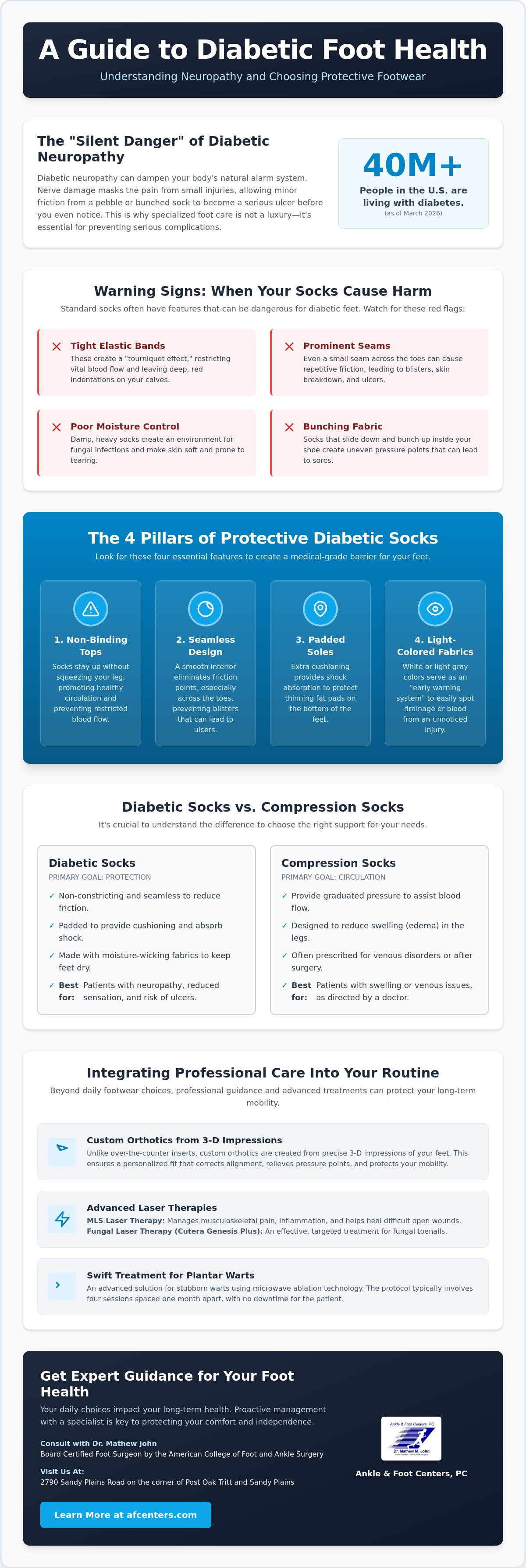
Standard store-bought socks are often designed for style or general athletics, which can be a hidden risk for your feet. They frequently feature tight elastic bands at the top to keep them from slipping. While this works for many, it can create a "tourniquet effect" for you, restricting vital blood flow to your lower extremities. Poor circulation slows down the healing process and weakens nerve health over time. Specialized socks prioritize non-binding support to ensure that your blood moves naturally, providing the oxygen and nutrients your nerves need to stay as healthy as possible. It's about finding the best socks for diabetic neuropathy that offer moisture management and friction reduction to prevent complications before they start.
The Link Between Neuropathy and Foot Ulcers
A tiny blister might seem like a minor inconvenience, but for someone managing diabetes, it can escalate into a serious medical issue quickly. If you can't feel the irritation, you continue to walk on it, driving the friction deeper into the tissue. This process often starts in the toe box, where cramped space leads to skin breakdown between the toes. Moisture management is another critical factor. High-quality neuropathy socks use moisture-wicking materials to keep your feet dry. This environment discourages fungal infections and prevents the skin from becoming soft and prone to tearing. Professional diabetic foot care is essential for catching these issues before they become life-altering.
When to Upgrade from Regular Socks
You should consider an upgrade if you notice your current footwear is causing more harm than good. Watch for these specific signs that your socks are failing to protect you:
- Deep, red indentations around your calves or ankles after removal.
- Visible seams that leave marks or irritation on your toes.
- Socks that feel damp, heavy, or cold by the middle of the day.
- Fabric that bunches up or slides inside your shoes, creating pressure points.
Seamless construction is non-negotiable; even a tiny seam across the toes can cause enough repetitive friction to break the skin. Dr. Mathew John, a Board Certified Foot Surgeon by the American College of Foot and Ankle Surgery, emphasizes that your daily choices impact your long-term health. Diabetic neuropathy is a progressive condition that requires proactive management to protect your long-term comfort and independence.
4 Essential Features of the Best Socks for Neuropathy
Choosing the best socks for diabetic neuropathy requires looking beyond the packaging and understanding the clinical benefits of specific design elements. These features act as a protective layer for your feet, compensating for the sensory loss described in Diabetic neuropathy symptoms and causes. By prioritizing these four essentials, you invest in your daily comfort and long-term health.
- Non-binding tops: High-quality socks should stay up without squeezing your leg. Tight elastic bands can restrict arterial flow and venous return, which is particularly dangerous if you already have compromised circulation.
- Seamless design: Traditional socks have a thick seam across the toes that can cause repetitive micro-trauma. A truly seamless construction eliminates this friction, preventing the blisters that often lead to ulcers.
- Padded soles: Many people with neuropathy experience fat pad atrophy, where the natural cushioning on the bottom of the foot thins out. Extra padding in the sole provides the shock absorption your body can no longer provide on its own.
- Light-colored fabrics: Choosing white or light gray socks serves as a vital "early warning system." Since you might not feel a cut or sore, light fabric makes it easy to spot drainage or spotting the moment you take your socks off.
Material Science: Bamboo vs. Synthetic Blends
The fabric you choose determines how well your skin breathes. Bamboo fibers are incredibly soft and offer natural moisture-wicking properties, making them an excellent choice for sensitive skin. High-tech synthetic blends are also effective because they pull sweat away from the foot to the outer layer of the sock. You should avoid 100% cotton entirely. Cotton traps moisture against your skin, which increases the risk of fungal infections and skin maceration. Many of the best socks for diabetic neuropathy also feature antimicrobial treatments to further reduce the risk of infection. If you're concerned about persistent skin issues, our team at Ankle & Foot Centers, PC can evaluate your skin health during a routine checkup.
The Importance of Proper Sizing
A "one size fits all" approach is risky for your foot health. Socks that are too small will pinch your toes, while socks that are too large will bunch up inside your shoe, creating new pressure points. To find a medical-grade fit, measure your foot length and ankle circumference rather than relying on shoe size alone. A proper fit ensures the sock stays smooth against your skin without sliding. Dr. Mathew John, a Board Certified Foot Surgeon by the American College of Foot and Ankle Surgery, recommends that patients at our office located at 2790 Sandy Plains Road on the corner of Post Oak Tritt and Sandy Plains perform a visual check every evening to ensure their footwear isn't leaving marks or causing irritation.
Diabetic Socks vs. Compression Socks: Which Do You Need?
Choosing between diabetic socks and compression hosiery can feel confusing because they often sit on the same shelf. However, they serve very different clinical purposes for your foot health. Diabetic socks are primarily designed for protection and zero restriction. They focus on preventing the "silent" injuries we discussed earlier by eliminating pressure points and managing moisture. In contrast, compression socks are engineered to apply specific pressure to the lower legs to move fluid and improve venous return. Understanding which one fits your current health goals is a vital step in your wellness journey.
There is a "sweet spot" for many patients managing nerve pain and swelling. Mild compression, usually between 15 to 20 mmHg, can provide enough support to reduce edema without cutting off vital circulation. But you must approach this carefully. Applying high-pressure compression to a foot with undiagnosed arterial issues can be dangerous. This is why Dr. Mathew John, a Board Certified Foot Surgeon by the American College of Foot and Ankle Surgery, recommends a professional evaluation before you begin any compression regimen. Finding the best socks for diabetic neuropathy often involves balancing these two needs under expert guidance at our office located at 2790 Sandy Plains Road on the corner of Post Oak Tritt and Sandy Plains.
Managing Edema and Neuropathy Simultaneously
Swelling, or edema, often complicates neuropathy because the extra fluid puts even more pressure on sensitive, damaged nerves. This can make the tingling and burning sensations feel much more intense. The best socks for diabetic neuropathy for those with swelling are those that accommodate daily fluctuations in foot size. Graduated compression helps by being tightest at the ankle and loosening as it moves up the leg. This design stabilizes foot temperature and keeps your circulatory system working efficiently throughout the day. You can learn more about how we manage these complex symptoms by exploring our diabetic foot care services.
Nighttime vs. Daytime Footwear Strategies
Your protection plan shouldn't end when the sun goes down. Many patients find relief using loose-fitting "sleep socks" at night. These protect your skin from irritation caused by bedding while keeping your feet at a consistent temperature. However, you should never wear tight compression socks while lying horizontal unless a doctor specifically tells you to do so. Without the help of gravity, high compression can make it harder for your heart to pump blood to your toes. Dr. Mathew John, a Board Certified Foot Surgeon by the American College of Foot and Ankle Surgery, advocates for a 24-hour protection strategy that adjusts to your activity levels and body position to ensure your feet stay safe and comfortable around the clock.
Integrating Footwear into Your Daily Diabetic Care Plan
Even the best socks for diabetic neuropathy can't replace the value of a vigilant daily routine. While high-quality hosiery provides a critical first line of defense, it works most effectively when you pair it with a disciplined inspection of your feet. This habit allows you to spot subtle changes in your skin or foot structure before they lead to complications. Think of your socks as a protective tool and your daily check as the monitoring system that keeps that tool effective. Integrating these steps into your morning or evening ritual ensures that your mobility remains a top priority.
Your footwear needs to work in harmony with other medical interventions. If you're managing nerve damage, your feet may change shape over time, creating new pressure points that standard shoes can't accommodate. This is why professional guidance is so important. Transitioning from simple home care to a structured medical plan helps you stay ahead of progressive symptoms. At our office located at 2790 Sandy Plains Road on the corner of Post Oak Tritt and Sandy Plains, we help you build a comprehensive strategy that covers everything from the fabric on your skin to the structural support under your soles.
The Daily Foot Inspection Checklist
Every time you take your socks off, spend two minutes performing a thorough visual exam. Because neuropathy can dull your ability to feel pain, your eyes must do the work your nerves cannot. Look for these specific indicators of trouble:
- New areas of redness or "hot spots" that don't fade after rest.
- Localized swelling around the joints or toes.
- Changes in nail color or thickness, which could signal a fungal infection.
- Skin that feels unusually warm or cold compared to the other foot.
Use a hand mirror to check the soles of your feet and the areas between your toes where moisture often traps bacteria. Any new sore, blister, or break in the skin requires an immediate visit to a foot surgeon to prevent infection.
Advanced Diagnostics and Orthotics
When the best socks for diabetic neuropathy aren't enough to manage pressure, custom orthotics provide the necessary next level of care. We use 3-D impressions to capture the exact contours of your feet, ensuring a perfect fit that off-the-shelf inserts simply can't match. These 3-D impressions allow us to create devices that redistribute your weight away from sensitive areas, significantly reducing the risk of ulcers. It's essential to choose footwear that has enough depth to accommodate these medical-grade orthotics comfortably. Learn more about our comprehensive services to see how we customize these solutions for your lifestyle.
Annual diabetic foot exams in Marietta are a non-negotiable part of your health journey. These visits allow Dr. Mathew John, a Board Certified Foot Surgeon by the American College of Foot and Ankle Surgery, to assess your nerve function and circulation with professional precision. Don't wait for a small problem to become a major hurdle. Schedule your annual diabetic foot exam with our expert team today to ensure your feet stay healthy and protected.
Professional Neuropathy Relief at Ankle & Foot Centers, PC
While finding the best socks for diabetic neuropathy is a fantastic first step toward daily comfort, professional medical support is the key to long-term mobility. At Ankle & Foot Centers, PC, we don't just look at your footwear; we look at the underlying health of your nerves and circulation. Dr. Mathew John, a Board Certified Foot Surgeon by the American College of Foot and Ankle Surgery, leads our team with a commitment to returning Marietta patients to a pain-free, active lifestyle. Our clinic is conveniently located at 2790 Sandy Plains Road on the corner of Post Oak Tritt and Sandy Plains. We believe everyone deserves to move through their day without the constant distraction of foot pain.
MLS Laser Therapy for Nerve Pain
Managing the inflammation associated with neuropathy requires more than just high-quality fabric. We utilize advanced technology like MLS Laser Therapy to address the musculoskeletal pain and inflammation that often accompany nerve damage. This non-invasive solution is also a breakthrough for difficult-to-heal open wounds that can result from unnoticed friction. During a typical session, you won't feel any pain or discomfort. Instead, you'll experience a gentle, soothing warmth as the laser energy penetrates deep into the tissue to reduce swelling and accelerate your body's natural healing process. It's an excellent option for patients who want to manage their symptoms without relying solely on medication.
Schedule Your Comprehensive Diabetic Foot Exam
The value of a professional evaluation can't be overstated, especially when it comes to preventing the need for reconstructive surgery. Even if you've already invested in the best socks for diabetic neuropathy, an annual exam allows us to monitor changes in your nerve function and circulation with clinical precision. We take pride in serving our neighbors in the Marietta, Roswell, and Woodstock communities with sophisticated resources in a welcoming, non-judgmental environment. Whether you are dealing with nerve damage or need to relieve your heel pain with our expert guidance, we are here to support your journey.
Your personal health journey shouldn't be a solo mission. By partnering with an expert team, you gain a steady hand to guide you toward your long-term wellness goals. We invite you to join our community and experience the difference that professional, localized care makes. Let's work together to protect your feet and keep you moving comfortably for years to come.
Take the Next Step Toward Lasting Foot Comfort
Your journey to better foot health starts with the small, daily choices you make. Finding the best socks for diabetic neuropathy provides a vital foundation for protecting your skin and supporting your circulation. When you combine these protective layers with consistent daily inspections and the right structural support, you create a powerful defense against the complications of nerve damage. You don't have to navigate these decisions alone; expert guidance is just around the corner.
We are here to help you move forward with confidence. Our Marietta clinic, located at 2790 Sandy Plains Road on the corner of Post Oak Tritt and Sandy Plains, offers advanced resources like MLS Laser Therapy to manage inflammation and pain. Dr. Mathew John, a Board Certified Foot Surgeon by the American College of Foot and Ankle Surgery, is ready to partner with you to ensure your feet stay healthy and active. Don't wait for discomfort to dictate your lifestyle. Schedule Your Diabetic Foot Exam with Dr. Mathew John today and embrace a future of protected, pain-free mobility. Your feet are your foundation; let's keep them strong together.
Frequently Asked Questions
Can the right socks actually cure my neuropathy?
Socks cannot cure diabetic neuropathy; they are a management tool rather than a medical cure. The best socks for diabetic neuropathy serve as a protective barrier to prevent blisters, ulcers, and friction related injuries that often go unnoticed. While they improve your comfort and protect your skin, you should pair them with professional treatments from a Board Certified Foot Surgeon by the American College of Foot and Ankle Surgery to address underlying nerve damage.
How often should I replace my diabetic socks?
You should replace your diabetic socks every three to six months to ensure they maintain their protective qualities. Over time, the padding in the sole can compress and the non-binding elastic may lose its shape. Inspect your socks weekly for thinning fabric, holes, or frayed seams. If you notice any loss of cushioning or elasticity, it's time for a new pair to keep your feet properly protected from friction.
Is it safe to wear compression socks if I have peripheral arterial disease (PAD)?
Compression socks are typically not recommended for patients with peripheral arterial disease (PAD) without a specific medical clearance. If your arterial flow is already restricted, the external pressure from compression can further reduce blood supply to your toes. Before starting any compression therapy, visit our clinic at 2790 Sandy Plains Road on the corner of Post Oak Tritt and Sandy Plains for a thorough vascular assessment to ensure it's safe for you.
What is the Swift Treatment for warts, and can it be used for diabetic patients?
Swift Treatment is an advanced technology for stubborn or recalcitrant warts that utilizes microwave ablation to stimulate a natural immune response. It is a safe and effective option for diabetic patients because it doesn't involve cutting or chemicals that could lead to slow healing wounds. The procedure typically involves four sessions spaced one month apart. There is no downtime following the treatment, allowing you to return to your daily activities immediately.
Should I wear socks to bed if I have neuropathy?
Wearing loose fitting socks to bed can be very beneficial if you have neuropathy. They protect your skin from irritation caused by sheets and keep your feet at a stable temperature, which can reduce nighttime tingling. However, ensure they aren't restrictive or too tight. Dr. Mathew John, a Board Certified Foot Surgeon by the American College of Foot and Ankle Surgery, recommends "sleep socks" specifically designed for zero pressure during rest.
What is the difference between MLS Laser and other laser treatments for feet?
MLS Laser Therapy is specifically designed to treat musculoskeletal pain, inflammation, and difficult to heal open wounds. It uses dual wavelengths to penetrate deep into the tissue and accelerate healing. In contrast, other treatments like the Cutera Genesis Plus NDYag Laser are used specifically for fungal laser therapy. MLS Laser is non-invasive and painless, making it an excellent choice for managing the chronic inflammatory discomfort often associated with nerve damage.
How do 3-D impressions help with neuropathy pain?
3-D impressions allow us to create custom orthotics that perfectly match the unique contours of your feet. By capturing an exact mold, we can design devices that redistribute pressure away from sensitive "hot spots" and provide support where your natural fat pads have thinned. This precise fit reduces the risk of skin breakdown and can significantly lower the daily pain levels associated with your neuropathy symptoms by improving your overall foot alignment.
When should I see a Board Certified Foot Surgeon for my neuropathy?
You should schedule an appointment with a Board Certified Foot Surgeon by the American College of Foot and Ankle Surgery at least once a year for a comprehensive exam. However, if you notice new numbness, burning, or a sore that doesn't heal, seek professional help immediately. Early intervention at our office at 2790 Sandy Plains Road on the corner of Post Oak Tritt and Sandy Plains can prevent minor irritations from becoming serious medical complications.


