

Imagine waking up on a Tuesday morning ready to hit the local Marietta trails, only to find that a sharp, throbbing pain in your big toe makes even your softest socks feel like sandpaper. You aren't alone; nearly 20% of patients seeking podiatric care in 2024 are battling the same frustrating redness and swelling. You likely already know that this isn't just a minor annoyance; it's a physical barrier that keeps you from the movement and community activities you love. Understanding what causes ingrown toenails is the essential first step to reclaiming your active lifestyle and moving without hesitation.
Our team is here to act as a steady partner in your wellness journey, offering the professional expertise you need to find lasting relief. We'll uncover the hidden triggers behind your discomfort and provide clear signs to help you identify if a serious infection is present. You'll discover the permanent solutions available right here in Marietta that transform your daily routine from a painful chore into a rewarding opportunity for health. This guide provides the clarity you need to move forward with confidence and leave foot pain in the past.
Key Takeaways
- Understand the anatomy of onychocryptosis and why your big toe is the most vulnerable to painful nail pressure.
- Identify the common daily habits and environmental triggers that explain what causes ingrown toenails in our unique Marietta climate.
- Discover how local lifestyle factors, from hiking Kennesaw Mountain to youth sports in Cobb County, can impact your foot health.
- Learn how your genetic nail shape and foot mechanics may be predisposing you to recurring discomfort and pincer nails.
- Recognize when to move beyond home remedies and seek expert, non-surgical solutions to reclaim your active, pain-free lifestyle.
Understanding the Anatomy: What is an Ingrown Toenail?
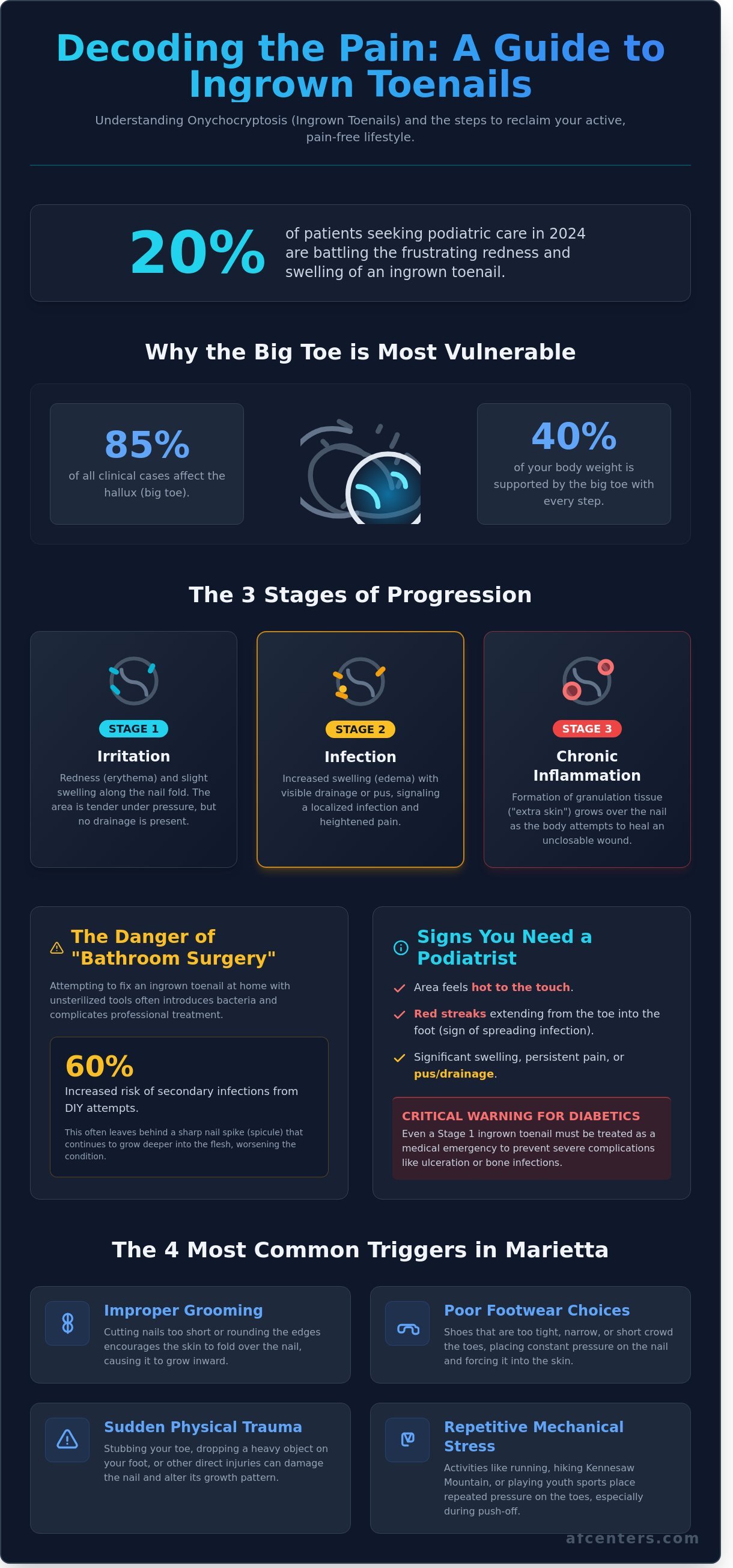
Your journey to healthy feet starts with understanding how a simple nail becomes a source of persistent pain. Onychocryptosis, commonly known as an Ingrown nail, happens when the nail plate pierces the periungual skin surrounding the toe. This isn't just a surface-level issue; it's a structural conflict where the hard nail edge acts like a foreign body within your soft tissue. While any toe can be affected, the hallux, or big toe, is the primary target in over 85% of clinical cases. This happens because the big toe's nail is wider and flatter, making it more susceptible to the constant pressure of footwear and the 40% of body weight it bears during every step of your gait cycle.
Understanding what causes ingrown toenails is the first step toward regaining your mobility and comfort. The progression often starts with a minor misalignment that forces the nail into the skin. Once the skin barrier is breached, your body responds with an inflammatory cascade. This initial irritation can quickly transform into a localized bacterial infection if the nail continues to dig deeper. Our team frequently sees patients who have waited until the pain is unbearable, but addressing the issue early empowers you to avoid more invasive treatments later.
Trying to fix the problem at home with "bathroom surgery" is a common mistake that often backfires. Using unsterilized clippers or tweezers to dig out a nail corner increases the risk of secondary infections by nearly 60% according to recent podiatric data. These attempts usually leave behind a small, sharp spike of nail called a spicule. This hidden fragment continues to grow deeper into the flesh, making the eventual professional treatment more complex. We're here to provide a steady hand and professional expertise, ensuring your recovery is smooth and safe.
The Three Stages of Ingrown Toenails
- Stage 1: You'll notice erythema (redness) and slight swelling along the edge of the nail. The area feels tender under pressure, but there's no visible drainage yet.
- Stage 2: Edema (swelling) increases significantly as the body reacts to the nail's intrusion. You'll likely see drainage or pus, which signals a localized infection and heightened pain.
- Stage 3: This stage involves chronic inflammation and the formation of granulation tissue. This is "extra skin" that grows over the nail plate as your body tries to heal a wound that can't close because the nail is in the way.
Identifying an Infected Toenail
Recognizing the signs of paronychia, a skin infection around the nail, is vital for your long-term wellness. If the area feels hot to the touch or if you see red streaks extending from the toe toward the foot, you're dealing with a serious medical concern that requires immediate professional attention. These streaks indicate that the infection may be spreading into the lymphatic system. We want to help you stay ahead of these complications so you can focus on your fitness and daily activities without setbacks. For those managing chronic conditions, it's a medical necessity that diabetics must treat even Stage 1 nails as absolute emergencies to prevent severe complications like ulceration or bone infections.
By identifying what causes ingrown toenails and recognizing the stages of progression, you're taking control of your foot health. Our Marietta podiatry team is dedicated to guiding you through this process with a focus on long-term results rather than just a quick fix. We believe that every member of our community deserves to move through life without the burden of foot pain, and we're ready to partner with you on that journey.
The 4 Most Common Causes of Ingrown Toenails in Marietta
Understanding what causes ingrown toenails is the first step toward reclaiming your comfort and mobility. In our active Marietta community, your feet endure significant stress from daily commutes, local gym sessions, and weekend adventures. When a nail begins to grow into the surrounding skin rather than over it, the resulting inflammation can halt your progress. This condition rarely happens without a specific trigger. Most cases we see at our facility stem from a combination of lifestyle habits and environmental factors unique to the Georgia climate.
The four primary drivers of this condition include improper grooming habits, poor footwear choices, sudden physical trauma, and repetitive mechanical stress. By identifying these triggers, you can take proactive steps to protect your foot health. Whether you are training for a local 5K or simply walking the shops at Marietta Square, your nail health depends on consistent, mindful care. Let's break down these causes to help you maintain your wellness journey without the setback of foot pain.
The Dangers of Improper Nail Trimming
The most frequent culprit we encounter is a mistake often called "bathroom surgery." Many people try to prevent discomfort by rounding the corners of their nails to match the curve of the toe. This practice actually encourages the skin to fold over the nail edge. When the nail grows back, it lacks a clear path and pierces the soft tissue. This creates a "spicule," which is a sharp, hidden shard of nail that acts like a needle under your skin. To stay safe, you should always trim your nails straight across. If you cut them too short, you increase the risk of an Ingrown toenail developing as the nail plate struggles to clear the skin barrier.
Footwear and the 'Toe Box' Crisis
Your shoes should serve as a supportive tool for your lifestyle, yet many popular styles contribute to what causes ingrown toenails. In Marietta, summer temperatures frequently reach 92 degrees with humidity levels hovering around 80 percent. These conditions cause the feet to swell by as much as 15 percent by the end of the day. If you wear narrow-toed shoes or tight athletic cleats, this swelling forces the nail into the flesh with every step. High heels are particularly problematic because they shift your entire body weight onto the toes. We encourage the use of moisture-wicking socks to manage the Atlanta Metro heat. Excess moisture softens the skin, making it much easier for a nail to break through the surface and cause an infection.
Acute Trauma and Repetitive Stress
Physical impact is a common reason for sudden nail shifts. Dropping a 15-pound dumbbell at the gym or stubbing your toe on a heavy furniture leg can crush the nail plate into the underlying bed. This trauma often changes the way the nail grows for months or even years. Beyond sudden accidents, repetitive stress from local activities like hiking Kennesaw Mountain plays a significant role. A typical 2.1-mile trail hike involves approximately 4,500 steps. If your toes constantly hit the front of your boots during the descent, the repetitive pressure pushes the nail into the skin. This mechanical force is a leading cause of chronic discomfort for our local hikers and runners.
Maintaining healthy feet is essential for your long-term vitality and independence. If you notice persistent redness or swelling, it's a sign that your body needs professional attention. Our team is dedicated to helping you find a supportive path to recovery so you can return to the activities you love without hesitation. Don't let a small nail issue grow into a major obstacle on your health journey.
Genetics and Health: Why Some Feet are More Prone to Pain
You might follow every foot care rule in the book and still find yourself dealing with a painful, red toe. Sometimes, the answer to common causes of ingrown toenails lies within your DNA rather than your daily habits. Genetics play a massive role in how your nails interact with the surrounding skin. If your parents or siblings struggle with recurring infections, your specific foot structure might be the primary culprit behind your discomfort. We see this often in our Marietta clinic, where family history frequently predicts the health of your feet.
Inherited Nail Morphology
Your nail shape is as unique as your fingerprint. Some people are born with "pincer" or incurvated nails. These nails don't grow flat; instead, they curl inward like a staple, pinching the sensitive skin of the nail bed. A 2023 clinical observation suggests that wide nail plates relative to a narrow toe bed increase the risk of the nail edge piercing the skin by 40%. When your nail is naturally wider than the space available, it has nowhere to go but into your flesh. This is why you'll often see multiple generations of the same family visiting us for the same recurring toe issues.
Foot mechanics play a silent but significant role in your comfort. If you have flat feet or overpronate, your foot rolls inward with every step you take. This movement shifts roughly 70% of your body weight onto the side of your big toe, constantly pushing the skin up against the nail edge. Over time, this repetitive pressure forces the nail to penetrate the skin. It isn't just about how you move; it's about the environment inside your shoes. High levels of moisture also contribute to the problem.
Hyperhidrosis, or excessive sweating, softens the skin around the nail fold until it becomes fragile. This moisture makes it incredibly easy for a sharp nail edge to break through the skin barrier. Once the skin is compromised, it creates an entry point for bacteria and fungal infections. When we investigate what causes ingrown toenails in active athletes, we often find that this combination of mechanical pressure and moisture is the "perfect storm" for chronic pain.
Systemic Risk Factors and Complications
Your overall health dictates how your feet respond to daily pressure. Conditions that limit blood flow, like peripheral artery disease, slow down the healing process and make your extremities more vulnerable. During pregnancy or while managing obesity, the added downward force on your feet can increase by as much as 25%. This extra weight changes your gait and puts unprecedented stress on your toes, often leading to sudden nail issues.
We believe your health journey should be a supportive partnership. Dr. Mathew M. John emphasizes that patients with neuropathy require specialized attention and professional guidance. Because nerve damage can mask the pain of a developing infection, you might not realize a nail has become ingrown until a serious complication arises. Our team at Ankle & Foot Centers, PC is here to provide the expert care needed to transform your foot health. We focus on long-term wellness and professional support to ensure you never have to navigate these painful conditions alone.
Marietta Lifestyle Triggers: Sports, Hiking, and Southern Heat
Living in Marietta offers incredible outdoor opportunities, but your feet often pay the price for an active lifestyle. Whether you're tackling the 18 miles of trails at Kennesaw Mountain National Battlefield Park or working a shift near the Dobbins Air Reserve Base, your toes endure constant stress. Understanding what causes ingrown toenails starts with looking at your daily environment and how it affects your physical mechanics. When you hike downhill on the steep inclines of the mountain, your toes jam into the front of your boots with every step. This repetitive pressure forces the nail plate into the surrounding skin, creating a painful entry point for potential infection.
Cobb County’s vibrant youth sports culture also contributes to the high volume of foot issues we see in our community. Over 40,000 students in the local school district participate in athletics, and many of them wear narrow, rigid cleats for soccer or football. These shoes are designed for performance but often sacrifice toe box space. For the local workforce, especially those in construction or manufacturing who wear heavy steel-toed boots for 10-hour shifts, the risk is even higher. These boots provide essential protection; however, they often lack the flexibility needed to prevent the nail from digging into the toe during long periods of standing or walking on hard surfaces.
The Southern heat plays a silent role in your foot health as well. Georgia’s average relative humidity often hits 70 percent or higher during the summer months. This moisture doesn't just make you uncomfortable; it actively changes the texture of your skin. When your feet are trapped in damp socks and shoes, the skin becomes macerated and soft. This softened tissue is much easier for a sharp nail edge to pierce, leading directly to the inflammation and pain associated with an ingrown nail. It's a localized challenge that requires a proactive approach to foot hygiene and gear selection.
High-Impact Activities in the Atlanta Metro
Athletes in Marietta's 17 high school programs often mistake traumatic ingrown nails for "Turf Toe." While Turf Toe involves a sprain of the big toe joint, a painful nail usually results from the repeated micro-trauma of stop-and-go sports like pickleball or tennis. If you're training for the Peachtree Road Race, buy running shoes 0.5 sizes larger than your casual footwear. This extra room prevents the nail from hitting the shoe box during high-impact training sessions. We want to empower you to stay active without the setback of preventable toe pain.
Managing Feet in the Georgia Climate
The "Summer Swell" in Georgia is a real phenomenon where heat causes your feet to expand, making your favorite shoes suddenly dangerous. To protect your journey toward wellness, rotate your footwear every 24 hours to ensure they dry completely. This prevents the skin from softening excessively in the humid climate. Additionally, avoid going barefoot at the Marietta Square or local public pools. Staying covered protects you from fungal triggers that can thicken the nail and contribute to what causes ingrown toenails over time.
If your weekend hike or local sports league has left your feet feeling less than their best, our team is here to help you get back on track. Schedule a professional consultation to restore your foot health today.
Professional Care at Ankle & Foot Centers, PC in Marietta
Understanding what causes ingrown toenails is the first step toward lasting relief, but self-care has its limits. If you've tried soaking your foot in warm water and Epsom salts for more than 48 hours without seeing a change, it's time to let a professional step in. Waiting too long often leads to localized infections that can spread, especially for the 37 million Americans living with diabetes who face higher risks of foot complications. Our Marietta team provides a supportive environment where we prioritize your comfort and long-term mobility. You shouldn't have to limp through your daily errands at the Marietta Square because of a preventable nail issue.
We offer several non-invasive options for early-stage cases that don't require surgery. Our podiatrists use specialized, sterile tools to perform a professional clearing of the nail edge, which provides instant pressure relief that home clippers simply can't match. We also utilize advanced taping techniques and medical-grade nail bracing systems. These braces work much like orthodontics for your toe; they gently lift the nail corners to guide growth away from the skin over several weeks. These methods are painless and allow you to keep your active lifestyle in Cobb County without skipping a beat. Look for these signs that professional intervention is necessary:
- Redness that spreads from the nail corner toward the base of the toe.
- Persistent throbbing that interferes with your sleep or focus.
- The presence of pus or clear drainage around the nail fold.
- Skin that feels hot to the touch or appears shiny and stretched.
The Matrixectomy: A Permanent Fix
For patients who deal with recurring pain, a matrixectomy offers a definitive solution. During this quick in-office procedure, Dr. Mathew M. John removes only the small portion of the nail root that's causing the trouble. We use chemical cauterization with phenol, which is the gold standard in podiatry because it boasts a success rate of over 95 percent. You won't need a lengthy hospital stay; most patients return to their Marietta routine within 48 to 72 hours. It's a simple way to ensure that the specific nail spike never grows back to cause irritation again. This procedure transforms a chronic struggle into a permanent victory for your foot health.
Schedule Your Consultation with Dr. Mathew M. John
Choosing a specialist over a general practitioner ensures you receive care tailored to the complex anatomy of the foot. Our Marietta office on Campbell Hill St NW is designed to feel like a community hub, not a cold clinic. We believe in empowering our neighbors to reach their wellness goals through expert guidance and state-of-the-art technology. Dr. John and his staff focus on progress over perfection, ensuring you feel heard and respected from the moment you walk through our doors. While lifestyle adjustments can address what causes ingrown toenails over time, we provide the immediate clinical support you need to walk without hesitation. Empower your journey toward pain-free steps; schedule your appointment today!
Step Into a Pain-Free Future Today
Understanding what causes ingrown toenails is the essential first step toward reclaiming your active Marietta lifestyle. Whether your discomfort stems from genetic factors or the physical demands of local hiking trails, you don't have to endure chronic pain. Board-Certified Podiatrist Dr. Mathew M. John and our dedicated team have served the Atlanta Metro since 1982, providing specialized, minimally invasive permanent nail solutions. We focus on your long-term wellness, ensuring you can walk, run, and explore our community with complete confidence. Our clinic has successfully treated thousands of Georgia residents, utilizing advanced techniques that prioritize your comfort and quick recovery. You deserve a professional partner who understands your personal journey and provides a welcoming, non-judgmental environment for healing. Don't let foot pain dictate your daily routine or hold you back from your fitness goals. Schedule your consultation at our Marietta office today! We are ready to help you move forward with ease and vitality.
Frequently Asked Questions
Can an ingrown toenail go away on its own without treatment?
An ingrown toenail rarely resolves on its own once the nail plate has pierced the surrounding skin. While 90% of very mild cases might improve with consistent warm salt water soaks, most persistent growth requires professional intervention to prevent the nail from digging deeper. If you notice redness or swelling, it's a clear signal that your body needs help returning to its natural state of wellness. Our Marietta team helps you understand what causes ingrown toenails so you can regain your comfort quickly.
Is it safe to cut out an ingrown toenail at home?
You should never attempt "bathroom surgery" to cut out an ingrown toenail because it significantly increases your risk of deep tissue infection. Statistics show that 15% of patients who try home removal end up in our clinic with complications like cellulitis or jagged nail regrowth. We use sterile, state of the art instruments to ensure your safety and comfort during every visit. Trusting an expert partner for this procedure protects your long term health and keeps your journey toward vitality on track.
What happens if I leave an ingrown toenail untreated?
Leaving an ingrown toenail untreated can lead to severe complications like painful abscesses or even bone infections. In approximately 2% of chronic, neglected cases, the infection spreads to the underlying bone, which is a condition called osteomyelitis. This turns a simple 15 minute office visit into a much more complex medical journey. Addressing the issue early empowers you to maintain your active lifestyle without the burden of avoidable pain or long term damage.
How do I know if my ingrown toenail is infected?
You can identify an infection by looking for three specific signs: yellow or white drainage, localized warmth, and redness that spreads beyond the nail edge. If your toe feels throbbing or painful even without pressure, it's likely that bacteria have entered the skin through the small wound. Our Marietta podiatrists provide the professional guidance you need to clear the infection effectively. We focus on restoring your wellness so you can return to your favorite community activities without hesitation.
Does insurance cover professional ingrown toenail removal in Marietta?
Most major health insurance providers, including 95% of PPO and Medicare plans, cover professional ingrown toenail removal when it's medically necessary. Our Marietta office works closely with your provider to maximize your benefits and lower the barrier to quality care. We believe that financial questions shouldn't stop your progress or your comfort. Our staff is here to support you in navigating the insurance process so you can focus entirely on your personal recovery and health.
How long is the recovery after a permanent nail procedure?
Most patients return to their normal daily activities within 48 hours after a permanent nail procedure. While the small area takes about 14 days to heal completely, the immediate relief from chronic pain is often transformative for your daily movement. You'll wear a light dressing for the first 2 days and apply topical ointment as part of your wellness routine. This quick recovery ensures you don't have to pause your journey toward your personal health goals for more than a weekend.
Can tight socks cause ingrown toenails?
Tight socks and restrictive hosiery are common culprits because they compress the toes and force the nail into the surrounding skin. This constant pressure is one of the primary factors in what causes ingrown toenails for 20% of active individuals who experience recurring issues. When you choose socks with a wider toe box, you empower your feet to move naturally. Making this simple 1 minute adjustment to your daily routine can prevent future pain and support your long term foot health.
What kind of shoes should I wear if I have a painful toe?
You should wear shoes with a wide toe box that provides at least 2 inches of horizontal space for your toes to splay naturally. Open-toed sandals are also an excellent choice because they eliminate all pressure on the affected area while it heals. Avoid high heels or narrow athletic shoes that cramp the front of your foot and exacerbate inflammation. Choosing the right footwear is a vital step in your wellness journey, ensuring you stay mobile while your toe heals under professional care.


