

Could a small wound or color change become harder to manage if you can’t feel it? Diabetes-related nerve changes can make foot injuries less noticeable, so it’s understandable to worry about what you might miss. If you’re looking for guidance on avoiding amputation with diabetic care Woodstock, paying attention to new or changing concerns gives a podiatrist a chance to assess them and recommend next steps. No treatment can guarantee amputation prevention, but you don’t have to judge a foot concern on your own.
This article explains which changes deserve prompt medical attention, what a podiatric evaluation may involve, and practical ways to check your feet day to day. You’ll also learn how care decisions can be tailored to clinical findings instead of relying on a one-size-fits-all approach. Ankle & Foot Centers, PC provides diabetic foot care for patients in Woodstock and across the greater Atlanta area, including Marietta, Roswell, Kennesaw, Atlanta, and Sandy Springs. Led by Dr. Mathew M. John, a Board Certified Foot Surgeon by the American College of Foot and Ankle Surgery, the practice offers professional guidance for new or changing foot concerns.
Key Takeaways
- Know which new foot changes, including wounds, swelling, redness, warmth, drainage, or color changes, need prompt attention.
- Learn how reduced sensation can make injuries harder to notice and why regular foot checks matter when avoiding amputation with diabetic care Woodstock.
- Understand how a podiatric evaluation considers your symptoms, medical history, skin, sensation, circulation concerns, and any wound.
- Build a simple daily routine to check both feet, wash gently, and dry carefully so you can spot changes sooner.
- Explore how individualized diabetic foot care at Ankle & Foot Centers, PC can guide next steps based on your clinical findings.
How diabetic foot care near Woodstock can help address amputation risk
Diabetic foot care involves assessing your feet for changes that may need attention and tailoring care to your health and exam findings. Diabetes can contribute to peripheral neuropathy, or nerve damage that may reduce protective sensation. It can also affect circulation in some people. When sensation is reduced, an injury may be less noticeable. Circulation concerns can affect how a foot problem heals. These factors don’t mean every foot concern will worsen, but they make it important to notice changes and seek professional guidance when something new appears.
Diabetic foot care helps identify and address concerns early to reduce avoidable risk; it cannot guarantee that amputation will be prevented. An evaluation helps a podiatrist understand what’s happening and recommend next steps based on clinical findings. Outcomes depend on the individual situation. For an overview of how foot ulcers relate to diabetes, see Diabetic Foot Ulcer.
For Woodstock residents considering avoiding amputation with diabetic care Woodstock, the practical focus is not on predicting an outcome. It’s on recognizing changes, getting them assessed, and following care recommendations that fit the findings. Ankle & Foot Centers, PC provides diabetic foot care, including podiatric evaluation for new or changing concerns.
Why a diabetic foot problem can go unnoticed
Peripheral neuropathy can make it harder to feel pressure, rubbing, heat, or pain in your feet. A blister caused by a shoe, a small cut, or pressure on one area may go unnoticed, especially if you don’t routinely look at your feet. Not feeling pain doesn’t show whether a spot is minor or serious. Check the area visually and seek clinical advice about a new wound rather than judging its importance by discomfort alone.
Who should take a new foot concern seriously?
If you have diabetes, include foot checks in your routine even when your feet feel normal. A family member can help you look at areas that are difficult to see, while you stay involved in noticing and reporting changes. A new concern deserves attention even if it doesn’t hurt. That doesn’t mean it will get worse, but an exam can help clarify what care is appropriate. Ankle & Foot Centers provides diabetic foot care for patients in Woodstock and the surrounding communities.
Daily observation and professional evaluation serve different purposes. Looking at your feet can help you notice a change; a podiatric exam can assess it in context, including skin condition, sensation, circulation concerns, and the characteristics of any wound. If something appears new or is changing, note when you first noticed it and share that information during your evaluation. Timely attention supports informed decisions without promising a particular result.
Diabetic foot warning signs Woodstock patients should not ignore
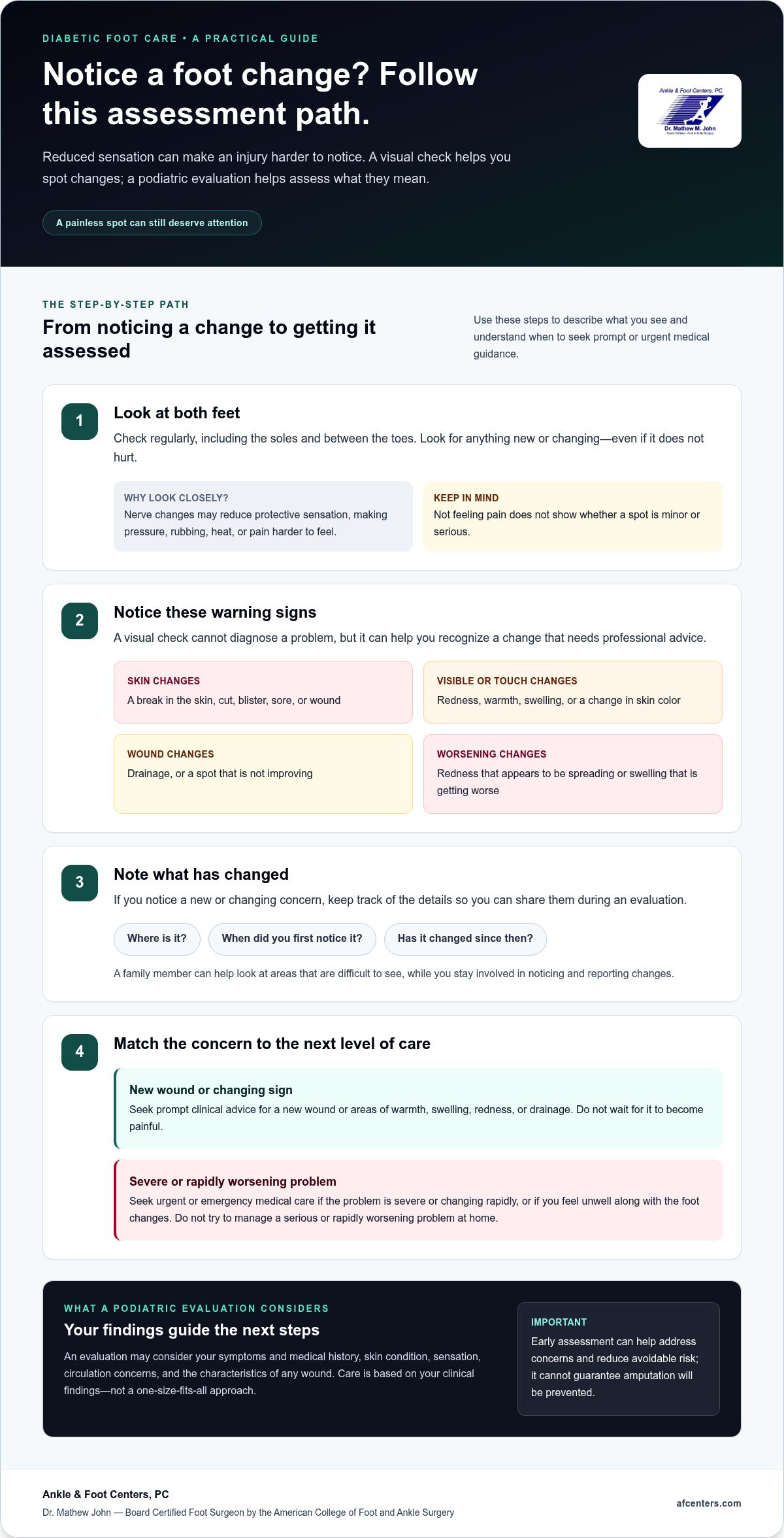
A foot concern can be easy to dismiss if it seems small or doesn’t hurt. With diabetes, changes in sensation may make pain an unreliable way to judge what’s happening. Look at both feet regularly, including the soles and between the toes, and pay attention to anything new or changing. A visual check can’t diagnose a problem, but it can help you notice when it’s time to seek professional advice.
Watch for changes such as:
- A break in the skin, cut, blister, sore, or wound
- Redness, warmth, swelling, or a change in skin color
- Drainage from a wound or a spot that isn’t improving
- Redness that appears to be spreading or swelling that is getting worse
These signs don’t point to one specific diagnosis on their own. A podiatric evaluation can help determine what they mean in your situation and what care may be appropriate.
Changes that deserve prompt podiatric attention
Don’t wait for a blister, sore, or cut to become painful before taking it seriously. A wound that remains open or doesn’t seem to be improving deserves professional attention, as do new areas of warmth, swelling, redness, or drainage. When you notice a change, describe where it is, when you first saw it, and whether it has changed since then. Those details can help your clinician assess the concern.
A painless wound still deserves assessment because reduced sensation can make pain an unreliable sign of how serious a foot concern may be. This doesn’t mean every wound will worsen. It means a lack of discomfort shouldn’t be the only reason to postpone an evaluation.
When a foot concern may need urgent attention
Some changes call for prompt clinical attention, while severe or rapidly worsening problems may require urgent or emergency medical care. Seek prompt advice if redness is spreading, swelling is worsening, or a wound has drainage. If the foot problem is severe or changing rapidly, or you feel unwell along with the foot changes, seek urgent medical help rather than waiting for a routine appointment. Don’t try to manage a serious or rapidly worsening problem at home.
For people focused on avoiding amputation with diabetic care Woodstock, recognizing a change is a useful first step, not a way to predict the outcome. If you’re unsure how quickly a new concern should be evaluated, clearly describe the changes when seeking medical guidance. A clinician can help determine the appropriate next step based on your symptoms and examination.
Ankle & Foot Centers provides diabetic foot care and podiatric evaluation for Woodstock-area patients with new or changing foot concerns.
How a Woodstock diabetic foot evaluation guides treatment decisions
A podiatric evaluation helps turn a foot concern into a clearer, individualized plan. Rather than assuming every wound needs the same treatment, the clinician considers your symptoms, diabetes history, examination findings, and personal needs. For people focused on avoiding amputation with diabetic care Woodstock, an assessment can help clarify whether a concern should be monitored, needs wound-focused care, or calls for further evaluation or intervention. These are possibilities to discuss, not a guaranteed sequence or outcome.
What the clinician may assess
Your visit can begin with questions about your diabetes and foot health: what you’ve noticed, when it began, whether it has changed, and whether you’ve had previous wounds or other foot concerns. The podiatrist may examine your skin and, if present, the wound area, while assessing protective sensation. Circulation concerns may also be considered as part of the evaluation. The specific assessment depends on your presentation and clinical judgment.
Sharing clear details helps make the visit more useful. Mention a recent blister, an area that keeps rubbing in a shoe, a wound that hasn’t improved, or a change you noticed during a foot check. Bring up relevant changes in your health and any previous foot problems. You don’t need to decide what a finding means before the appointment. Describe what you’ve observed, and the clinician can assess it in context.
How findings shape an individualized care plan
The plan depends on what the examination shows. A concern that appears stable may lead to clinician-directed monitoring and guidance about follow-up. A wound may prompt wound-focused care and observation of its characteristics over time. If findings raise additional concerns, the clinician may discuss further evaluation or intervention. Surgery isn’t assumed, and no single procedure or product can prevent every amputation.
The comparison below shows how different findings can shape the conversation. It’s a general guide, not a diagnosis or treatment recommendation for your particular foot.
Finding or situation: No open wound, with a concern the clinician considers stable.
Possible discussion: Whether monitoring and follow-up are appropriate.
Finding or situation: A wound or other skin concern that needs direct attention.
Possible discussion: Wound-focused care and how the area will be reassessed.
Finding or situation: Examination findings that raise further concerns.
Possible discussion: Whether additional evaluation or another intervention should be considered.
These options aren’t a fixed ladder. The clinician weighs the wound’s characteristics, skin condition, sensation, circulation concerns, and your health needs together. If the plan includes monitoring, ask what changes to watch for and what follow-up is recommended. If care is advised, make sure you understand its purpose and the next steps. Individualized diabetic foot care gives Woodstock-area patients a way to discuss new or changing concerns with a podiatrist and make decisions grounded in clinical findings.
Daily diabetic foot care steps for people in the Woodstock area
A short, consistent routine can help you notice changes that are easy to miss during a busy day. Set aside a moment to check both feet, keep up gentle hygiene, and choose footwear that doesn’t create obvious rubbing or pressure. These habits support awareness, but they don’t replace a podiatric evaluation when you notice a new concern.
A repeatable foot-check routine
Look over each foot every day, including the tops, soles, heels, and spaces between the toes. Check for breaks in the skin, blisters, redness, swelling, warmth, drainage, or a change in color. If it’s difficult to see the soles, use a mirror or ask someone you trust to help. A family member’s support can make the check easier and help you keep track of changes.
Focus on what’s different from your usual skin condition rather than deciding what a change means. If you find something new, write down when you noticed it and where it is. A brief note or photo for your own reference may help you describe the change accurately to a clinician. Don’t rely on memory alone, especially if the area looks different over time.
If a daily check turns up a new or changing concern, an individualized podiatric evaluation can help clarify what to do next. Ankle & Foot Centers provides diabetic foot care for patients in the Woodstock area, with recommendations guided by clinical findings.
Habits that support safer foot care
Wash your feet gently with lukewarm water, then dry them carefully, including between the toes. Take your time so moisture doesn’t remain between your toes. Choose footwear that fits comfortably and doesn’t create obvious pressure or rubbing. Avoid walking barefoot if reduced sensation could make an injury harder to notice. These are practical routines, not a substitute for care tailored to your needs.
Keep the focus on noticing and reporting, not trying to treat a concerning spot yourself. Don’t cut into a wound, blister, or area of changed skin, or attempt to remove it on your own. If you see a break in the skin or another new change, seek professional guidance rather than waiting for pain to appear. Reduced sensation can make discomfort an unreliable signal.
For people thinking about avoiding amputation with diabetic care Woodstock, daily checks are one practical way to stay aware of changes and share them with a clinician. A routine doesn’t guarantee a particular outcome, but it can help you spot something that deserves attention. If a change is severe or worsening quickly, seek urgent medical help instead of relying on home care.
Getting diabetic foot care near Woodstock at Ankle & Foot Centers
If you live in Woodstock and have a new or changing foot concern, an individualized podiatric evaluation can help clarify what to do next. Ankle & Foot Centers, PC provides diabetic foot care and specialized podiatric evaluations for Woodstock patients from its Marietta practice. The practice serves patients across the greater Atlanta area, including Roswell, Kennesaw, Atlanta, and Sandy Springs. An assessment focuses on understanding your specific concern and considering next steps based on clinical findings, not promising one outcome or recommending the same plan for everyone.
Dr. Mathew M. John leads the practice and is a Board Certified Foot Surgeon by the American College of Foot and Ankle Surgery. The practice’s focus on foot health offers a professional setting to discuss changes you’ve noticed and how diabetes may relate to your foot care needs. An evaluation can put those details into context and guide a plan suited to you.
What to prepare for a first visit
You don’t need to arrive with a diagnosis. A few details can help make the conversation more productive. Before your visit, note when the concern began, where it is, and whether it has changed. If you’ve had previous foot wounds or reduced sensation, mention that too. Bring relevant information about your diabetes and medications when available, and share any changes you’ve noticed, even if they seem minor or don’t cause pain.
It may help to write down questions you want answered, such as what the exam found, what next steps are recommended, and what changes should prompt follow-up. If someone helps you with daily foot checks, they can help you recall when a change first appeared or how it has developed. Clear observations give the clinician useful context, while the examination helps determine which details matter for your care.
For Woodstock-area patients considering avoiding amputation with diabetic care Woodstock, an individualized evaluation is a practical next step when a wound or other foot change needs attention. Diabetic foot care doesn’t guarantee amputation prevention, but a podiatrist can assess the concern and discuss appropriate care based on what the examination shows.
Take a clear next step for a changing foot concern
If you’ve noticed a new wound or concerning change, schedule a podiatric evaluation rather than waiting for it to hurt or trying to decide on your own what it means. Ankle & Foot Centers welcomes patients seeking guidance for diabetic foot concerns. Explore the practice’s diabetic foot care services and take the next step toward a professional assessment. If the problem is severe or worsening rapidly, seek urgent medical help.
Take the Next Step for Your Foot Health
Taking a concern seriously doesn’t mean assuming the worst. It means giving yourself the opportunity to get clear, personalized guidance and make informed choices about your foot health. Start with one simple step: arrange an evaluation and share what’s concerning you.
If you’re ready to move forward with avoiding amputation with diabetic care Woodstock, schedule a diabetic foot evaluation with Ankle & Foot Centers. A conversation with a podiatrist can help you understand your situation and consider next steps without pressure or promises about outcomes.
Steady attention to your health matters. Schedule an evaluation with Ankle & Foot Centers to discuss a new or changing foot concern.
Frequently Asked Questions
Can diabetic foot care prevent an amputation?
No foot-care plan can promise that an amputation will be prevented. Regular podiatric attention and individualized recommendations may help address concerns before they become more complex, but outcomes depend on each person’s clinical findings. For Woodstock patients, avoiding amputation with diabetic care means focusing on risk reduction rather than a guaranteed result. Ask your clinician what the exam shows, which steps are recommended, and what changes should prompt follow-up.
Can a diabetic foot wound be serious even if it does not hurt?
Yes. Reduced sensation can make it harder to notice pressure, friction, or an injury, so pain alone can’t show whether a wound needs attention. For example, you might notice a mark or break in the skin while changing socks even though it caused no discomfort. Don’t use the absence of pain as proof that a wound is harmless. Have a new or changing wound assessed by a clinician.
What should I do if I notice a sore on my foot?
Arrange a podiatric evaluation and describe what you’ve noticed, including where the sore is and whether it has changed. If you can, note when you first saw it and bring that information to the visit. Don’t cut into the sore, try to remove tissue, or rely on an unadvised treatment. If the problem is severe or worsening rapidly, seek urgent medical help rather than waiting for a routine appointment.
How often should I check my feet if I have diabetes?
Check both feet daily, even if they feel normal. Choose a dependable time, such as while getting dressed or before bed, so the check becomes part of your routine. Look at each foot in good light, and use a mirror or ask someone you trust for help if an area is hard to see. If you notice a new change, record it and share it with your clinician.
When should someone with diabetes seek urgent care for a foot problem?
Seek urgent medical help for a severe or rapidly worsening foot problem. Spreading redness, worsening swelling, drainage, or feeling unwell along with a foot concern are reasons to get prompt clinical attention. If the change is quickly progressing or seems severe, don’t try to manage it at home or wait for a routine visit. A clinician can assess the situation and advise on the appropriate next step.
What happens during a diabetic foot exam?
A diabetic foot exam may include a conversation about your health and symptoms, followed by an examination of your feet. The clinician may consider skin condition, any wound’s appearance, protective sensation, and circulation concerns. The exact assessment can vary with your needs and findings. You can help by sharing previous foot problems, changes you’ve noticed, and questions you’d like addressed, so the discussion can focus on what matters to you.
Where can Woodstock residents get diabetic foot care?
Woodstock residents can arrange a podiatric evaluation for a new or changing diabetic foot concern through Ankle & Foot Centers, PC. The practice is based in Marietta and serves patients in Woodstock, Roswell, Kennesaw, Atlanta, and Sandy Springs. To make the visit more useful, note when the issue began, what changes you’ve observed, and any relevant foot-health history. Share your questions and concerns during the appointment so the clinician can discuss findings and potential next steps tailored to your needs.


