
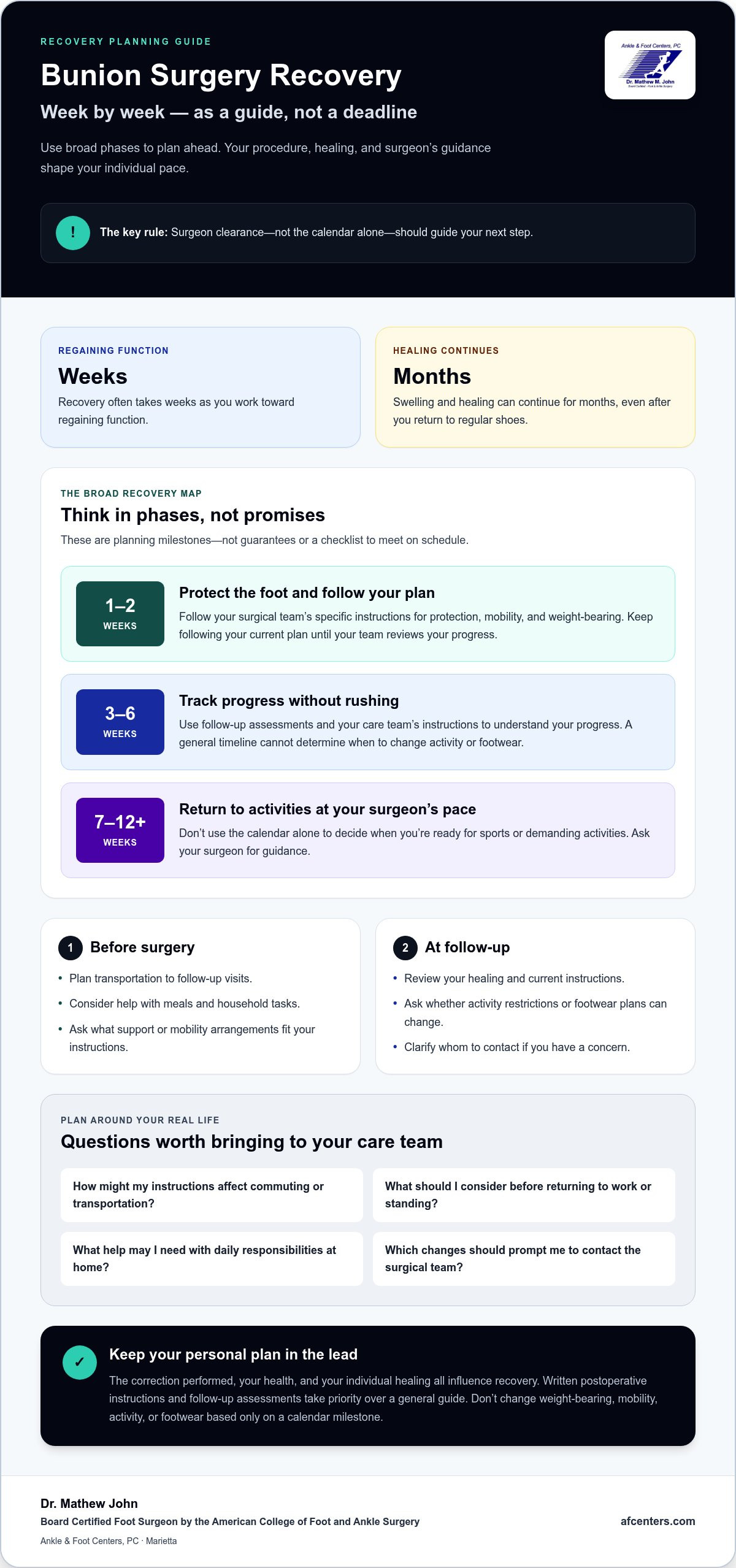
The day you return to regular shoes isn’t necessarily the day your foot is fully healed. If you’re researching bunion surgery recovery week by week, treat each phase as a planning milestone, not a deadline. Your procedure, healing, and surgeon’s guidance all shape the pace.
It’s understandable to wonder how pain, swelling, or limited mobility may affect work, transportation, and everyday responsibilities. Recovery often takes weeks to regain function, while swelling and healing can continue for months. Your timeline may differ, so use general milestones as a guide rather than a guarantee.
This article outlines common recovery phases, factors that can affect progress, and changes to discuss with your surgeon. It also offers practical points to consider as you plan daily support and follow-up care. Dr. Mathew M. John leads Ankle & Foot Centers, PC, a podiatry practice in Marietta. Individualized guidance can help you understand what to expect after your specific procedure.
Key Takeaways
- Use bunion surgery recovery week by week as a planning framework, not a guaranteed schedule. Your procedure and healing influence each milestone.
- Follow your surgical team’s specific instructions for protecting your foot, moving around, and bearing weight in the early weeks.
- Use follow-up appointments to review your progress and ask whether activity restrictions or footwear plans can change.
- Don’t rely on the calendar alone to decide when you’re ready for sports or demanding activities. Ask your surgeon for guidance.
- Prepare questions about recovery, daily responsibilities, and follow-up care for Dr. Mathew M. John and the care team.
Bunion Surgery Recovery Week by Week: Why Timelines Differ
Planning time away from work, arranging transportation, and sharing daily responsibilities can feel difficult when you don’t know what recovery may involve. A bunion surgery recovery week by week guide can offer a useful planning framework, but it can’t predict exactly how your foot will heal. Recovery varies with the correction performed, your health, and your individual healing.
The term bunion surgery covers different surgical approaches. A general overview can help you understand the topic, but your surgeon’s written postoperative instructions and follow-up assessments should guide your care. Those instructions take priority over a general timeline, including the phases described here.
What affects a bunion surgery recovery timeline?
The specific correction performed can affect your restrictions, mobility instructions, and follow-up plan. Your health history and your surgeon’s assessment of your progress also inform recommendations. As healing continues, your care team can help determine when a change in activity or footwear may be appropriate. Avoid relying on a fixed date for walking normally, returning to work, or exercising. Those milestones aren’t the same for everyone.
How to use this week-by-week recovery guide
Think of each week or group of weeks as a broad phase, not a checklist you must meet on schedule. Your experience may differ, and a slower or faster change doesn’t automatically tell you whether healing is on track. Bring questions about work, transportation, home responsibilities, and activity to your surgical consultation. Ankle & Foot Centers, PC provides foot and ankle care in Marietta. You can review the practice’s foot and ankle services as you consider your care options.
Surgeon clearance, not the calendar alone, should guide your next step in recovery. At follow-up, ask what your current instructions mean for daily movement and which changes should prompt you to contact the surgical team. Keep your written plan accessible so you and anyone helping with your care can refer to the same guidance.
Weeks 1-2 After Bunion Surgery: Protect the Foot and Follow Your Plan
The first two weeks are generally a time to follow your individual postoperative plan and protect the surgical area. Your surgeon’s instructions will reflect the procedure you had, so don’t use a general recovery timeline to decide how much to walk or whether to put weight on your foot. Follow only the mobility and weight-bearing guidance provided by your surgical team.
Your experience may not match someone else’s. Pain, swelling, and mobility can vary, and a particular symptom or pace of progress doesn’t tell the whole story. Ask your care team which changes are expected for your situation and whom to contact if you have concerns. The Bunion surgery recovery at home resource offers additional general information, but your own care instructions should take priority.
What may be part of the first week?
Your team will explain how to rest and protect your foot based on your procedure. Before leaving your appointment, make sure you know how to reach the appropriate contact with questions, when to attend follow-up, and what to do if you’re unsure about an instruction. Writing down these details can make it easier to follow your plan at home.
Arrange practical support before surgery where possible. Consider who can help with meals, household tasks, or transportation, and how you’ll get to follow-up visits. Ask your surgical team what support or mobility arrangements may fit your specific instructions.
What should you plan for during week two?
A follow-up appointment gives your surgeon a chance to assess healing and discuss whether any next steps are appropriate. Keep following your current plan until the surgical team reviews your progress. Don’t change weight-bearing, mobility, or activity based on what a general guide says should happen by this point.
Let your actual restrictions shape plans for work and home. For example, ask your care team how your instructions may affect commuting, standing, or household responsibilities before committing to a return date. Write down questions as they come up so you can discuss them at your appointment.
- Who can help with transportation and essential tasks?
- What instructions should you follow until your next assessment?
- Whom should you contact if you have a concern?
For individualized bunion care and surgical guidance, review the practice’s foot and ankle services. Ankle & Foot Centers, PC is based in Marietta and serves patients in nearby communities, including Roswell, Woodstock, Kennesaw, Atlanta, and Sandy Springs.
Weeks 3-6 After Bunion Surgery: Track Progress Without Rushing
Weeks three through six are best viewed as a reassessment phase, not a promise that a particular change will happen by a certain date. The procedure you had and your clinical progress help determine which milestones may be appropriate. At follow-up, your surgeon can assess how healing is going and decide whether any restrictions or footwear plans should change.
Use these visits to describe what you’re experiencing, including concerns about comfort, mobility, or how your foot is responding to your current plan. A general bunion surgery recovery week by week guide can’t assess your healing or tell you whether a symptom is expected for you. If you’re concerned, contact your surgical team rather than relying on someone else’s timeline.
How may activity and mobility guidance change?
Your care team may adjust recommendations as they assess your progress, but make changes only when your surgical team gives you explicit instructions. Feeling ready to do more is not the same as receiving clearance. If a daily task feels easier, ask whether that changes what you’re allowed to do. Don’t set your own walking targets, exercise plans, or return-to-work date based on the calendar.
Bring specific questions to your appointment, such as, “Which restrictions still apply?” and “What should I do if an activity increases discomfort?” Clear answers can help you plan while keeping your next steps aligned with your individual recovery.
When might footwear become part of the discussion?
Ask your surgeon when and how to discuss footwear as your healing progresses. A change in shoes isn’t a guaranteed week-based milestone, and comfort and fit should be considered with your care team. Before switching footwear, confirm what options are appropriate for your situation and whether any restrictions remain.
Keep track of questions or changes you want to discuss between visits. Your surgeon’s assessment, not a date on a general timeline, determines whether it’s appropriate to progress.
Confirm recovery milestones with the surgeon treating your foot. You can review Ankle & Foot Centers, PC’s foot and ankle services for information about the practice’s care in Marietta and the surrounding communities.
Weeks 7-12 and Beyond: Return to Activities at Your Surgeon’s Pace
As recovery continues, follow-up visits can help you and your surgeon reassess comfort, function, and the activities you hope to resume. Progress during this phase isn’t measured by the calendar alone. Your procedure and healing matter, so ask what’s appropriate for you rather than assuming that reaching a certain week means you’re ready for more.
A bunion surgery recovery week by week guide can help you organize questions, but it can’t confirm that your foot is ready for a specific demand. Use the comparison below to separate common expectations from decisions that belong with your treating surgeon.
| Patient expectation | What to confirm with your surgeon |
|---|---|
| “I’ve reached a later recovery week, so I can increase activity.” | Which activities are appropriate now, and what limits should I continue to follow? |
| “I feel ready to return to work or drive.” | Does my healing and current mobility allow me to do this safely? |
| “I can try exercise or a demanding activity again.” | What signs of readiness should guide my return, and should I wait for clearance? |
What should guide a return to normal routines?
Bring up work, driving, exercise, and other routines at your follow-up appointments. The right timing depends on your individual assessment and the demands of each activity. Feeling better is encouraging, but it isn’t the same as being cleared. Don’t self-clear or set a return date based only on a general timeline. Ask your surgeon which steps are appropriate and whether any restrictions still apply.
Which changes should prompt a call to the care team?
Contact your surgical team promptly about symptoms that are worsening, unexpected, or concerning to you. Don’t try to diagnose the cause or dismiss a change because you’ve read that a certain amount of discomfort can happen during recovery. Follow any urgent-care instructions your team gave you, and ask for guidance if you’re unsure what to do.
For individualized bunion and foot surgery guidance, contact Ankle & Foot Centers, PC to discuss your needs. The practice provides bunion care and reconstructive foot and ankle surgery in Marietta, with care for patients from Roswell, Woodstock, Kennesaw, Atlanta, and Sandy Springs. Explore its foot and ankle services to learn more.
Plan Bunion Surgery Recovery With Individual Foot Surgeon Guidance
A week-by-week guide can help you think ahead, but your own recovery plan should come from the surgeon who understands your procedure and can assess your progress. Before surgery, talk through practical details that matter in your life, from transportation and household support to follow-up visits. Clear answers can make planning feel more manageable without treating a general timeline as a promise.
Questions to ask before bunion surgery
Bring a written list to your consultation so you can use the time to understand both the procedure and the follow-up plan. Consider asking:
- What procedure are you considering for my bunion, and how will that affect my recovery plan?
- What restrictions should I plan for, and how will I learn when they may change?
- Which follow-up visits should I expect, and what will the surgeon assess at each one?
- What help at home or transportation arrangements might I need to organize?
- Whom should I contact if I have a concern between appointments?
Your daily responsibilities are worth discussing, too. Explain what your work and home routines involve, then ask how to plan around the instructions specific to your surgery. You can also ask how activity and footwear decisions will be reviewed as healing progresses. These conversations help you prepare questions and arrange support, while leaving medical decisions with your surgical team.
Where to seek personalized bunion guidance in Marietta
If you’re looking for a local bunion evaluation, a consultation is an opportunity to discuss your symptoms, treatment options, and personal goals. Ankle & Foot Centers, PC provides bunion care and reconstructive foot and ankle surgery in Marietta. An evaluation can help you understand your options and ask how follow-up guidance may be tailored to your situation, without assuming a particular outcome or recovery duration.
To learn more about the practice’s care, explore its foot and ankle services. If you’re considering a bunion evaluation in Marietta, use the information as a starting point for a conversation with the care team about next steps.
Move Forward With a Recovery Plan That Fits You
Use this bunion surgery recovery week by week guide to plan and prepare, not to set deadlines for your healing. Your procedure, personal health, and follow-up assessments all shape when a change in activity is appropriate. Keep following your surgical team’s instructions, and bring questions or concerns to your appointments rather than judging progress by the calendar.
Planning ahead can also make recovery feel more manageable. Discuss the procedure, restrictions, follow-up, and practical support you may need with a foot surgeon. Ankle & Foot Centers, PC provides bunion care and reconstructive foot and ankle surgery in Marietta, serving patients in Roswell, Woodstock, Kennesaw, Atlanta, and Sandy Springs.
If you’re ready to discuss your bunion care and personal next steps, contact Ankle & Foot Centers, PC. Ask the care team about an evaluation and how to plan for your individual recovery.
Frequently Asked Questions
How long does bunion surgery recovery take?
Recovery time varies with the procedure, your health, and how healing progresses. A bunion surgery recovery week by week guide can help you plan, but it can’t predict your individual outcome. Your surgeon will assess your foot during follow-up and explain when it may be appropriate to change restrictions or resume activities. Before surgery, ask for a personalized recovery plan and follow the specific instructions you receive.
What happens during the first week after bunion surgery?
The first week is generally focused on following your surgical team’s instructions and protecting your foot. Your care team should explain your mobility restrictions, wound-care plan, and how to contact them with concerns. Ask questions if any directions are unclear. Don’t use a general article to decide how much weight to place on your foot or how to manage symptoms, since your postoperative plan should reflect your procedure.
When can I walk normally after bunion surgery?
There isn’t one week when every patient can walk normally. The procedure, your healing progress, and your surgeon’s instructions all affect when walking can advance. Follow the weight-bearing and mobility guidance provided by your surgical team, and ask at follow-up what progression is appropriate. Feeling ready to do more doesn’t necessarily mean your foot has been cleared for unrestricted walking, so check before changing your activity.
When can I wear regular shoes after bunion surgery?
The timing depends on your healing, comfort, and surgical plan, so a general week-by-week schedule can’t promise when regular shoes will fit. Ask your surgeon what footwear is appropriate at each stage and what should guide a change. Don’t force a shoe that causes discomfort or change your postoperative instructions without checking with your care team. Discuss fit and comfort at follow-up before transitioning to different footwear.
Is swelling normal weeks after bunion surgery?
Some patients may notice swelling as recovery progresses, but the expected pattern varies. Ask your surgeon what changes may be anticipated after your specific procedure. Contact your care team if swelling is worsening, unexpected, or accompanied by other concerning changes. Follow any urgent instructions your surgical team provided. An online timeline can’t determine the cause of swelling or tell you whether a change needs assessment.
When can I return to work or exercise after bunion surgery?
Return timing depends on your work or activity, the procedure, and how your recovery is progressing. Discuss your responsibilities and goals with your surgeon, including what your work involves and what activities you hope to resume. Don’t return to demanding activity based only on the number of weeks since surgery. Follow-up assessments can help your surgeon explain whether a change is appropriate and which restrictions still apply.
What should I do if recovery does not match the expected timeline?
Contact your surgical team and describe what has changed, when it began, and any other symptoms you’ve noticed. A general timeline can’t explain what’s happening in your individual case, so don’t use it to diagnose a concern or dismiss a change. Your surgeon can assess your situation and advise whether you need an appointment or another next step. Ankle & Foot Centers, PC is based in Marietta and serves patients in Roswell, Woodstock, Kennesaw, Atlanta, and Sandy Springs.


