
There isn’t one calendar date that tells everyone when to stop wearing a boot after foot surgery. If you’re searching for how long to wear boot after foot surgery, the answer depends on the procedure, how your foot is healing, and the weight-bearing plan your surgeon gives you.
It’s understandable to want a clear finish line, especially when the boot makes everyday activities harder. But stopping too soon may put healing at risk, while wearing it longer than directed can affect your next steps in recovery. Your surgeon’s instructions are the safest guide, even if your timeline differs from someone else’s.
This article explains what can affect boot duration, how to follow your instructions, and what to ask at a follow-up appointment if you’re unsure about changing your plan. Ankle & Foot Centers, PC provides specialized foot and ankle care in Marietta, including evaluations for foot and ankle concerns. The key is to understand your individual recovery plan and check with your surgical team before making changes.
Key Takeaways
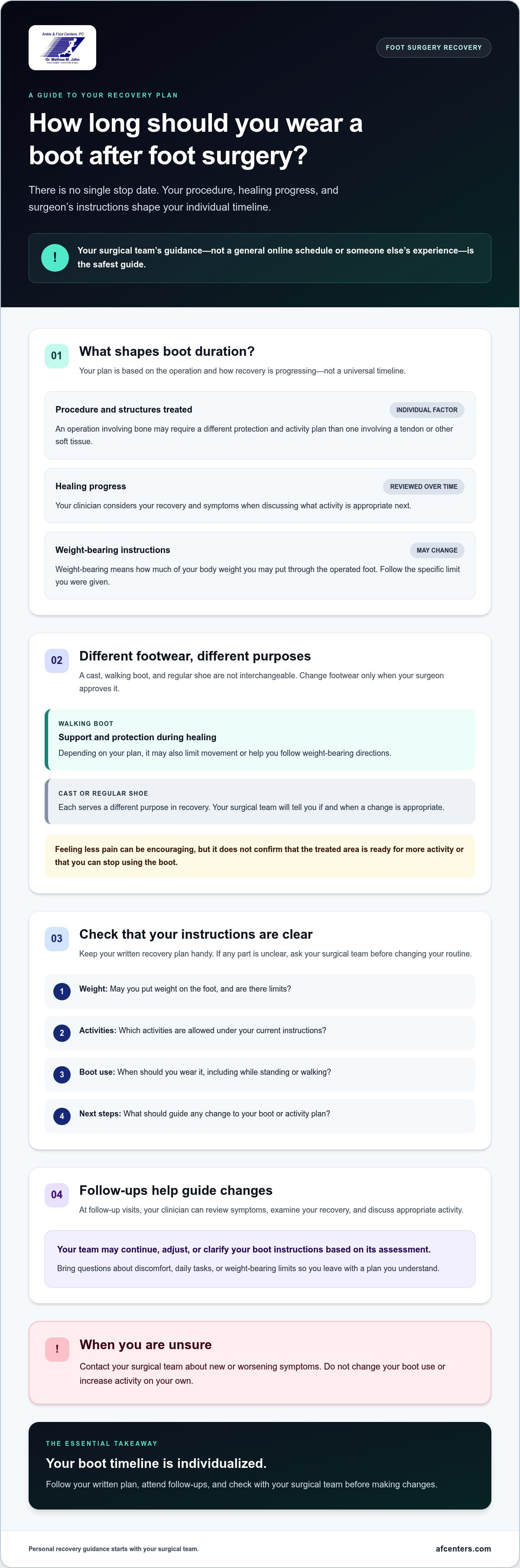
- There’s no single answer to how long to wear a boot after foot surgery. Your procedure and healing shape the timeline.
- Your surgeon’s instructions take priority over general guidance, and weight-bearing directions may change as recovery progresses.
- A cast, walking boot, and regular shoe serve different purposes. Change footwear only when your surgeon approves the transition.
- Keep your written recovery plan handy, attend follow-ups, and clarify any instructions you’re unsure about.
- Contact your surgical team about new or worsening symptoms rather than changing your boot use on your own.
How Long to Wear a Boot After Foot Surgery Depends on Your Procedure
A walking boot is part of recovery after some foot procedures, but the time you need it can vary. Your operating surgeon’s instructions should always take priority over general online guidance. The most useful answer to how long to wear a boot after foot surgery is one based on your specific operation and recovery plan.
Procedure type, healing progress, and weight-bearing instructions all shape how the boot is used. A procedure involving bone may call for different protection than one involving soft tissue, such as a tendon. Your surgeon also considers how your recovery is progressing and whether the amount of weight you’re allowed to put on your foot should change. Less pain can feel encouraging, but it doesn’t confirm that the treated area is ready for more activity or that it’s safe to stop using the boot.
Why there is no single boot-wearing timeline
Foot surgeries address different structures and have different goals, so one person’s experience may not apply to yours. Your surgeon considers what was treated, how it was repaired, and what the planned stages of recovery require. Your boot duration is individualized according to your procedure, healing progress, and surgeon’s instructions.
What the boot is intended to do during recovery
A prescribed boot can help support and protect your foot while it heals. Depending on your treatment plan, it may also limit movement or help you follow specific weight-bearing instructions. An orthopedic boot is a type of supportive device used for foot and ankle conditions, but why you’ve been prescribed one and how to use it depend on your surgeon’s guidance. A boot is one part of recovery care. It can’t guarantee healing or prevent every complication.
Follow the directions you were given, including when to wear the boot and how much weight to place on your foot. If the instructions aren’t clear, ask your surgical team before changing your routine. Ankle & Foot Centers, PC offers specialized foot and ankle evaluations in Marietta. An appointment can help address questions about a foot or ankle concern and clarify which care options may be relevant to you.
What Determines How Long You Wear a Walking Boot After Surgery?
Your recovery plan reflects more than the name of your operation. Your surgeon considers which structures were treated, the protection they need, and how your healing is progressing. An operation involving bone may call for a different activity plan than one involving a tendon or other soft tissue. Midwest Orthopedic Specialty Hospital also describes a recovery timeline by procedure, illustrating why another patient’s boot schedule may not fit yours.
Other health factors can also affect how a clinician plans and assesses recovery. Share relevant health information with your surgical team so they can consider it alongside your examination and progress. Don’t assume a particular condition is responsible for a change in healing, and don’t compare your recovery with someone else’s as a substitute for personalized guidance.
How procedure type and weight-bearing instructions affect recovery
Weight-bearing means how much of your body weight you’re allowed to put through your operated foot. It’s different from general activity: you might be allowed to do some tasks while still needing to limit pressure on the foot. Your surgical team may revise these limits as recovery progresses. Follow the exact instructions you received, and ask for clarification if you’re unsure what they allow.
For a practical check, make sure you understand:
- Whether you can put weight on the foot, and any limits on how much.
- Which activities are permitted under your current instructions.
- Whether the boot should be worn for all standing and walking, or under different conditions.
These details are specific to your procedure. Avoid increasing activity or changing how you use the boot based on a general online schedule.
How follow-up visits help guide boot changes
Follow-up visits let your clinician review your symptoms, examine your recovery, and discuss what activity is appropriate next. Based on that assessment, the team may continue, adjust, or clarify your boot instructions. Bring questions about discomfort, daily tasks, or unclear weight-bearing limits so you leave with a plan you can follow.
General recovery information can explain common factors, but only your surgical team can advise you about your personal recovery. If you’re uncertain about your instructions, contact the team that knows your procedure rather than changing the plan yourself. Learn more about Ankle & Foot Centers, PC’s foot and ankle services.
Boot, Cast, or Regular Shoe: What Changes During Foot Surgery Recovery?
A cast, walking boot, and regular shoe aren’t interchangeable. Each offers a different level or kind of support, and the right choice depends on the operation and your surgeon’s plan. If you’re wondering how long to wear a boot after foot surgery, remember that the plan may include a clinician-approved change in footwear as recovery progresses, not simply a date on the calendar.
| Device | Purpose | Typical context | Who decides on a change? |
|---|---|---|---|
| Cast | Holds the foot or ankle in a more fixed position for protection. | A clinician may use one when the treatment plan calls for firm support or restricted movement. | Your surgical team. |
| Walking boot | Provides support and protection, with use guided by your instructions. | A clinician may prescribe one for protected walking or other specific recovery needs. | Your surgeon or care team. |
| Regular shoe | Provides everyday footwear without the same structure as a prescribed cast or boot. | May be considered when your clinician approves a footwear transition. | Your surgeon or care team. |
When a walking boot may be part of the recovery plan
Your clinician may prescribe a boot to support the foot or allow controlled walking, but not every foot surgery requires one. Your directions may specify when to wear it, which activities require it, and how much weight you can put on the foot. If any part of the plan is unclear, ask the surgical team before changing how you use the boot.
Why you should not switch to a regular shoe on your own
Feeling more comfortable or having less pain can be encouraging, but it doesn’t confirm that your foot is ready for a footwear change. A shoe may feel fine while still offering different support from the device your clinician prescribed. The transition should be based on an individual assessment and your surgeon’s approval, not a comparison with another person’s recovery.
Before changing devices, check what your instructions say about footwear, walking, and everyday activity. If the plan doesn’t answer your question, contact your surgical team for clarification rather than testing the change on your own. The appropriate footwear depends on the procedure and your recovery.
Safe Boot Management and When to Call Your Surgeon
A clear routine can make boot use easier to manage and help you avoid guessing about your recovery plan. Keep your written instructions accessible, and use follow-up visits to confirm whether anything has changed. If you’re unsure how long to wear a boot after foot surgery, your surgical team can explain how the instructions apply to your procedure and current recovery.
- Follow the written plan. Use the boot and follow weight-bearing and activity directions as instructed.
- Clarify anything unclear. Ask before removing the boot in situations not covered by your instructions or changing your routine.
- Attend follow-ups. These visits let your care team review your recovery and advise you about next steps.
- Call about new or worsening concerns. Don’t try to solve symptoms by adjusting the boot or activity plan on your own.
Questions to ask before changing how you wear the boot
Bring practical questions to your follow-up or contact your surgical team if you need clarification sooner. Ask when the boot should be worn and whether there are situations when you may remove it. Confirm your weight-bearing and activity limits until your next assessment, including what applies to bathing and sleeping. Also ask which symptoms should prompt a call and whom to contact after hours. Use the contact information and directions in your discharge instructions.
When to contact your surgical team
Contact your surgical team promptly about a new or worsening concern after surgery. Your discharge paperwork is the guide for symptoms that need urgent attention and for emergency instructions. If you’re unsure how urgently to respond, follow those directions or contact the team using the information provided. This article offers general information, not a diagnosis or personal medical advice, so don’t wait for an online answer when you have a concern about your recovery.
Ankle & Foot Centers, PC provides specialized foot and ankle care in Marietta. Explore foot and ankle services to learn more about the practice’s care options.
Get a Foot Surgery Recovery Plan Tailored to Your Healing
There isn’t a universal answer to how long to wear a boot after foot surgery. Your surgeon determines boot use based on your specific procedure, recovery instructions, and assessment of your healing. Don’t stop wearing the boot or continue using it longer than instructed without first clarifying the plan with your surgical team.
If you’re unsure what comes next, an appointment gives you a chance to discuss questions tied to your procedure and how recovery is progressing. You don’t need to assume that every concern means you need another procedure. Often, the useful next step is simply getting clear guidance about your current instructions.
What to bring to a foot-surgery recovery appointment
A little preparation can help you make the most of your conversation. Bring your discharge instructions, current medication information, and a brief record of symptoms or changes you’ve noticed. Note any difficulty following the plan, such as managing the boot during daily activities, so the clinician understands what’s challenging.
Consider writing down questions ahead of time:
- When should I wear the boot, and are there situations when I can remove it?
- What weight-bearing and activity limits should I follow until my next assessment?
- When should I expect follow-up, and what changes might prompt a call sooner?
- How will I know when a transition to different footwear is appropriate?
Clear answers can help you follow your recovery plan with more confidence. If you’re unsure about an instruction, ask rather than guessing or changing your boot use on your own.
Local foot and ankle guidance in the Marietta area
An in-person assessment can help address questions about your particular procedure, symptoms, and healing. Ankle & Foot Centers, PC provides specialized foot and ankle care in Marietta and serves patients in the greater Atlanta area, including Roswell, Woodstock, Kennesaw, Atlanta, and Sandy Springs. If you have a foot or ankle concern, the practice can help you explore an appropriate next step.
Move Forward With a Recovery Plan You Can Trust
The answer to how long to wear a boot after foot surgery depends on your procedure, healing progress, and surgeon’s instructions. A cast, boot, or regular shoe each has a different role, so change footwear only when your surgical team says it’s appropriate. If you’re unsure about boot use, activity limits, or new symptoms, ask rather than adjusting your plan on your own.
Ankle & Foot Centers, PC provides specialized foot and ankle care in Marietta and serves the greater Atlanta Metro area, including Roswell, Woodstock, Kennesaw, Atlanta, and Sandy Springs. If you have questions about a foot or ankle concern, contact Ankle & Foot Centers, PC to discuss your care.
Recovery is a step-by-step process. With guidance tailored to your healing, you can focus on following your plan and moving forward with confidence.
Frequently Asked Questions
How long should you wear a boot after foot surgery?
There’s no single timeline for how long to wear a boot after foot surgery. Your surgeon sets the plan based on the procedure, the tissues treated, your healing progress, and your weight-bearing instructions. Follow the directions given to you rather than relying on another person’s experience or a general online estimate. At follow-ups, ask whether your boot use should continue or change.
Can I stop wearing my boot if my foot no longer hurts?
No. Less pain by itself doesn’t confirm that it’s safe to stop wearing your boot. The boot may be prescribed to protect your foot or support specific activity limits while recovery continues. Keep following your surgical team’s instructions, and ask before changing how or when you wear it. If pain improves, mention that at your follow-up, but don’t treat it as clearance to stop.
Can I take my walking boot off to sleep after foot surgery?
Only remove your boot for sleep if your surgical team’s instructions allow it. Sleep directions can vary with the procedure and your individual plan, so don’t assume the boot should always stay on or can always come off overnight. Check your discharge paperwork for specific guidance. If it doesn’t answer the question, contact your surgical team and clarify before changing your routine.
What happens if I stop wearing my boot too soon?
Stopping before your surgeon says it’s appropriate may leave your foot without the protection or support intended in your recovery plan. It could also mean you’re putting more weight on the treated area than instructed. The effect depends on your operation and healing, so it can’t be predicted from pain or appearance alone. If you’ve already stopped, contact your surgical team for advice on what to do next.
When can I switch from a boot to a regular shoe after foot surgery?
Switch to a regular shoe only when your surgeon approves the transition. The decision depends on the operation, your recovery assessment, and the activity or weight-bearing limits that still apply. Less discomfort or a shoe that feels comfortable doesn’t confirm that your foot is ready. Ask what footwear to use, whether the change should happen gradually, and what to do if the shoe causes discomfort.
Should I contact my surgeon if my boot feels uncomfortable?
Yes, contact your surgical team if the boot feels uncomfortable or you’re unsure how it should fit or be worn. Don’t make major changes to your boot or recovery instructions on your own. Explain what feels uncomfortable and when you notice it. For new or worsening symptoms, follow your discharge instructions and contact the team using the guidance provided. Use the urgent-care directions in those instructions if needed.
Is a walking boot needed after every foot surgery?
No, a walking boot isn’t required after every foot surgery. The device your clinician recommends depends on the procedure, the structures treated, and the recovery plan. Some patients may have different footwear or support instructions instead. Ankle & Foot Centers, PC provides specialized foot and ankle care in Marietta and serves the greater Atlanta area, including Roswell, Woodstock, Kennesaw, Atlanta, and Sandy Springs.


