

Could burning feet point to something beyond tiredness or uncomfortable shoes? A persistent burning sensation may be linked to nerve changes, diabetes, skin conditions, or other health concerns, so finding the cause matters. The right burning sensation in feet treatment Kennesaw patients need depends on what an evaluation reveals, not just how the symptom feels.
If the discomfort is disrupting your sleep, walking, or daily routine, a podiatric evaluation can help clarify possible causes and guide next steps based on your symptoms and health history. Dr. Mathew John, a Board Certified Foot Surgeon by the American College of Foot and Ankle Surgery, provides specialized foot and ankle evaluations for patients in Kennesaw at Ankle & Foot Centers, PC’s Marietta practice.
This guide explains common causes of burning feet, what a podiatrist may assess, and why treatment depends on the findings. It also covers what to track and when to arrange an evaluation near Kennesaw.
Key Takeaways
- Burning feet are a symptom, not a diagnosis. Note when and where the sensation occurs and whether other symptoms appear.
- A podiatric evaluation considers your symptom history and examination findings to help narrow possible causes.
- Burning sensation in feet treatment Kennesaw patients may need depends on the likely cause and individual findings.
- Track changes in your symptoms and choose comfortable footwear. Arrange an assessment if symptoms worsen or concerning changes develop.
- Ankle & Foot Centers, PC serves patients from Kennesaw and nearby communities, including Marietta, Roswell, Woodstock, Atlanta, and Sandy Springs. Dr. Mathew John provides specialized foot and ankle evaluations.
Burning Feet: What the Sensation Can Mean and Why the Cause Matters
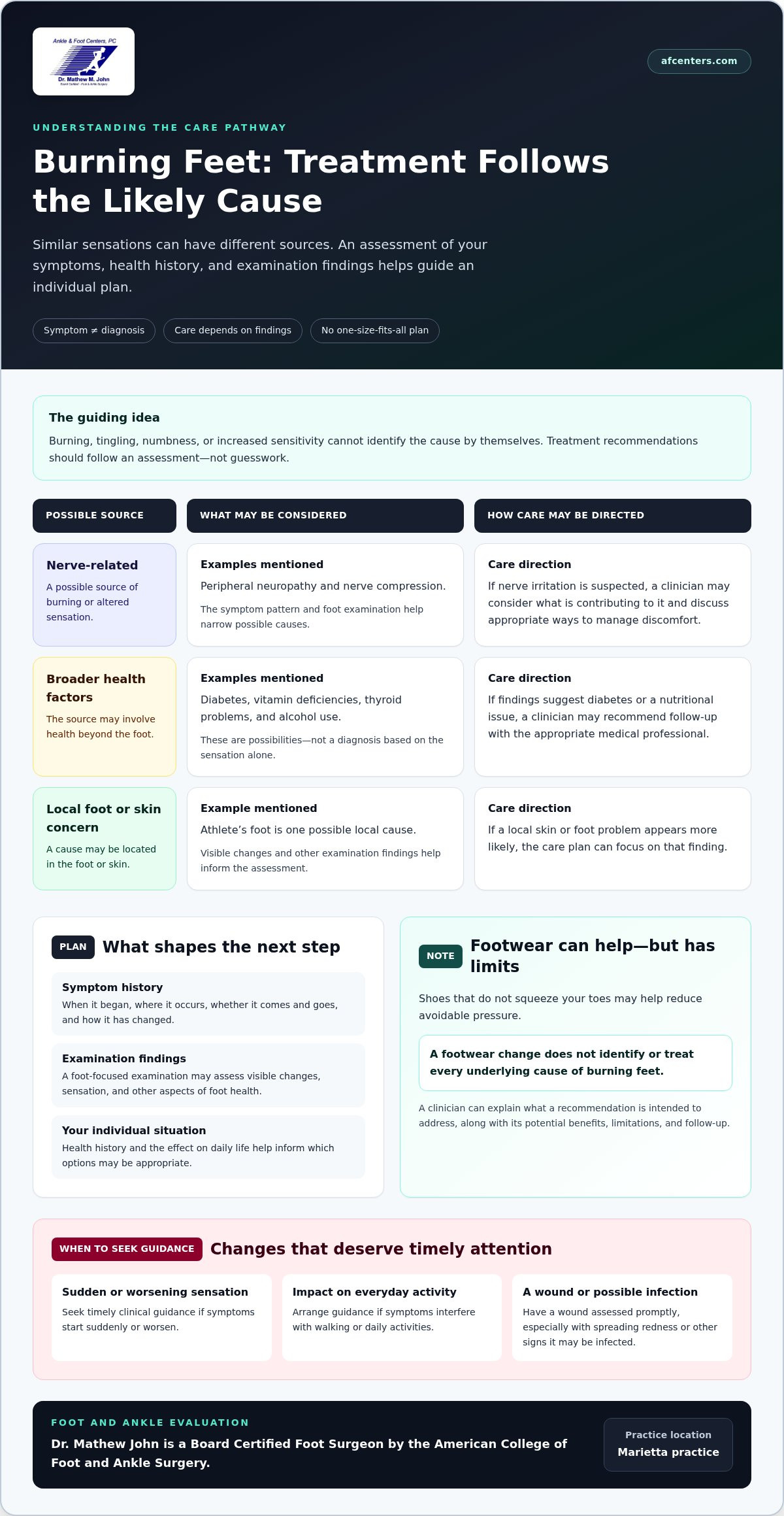
A burning feeling in your feet is a symptom, not a diagnosis. It can involve the nerves, reflect a broader medical issue, or come from a local foot or skin concern. Peripheral neuropathy is one possibility. Diabetes, vitamin deficiencies, thyroid problems, alcohol use, nerve compression, and athlete’s foot are among other potential causes. Similar sensations can have different sources, so the feeling alone can’t identify the cause.
The phrase Burning feet syndrome refers to a particular condition, but it should not be assumed to explain every case of burning feet. The location and timing of the sensation, how long it lasts, and any other symptoms can help guide an assessment. Treatment starts with identifying the likely cause so a clinician can consider care suited to your symptoms and findings.
For burning sensation in feet treatment Kennesaw patients may need, a foot-focused evaluation can help distinguish among possible nerve-related, medical, and local causes. Details about symptom changes and their effect on your daily activities can help make the assessment more informative.
How burning-foot symptoms can vary
You may notice burning, tingling, numbness, or increased sensitivity, but these sensations don’t point to one cause by themselves. Symptoms can affect one foot or both, stay in one area or spread, and come and go or change over time. Before your visit, note when they began, where you feel them, when they tend to occur, and what seems to ease or aggravate them. This record can help you explain the pattern.
When burning feet deserve prompt medical attention
Seek timely clinical guidance if the sensation starts suddenly, worsens, or interferes with walking and everyday activities. Have a wound assessed promptly, especially if you notice spreading redness or other signs that it may be infected. If you’re unsure how quickly to act, describe what’s happening to a medical professional and follow their guidance.
How a Podiatrist Evaluates Burning Feet Before Recommending Treatment
An evaluation starts with your experience, not a preset treatment. A podiatrist will ask when the burning began, where you feel it, whether it comes and goes, and how it has changed. They may also ask about other sensations, changes in your health, and what seems to trigger or ease the discomfort. These details help put the symptom in context.
What to share during a burning-feet appointment
A few notes can help you describe the pattern clearly. Record when symptoms began, how often they occur, which parts of your feet are affected, and whether the sensation is changing. Mention health conditions, medications, and treatments you’ve tried. Describe any effect on walking, sleep, work, exercise, or other daily activities.
How examination findings shape the next steps
Your history is considered alongside a foot-focused examination. The clinician may look for visible changes and assess findings related to sensation and other aspects of foot health. Together, your symptom pattern and examination findings help narrow possible causes.
Your symptom history and examination findings work together to guide next steps suited to your individual needs. If the cause remains unclear or findings suggest a broader health concern, the clinician may recommend further evaluation or appropriate testing. The causes of burning feet vary, which is why an assessment considers more than the sensation alone.
For burning sensation in feet treatment Kennesaw patients can benefit from an evaluation that connects their concerns with relevant examination findings. Ankle & Foot Centers, PC provides specialized foot and ankle evaluations for patients in Kennesaw at its Marietta practice, serving the greater Atlanta area, including Roswell, Woodstock, Atlanta, and Sandy Springs. Learn more about the practice’s foot and ankle services.
Burning Sensation in Feet Treatment: How Options Depend on the Cause
There isn’t one treatment that fits every case of burning feet. A plan depends on the suspected cause, examination findings, your health history, and how the discomfort affects daily life. Care may focus on an underlying medical condition, a local foot concern, or symptom relief. For example, if nerve irritation is suspected, a clinician may consider what’s contributing to it and discuss appropriate ways to manage discomfort. Peripheral neuropathy can have different causes, so the approach depends on the individual assessment.
Some causes may call for care beyond the foot itself. If findings suggest a condition such as diabetes or a nutritional issue, a clinician may recommend follow-up with the appropriate medical professional. If a local skin or foot problem appears more likely, the care plan can focus on that finding. Treatment recommendations should follow an assessment, not guesswork or a one-size-fits-all list.
Why treatment plans differ from person to person
Two people can describe a similar burning sensation but have different examination findings, health conditions, and needs. Those differences influence which options may be appropriate. A clinician can explain what a recommendation is intended to address, its potential benefits and limitations, and what follow-up may involve. The aim is a plan that reflects your situation rather than assuming one option works for everyone.
Choosing shoes that don’t squeeze your toes may help reduce avoidable pressure, but footwear changes don’t identify or treat every underlying cause. Don’t start supplements or use medication to treat persistent symptoms without guidance, since the right approach depends on what’s causing them. MLS Laser Therapy is used for musculoskeletal pain and inflammation and difficult-to-heal open wounds, not as a treatment for burning-foot symptoms or neuropathy.
What to ask about a recommended treatment plan
A clear conversation can help you understand your options. Consider asking:
- What cause or finding is this treatment intended to address?
- How will we review whether it’s helping?
- What practical considerations, risks, or alternatives should I understand?
These questions can help you make informed decisions alongside your clinician. For burning sensation in feet treatment Kennesaw patients can receive guidance through a foot-focused evaluation and care shaped by individual findings. Learn more about the practice’s foot and ankle services.
What You Can Do Now to Track Symptoms and Support Your Feet
A few practical steps can help you describe what’s happening and keep your feet comfortable while arranging care. Choose footwear that fits well and doesn’t squeeze your toes. Note whether particular shoes or activities seem to affect the sensation. These measures may support comfort, but they can’t determine the cause or replace an evaluation if symptoms persist.
A simple symptom record to bring to your appointment
Keep brief notes on your phone or in a notebook. Include when symptoms occur, how long they last, and which areas of one or both feet are affected. Record changes in sensation and whether symptoms influence walking, sleep, or everyday activities. A few clear examples can help focus the visit.
Before your appointment, gather a short list of:
- Questions or concerns you want to discuss
- Treatments or comfort measures you’ve tried and how they affected you
- Relevant health conditions and medications
- Changes you’ve noticed in your feet or daily routine
Sharing this information gives the clinician a clearer picture of your experience and helps focus the conversation on your needs.
When home care is not enough
Don’t rely on footwear changes or symptom notes alone if burning continues, has no clear explanation, worsens, or begins interfering with daily life. A professional assessment can help determine whether further evaluation is appropriate and guide next steps. Seek prompt medical attention for a wound, spreading redness, other signs of infection, or symptoms that change rapidly. If you have diabetes or another condition affecting your feet, mention it when seeking care.
For burning sensation in feet treatment Kennesaw patients can take a helpful first step by bringing a symptom record to a foot-focused evaluation. Ankle & Foot Centers, PC serves patients in Kennesaw from its Marietta practice, along with patients in nearby Roswell, Woodstock, Atlanta, and Sandy Springs. Explore foot and ankle care and arrange an evaluation to discuss your symptoms.
Find Burning Feet Care Near Kennesaw at Ankle & Foot Centers
Burning feet can leave you unsure whether to wait, try home measures, or seek specialist care. If symptoms persist, worsen, or interfere with sleep or walking, a foot-focused evaluation can help clarify what to consider next. Ankle & Foot Centers serves patients in Kennesaw from its Marietta practice, providing specialized foot and ankle evaluations and care.
What local patients can expect from a foot-focused visit
The visit is an opportunity to describe your symptoms, explain how they affect your routine, and have your feet assessed. Findings guide a discussion of possible next steps; they don’t guarantee a particular diagnosis or treatment. Dr. Mathew John is a Board Certified Foot Surgeon by the American College of Foot and Ankle Surgery and provides specialized foot and ankle care.
Care is considered in light of your symptoms, health history, and examination findings. If you’ve kept notes about when the burning occurs or what changes it, bring them along. That context can help focus the conversation and support decisions tailored to your needs.
Take the next step toward understanding your symptoms
You don’t have to determine the cause on your own. An evaluation can help clarify what your symptoms and examination findings suggest and whether further steps should be considered. It can be especially useful if burning keeps returning, affects daily activities, or comes with a wound or other concerning change.
For burning sensation in feet treatment Kennesaw patients can begin with an individualized assessment at Ankle & Foot Centers’ Marietta practice. If you’re ready to discuss persistent or concerning symptoms, explore foot and ankle services and arrange an evaluation.
Take a Clear Next Step for Burning Feet
Burning feet are a symptom with several possible causes, so identifying what may be behind the sensation is an important first step. A podiatric evaluation considers your symptoms and examination findings to guide appropriate next steps. Keeping track of when the discomfort occurs, where you feel it, and how it affects your routine can make the conversation more useful.
If you’re considering burning sensation in feet treatment Kennesaw, Ankle & Foot Centers, PC serves patients from Kennesaw at its Marietta practice. Dr. Mathew John is a Board Certified Foot Surgeon by the American College of Foot and Ankle Surgery and provides specialized foot and ankle care.
Persistent or concerning symptoms deserve thoughtful attention. Schedule a foot evaluation with Ankle & Foot Centers, PC to discuss what you’re experiencing and explore next steps.
Frequently Asked Questions
What can cause a burning sensation in the feet?
Several conditions can cause burning feet, so the sensation alone can’t identify the reason. Peripheral neuropathy, or nerve damage, is one possibility. Diabetes, vitamin deficiencies, thyroid problems, alcohol use, and nerve compression may also contribute. Local causes such as athlete’s foot can create burning or irritation, too. A clinician considers your symptom pattern, health history, and examination findings to help narrow possible causes and guide next steps.
Can a podiatrist treat burning feet?
Yes. A podiatrist can evaluate foot symptoms, consider possible causes, and discuss next steps based on your individual findings. Some causes may call for care focused on a local foot concern, while others may require attention to an underlying health condition or coordination with another clinician. Ankle & Foot Centers serves patients in Kennesaw from its Marietta practice, as well as nearby communities including Roswell, Woodstock, Atlanta, and Sandy Springs.
What is the best treatment for burning feet?
There isn’t one best treatment for everyone. The right approach depends on the suspected cause and your assessment. Care may address an underlying condition, a local foot issue, or the discomfort itself. For burning sensation in feet treatment Kennesaw patients should start with an evaluation rather than choosing a treatment based on the symptom alone. A podiatrist can explain what an option is intended to address, its limitations, and how progress may be reviewed.
When should I see a doctor for burning feet?
Arrange clinical guidance if burning persists, worsens, has no clear explanation, or interferes with walking, sleep, or daily activities. Seek prompt medical attention for a wound, spreading redness, other signs of infection, or symptoms that change rapidly. If you have diabetes or another condition affecting foot health, mention it when seeking care. An evaluation can help determine what the symptoms may indicate and whether further assessment is appropriate.
Can diabetes cause burning feet?
Yes. Diabetes can damage peripheral nerves, and this nerve damage may cause burning, tingling, numbness, or changes in sensation in the feet. Those symptoms don’t confirm diabetic neuropathy, since other conditions can feel similar. If you have diabetes and notice new or persistent foot sensations, share them with your healthcare professional. A foot-focused evaluation can help assess your symptoms and guide discussion of appropriate next steps.
What should I tell a podiatrist about burning feet?
Describe when the sensation began, how often it occurs, how long it lasts, and whether it affects one or both feet. Point out the areas involved and mention changes such as tingling, numbness, or sensitivity. Share relevant health conditions, medications, and treatments you’ve tried. Explain whether symptoms affect walking, sleep, or everyday activities, and bring any questions you have. These details help the podiatrist understand your experience and inform an individualized assessment.
Does MLS Laser Therapy treat burning feet or neuropathy?
No. MLS Laser Therapy at Ankle & Foot Centers is used for musculoskeletal pain and inflammation and difficult-to-heal open wounds. It isn’t a treatment for burning-foot symptoms or neuropathy. Because burning feet can have different causes, an evaluation helps guide appropriate care rather than assuming a particular therapy will address the symptom. A podiatrist can consider your findings and discuss suitable next steps.


