
What if the most useful answer to “What will surgery cost?” starts with your diagnosis, not a price list? The cost of reconstructive foot surgery Georgia patients may face varies because each procedure and care plan is different. A correction for one condition may involve different surgical steps, facility needs, anesthesia, or recovery care than a more complex reconstruction.
It’s understandable to want one clear number and know exactly what an estimate includes. Before your treatment plan is established, a general figure may not reflect your specific needs or insurance benefits. Your diagnosis and proposed care plan can help frame questions about coverage, prior authorization, and your potential out-of-pocket responsibility.
This guide explains what can shape an estimate, which services and follow-up care to ask about, and what information to gather from your insurance plan. At Ankle & Foot Centers, PC, Dr. Mathew M. John, a Board Certified Foot Surgeon by the American College of Foot and Ankle Surgery, provides specialized evaluation and treatment in Marietta. Whether you’re in Marietta, Roswell, Woodstock, Kennesaw, Atlanta, or Sandy Springs, a diagnosis-specific discussion can help you prepare for next steps.
Key Takeaways
- The cost of reconstructive foot surgery Georgia patients may face depends on the diagnosis, planned procedure, and individual care needs.
- The number of areas treated, surgical complexity, and related care can affect what an estimate includes.
- An estimate is different from a final insurance coverage decision or a processed claim.
- Gather your insurance details, relevant records, and questions about the estimate before discussing costs.
- Dr. Mathew M. John is a Board Certified Foot Surgeon by the American College of Foot and Ankle Surgery. An evaluation can connect your diagnosis with treatment options and a more relevant cost discussion.
What Determines the Cost of Reconstructive Foot Surgery in Georgia?
Reconstructive foot surgery is a broad category, not one standardized operation with one universal price. It can involve different approaches to structural problems affecting the foot or ankle. The right plan depends on what’s causing your symptoms, what the evaluation shows, and what treatment is appropriate for your individual needs. For a general overview of the specialty and its scope, see this introduction to foot and ankle surgery.
That’s why the cost of reconstructive foot surgery Georgia patients may face can’t be determined by a procedure name alone. A diagnosis such as a bunion or flatfoot doesn’t automatically mean every patient needs the same operation. Your surgeon considers the specific structural issue and the goals of care before recommending a surgical plan.
Why one procedure name does not determine the total
A procedure describes a planned surgical approach, while the broader episode of care may involve other services and follow-up planning. For example, treatment for one area may differ from a plan addressing multiple areas or a more involved structural concern. The number of procedures, clinical complexity, and individual recovery needs can all shape the plan. Not everyone with the same diagnosis will need the same operation or recovery pathway.
What a personalized estimate should help clarify
An evaluation connects your diagnosis with the proposed treatment plan, giving financial questions useful context. An estimate can help you understand the charges it represents, while your potential out-of-pocket responsibility depends on your insurance benefits and other plan details. These are related, but they aren’t interchangeable.
An estimate depends on the planned care and coverage details. It isn’t a guarantee of what an insurer will cover or what you’ll ultimately owe after a claim is processed. Coverage and patient responsibility vary by plan, so a general online figure can’t establish your individual financial responsibility.
At Ankle & Foot Centers, PC, Dr. Mathew M. John is a Board Certified Foot Surgeon by the American College of Foot and Ankle Surgery. A specialized evaluation can help you understand your diagnosis, review appropriate treatment options, and put cost questions in the context of your care plan.
Which Factors Can Change Reconstructive Foot Surgery Costs?
An estimate takes shape around the specific care being considered. For reconstructive foot surgery, the diagnosis guides the proposed procedure, but it doesn’t dictate one fixed treatment or fee. Your surgeon needs to evaluate the structural problem and your individual clinical needs before outlining an appropriate plan. That plan gives a more useful starting point for understanding the cost of reconstructive foot surgery Georgia patients may encounter.
How the diagnosis and surgical plan affect an estimate
The treatment approach may differ depending on the location and nature of the problem, how many areas need attention, and the complexity of the reconstruction. Even people with the same diagnosis may have different clinical needs. An evaluation connects what’s happening in your foot or ankle with the proposed procedure and related care, rather than relying on a diagnosis label alone.
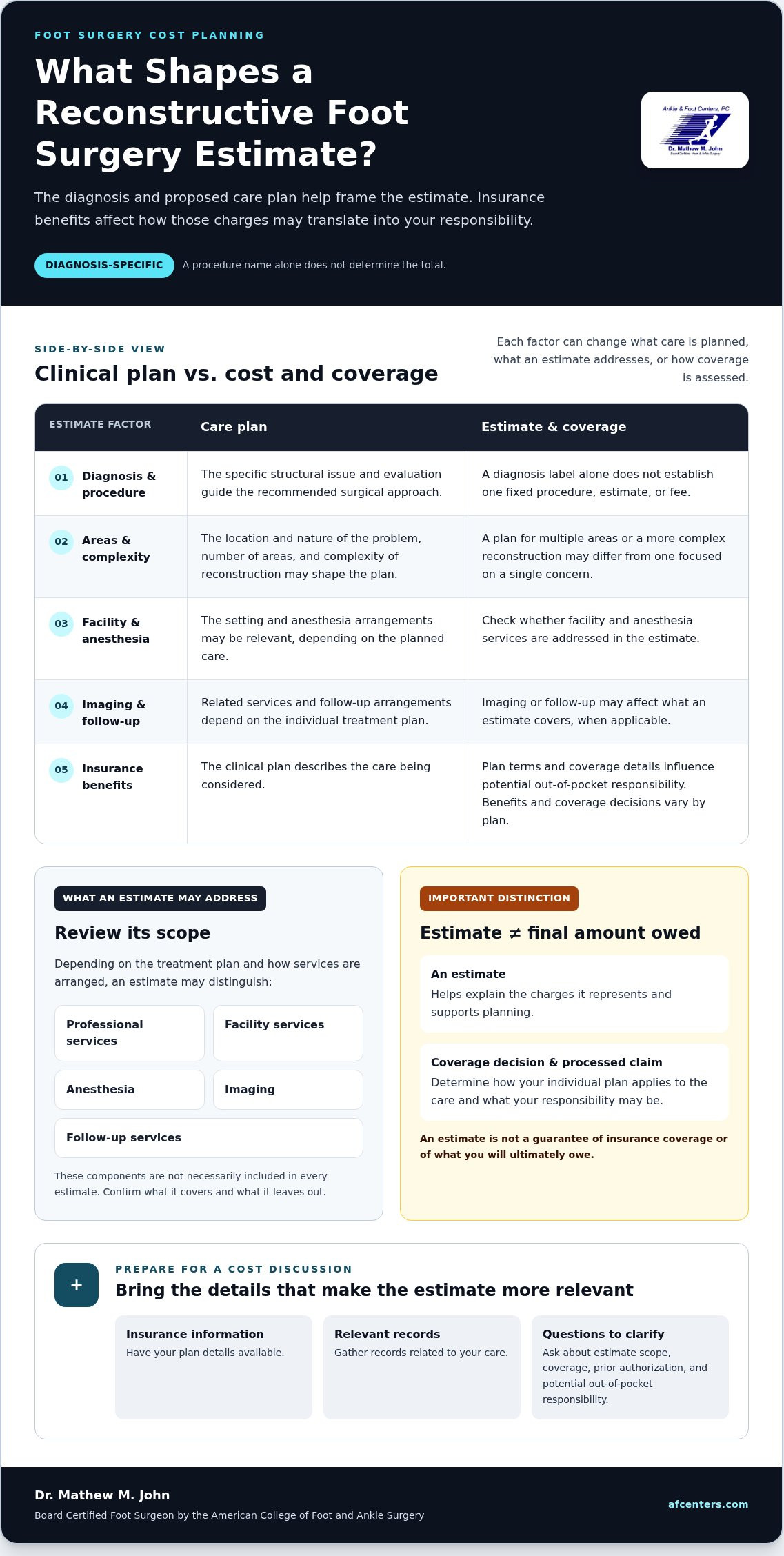
Estimate factor | Why it may vary
Planned procedure | The surgical approach is based on the specific structural issue and recommended treatment plan.
Areas treated and complexity | A plan involving more than one area or a more complex reconstruction may differ from a plan focused on one concern.
Facility and anesthesia | The setting and anesthesia arrangements may be relevant, depending on the planned care.
Imaging and follow-up | Related services or follow-up arrangements may affect what an estimate addresses, when applicable.
Insurance benefits | Plan terms and coverage details can influence your potential responsibility, separately from the clinical plan.
Which care and billing components may be relevant
Depending on the treatment plan and how services are arranged, an estimate may distinguish professional, facility, anesthesia, imaging, or follow-up services. These components aren’t necessarily included in every estimate. Review what the estimate covers and what it leaves out so you can understand its scope. Stanford Health Care’s overview, Determining the Costs of the Procedure, also explains how surgical costs can involve distinct components.
Clinical factors shape the planned care; insurance and benefit factors shape how that care may translate into your out-of-pocket responsibility. An estimate is a planning tool, not a final coverage determination or a guarantee of what you’ll owe after your plan processes a claim. Bring your insurance information and questions about the estimate to your discussion. You can also review Ankle & Foot Centers, PC’s foot and ankle services as you prepare for an evaluation.
How Insurance and Out-of-Pocket Costs Affect Foot Surgery Planning
Planning the cost of reconstructive foot surgery Georgia patients may face means looking beyond estimated charges to the details of your individual insurance plan. Benefits, coverage decisions, and patient responsibility vary. A provider estimate can help with planning, but it isn’t a promise of coverage or a final statement of what you’ll owe.
What to review in your insurance benefits
Before discussing expected responsibility, review your plan documents or contact your insurer about the proposed care. Keep notes about the information you receive, including the date and any reference details provided. These questions can help organize the conversation:
- What deductible applies, and how much of it has been met?
- What coinsurance or copayment may apply to the planned services?
- Does the plan require authorization for the proposed procedure or related care?
- Which services does the benefit information address, and are any considered separately?
Plan language and coverage decisions differ, so benefit information shouldn’t be treated as a guarantee that a claim will be paid. MedlinePlus offers helpful guidance on Understanding your hospital bill, including common insurance terms that can be useful as you review paperwork.
How to make sense of an estimate
An estimate is a planning document based on the information available about the proposed care. An insurer’s benefit or authorization information describes how the plan may apply, while the final bill reflects services and claim processing. Those documents serve different purposes, and the amount you ultimately owe can depend on your plan and the processed claim.
Look at the estimate’s scope. Does it address the professional service, facility, anesthesia, or other related care, or are some items handled separately? If you’re unsure what a line or term means, note it for discussion rather than assuming it is included.
Bring your insurance information, benefit notes, and questions to a personalized evaluation. Ankle & Foot Centers, PC provides specialized foot and ankle evaluations in Marietta, serving patients from Roswell, Woodstock, Kennesaw, Atlanta, and Sandy Springs as well. Dr. Mathew M. John is a Board Certified Foot Surgeon by the American College of Foot and Ankle Surgery. An evaluation can connect your diagnosis and proposed treatment with a clearer cost discussion. Explore the practice’s foot and ankle services as you prepare.
How to Prepare for a Reconstructive Foot Surgery Cost Discussion
A clear cost discussion starts with understanding your foot or ankle concern and the care being considered. An evaluation connects your symptoms and clinical findings with appropriate treatment options. Once you understand the proposed plan, you can ask focused questions about an estimate and how your insurance information may relate to it. This step-by-step approach can make a conversation about the cost of reconstructive foot surgery Georgia patients are planning for feel more manageable.
Information to bring to your evaluation
Gather what you have, but don’t worry if you can’t locate every record. Useful information can help your foot surgeon understand your health history and the concerns affecting daily life.
- Relevant medical history: Bring notes about health conditions, current medications, prior foot or ankle care, and available imaging or medical records.
- Your symptoms: Describe where you feel discomfort, when it began, what makes it better or worse, and how it affects walking, work, exercise, or other activities.
- Treatments tried: Share what you’ve already tried and how it affected your symptoms.
- Insurance information: Bring your insurance card and any notes about benefits, deductibles, coinsurance, copayments, or authorization questions.
These details give the evaluation context. They also help you explain what you hope to improve, so the discussion can address your needs rather than focus only on a procedure name.
Questions that make cost conversations clearer
After discussing your symptoms and reviewing the proposed plan, use your questions to understand both the care and the estimate. You might ask:
- What treatment is being considered, and which clinical findings helped shape the plan?
- Does the estimate address the professional service, facility, anesthesia, imaging, or follow-up care, as applicable?
- Are any services handled separately from the estimate?
- How are insurance details reflected, and which parts represent estimated charges versus potential patient responsibility?
An estimate is a planning resource, not a final coverage decision or a guarantee of the amount you’ll owe. Keep your benefit notes and insurer responses together as you review the estimate. That can help you identify unanswered questions and understand which details may depend on your plan or claim processing.
Ankle & Foot Centers, PC serves patients in Marietta and the greater Atlanta Metro area, including Roswell, Woodstock, Kennesaw, Atlanta, and Sandy Springs. Dr. Mathew M. Arrange an evaluation to discuss your foot surgery options and connect your diagnosis, treatment plan, and cost questions.
Plan Your Next Step with a Georgia Foot Surgery Evaluation
Cost research can help you prepare, but a useful next step is understanding what’s happening in your own foot or ankle. An evaluation connects your concerns and examination findings with possible treatment options. From there, you can review the recommended plan and discuss what an estimate addresses. This diagnosis-first approach makes questions about the cost of reconstructive foot surgery Georgia patients may face more specific to their circumstances.
What a local evaluation can help you understand
Your symptoms are part of the picture. The evaluation also considers clinical findings that help clarify the structural concern and possible ways to address it. A personalized discussion can explain why a particular treatment option may be considered, what questions remain, and what the next steps could involve. Not every person with a similar concern will have the same needs, so treatment recommendations and financial expectations should be individualized.
Once you understand the proposed care, you can ask more focused estimate questions. Clarify what services the estimate covers, how your insurance information is represented, and which details may depend on your plan’s benefits or claim processing. An estimate can support planning, but it doesn’t guarantee a specific coverage decision or final amount owed.
Take the next step in Marietta
Ankle & Foot Centers, PC provides specialized foot and ankle evaluations in Marietta and serves patients from Roswell, Woodstock, Kennesaw, Atlanta, and Sandy Springs. Dr. Mathew M. An evaluation gives you a place to discuss your concerns, understand potential treatment options, and raise cost questions in the context of your care.
You don’t need to have every answer before starting. Gather your records and insurance information, note the questions that matter most, and take the discussion one step at a time. If you’re considering reconstructive foot surgery, explore the practice’s foot and ankle services and arrange an evaluation through the practice website. The goal is to help you understand your options and plan your next step with clearer information, not to promise a particular price or outcome.
Move Forward with a Clearer Plan
The cost of reconstructive foot surgery Georgia patients may face depends on the diagnosis, recommended treatment, and individual insurance benefits. A general figure can’t replace a personalized estimate. Start by understanding the condition, reviewing treatment options, and clarifying what an estimate includes and how your coverage may apply.
An evaluation can connect your foot or ankle concerns with possible next steps and give you a place to discuss financial questions. Dr. Mathew M. Ankle & Foot Centers, PC serves patients in Marietta, Roswell, Woodstock, Kennesaw, Atlanta, and Sandy Springs.
You don’t need to have every question answered before you begin. Schedule a foot and ankle evaluation to discuss your concerns and explore a plan that reflects your needs.
Frequently Asked Questions
How much does reconstructive foot surgery cost in Georgia?
There isn’t one standard price for reconstructive foot surgery in Georgia because the term covers different procedures and care plans. The cost of reconstructive foot surgery Georgia patients may face depends on the diagnosis, planned treatment, clinical needs, and applicable insurance benefits. A general online figure can’t establish your personal responsibility. An evaluation helps define the proposed care, after which you can discuss an estimate and what it covers.
What factors affect the cost of reconstructive foot surgery?
The planned procedure, number of areas treated, and clinical complexity can all affect an estimate. Other care arrangements, such as the surgical facility, anesthesia, imaging, and follow-up services, may also be relevant depending on the treatment plan. These factors aren’t identical for every patient. Your diagnosis helps guide the plan, but a foot surgeon’s evaluation is needed to understand which options fit your individual needs.
Does insurance cover reconstructive foot surgery in Georgia?
Coverage depends on your specific insurance plan, applicable benefits, and the services involved. Review your plan’s deductible, coinsurance, copayment, and any authorization requirements that may apply. Benefit information or an authorization decision isn’t necessarily a final claim outcome, and coverage can’t be promised in advance. Keep notes from discussions with your insurer, then compare those details with the proposed treatment and estimate to better understand potential patient responsibility.
What should I ask about a foot surgery estimate?
Ask what treatment the estimate reflects and which services it addresses. For example, clarify whether professional services, facility arrangements, anesthesia, imaging, or follow-up care are included or handled separately, as applicable. Also ask how insurance information is reflected and which figures represent estimated charges rather than potential out-of-pocket responsibility. These questions help you understand the estimate’s scope and identify items that may depend on benefits or claim processing.
Can the cost be estimated before my evaluation?
You may be able to discuss general cost-planning questions beforehand, but a personalized estimate depends on the proposed care and coverage details. Before an evaluation, the diagnosis and appropriate treatment plan may not yet be clear, so a broad figure can’t tell you what your individual responsibility will be. An evaluation helps connect your symptoms and clinical findings with treatment options, giving a cost discussion more relevant context.
Where can I discuss reconstructive foot surgery in the Atlanta area?
Ankle & Foot Centers, PC provides specialized foot and ankle evaluations in Marietta and serves patients in Roswell, Woodstock, Kennesaw, Atlanta, and Sandy Springs. Dr. Mathew M. An evaluation can help you understand your diagnosis, review possible treatment options, and discuss estimate and insurance questions in relation to your care plan.


