

If you’re wondering what causes bunions to get worse, start by separating a symptom flare from a lasting change in the joint. A long walk or snug shoes can make the area sore without proving that ordinary activity has changed the joint’s structure. Pain and bunion shape are related, but they don’t always change together.
Bunions can progress gradually, and the pace varies from person to person. Foot structure and mechanics may influence alignment, while pressure from narrow shoes can aggravate pain and irritation. Tracking changes in toe position, shoe fit, and daily activities can help you tell whether the problem is persistent or limited to a difficult day.
This article explains how to recognize lasting changes, identify factors that may worsen discomfort, and know when an evaluation can help. At Ankle & Foot Centers, PC, Dr. Mathew John, a Board Certified Foot Surgeon by the American College of Foot and Ankle Surgery, evaluates and treats bunions. An evaluation can clarify your symptoms, foot structure, and options. It doesn’t mean surgery is automatic.
Key Takeaways
- Foot structure and mechanics may affect bunion changes over time, while shoe pressure can make discomfort more noticeable.
- Understand what causes bunions to get worse and how to distinguish a lasting change in shape or function from a temporary increase in symptoms.
- Track patterns in pain, shoe comfort, and daily activities to help describe changes in your bunion.
- Choose shoes with a roomy toe area to reduce direct pressure and improve comfort.
- A podiatric evaluation can assess joint function and your goals, then help guide individualized care without assuming surgery is needed.
What Does It Mean When a Bunion Gets Worse?
A bump near your big toe, more frequent soreness, or shoes that suddenly feel uncomfortable can raise understandable questions. A change in pain doesn’t always mean the bunion’s shape has changed. The bump and the symptoms are related, but they can follow different patterns.
What changes in the big-toe joint?
A bunion is a change in the alignment of the big-toe joint that can create a visible bump at the base of the toe. The medical term, hallux valgus, describes the big toe angling toward the smaller toes. This affects the first metatarsophalangeal (MTP) joint, where the long bone behind the big toe meets the toe itself. The Bunion overview describes this alignment change and related foot anatomy.
Each foot is different. The amount and direction of alignment change, the joint’s movement, and the discomfort you feel don’t follow one identical course. A bunion’s appearance may change over time, while symptoms can fluctuate from day to day. The question “what causes bunions to get worse” has no single answer that predicts what will happen for everyone.
How can you tell progression from a painful day?
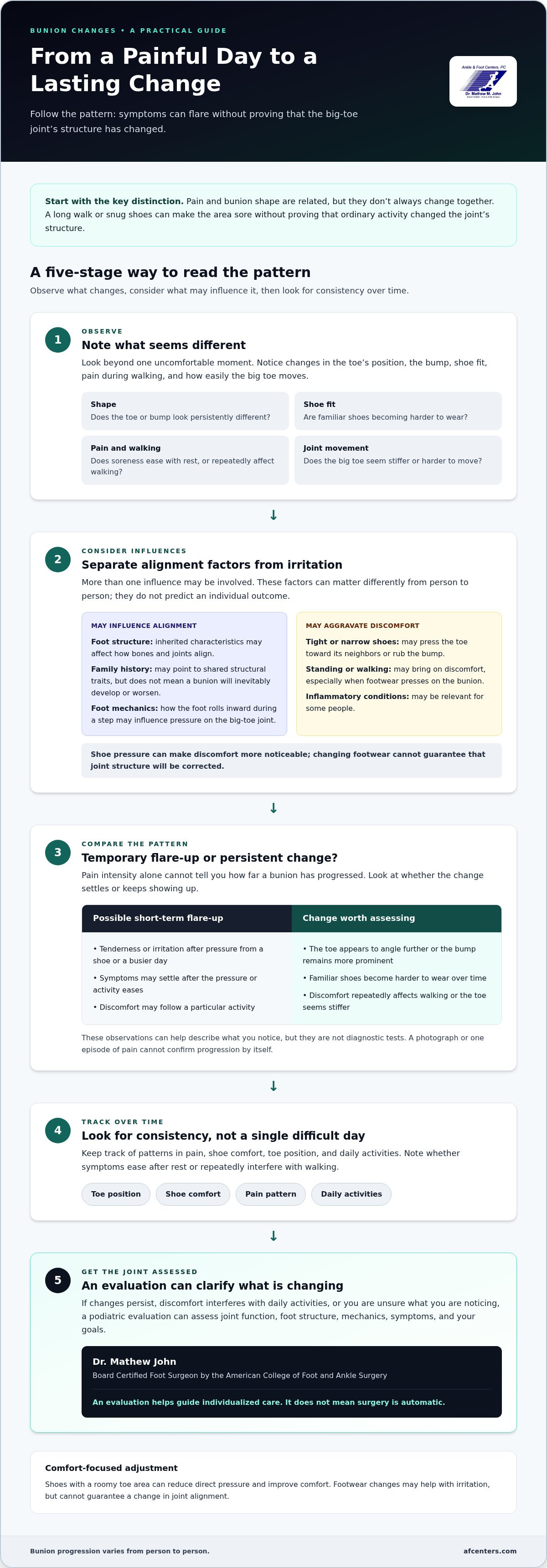
Look for patterns rather than relying on one uncomfortable moment. A temporary flare may follow pressure from a particular shoe or a busier day. The area may feel more tender or look irritated, then settle. A lasting change is more likely to show up consistently: the big toe appears to angle further, the bump remains more prominent, or familiar shoes become harder to wear over time.
Notice how your foot feels and functions during ordinary activities. These observations can help you explain what has changed, but they aren’t a diagnosis.
- Shape: Does the toe or bump look persistently different, rather than briefly irritated?
- Shoe fit: Are shoes uncomfortable more often, including pairs that used to fit?
- Pain and walking: Does soreness ease after rest, or does it repeatedly affect walking?
- Joint movement: Does the big toe seem stiffer or harder to move than before?
A photograph or a single episode of pain can’t confirm progression on its own. If changes persist, discomfort interferes with daily activities, or you’re unsure what you’re noticing, a professional evaluation can assess the joint and your foot mechanics. Progression varies, and no single symptom or activity determines an individual outcome.
What Factors Can Contribute to a Bunion Getting Worse?
Bunions don’t have one cause, and a factor that aggravates pain doesn’t necessarily cause the underlying alignment change. Inherited foot structure and the way your foot moves can influence how pressure travels through the big-toe joint. Shoes and activity may add irritation, but they don’t determine everyone’s outcome. Knowing the difference can help you make practical adjustments without blaming yourself for having a bunion.
How can foot structure and family history matter?
Some people inherit foot characteristics that affect the shape of the foot or the way its joints and bones align during movement. A family history of bunions may point to shared structural traits, but it doesn’t mean a bunion will inevitably develop or worsen. Foot mechanics, including how the foot rolls inward during a step, may also influence pressure on the big-toe joint. These factors are individual, so a clinician needs to assess your foot to understand how they may relate to your bunion.
Mayo Clinic describes several factors that can contribute to bunions or make them worse, including inherited foot structure and ill-fitting shoes. Inflammatory conditions may also be relevant for some people. These are possible influences, not a checklist that predicts what will happen in your case.
Can shoes, activity, or time aggravate bunions?
Tight or narrow shoes can press the toe toward its neighbors and rub against the bump. That added pressure may make the area sore or irritated, especially when the shoe leaves little room across the front of the foot. A roomy toe area can reduce direct contact and improve comfort, but changing footwear can’t guarantee that the joint’s structure will be corrected.
Long periods of standing or walking may also bring on discomfort, particularly when shoes press on the bunion. If symptoms increase after a specific activity and then ease, that pattern may suggest irritation rather than a lasting structural change. Activity doesn’t affect everyone in the same way, and routine walking shouldn’t automatically be treated as damage.
So, what causes bunions to get worse? For one person, inherited alignment may be an important factor; for another, footwear pressure may be the main source of day-to-day discomfort. More than one influence can be involved, and progression varies. A podiatric evaluation can consider your foot structure, joint function, symptoms, and daily needs together. Ankle & Foot Centers evaluates and treats bunions as part of its foot and ankle services.
Bunion Progression or Temporary Flare-Up: How to Tell the Difference
A sore or irritated bunion can make it seem as if the joint has changed overnight. Pain intensity alone, however, can’t tell you how far a bunion has progressed. A flare-up may temporarily make walking or wearing shoes harder, while structural progression involves changes that persist. The observations below can help you describe what you’re noticing, but they aren’t diagnostic tests.
| What to notice | Possible short-term flare-up | Change worth assessing |
|---|---|---|
| Shape | Temporary redness or irritation after pressure | The bump or toe position seems consistently different |
| Shoe tolerance | A particular pair rubs or feels uncomfortable | More shoes regularly feel tight or hard to wear |
| Pain pattern | Soreness follows an activity or eases with rest | Pain becomes persistent or increasingly disruptive |
| Daily function | One busy day is more uncomfortable than usual | Walking or usual activities are repeatedly limited |
Which changes are useful to track?
Keep a brief note of when discomfort occurs, what footwear you wore, and which activities were affected. Record whether the bump or toe position seems persistently different, and whether shoe fit or walking comfort changes over time. These notes can help you explain the pattern during an evaluation. Avoid repeatedly pressing, stretching, or manipulating the joint to test it. That won’t establish whether the bunion has progressed.
When does worsening deserve professional attention?
Consider an evaluation if pain persists or increases, shoe tolerance keeps declining, or discomfort is reducing your usual activity. Seek prompt medical guidance for marked swelling, sudden severe pain, or broken skin near the joint. These signs don’t prove a particular diagnosis or mean a specific treatment is needed, but they deserve timely attention.
A clinician can examine the joint, assess alignment and movement, and recommend imaging when appropriate to better understand the changes. That assessment can help distinguish a symptom flare from structural change and guide next steps. For a general overview of care approaches, Harvard Health Publishing’s guide to treating a bunion discusses nonsurgical and surgical options. Understanding what causes bunions to get worse is part of the picture; an individual assessment helps interpret what’s happening in your foot.
What Can You Do to Reduce Pressure and Monitor a Bunion?
You can take practical steps to ease pressure and notice patterns without assuming you can correct the joint’s alignment on your own. These habits may improve comfort and give you useful details to share during an evaluation.
Which everyday adjustments may ease pressure?
Try this simple sequence, adjusting it to what feels comfortable for you:
- Choose roomier footwear. Look for shoes with enough space around the toes so the upper and sides don’t press or rub against the bunion.
- Notice recurring triggers. Track which shoes or activities tend to bring on discomfort. If a particular pair or prolonged activity repeatedly aggravates the area, reduce that pressure where practical.
- Observe patterns over time. Note changes in shoe comfort, walking, pain, and the appearance of the toe or bump. A pattern is more useful than judging the bunion by one difficult day.
- Arrange an assessment if symptoms persist. Seek professional guidance if discomfort continues, daily activities become harder, or you’re uncertain whether the joint has changed.
These adjustments may make daily movement more comfortable, but they don’t necessarily reverse a structural alignment change. No single shoe, insert, or exercise plan can promise to stop every bunion from progressing.
Why avoid self-diagnosis and one-size-fits-all fixes?
Similar symptoms can have different explanations, and the right approach depends on your foot structure, joint function, discomfort, and daily goals. Custom orthotics may be considered as part of care when appropriate, but they don’t suit every person or replace an evaluation. Avoid relying on an online photo, one episode of soreness, or a generic exercise routine to decide what’s happening in your foot.
If you’re still wondering what causes bunions to get worse, an individualized assessment can put your observations in context. Dr. Mathew John, a Board Certified Foot Surgeon by the American College of Foot and Ankle Surgery, evaluates bunions with your symptoms and goals in mind. The evaluation helps clarify your options; it doesn’t mean surgery is inevitable.
For personalized bunion evaluation and treatment, choose care that takes your foot and daily needs into account.
How a Podiatric Evaluation Helps Guide Bunion Treatment
A bunion evaluation can clarify whether your main concern is discomfort, changes in alignment, difficulty wearing shoes, or a combination of factors. It connects what you’ve noticed at home with how the joint moves and how your foot is structured. The goal is to understand your needs and discuss appropriate options, not to assume surgery is necessary.
What may a bunion evaluation include?
Your clinician may ask when symptoms began, what makes them better or worse, which shoes are difficult to wear, and whether bunion discomfort limits walking or other activities. Relevant medical history can also help put your symptoms in context. The examination may include looking at foot alignment and assessing the big-toe joint’s movement and function. Imaging may be recommended when appropriate to provide additional information about the bones and joint.
These details help distinguish what you’re experiencing from what can be observed during an examination. Shoe discomfort and joint stiffness may both matter, but they don’t necessarily point to the same care priorities. Sharing your daily goals, such as walking more comfortably or wearing a wider range of shoes, helps make the conversation specific to you.
How are next steps matched to your needs?
Recommendations depend on your symptoms, examination findings, and personal goals. Depending on the situation, care may focus on reducing pressure and managing discomfort, or include a discussion of surgical correction. These aren’t automatic steps for every patient. A treatment conversation helps you understand the options and why they may or may not suit your needs.
Learning what causes bunions to get worse can give you useful context, but it can’t predict your individual course. An evaluation offers a closer look at your foot and a chance to discuss next steps with a professional. Dr. Mathew John is a Board Certified Foot Surgeon by the American College of Foot and Ankle Surgery. Ankle & Foot Centers, PC evaluates and treats bunions in Marietta, serving patients in Roswell, Woodstock, Kennesaw, Atlanta, and Sandy Springs.
If you’re ready to better understand your symptoms and options, explore bunion care and evaluation at Ankle & Foot Centers, PC.
Take the Next Step Toward Comfortable Movement
Bunion discomfort and a change in the joint’s shape aren’t always the same thing. Footwear or activity can trigger a temporary flare, while lasting changes in toe alignment, shoe fit, or daily function may benefit from professional assessment. Understanding what causes bunions to get worse can help you notice patterns and make practical choices without assuming you caused the problem.
Roomier shoes may reduce pressure, but no single adjustment can guarantee that a bunion’s structure will change or remain the same. An evaluation considers your symptoms, foot structure, joint function, and personal goals, then helps guide individualized options. It doesn’t mean surgery is automatic.
Ankle & Foot Centers, PC evaluates and treats bunions and provides reconstructive foot and ankle surgery in Marietta. The practice serves patients in Roswell, Woodstock, Kennesaw, Atlanta, and Sandy Springs. Dr. Mathew John is a Board Certified Foot Surgeon by the American College of Foot and Ankle Surgery. If discomfort or changing shoe fit is affecting your routine, schedule a bunion evaluation with our foot and ankle team.
Frequently Asked Questions
Can tight shoes make a bunion worse?
Tight or narrow shoes can press against a bunion and aggravate soreness, redness, or trouble finding comfortable footwear. Shoes aren’t the sole cause of every bunion, and changing footwear won’t reverse the joint’s alignment. Choose shoes with room for your toes and less pressure over the bump. If discomfort continues or affects daily activities, a podiatric evaluation can help clarify what’s going on.
Does walking make a bunion get worse?
Walking doesn’t affect every bunion in the same way. Longer periods on your feet may increase pressure or discomfort, especially in shoes that rub against the joint. A temporary increase in soreness doesn’t necessarily mean the bunion’s structure has changed. Track which activities and footwear bring on symptoms. If pain or changes persist, discuss them with a podiatric professional.
Can bunions get worse over time?
Bunions can change over time, but the pattern and pace vary from person to person. Foot structure, mechanics, footwear pressure, and other individual factors may play a role. Understanding what causes bunions to get worse can provide helpful context, but a painful day alone can’t show whether alignment has progressed. If toe position, shoe fit, or your ability to stay active is changing, an examination can help clarify the situation.
How can I tell if my bunion is getting worse?
Look for persistent changes rather than relying on one painful episode. You may notice a lasting change in toe position, increasing difficulty finding comfortable shoes, or reduced ability to walk or take part in usual activities. These observations can help you describe what’s changed, but they aren’t a diagnosis. A podiatric evaluation can assess the joint and help distinguish a lasting structural change from a temporary symptom flare-up.
Can a bunion get worse even if I wear comfortable shoes?
Comfortable shoes can reduce pressure and irritation, but they can’t guarantee that a bunion will stop changing. Individual foot structure and mechanics can also be relevant, and progression varies. If discomfort or visible alignment changes continue despite reducing shoe pressure, consider a professional evaluation. Treatment recommendations should take your symptoms, examination findings, and daily needs into account rather than relying on footwear alone.
When should I see a podiatrist about a bunion?
Consider an appointment if pain persists, shoes become increasingly difficult to wear, walking is affected, or the toe’s appearance seems to change. Seek timely medical guidance for sudden severe pain, pronounced swelling, or skin breakdown. Ankle & Foot Centers, PC serves Marietta, Roswell, Woodstock, Kennesaw, Atlanta, and Sandy Springs. Dr. Mathew John is a Board Certified Foot Surgeon by the American College of Foot and Ankle Surgery.
Does a bunion always need surgery to stop getting worse?
No. A bunion evaluation doesn’t mean surgery is inevitable. A clinician can consider your symptoms, foot structure, joint function, and goals when discussing options. Some approaches may help reduce pressure or discomfort, while the right plan depends on the individual. An evaluation can explain suitable options and their potential benefits and limitations, so you can make an informed decision without assuming surgery is the next step.


