

What if getting insurance to approve foot surgery depends on more than the diagnosis? Your plan’s requirements and the records supporting the request can both shape the review. If you’re unsure about prior authorization, which documents matter, or what a denial could mean for your costs, start by separating the clinical questions from the coverage questions. It’s reasonable to want clear answers before surgery is scheduled.
This guide explains how to understand your plan’s process and prepare a clear case for medical necessity. You’ll learn what to ask your insurer, which clinical and insurance documents to organize, and how to respond if a request is delayed or denied. Requirements vary by plan, so use your current plan documents to confirm its steps and deadlines.
A clinical evaluation can clarify your diagnosis, treatment options, and the medical rationale for surgery in your individual case. At Ankle & Foot Centers, PC, Dr. Mathew M. John is a Board Certified Foot Surgeon by the American College of Foot and Ankle Surgery. The steps ahead can help you work with your care team and insurer with greater confidence, while keeping in mind that coverage decisions are made by your plan.
Key Takeaways
- Review your plan’s requirements for benefits, network status, and prior authorization. Coverage rules vary by plan.
- Organize clinical records that connect your diagnosis and symptoms to daily function and the proposed treatment.
- Track plan requirements, supporting documents, responsible contacts, and current status in one place.
- If authorization is delayed or denied, get the written decision, identify the reason, and follow the appeal instructions and deadlines in your plan documents.
- Getting insurance to approve foot surgery starts with knowing what information your plan needs and preparing for a clear discussion with your care team.
Getting insurance to approve foot surgery starts with knowing your plan
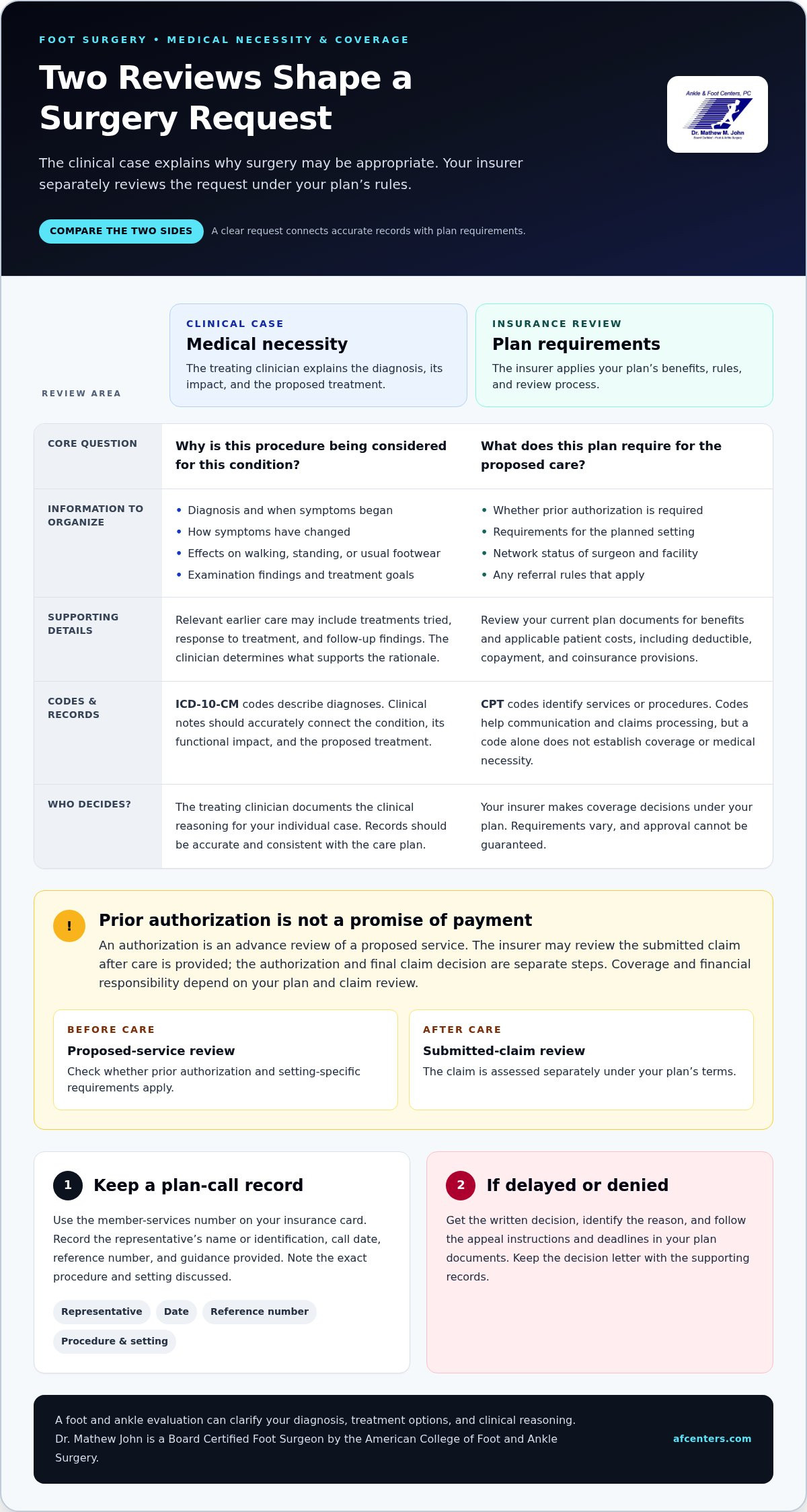
Insurance review depends on your plan and the proposed surgery, so approval can’t be guaranteed. Understanding the terms your insurer uses can help you ask focused questions and prepare for the next steps. A clinical recommendation explains why surgery may be appropriate for your foot or ankle; your insurer separately reviews the request under your plan’s rules.
What does insurance approval for foot surgery mean?
Prior authorization is an insurer’s advance review of a proposed service, not a promise that the service will be covered or paid for. It’s one form of utilization management, a process used within the health insurance system to review care before it takes place.
Medical necessity is the clinical rationale for a treatment, considered under your plan’s terms. Benefits describe the services and conditions your plan covers, along with applicable patient costs. Network status indicates whether a surgeon or facility participates in your plan’s network.
An authorization decision and the final claim decision are separate steps. The insurer may review a request before surgery, then assess the submitted claim after care is provided. Your coverage and financial responsibility depend on your specific plan and the claim review. An authorization alone doesn’t settle those questions.
Which plan details should you check first?
Start with your current plan documents and the member-services number on your insurance card. Ask whether the proposed procedure requires prior authorization and whether the planned setting, such as a hospital or outpatient facility, has separate requirements. Confirm network status for both the surgeon and facility, and review any referral rules that apply.
Next, review your plan’s deductible, copayment, and coinsurance provisions. These terms affect what you may owe, but your costs depend on your benefits and how the claim is processed. If a representative can’t give a definite answer, ask where the relevant information appears in your plan documents.
Keep a record of each call: the representative’s name or identification, the date, any reference number, and the guidance provided. Note the exact procedure and setting you asked about. This makes it easier to compare the insurer’s instructions with the proposed care plan and follow up if information differs.
A foot and ankle evaluation can clarify your diagnosis, treatment options, and the clinical reasoning for your individual case. Dr. John is a Board Certified Foot Surgeon by the American College of Foot and Ankle Surgery. Learn more about foot and ankle care at Ankle & Foot Centers, PC. Clear plan information and clinical documentation can make getting insurance to approve foot surgery easier to navigate, even though the insurer makes its own coverage decision.
How medical-necessity records support a foot-surgery request
A diagnosis gives a name to a foot or ankle condition, but an insurer may also review the clinical reasoning behind the proposed treatment under your plan’s rules. Useful records connect the diagnosis to your symptoms, the effect on everyday activities, and why surgery is being considered. Clear documentation can help explain the case, but no single note, diagnosis code, or treatment history guarantees coverage or approval.
What clinical information can explain the need for surgery?
The treating clinician determines which details matter for your case. Records may describe the diagnosis, when symptoms began and how they have changed, and how they affect activities such as walking, standing, or wearing usual footwear. Examination findings and treatment goals can add context by showing how the proposed procedure relates to the condition and your functional concerns.
Clinical documentation helps an insurer compare the diagnosis, its impact on daily function, and the proposed treatment with the rules of your plan.
How can prior treatment and coding fit into the request?
Earlier-care records may help explain the course of a condition when they’re relevant. These could include treatments tried, how you responded, and follow-up findings. Share accurate records with your care team so the request reflects your actual history. The clinician decides which information supports the medical rationale. Don’t change or embellish details to try to influence an insurer’s decision.
Diagnosis and procedure codes help identify the condition and service being reported. ICD-10-CM codes describe diagnoses, while CPT codes identify services or procedures. Codes support communication and claims processing, but a code by itself doesn’t establish that a service is covered or medically necessary. Consistency matters: the clinical notes, proposed procedure, and submitted information should accurately describe the same care plan.
If a review results in a denial, keep the decision letter with the supporting records and follow the appeal instructions and timing stated in your plan documents. Healthcare.gov also explains steps to appeal a health insurance decision.
A foot and ankle evaluation can clarify your diagnosis, treatment options, and the clinical reasoning relevant to your situation. Explore foot and ankle services at Ankle & Foot Centers, PC, including evaluation and reconstructive care. Well-organized, accurate records can make the medical rationale easier to understand as you work through the review process.
Compare the insurer’s requirements with the proposed foot-surgery plan
A surgeon’s recommendation explains the clinical reasoning for treatment, but it doesn’t automatically mean your plan covers it. The insurer reviews the request under the plan’s terms. A side-by-side checklist helps you see what’s documented, what still needs an answer, and who to follow up with, without guessing what the insurer will decide.
How do you build a clear insurance checklist?
Start with the procedure and setting described by your treating clinician. Then record the plan’s requirements, the document or person that can support each item, and its current status. Mark unanswered questions as pending, not approved.
| Question or requirement | Source document | Responsible contact | Status |
|---|---|---|---|
| What procedure and setting are proposed? | Clinical notes or treatment plan | Treating surgeon’s office | Documented / needs clarification |
| Is the service a covered benefit? | Current plan documents | Insurer member services | Confirmed / pending |
| Are the surgeon and facility in network? | Plan directory or written plan information | Insurer and care team | Confirmed / pending |
| Is authorization or a referral required? | Plan documents or insurer guidance | Insurer and care team | Submitted / pending / not established |
Keep clinical questions separate from coverage questions. Your surgeon’s office can explain the diagnosis, recommended procedure, and planned setting. Your insurer can clarify benefits, network status, referral rules, and authorization requirements. If a representative gives guidance by phone, record the date, name, reference number, and answer so you can compare it with your plan documents.
What if the plan and clinical recommendation seem different?
Ask the insurer to identify the specific requirement or coverage concern that remains unresolved. Clarify whether the issue relates to the service, the setting, network participation, or missing information. A question or pending status isn’t the same as a denial, so don’t treat an incomplete review as a final decision.
Then discuss the insurer’s response with your treating surgeon. You can explore whether there are clinically appropriate alternatives or whether additional records may clarify the recommendation. Treatment decisions should remain a clinical discussion, not a change made simply to fit an assumed coverage outcome. If the insurer issues a denial, HealthCare.gov explains the right to appeal the company's decision.
Getting insurance to approve foot surgery is easier to organize when you track clinical details and plan requirements separately. A foot and ankle evaluation can clarify the diagnosis and treatment options for your individual case. Learn more about foot and ankle services at Ankle & Foot Centers, PC. Dr. Mathew M. John is a Board Certified Foot Surgeon by the American College of Foot and Ankle Surgery.
Handling delayed or denied foot surgery authorization
A delay or denial can feel discouraging, but it doesn’t automatically mean surgery will never be covered. First, understand what the insurer decided, why, and what your plan says you can do next. Use the written notice and your current plan documents as your guide, since appeal steps and deadlines vary.
How should you read an authorization denial?
Start with the written decision. Look for the reason, any plan provision the insurer cites, information it says is missing, and the date by which you must respond. A request for more records is different from a denial based on coverage or medical necessity. If the notice is unclear, use the contact information it provides to ask the insurer to explain the decision.
A denial describes the insurer’s decision on that request. It doesn’t, by itself, establish that the procedure could never be covered. Read the notice carefully before deciding what response makes sense.
How can you organize a response or appeal?
Use this sequence to keep your next steps clear:
- Get the written decision. Save the notice, including any attachments or instructions.
- Identify the stated reason. Note whether the insurer needs information or has made a coverage or medical-necessity decision.
- Check the deadline and process. Follow the appeal instructions, timing, and submission method in your plan documents and decision notice. Verify the requirements against current materials rather than relying on a general deadline.
- Gather relevant support. Depending on the reason and your plan’s process, this may include clinical notes, examination findings, treatment history, or a clear explanation from the treating clinician.
- Keep a record. Save copies of everything submitted and received. Record the date, contact, reference number, and details of each call or submission.
Focus your response on the issue the insurer identified. If the decision points to missing clinical details, ask the treating surgeon’s office which records or explanation may address that concern. If the notice raises a benefit or plan-term question, direct it to the insurer. Accurate, consistent information helps keep the review focused. Don’t alter records to try to change the outcome.
Getting insurance to approve foot surgery can involve more than one review step, so organized records and close attention to plan instructions can help you respond thoughtfully. A foot and ankle evaluation can clarify the diagnosis and treatment options for your individual case. Learn more about foot and ankle evaluations and surgery with Dr. Mathew M. John, a Board Certified Foot Surgeon by the American College of Foot and Ankle Surgery.
Prepare for a foot-surgery coverage discussion and your next step
Preparing for a foot-surgery evaluation can help you make the most of the visit and keep coverage questions organized. Bring information about your plan’s instructions and how the foot or ankle problem affects you. An evaluation can clarify your diagnosis and treatment options, but the insurer makes coverage decisions according to your plan’s terms.
What should you bring to a foot-surgery evaluation?
Gather materials that help explain your situation, including insurer correspondence. A concise written summary can make it easier to describe your symptoms and the care you’ve already received.
- Insurance information: Bring your current insurance card and relevant plan details.
- Review correspondence: Include authorization notices, decision letters, requests for more information, and any appeal records.
- Symptom history: Note when the problem began, how it has changed, and how it affects activities such as walking, standing, or wearing shoes.
- Prior-care records: Bring relevant records about earlier evaluations and treatments, along with information about how you responded.
You don’t need to decide which details prove that surgery is necessary. Share an accurate account, and the clinician can determine what’s relevant to your evaluation and treatment discussion.
How can a specialist help clarify your treatment path?
A foot and ankle evaluation can connect your symptoms and examination findings with a diagnosis, possible treatment options, and the clinical reasoning for recommended care. Ankle & Foot Centers, PC provides specialized foot and ankle evaluations and reconstructive surgery.
Keep the clinical discussion separate from the insurer’s coverage review. Your care team can explain the medical considerations; your plan determines coverage under its terms. If a procedure is recommended, use the evaluation information to continue the plan-specific conversation with your insurer. No clinical recommendation can guarantee an approval or payment decision.
If you’re in Marietta, Roswell, Woodstock, Kennesaw, Atlanta, or Sandy Springs and would like to discuss a foot or ankle concern, schedule an evaluation with Dr. John. Learn more about our foot and ankle services. Preparing thoughtfully can help you take the next step with a clearer understanding of your care options as you work through the separate process of getting insurance to approve foot surgery.
Take the next step with clear information
Getting insurance to approve foot surgery starts with understanding your plan’s requirements and keeping its instructions organized. A clear record of your symptoms, daily limitations, prior care, and clinical findings can help explain the medical rationale for a proposed treatment. If the insurer delays or denies a request, review its written decision and follow the response steps and deadlines in your plan documents. Approval and coverage depend on the insurer’s review and your specific plan.
A foot and ankle evaluation can help clarify your diagnosis, treatment options, and the reasoning behind recommended care. Ankle & Foot Centers, PC provides specialized foot and ankle evaluations and reconstructive surgery in Marietta and the greater Atlanta Metro area.
If you’re ready to discuss a foot or ankle concern, schedule a foot and ankle evaluation. Take the next step with a clearer understanding of your care options and a team focused on foot and ankle care.
Frequently Asked Questions
Does insurance always require prior authorization for foot surgery?
No. Authorization requirements depend on your plan and the proposed procedure or setting. Review your current plan documents and call the number on your insurance card to ask whether authorization or a referral is needed. Getting insurance to approve foot surgery starts with understanding those plan-specific steps. An authorization is a review decision, not a guarantee of payment or a final determination of what you’ll owe.
What does medical necessity mean for foot surgery coverage?
Medical necessity is the clinical reasoning for recommending care, considered under your plan’s rules. Documentation may connect a diagnosis with symptoms, effects on daily activities, examination findings, and relevant prior treatment. The treating clinician determines which information applies to your situation. A diagnosis or a particular treatment history alone doesn’t guarantee that an insurer will approve or cover a procedure.
Can my insurer deny foot surgery even when my doctor recommends it?
Yes. A physician’s recommendation reflects clinical judgment, while the insurer reviews the request under your plan’s coverage terms and requirements. If the insurer denies authorization, read the written decision to identify its stated reason and any missing information. Follow the appeal instructions and deadlines in your plan documents. A denial applies to that request, so don’t assume it means the procedure can never be covered.
What documents may help support a foot-surgery authorization request?
Relevant records may include clinical notes describing the diagnosis, symptoms, functional limitations, examination findings, and proposed treatment. Records of prior care may also help explain the clinical history when relevant. Your plan may require specific forms or information, so review its instructions. The treating clinician determines which records fit your case, and no single document or diagnosis code guarantees approval.
What happens if insurance denies authorization for foot surgery?
Get the written decision and note the reason, any plan provision cited, requested information, and response deadline. Then follow the appeal process and submission instructions in your current plan documents. Depending on the stated reason, additional clinical records or an explanation from your treating clinician may be useful. Keep copies of notices and submissions, and record the dates and details of calls with the insurer.
How much will I pay for foot surgery if insurance approves it?
Your out-of-pocket amount depends on your plan’s benefits and how the claim is processed. Deductible, copayment, coinsurance, and network rules may affect your responsibility, so ask the insurer about the proposed procedure, surgeon, and facility. Ankle & Foot Centers, PC provides specialized evaluations and reconstructive surgery in Marietta, serving patients in Roswell, Woodstock, Kennesaw, Atlanta, and Sandy Springs. Coverage decisions remain with your insurer.


