
Have you ever reached down to lace up your favorite sneakers, only to feel a sharp, wincing sting across the bridge of your foot? It is incredibly frustrating when a dull ache lingers after a long day or when you find it nearly impossible to wear your preferred footwear without discomfort. You shouldn't have to settle for a life limited by these symptoms. Identifying the underlying causes of pain on top of foot is the essential first step toward finding lasting relief and preventing further injury to your foundation.
We're here to help you uncover the source of your midfoot struggles and show you how professional podiatric care can restore your active lifestyle. Led by Dr. Mathew John, a Board Certified Foot Surgeon by the American College of Foot and Ankle Surgery, our team at 2790 Sandy Plains Road on the corner of Post Oak Tritt and Sandy Plains provides a supportive, expert environment for your recovery. This guide will walk you through accurate diagnostic methods like 3-D impressions and highlight non-invasive treatments, including MLS Laser Therapy. You will discover a clear path toward returning to the Marietta activities you love with confidence and comfort.
Key Takeaways
- Identify the primary causes of pain on top of foot, ranging from extensor tendonitis and stress fractures to nerve-related discomfort.
- Learn how we utilize 3-D impressions to create a precise structural map of your feet for more accurate diagnoses and custom orthotic solutions.
- Discover non-invasive relief through MLS Laser Therapy, a sophisticated option for reducing musculoskeletal pain and inflammation without the need for medication.
- Understand the critical "red flag" symptoms that signal it is time to consult Dr. Mathew John, a Board Certified Foot Surgeon by the American College of Foot and Ankle Surgery.
- Explore advanced, high-tech treatments like Swift microwave ablation for stubborn warts, which typically requires four sessions and involves no downtime.
What Are the Most Common Causes of Pain on Top of the Foot?
The top of your foot, or the dorsal region, is a complex area where tendons, bones, and nerves sit very close to the surface. Unlike the padded sole of your foot, the top has very little fatty tissue to protect these sensitive structures from external pressure. This unique anatomy makes the area highly susceptible to irritation from footwear and repetitive movement. Understanding the common foot diseases and mechanical issues that affect this region is the first step toward reclaiming your comfort.
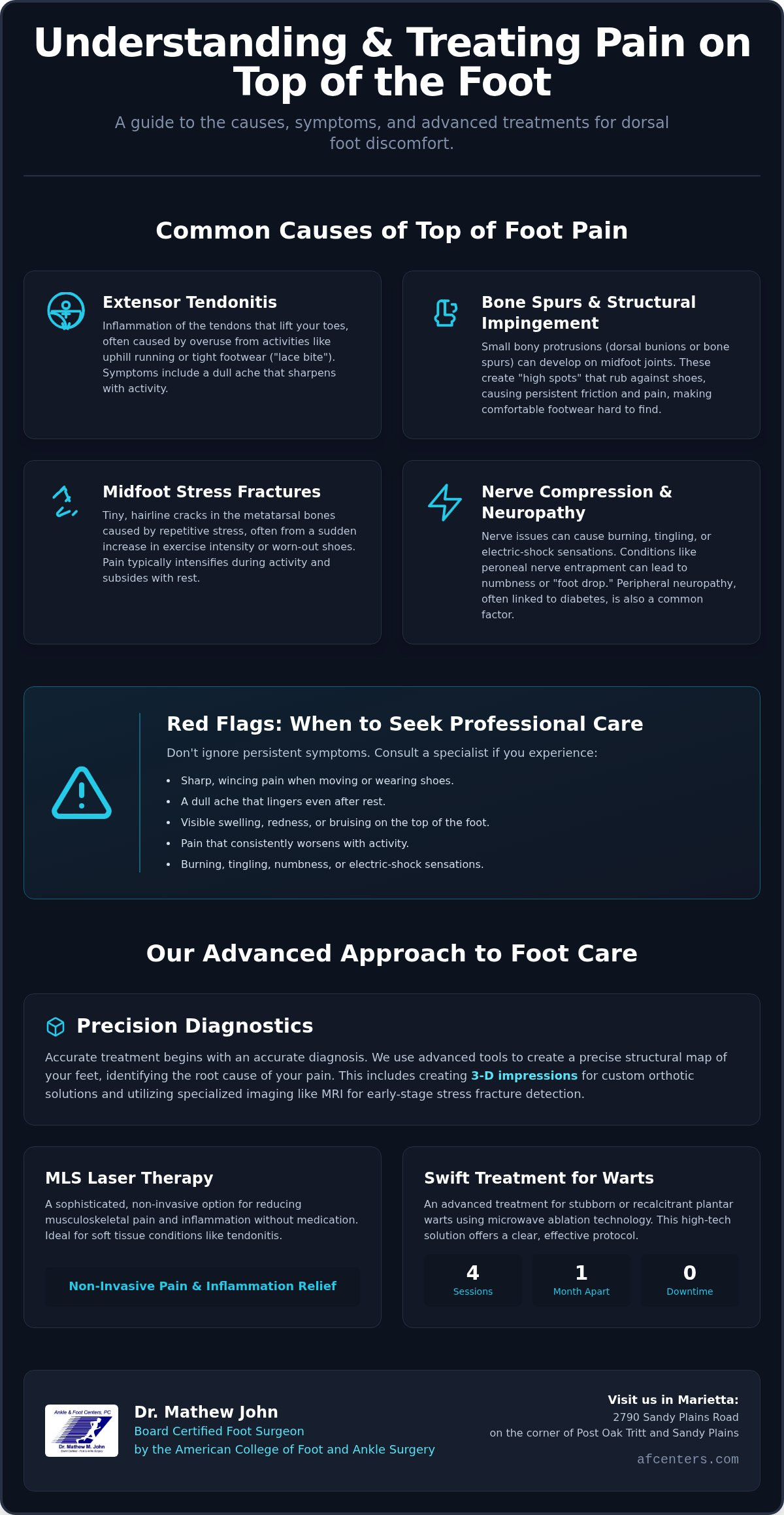
When investigating the causes of pain on top of foot, we often look at how your daily habits interact with your foot's structure. You might notice visible swelling, redness, or a sharp pain that intensifies when you move your toes or walk. One frequent culprit is "lace bite," a condition where tight shoelaces create localized pressure on the underlying tendons and nerves. This mechanical stress can turn a simple morning walk into a painful ordeal, especially if your shoes don't provide enough volume for your midfoot.
Extensor Tendonitis and Overuse
Extensor tendonitis is one of the most frequent reasons patients visit our Marietta clinic. These tendons are responsible for lifting your toes and pulling your foot upward. When you engage in repetitive activities, such as uphill running or walking on uneven trails, these tendons can become overworked and inflamed. You'll likely feel a dull ache that sharpens during activity. It's vital to listen to these early warning signs. Resting the foot and loosening your laces are essential initial steps to prevent the inflammation from becoming a chronic issue that sidelong your fitness goals.
Bone Spurs and Structural Impingement
Sometimes the source of your discomfort is structural rather than just soft tissue inflammation. Dorsal bunions or bone spurs can develop on the joints of the midfoot over time. These small, bony protrusions create "high spots" on the foot that rub against the inside of your shoes. This friction leads to persistent pain and makes finding a comfortable pair of sneakers feel like an impossible task. Because these changes involve the bone itself, they require a professional perspective to manage effectively. Dr. Mathew John, a Board Certified Foot Surgeon by the American College of Foot and Ankle Surgery, specializes in identifying these structural impingements. By visiting our office at 2790 Sandy Plains Road on the corner of Post Oak Tritt and Sandy Plains, you can receive a comprehensive evaluation to determine if structural changes are the primary causes of pain on top of foot for you.
Understanding Bone and Nerve Issues: Stress Fractures to Neuropathy
While soft tissue irritation is a frequent culprit, deeper structural problems involving bones and nerves are also significant causes of pain on top of foot. These issues often require a higher level of diagnostic precision to resolve effectively. Degenerative arthritis, for instance, occurs when the protective cartilage in your midfoot joints begins to wear away. This leads to a dull, persistent ache and stiffness that can make every step feel labored. Additionally, gout can strike the midfoot with sudden, intense pain and swelling, often triggered by a buildup of uric acid crystals in the joint.
Midfoot Stress Fractures
Stress fractures are tiny, hairline cracks that typically develop in the metatarsal bones due to repetitive stress. If you've recently ramped up your exercise intensity or changed your running surface, you might notice pain that intensifies during activity but subsides during rest. These injuries are particularly common in individuals with osteoporosis or those wearing worn-out footwear that lacks proper support. Early diagnosis is vital. While a standard X-ray might not show a new fracture, specialized imaging like an MRI can reveal bone marrow edema and early-stage stress reactions before they become full breaks. Taking the time to heal properly now prevents long-term mobility issues later.
Nerve Compression and Neuropathy
Nerve-related pain often presents as a burning, tingling, or electric-shock sensation across the dorsal foot. Peroneal nerve entrapment is a specific type of compression that can cause numbness or even "foot drop," making it difficult to lift your toes. There's also a critical connection between metabolic health and foot comfort. Peripheral neuropathy, often linked to diabetes, affects approximately 2 to 8 percent of the general population, with prevalence increasing as we age. This damage to the small nerve fibers can cause persistent, radiating pain that disrupts your sleep and daily activities.
At our clinic, we offer sophisticated solutions to manage these complex nerve and bone conditions. Dr. Mathew John, a Board Certified Foot Surgeon by the American College of Foot and Ankle Surgery, utilizes advanced tools to create a personalized recovery plan for you. For those struggling with nerve inflammation, MLS Laser Therapy provides a non-invasive, drug-free way to stimulate healing and reduce discomfort. If you're ready to find answers, we invite you to explore our comprehensive foot care services at 2790 Sandy Plains Road on the corner of Post Oak Tritt and Sandy Plains.
Diagnostic Excellence: How We Identify the Root Cause
Identifying the specific causes of pain on top of foot requires more than just a quick look. It starts with a comprehensive physical exam where we carefully evaluate your foot's mechanics. We check your range of motion and pinpoint specific areas of tenderness to distinguish between a simple soft tissue injury and a deeper structural deformity. For instance, pain that flares up when you manually lift your toes often points toward extensor tendonitis, while localized bone tenderness might suggest a stress reaction or fracture. This hands-on approach allows us to see how your foot behaves under pressure.
When the physical exam indicates a need for deeper insight, we turn to advanced imaging technology. Digital X-rays allow us to see bone spurs or arthritic changes immediately. If we suspect a complex nerve issue or a hidden stress fracture that hasn't fully appeared on a standard X-ray, we may recommend advanced diagnostics. This level of precision ensures your treatment plan is based on clear evidence, not guesswork. We want to ensure that every recommendation we make is perfectly aligned with your specific physiological needs.
The Role of 3-D Impressions in Treatment
Many generic inserts rely on flat molds that don't account for how your foot actually functions in motion. We utilize 3-D impressions to create a perfect structural map of your foot. This technology captures the exact contours of your arch and midfoot while accounting for your unique bone structure. By using these 3-D impressions, we can design custom orthotics that strategically offload pressure from the top of the foot. This corrective device is tailored to your unique gait, helping to realign your foot and prevent the recurring friction that often serves as one of the primary causes of pain on top of foot.
Expert Evaluation by Dr. Mathew John
Dealing with chronic pain is exhausting, but you don't have to navigate it alone. Seeking an evaluation from an expert like Dr. Mathew John, a Board Certified Foot Surgeon by the American College of Foot and Ankle Surgery, provides you with a level of care rooted in years of specialized experience. At our clinic located at 2790 Sandy Plains Road on the corner of Post Oak Tritt and Sandy Plains, we focus on developing a personalized treatment plan for every Marietta patient. Whether you need advanced biological therapies or structural support, you can find the right path forward by exploring Our Services. We are committed to helping you return to your active lifestyle with confidence and comfort.
When to Seek Professional Care in Marietta
Determining the underlying causes of pain on top of foot is essential for your long-term health, but knowing when to transition from home care to a professional evaluation is equally important. Many patients attempt to push through the discomfort, hoping it will simply fade away. However, certain "red flag" symptoms demand immediate attention from an expert. If you experience an inability to bear weight, notice a visible deformity, or deal with severe swelling that doesn't subside, you shouldn't delay seeking an opinion. Ignoring these signals can transform a manageable issue into chronic structural damage that limits your mobility for years to come. Don't wait for the pain to become unbearable.
The RICE method—Rest, Ice, Compression, and Elevation—is a common starting point for many minor foot injuries. It's a helpful way to manage initial inflammation. If you find that your symptoms persist or even worsen after 48 to 72 hours of dedicated home care, the issue likely requires more than just rest. Persistent pain is your body's way of telling you that the root cause hasn't been addressed. A professional diagnostic plan ensures you aren't just masking symptoms but actually solving the problem.
Home Care vs. Clinical Intervention
Gentle stretches can sometimes alleviate tension in the extensor tendons, providing temporary relief. You must be cautious, though, as stretching can actually aggravate the condition if your pain is caused by a stress fracture or nerve entrapment. Similarly, over-the-counter shoe inserts provide a one-size-fits-all approach that often fails to address the specific mechanical triggers of your discomfort. These mass-produced products lack the precision needed to offload pressure effectively. Clinical intervention allows for a tailored strategy, such as using 3-D impressions to create custom orthotics. These devices provide the exact support your unique foot structure requires to heal properly and prevent future flare-ups.
Our Marietta Podiatry Location
Our clinic is a welcoming environment located at 2790 Sandy Plains Road on the corner of Post Oak Tritt and Sandy Plains. This central hub provides easy access for patients traveling from Roswell, Woodstock, and Kennesaw who are looking for high-level expertise close to home. When you arrive for your first consultation with Dr. Mathew John, a Board Certified Foot Surgeon by the American College of Foot and Ankle Surgery, please bring your most frequently worn shoes and any notes on when your pain is most intense. This information helps us build a precise diagnostic picture of your foot health. If you are also dealing with discomfort in other areas, you might find our guide on Heel Pain Relief in Marietta helpful. We are ready to help you take the next step toward a pain-free life. Schedule your evaluation today to begin your journey back to full activity.
Advanced Treatment Options for Lasting Relief
Reaching a diagnosis is a breakthrough, but your true goal is returning to the activities you enjoy without hesitation. We offer advanced, high-tech therapies that go beyond traditional methods to address the various causes of pain on top of foot. Whether your discomfort stems from chronic inflammation or a stubborn surface issue, our specialized treatments focus on long-term recovery and vitality. You deserve a recovery plan that matches the pace of your lifestyle.
MLS Laser Therapy for Midfoot Inflammation
MLS Laser Therapy is a cornerstone of our pain management strategy at our Marietta office. This FDA-cleared technology uses specific wavelengths of light energy to penetrate deep into the tissue, stimulating cellular repair and significantly reducing swelling. It works without the use of drugs or invasive procedures, making it an ideal choice if you're struggling with extensor tendonitis or nerve-related inflammation. Most sessions are short, and because the treatment is entirely painless, you can return to your daily routine immediately with no downtime. It's a gentle yet powerful way to accelerate your body's natural healing process.
Swift Treatment for Recalcitrant Warts
Surface-level issues like plantar warts can also create significant discomfort on the dorsal foot. For stubborn or recalcitrant warts that haven't responded to other methods, we utilize Swift Treatment. This advanced technology uses microwave ablation to target the underlying virus, triggering a natural immune response. The protocol typically involves four sessions spaced one month apart to ensure maximum efficacy. One of the greatest benefits of Swift is that it requires no downtime. You won't have to worry about post-procedural pain or bandages, making it a convenient and effective option for our busy community members.
For those dealing with chronic tendon issues that haven't responded to conservative measures, Extracorporeal Shockwave Therapy (ESWT) provides an effective alternative by using pressure waves to trigger healing in damaged tissue. In cases where structural deformities are the primary issue, reconstructive surgery may be the most reliable path forward. Dr. Mathew John is a Board Certified Foot Surgeon by the American College of Foot and Ankle Surgery, ensuring you receive the highest level of expertise for complex structural corrections. Visit us at 2790 Sandy Plains Road on the corner of Post Oak Tritt and Sandy Plains to explore these advanced options. We're ready to partner with you on your journey toward a pain-free, active lifestyle.
Step Toward Lasting Comfort and Mobility
You shouldn't have to navigate your day with persistent discomfort or the frustration of limiting your favorite activities. From identifying structural shifts with 3-D impressions to utilizing advanced MLS Laser and Swift technology, we're dedicated to helping you reclaim your active lifestyle. Understanding the various causes of pain on top of foot is the first step toward a more vibrant, mobile future. We focus on progress over perfection, guiding you toward long-term health with a steady, expert hand.
Dr. Mathew John, a Board Certified Foot Surgeon by the American College of Foot and Ankle Surgery, provides the specialized expertise and compassionate care you need to find real answers. Whether you're dealing with stubborn inflammation or complex structural issues, our clinic at 2790 Sandy Plains Road on the corner of Post Oak Tritt and Sandy Plains is your local hub for sophisticated relief. We prioritize your personal journey and wellness goals, ensuring you never feel alone while navigating your recovery.
Schedule your consultation with Dr. Mathew John at our Marietta office today and take the first step toward walking with confidence again. We look forward to welcoming you into our community and helping you achieve the vitality you deserve.
Frequently Asked Questions
Is pain on top of the foot serious?
Pain on top of the foot can range from mild irritation to a serious structural injury. You should take it seriously if the discomfort prevents you from bearing weight or if you notice significant swelling. While "lace bite" might resolve with rest, conditions like stress fractures or neuropathy require professional intervention to prevent long-term damage. Visiting our Marietta office ensures you receive an accurate diagnosis for the causes of pain on top of foot before the condition worsens.
Can tight shoes cause permanent damage to the top of the foot?
Wearing tight footwear for extended periods can indeed cause lasting issues. The constant pressure on the dorsal tendons and nerves, often called lace bite, can lead to chronic inflammation or even the development of bone spurs. Over time, this structural impingement makes it difficult to find any comfortable shoes. We recommend choosing footwear with adequate midfoot volume and practicing lacing techniques that reduce pressure on the sensitive structures of your foot bridge.
How do I know if the pain on top of my foot is a stress fracture?
A stress fracture often presents as localized pain that intensifies during physical activity and subsides when you rest. You might also notice pinpoint tenderness when touching a specific metatarsal bone on the top of your foot. Because these tiny cracks don't always appear on initial X-rays, Dr. Mathew John may use advanced diagnostics to confirm the injury. Early detection is vital for ensuring the bone heals correctly without leading to a full break or chronic mobility issues.
What is the fastest way to heal extensor tendonitis?
Healing extensor tendonitis quickly involves a combination of immediate rest and addressing mechanical triggers. You should start by loosening your shoelaces and avoiding uphill running or walking. For faster recovery, we offer MLS Laser Therapy at our office at 2790 Sandy Plains Road on the corner of Post Oak Tritt and Sandy Plains. This non-invasive treatment stimulates cellular repair and reduces inflammation, helping you return to your active lifestyle in Marietta much sooner than rest alone.
What is Swift Treatment and how does it work for warts?
Swift Treatment is a sophisticated microwave ablation technology used to treat stubborn or recalcitrant warts. It works by delivering a precise dose of energy to the site, which triggers your body's natural immune response to attack the underlying virus. The typical protocol involves four sessions spaced exactly one month apart. Patients appreciate this method because there is no downtime or post-procedural pain; you can walk right out of the office and resume your normal activities immediately after your session.
Does MLS Laser Therapy hurt during the procedure?
Not at all. MLS Laser Therapy is a completely painless and non-invasive procedure designed for musculoskeletal pain and inflammation. Most patients report feeling no sensation during the treatment, while some may feel a very slight, pleasant warmth in the area. Each session is relatively short, often lasting between 10 and 15 minutes. It's an excellent, drug-free option for Marietta residents who want to reduce swelling and accelerate healing without the discomfort or recovery time of more invasive treatments.
When should I see Dr. Mathew John for my foot pain?
You should schedule a consultation if your pain persists for more than three days despite rest and icing. Other signs that it's time for professional care include visible deformity, numbness, or a tingling sensation that radiates across your foot. Dr. Mathew John, a Board Certified Foot Surgeon by the American College of Foot and Ankle Surgery, can help identify the specific causes of pain on top of foot and develop a personalized plan to restore your comfort.
How do 3-D impressions help with my foot pain?
3-D impressions allow us to create a highly accurate structural map of your foot's unique contours. Unlike traditional flat molds, these impressions capture the exact height of your arch and the alignment of your midfoot while your foot is in a non-weight-bearing position. We use this data to design custom orthotics that provide targeted support and offload pressure from sensitive areas. This precision ensures your corrective devices are comfortable and effective, helping to prevent the recurring friction that leads to pain.


