
You don't have to endure the constant, sharp pain of a nail digging into your skin just because you're nervous about the healing process. It's common to feel a sense of hesitation when you think about a procedure that affects your mobility. You want a permanent solution, but you also worry about post-operative discomfort, how to properly clean the wound, and when you can finally get back into your favorite pair of shoes. It's a natural reaction to prioritize your long-term health while wanting to avoid any unnecessary downtime.
This guide is designed to replace that uncertainty with confidence as you plan your ingrown toenail surgery recovery. Dr. Mathew John, a Board Certified Foot Surgeon by the American College of Foot and Ankle Surgery, provides his expert perspective to ensure your journey is as smooth as possible. At our clinic located at 2790 Sandy Plains Road on the corner of Post Oak Tritt and Sandy Plains, we believe that professional guidance is the key to a stress-free healing experience.
We'll walk you through a clear, week-by-week timeline that details exactly what to expect. You'll discover how to manage the first 24 hours, identify early signs of infection, and understand the milestones for returning to sports. By the end of this article, you'll have a roadmap for a pain-free future and a quick return to the activities you love.
Key Takeaways
- Understand the immediate post-operative phase, including how to manage the first few hours as local anesthesia wears off and the toe begins to heal.
- Navigate your ingrown toenail surgery recovery with a clear week-by-week timeline that highlights key milestones like skin closure and reduced drainage.
- Learn professional aftercare techniques, such as proper Epsom salt soaks and dressing changes, to keep the site clean and prevent complications.
- Discover specific guidelines for returning to your favorite activities, from wearing normal shoes to resuming high-impact sports like running or jumping.
- Gain peace of mind by following the expert recovery protocols established by Dr. Mathew John, a Board Certified Foot Surgeon by the American College of Foot and Ankle Surgery.
What to Expect Immediately After Ingrown Toenail Surgery
The first step toward lasting relief is understanding the procedure itself. A Partial Nail Avulsion (PNA) is a specialized surgical technique where the specific edge of the ingrown nail causing irritation is carefully removed. At our practice at 2790 Sandy Plains Road on the corner of Post Oak Tritt and Sandy Plains, we view this as a restorative process. Dr. Mathew John, a Board Certified Foot Surgeon by the American College of Foot and Ankle Surgery, uses precision techniques to ensure that only the problematic portion is addressed, which significantly streamlines your ingrown toenail surgery recovery.
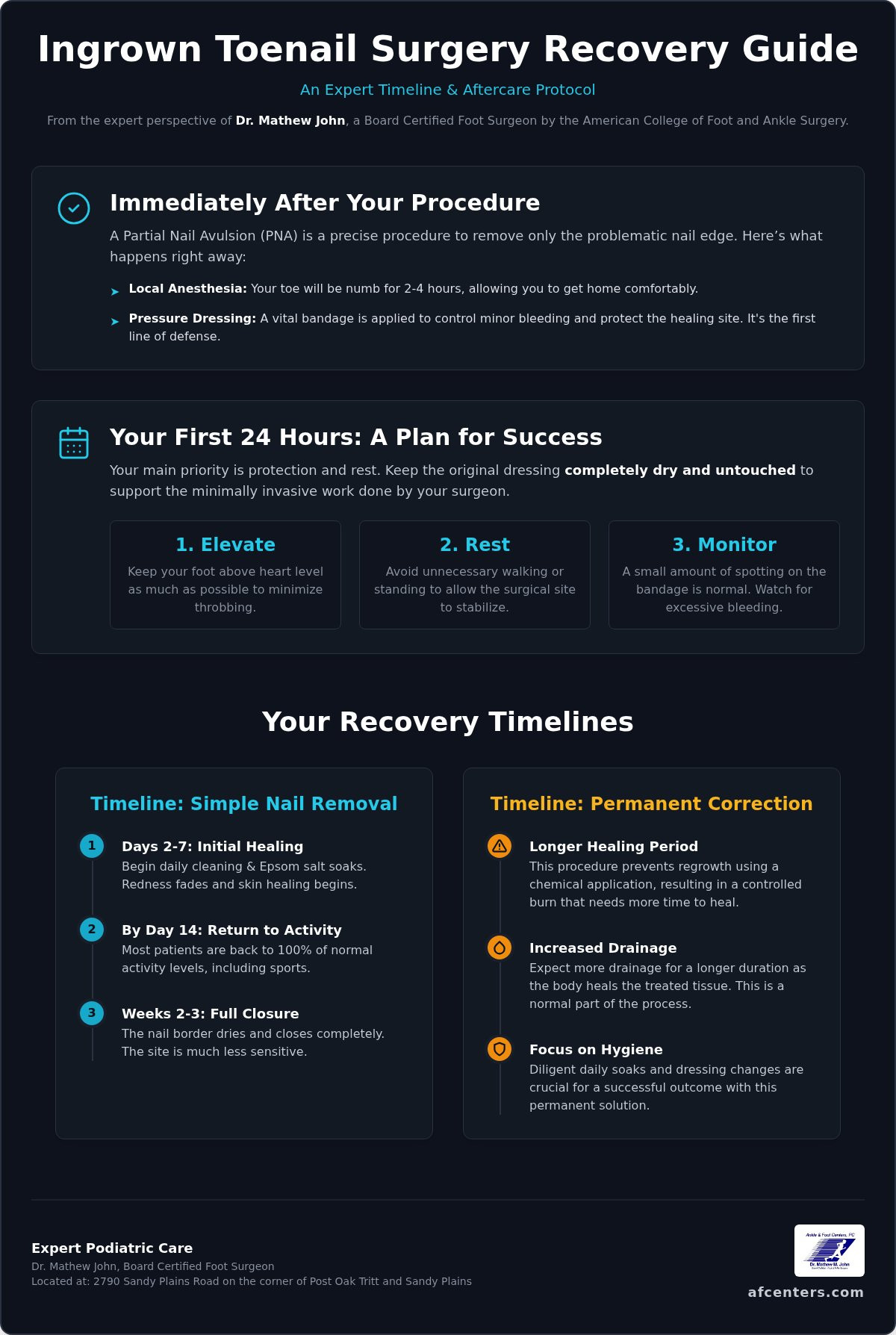
Before you leave the office, your toe will be comfortably numb due to local anesthesia. This sensation typically lasts for two to four hours, giving you plenty of time to get home and settle in. We apply a specialized pressure dressing immediately after the procedure. This bandage is vital because it controls minor bleeding and protects the site from external contaminants during the most sensitive phase of healing. It's your toe's first line of defense as the recovery journey begins.
The First 24 Hours: Managing Your Toe
Your main priority during the first full day is protection and rest. You must keep the original pressure dressing completely dry and untouched. If the bandage gets wet or is removed too early, it can disrupt the initial clotting process. Dr. Mathew John, a Board Certified Foot Surgeon, prioritizes minimally invasive techniques to reduce tissue trauma from the start. To support this careful work, follow these simple steps:
- Elevate: Keep your foot above the level of your heart as much as possible to minimize throbbing.
- Rest: Avoid unnecessary walking or standing to allow the surgical site to stabilize.
- Monitor: Watch for any excessive bleeding, though a small amount of spotting on the bandage is normal.
When the Numbness Wears Off
As the anesthetic fades, you'll likely feel a mild throbbing or tenderness. It's a sign that your body is beginning its natural healing work. Most patients find they can manage this comfortably with standard over-the-counter options. To keep pressure off the area, skip your usual shoes in favor of open-toed sandals or very loose-fitting sneakers. When it's time for sleep, place a pillow under your leg and keep your blankets loose at the foot of the bed to prevent them from pressing against your toe. For more information on our comprehensive care, you can explore our services available in Marietta.
Healing Timeline: Your Recovery Week-by-Week
While the initial procedure is quick, your body needs time to fully restore the health of your toe. Your ingrown toenail surgery recovery follows a predictable pattern, though the duration of certain phases depends on whether you had a simple removal or a permanent correction. During the first week, your focus is on hygiene. You'll begin daily cleaning and soaking to encourage skin closure. By weeks two and three, you'll notice the nail groove starts to fill in, and any remaining drainage should decrease significantly. By the time you reach weeks four through six, the skin has typically healed, and the area becomes much less sensitive to direct pressure.
It's important to understand that if you opted for a permanent solution to prevent future issues, your timeline will look slightly different. Dr. Mathew John, a Board Certified Foot Surgeon by the American College of Foot and Ankle Surgery, often recommends this path for recurring pain. If you're currently dealing with discomfort, it's easy to explore our services at our office at 2790 Sandy Plains Road on the corner of Post Oak Tritt and Sandy Plains.
The Simple Removal Timeline
A simple removal is often the fastest route to relief for a one-time issue. Between days two and seven, you'll see the initial skin healing begin as redness fades. Most patients are delighted to find they are back to 100% of their normal activity levels by day 14. The nail border typically dries and closes completely within two to three weeks, leaving you ready for any adventure. Because no chemicals are used, the tissue isn't required to process a controlled burn, leading to a very straightforward healing process.
The Permanent Matrixectomy Timeline
For many, a permanent matrixectomy is the best treatment for a more severe ingrown toenail. This procedure involves using a chemical, usually phenol, to prevent the nail from regrowing in the corner. Because this creates an intentional chemical burn to stop regrowth, expect clear or straw-colored drainage for three to six weeks. Don't be alarmed by this; it's a normal part of how the body responds to the phenol treatment. While this requires a bit more patience, the final result is a permanently narrower nail plate with a success rate of over 95%. This small investment in time ensures you won't have to deal with the same painful problem again.
Essential Aftercare: Soaking, Cleaning, and Advanced Healing
After the initial 24-hour protection period, your daily routine becomes the foundation of a successful ingrown toenail surgery recovery. While the procedure itself is precise, the way you care for the site at home determines how quickly you can return to your favorite activities. Dr. Mathew John, a Board Certified Foot Surgeon by the American College of Foot and Ankle Surgery, emphasizes that patient participation is the secret to avoiding complications like secondary infections. Consistency is your best tool for ensuring the tissue heals cleanly and without irritation.
The Daily Soaking Routine
Soaking isn't just about comfort; it's a vital clinical step to encourage drainage and keep the skin supple. Use lukewarm water mixed with Epsom salts for your daily routine. Don't use hot water, as high temperatures can increase swelling and cause unnecessary discomfort. Submerge your foot for 15 minutes twice a day. Once you've finished, gently pat the area dry with a clean, lint-free towel. Don't rub the surgical site, as this can irritate the delicate new tissue forming at the nail border. You can learn more about our comprehensive services for foot health at our Marietta office at 2790 Sandy Plains Road on the corner of Post Oak Tritt and Sandy Plains.
Once the toe is dry, apply a thin layer of antibiotic ointment and a fresh, sterile bandage. This simple step protects the area from friction and keeps the environment ideal for healing. During this phase, your footwear choice is critical. Transition from your initial open-toed surgical shoe to loose-fitting athletic footwear only when the sensitivity allows. It's best to avoid narrow dress shoes or high heels until the nail groove has completely dried and closed to prevent any setbacks.
Managing Inflammation with MLS Laser
At our clinic, we offer advanced technology to support your healing journey. MLS Laser Therapy is an excellent option for patients who want to minimize post-surgical inflammation and accelerate tissue repair. This therapy utilizes specific wavelengths of light to target musculoskeletal pain and difficult-to-heal wounds. It works by increasing local circulation and stimulating cellular regeneration right at the nail border. It's important to understand that MLS Laser is used specifically for healing and pain management. This is distinct from fungal laser therapy, such as the Cutera Genesis Plus NDYag Laser, which we use to treat onychomycosis. By incorporating these modern treatments, we help you get back on your feet faster than traditional methods often allow.
Returning to Activity: When Can You Run, Swim, or Wear Heels?
Most patients feel ready to jump back into their daily lives sooner than they expected. If you have a desk-based job, you can usually return to work the very next day. Walking around the house is perfectly fine, provided you listen to your body's signals and don't overexert yourself. The key to a successful ingrown toenail surgery recovery is balancing movement with the necessary rest to let the tissue knit back together. For those who spend all day on their feet, we might suggest a few extra days of light duty to prevent unnecessary swelling or throbbing.
Sports and High-Impact Exercise
Resuming high-impact sports like running, basketball, or soccer typically requires a wait of one to two weeks. This window allows the nail border to stabilize against the friction and pressure of athletic shoes. Before you hit the pavement or the court, you should wait for the "green light" from Dr. Mathew John, a Board Certified Foot Surgeon by the American College of Foot and Ankle Surgery. It's helpful to test your comfort level by wearing your specific athletic shoes around the house for an hour or two. If you notice heel pain or sensitivity during this transition, it may be a sign to scale back your intensity temporarily.
Water Safety and Infection Prevention
Protecting your surgical site from bacteria is non-negotiable for a smooth outcome. You must avoid swimming in pools, lakes, or hot tubs until the skin has completely bridged over the nail groove, which usually takes about two weeks. Communal water sources often harbor pathogens that can easily enter a healing wound and cause setbacks. During this time, keep a close watch for any signs of infection. These include increasing pain after initial improvement, localized heat, or the presence of thick yellow discharge. If you notice any of these symptoms, contact our office at 2790 Sandy Plains Road on the corner of Post Oak Tritt and Sandy Plains immediately.
Special occasions might tempt you to reach for high heels or narrow dress shoes earlier than planned. It's best to wait until all sensitivity to direct pressure has vanished entirely. For some, this is at the two-week mark; for others, it may take slightly longer depending on the complexity of the procedure. When you're ready to step back into your full lifestyle, we're here to ensure your feet are up to the task. If you're ready to leave toe pain behind and get back to the activities you love, schedule your consultation with our expert team today.
Expert Podiatric Care in Marietta: Why Choose Dr. Mathew John
Dr. Mathew John, a Board Certified Foot Surgeon by the American College of Foot and Ankle Surgery, understands that every patient brings a unique set of goals to their appointment. Choosing a surgeon with these specific credentials ensures you're receiving care from an expert who has met the highest standards of surgical proficiency and patient safety. Whether you're navigating the early stages of an ingrown toenail surgery recovery or seeking a permanent solution for chronic pain, our team is here to guide you with a steady hand. We believe that professional authority should always be paired with inclusive encouragement, making high-level podiatric care accessible to everyone in the Atlanta Metro area. Our facility is conveniently situated at 2790 Sandy Plains Road on the corner of Post Oak Tritt and Sandy Plains, serving as a localized hub for advanced foot and ankle solutions.
Beyond surgical excellence, we focus on your personal journey. Your recovery plan isn't a generic template; it's a strategy designed around your specific health needs and activity goals. We take the time to listen to your concerns about returning to work or your favorite sports, ensuring that every step of your aftercare is optimized for your success. This community-focused approach is why so many residents trust us to be their partners in long-term wellness. We emphasize progress over perfection, helping you reach your health goals at a pace that feels right for your body.
Advanced Technology at Our Marietta Clinic
Advanced technology allows us to provide results that were once thought impossible with minimal disruption to your life. For patients dealing with stubborn or recalcitrant warts, we offer Swift Treatment. This advanced technology uses microwave ablation to target the root of the problem without the need for invasive cutting or chemicals. The protocol typically involves four sessions spaced one month apart, and the best part is that there's no downtime for patients following the procedure. You can walk right out of our office and continue your day without restriction. Additionally, we utilize 3-D impressions to create custom orthotics. By capturing the exact contours of your feet without old-fashioned molds, we ensure your post-operative gait is fully supported, helping you maintain a healthy and active lifestyle long after your initial treatment.
Schedule Your Consultation Today
Don't let foot discomfort hold you back from the Marietta trails or your daily neighborhood walk. Your journey toward a pain-free life starts with an expert evaluation. Dr. Mathew John provides the sophisticated resources and professional guidance you need to move forward with confidence. If you're ready to take the next step in your ingrown toenail surgery recovery or need a comprehensive plan for another foot condition, we invite you to join our community. Call our office on the corner of Post Oak Tritt and Sandy Plains today to book your evaluation and experience the difference that expert, localized care can make for your vitality.
Step Into a Pain-Free Future
A successful ingrown toenail surgery recovery is built on a foundation of professional precision and diligent daily care. By following the week-by-week milestones we've shared, you can move from the initial protection phase to full athletic activity with complete confidence. Remember that your healing journey is supported by advanced options like MLS Laser Therapy for inflammation and Swift Treatment for stubborn warts; both are designed to minimize downtime and maximize your comfort. These modern resources ensure that your path to wellness is as smooth and efficient as possible.
At our Marietta office, we're dedicated to helping you return to the activities that define your lifestyle. Dr. Mathew John, a Board Certified Foot Surgeon by the American College of Foot and Ankle Surgery, provides the expert guidance you need to leave toe pain in the past. Visit us at 2790 Sandy Plains Road on the corner of Post Oak Tritt and Sandy Plains to start your personalized path to health. You don't have to navigate this journey alone. Schedule your consultation with Dr. Mathew John today and take the first step toward lasting vitality. We're ready to help you reach your goals with a steady, expert hand.
Frequently Asked Questions
How much pain should I expect after ingrown toenail surgery?
Most patients experience only mild throbbing once the local anesthetic wears off. You can typically manage this discomfort with over the counter pain relief. Dr. Mathew John, a Board Certified Foot Surgeon by the American College of Foot and Ankle Surgery, uses precise techniques to minimize tissue trauma. This careful approach helps keep your ingrown toenail surgery recovery as comfortable as possible for our Marietta and Roswell neighbors.
Can I drive myself home after the procedure?
You can usually drive yourself home after the procedure. Because we use a local anesthetic that only numbs the specific toe being treated, your ability to operate a vehicle isn't typically impaired. Most patients at our clinic on the corner of Post Oak Tritt and Sandy Plains feel perfectly comfortable driving immediately afterward. If you feel particularly nervous or have a long commute through Atlanta traffic, bringing a friend along is always a welcome option.
What happens if the ingrown toenail comes back after surgery?
If a nail regrows, it's often because some microscopic nail cells survived the initial treatment. While a permanent matrixectomy has a success rate of over 95%, Dr. Mathew John can perform a revision to address any persistent issues. Our practice specializes in reconstructive surgery and advanced solutions for recurring problems. Whether you're in Woodstock or Kennesaw, we're committed to ensuring you achieve a permanent, pain-free result for your long-term health.
How long do I need to keep my foot elevated?
You should aim to keep your foot elevated above heart level for at least the first 24 to 48 hours. This simple step is one of the most effective ways to reduce post-operative swelling and throbbing. By using a few pillows to prop up your leg, you'll help your body manage inflammation more efficiently. This focused rest period is a vital part of a smooth ingrown toenail surgery recovery for our patients.
Is it normal for the toe to drain fluid for several weeks?
It is very common to see clear or straw-colored drainage for several weeks if you had a permanent chemical procedure. This drainage is a normal part of the healing process for the controlled chemical burn created by the phenol. While it might seem unusual, it's actually a sign that the nail bed is responding correctly to the treatment. Most patients in Sandy Springs and Marietta see this drainage taper off by the fourth week.
When can I stop wearing a bandage on my toe?
You should continue wearing a light bandage until the surgical site is completely dry and the skin has closed. This usually takes between one and two weeks. Changing your dressing daily after your Epsom salt soaks keeps the area protected from friction and bacteria. Once the nail groove no longer produces drainage and the skin looks healthy, you can transition to leaving it uncovered while you're at home.
Can I get my toe wet in the shower after surgery?
You must keep the original pressure dressing dry for the first 24 hours. After that initial period, it's safe to let soapy water run over the toe in the shower. Avoid scrubbing the site directly; instead, gently pat it dry with a clean towel immediately afterward. While showering is fine, remember to stay away from communal water like pools or hot tubs until the wound has fully closed.
What are the signs that my ingrown toenail is infected after surgery?
Signs of a potential infection include spreading redness, localized heat, or thick yellow or green discharge. You might also notice a foul odor or pain that starts to get worse instead of better. If you experience any of these symptoms, please call our office at 2790 Sandy Plains Road on the corner of Post Oak Tritt and Sandy Plains. Quick intervention ensures your recovery stays on track so you can return to your active lifestyle.


