

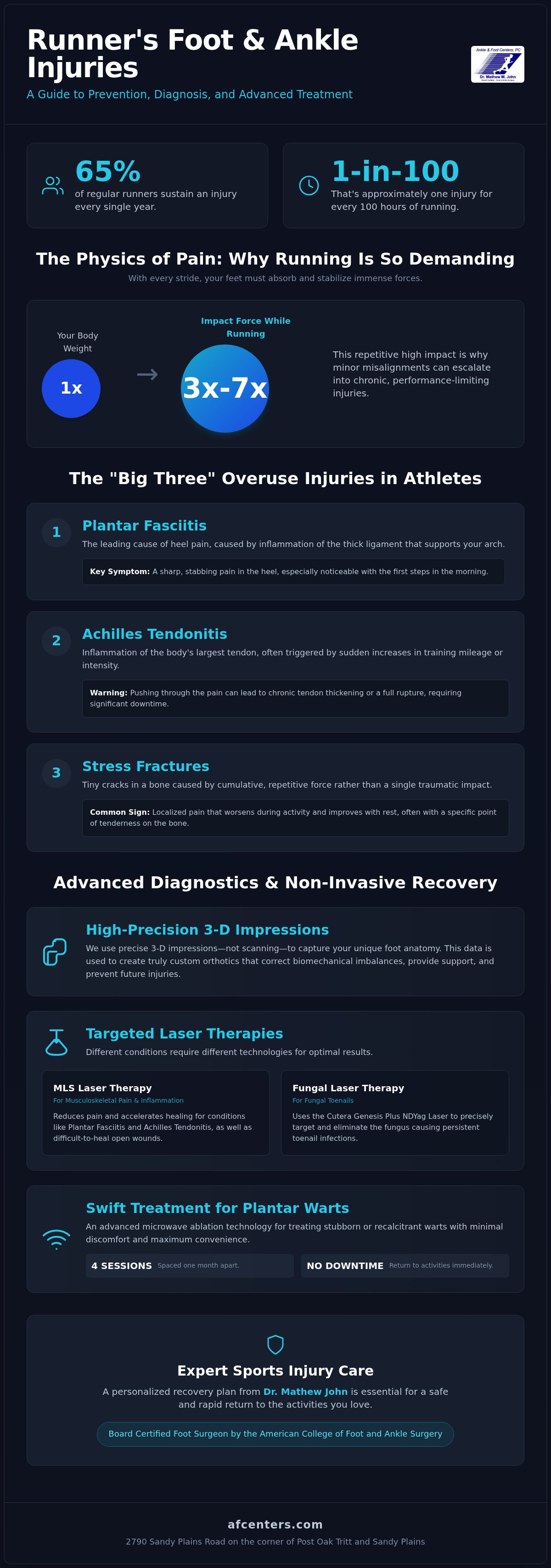
Did you know that approximately 65 percent of regular runners sustain an injury every single year? This statistic translates to about one injury for every 100 hours spent on the trail or track. When you're dedicated to your fitness, a sudden ache in your arch or a sharp pain in your heel feels like more than a physical setback; it's a frustrating disruption to your goals and your daily rhythm. You want to stay active, but the fear of long-term damage often makes it difficult to know when to rest and when to seek professional guidance.
Key Takeaways
- Learn why running places up to seven times your body weight on your feet and how this impact leads to common overuse conditions.
- Identify the early symptoms of Plantar Fasciitis and Achilles Tendonitis to address pain before it sidelines your training schedule.
- Explore the benefits of running foot injuries treatment Marietta athletes use, featuring non-invasive MLS Laser therapy to target musculoskeletal inflammation.
- Understand why high-precision 3-D impressions for custom orthotics provide more accurate biomechanical support than traditional scanning methods.
- Discover how a personalized recovery plan from a Board Certified Foot Surgeon can help you return to your favorite sports safely and faster.
Why Athletes are Prone to Common Foot and Ankle Injuries
Your feet are the foundation of every athletic movement you make. When you run, your feet absorb between three and seven times your body weight with every single stride. This intense physics of impact means that even a minor structural misalignment can quickly escalate into a chronic condition. Over time, this repetitive strain wears down the soft tissues and bones, leading to the frustration of recurring pain. If you're searching for running foot injuries treatment Marietta athletes trust, it's vital to understand that early intervention prevents permanent performance loss. Addressing a small ache today keeps you on the field tomorrow.
Improper footwear is a common culprit behind structural misalignment. When your shoes don't match your activity or your foot type, they can force your ankles and knees into unnatural angles. This doesn't just cause discomfort; it changes your entire kinetic chain. By choosing the right support early on, you protect your long-term health and maintain your training schedule. Our goal is to provide the professional guidance you need to make these choices with confidence. A steady hand and expert advice can make the difference between a minor setback and a season-ending injury.
High-Impact vs. Low-Impact Sports Risks
Different sports place unique demands on your lower extremities. In high-impact activities like running or basketball, the constant vertical force makes you more susceptible to stress fractures and plantar fasciitis. Conversely, soccer and other turf sports involve rapid lateral movements and pivots. These actions frequently result in Common Sports Injuries such as ankle sprains or turf toe. Even gymnastics and dance, which might seem lower impact in terms of distance, place extreme stress on the midfoot and toes during landings and balance work. Recognizing these specific risks helps you tailor your recovery and prevention strategies.
The Biomechanics of Performance
Your unique foot structure plays a massive role in how you handle athletic stress. If you have high arches or struggle with overpronation, your body may not distribute weight evenly. This imbalance creates "hot spots" where injuries are more likely to occur. A professional gait analysis is a powerful tool for identifying these potential injury sites before they stop your training. While standard athletic shoes are designed for the average foot, they often fail to provide the specific support your individual anatomy requires. This is why we prioritize precision 3-D impressions to create custom orthotics. Unlike generic inserts, these are built to align your body perfectly, ensuring your footwear works with you rather than against you.
The Big Three Overuse Injuries in Athletes
Plantar Fasciitis and Heel Pain
This condition is the leading cause of heel pain in our local running community. You'll likely recognize it by that sharp, stabbing sensation during your first steps in the morning or after sitting for a long period. This occurs because the plantar fascia ligament, which supports your arch, becomes inflamed and tightens during rest. Common causes include tight calf muscles and inadequate arch support. For a deeper dive into managing this condition, learn more about heel pain relief in Marietta through our detailed guide.
Achilles Tendonitis: The Athlete's Weak Link
The Achilles tendon is the largest in the body, but it's also a common "weak link" for many athletes. Sudden jumps in training intensity or mileage often lead to tendonitis. We distinguish between insertional tendonitis, located where the tendon meets the heel bone, and non-insertional tendonitis, which affects the middle portion of the tendon. Pushing through this pain is dangerous; it can lead to chronic thickening or even a painful rupture. A successful recovery plan utilizes professional stretching and strengthening protocols to rebuild tissue resilience. Understanding these Foot Injuries and Disorders helps you respect your body's signals and avoid long-term damage.
Stress Fractures: The Silent Injury
Acute Injuries and Stubborn Skin Conditions in Sports
While many issues stem from repetitive wear, sudden trauma and persistent skin conditions can be just as debilitating. If you've ever felt a sharp burn in your toes or a sudden roll of the ankle, you know how quickly an athletic season can change. Finding the right running foot injuries treatment Marietta athletes depend on means looking at both the structural and surface-level challenges that come with an active lifestyle. Our team is here to guide you through these unexpected hurdles with a steady hand and professional expertise.
Turf Toe and Ligament Damage
Turf toe is more than just a sore big toe; it's a sprain of the ligaments surrounding the big toe joint. This typically happens through hyperextension, often when pushing off into a sprint on a hard surface. We grade these injuries from Grade 1, which involves mild stretching, to Grade 3, which is a complete tear. Without proper care, severe injuries can lead to long-term stiffness that robs you of your explosive power. While Plantar Fasciitis Treatment often focuses on the heel, turf toe requires specialized stabilization to ensure the joint heals without losing its range of motion. Early diagnosis helps us protect your ability to sprint and pivot safely.
Plantar Warts and the Swift Treatment
Locker rooms, communal showers, and shared gym mats are frequent breeding grounds for the virus that causes plantar warts. Because athletes often have small abrasions on their feet from training, they're particularly susceptible to these stubborn infections. Traditional treatments often involve weeks of messy bandages and discomfort, but we offer a more sophisticated, high-tech approach.
The Swift Treatment is an advanced microwave ablation technology designed specifically for recalcitrant warts. It works by delivering a precise dose of energy to the site, triggering your body's own immune response to clear the virus. The protocol is simple and athlete-friendly:
- Includes 4 sessions in total.
- Sessions are spaced exactly one month apart.
- There is absolutely no downtime, so you can return to training immediately.
One of the most exciting breakthroughs in sports medicine is MLS Laser Therapy. This technology is specifically designed to target musculoskeletal pain and inflammation at the cellular level. By using specific wavelengths of light, the laser stimulates deep tissue healing and reduces sports-related swelling without any discomfort or downtime. It's an ideal solution for athletes struggling with stubborn tendonitis or the lingering effects of plantar fasciitis. Because it is entirely non-invasive, it serves as a powerful alternative to more aggressive treatments. This technology works by increasing blood flow and metabolic activity in the damaged area, which helps you get back to your training schedule much faster than traditional methods allow.
Dr. Mathew John is a Board Certified Foot Surgeon by the American College of Foot and Ankle Surgery. This distinction represents a high level of specialized training and a deep commitment to surgical excellence. While many injuries respond beautifully to the non-invasive tools we've discussed, Dr. John's expertise in Reconstructive Foot and Ankle Surgery means he's uniquely prepared for complex cases. Whether you're a casual jogger or a competitive sprinter, you'll benefit from this depth of professional knowledge. You don't have to navigate your injury alone when you have an expert partner by your side.
Our clinic is conveniently located at 2790 Sandy Plains Road, right on the corner of Post Oak Tritt and Sandy Plains. This localized hub provides sophisticated resources in a welcoming, non-judgmental atmosphere. When you arrive for your initial sports injury consultation, you'll find a team dedicated to your personal growth. We'll discuss your athletic history, perform a thorough evaluation, and explore our comprehensive foot and ankle services to find the right fit for your needs. We take pride in being a community-focused destination for athletes throughout the Marietta area.
Don't let the fear of a long-term injury keep you on the sidelines. Take the first step toward a pain-free return to your sport today. We believe in your potential and are ready to help you reclaim your training schedule. Your journey toward health is a lifestyle choice, and we're honored to be part of it. Reach out to our team to begin your personalized path to recovery.
Take the First Step Toward Your Peak Performance
Your athletic journey is a marathon, not a sprint. We've explored how understanding the physics of impact and utilizing advanced diagnostics can transform your recovery. By choosing precision 3-D impression technology for your custom orthotics, you give your feet the exact support they need to handle repetitive strain. Whether you're clearing stubborn skin issues with specialized Swift microwave ablation for warts or managing inflammation with MLS Laser therapy, your healing should be as sophisticated as your training schedule. Precision care ensures you don't just recover; you thrive.
When you're ready for the running foot injuries treatment Marietta athletes trust, our team provides a steady hand. Dr. Mathew John, a Board Certified Foot Surgeon, combines high-level expertise with a community-focused approach to help you reclaim your active lifestyle. It's time to stop letting recurring pain hold you back from your personal goals. Schedule your sports injury consultation with Dr. Mathew John today and start moving toward a stronger, pain-free foundation. We're proud to be your expert partner in health and vitality.
Frequently Asked Questions
What are the most common foot injuries for runners?
The most frequent conditions include plantar fasciitis, Achilles tendonitis, stress fractures, and ankle sprains. These issues often stem from repetitive impact and sudden changes in training volume. We provide the comprehensive running foot injuries treatment Marietta runners need to address these challenges early. By identifying symptoms like sharp heel pain or localized swelling, you can prevent a minor ache from becoming a chronic setback that disrupts your entire competitive season.
How do I know if I have a stress fracture or just a sore foot?
Stress fractures typically cause sharp, localized pain that intensifies during activity and lingers after you stop moving. General soreness usually feels like a dull ache that improves with rest or light stretching. Because these tiny cracks in the bone are difficult to detect on early X-rays, a professional diagnosis is essential. Early detection helps ensure the bone heals correctly without compromising your future performance or your structural alignment.
What is the best treatment for stubborn plantar warts in athletes?
Swift microwave ablation is the most advanced solution for recalcitrant warts. This technology triggers your body's immune system to clear the virus naturally. The process is highly efficient for athletes because it requires no bandages and involves zero downtime. You can return to your training schedule immediately after each session. The protocol consists of four total treatments, which we space exactly one month apart for the most optimal results.
How long does it take to recover from turf toe?
Recovery time depends on the severity of the ligament sprain, ranging from a few weeks to several months. A Grade 1 stretch might only require a short period of rest and stabilization. However, a Grade 3 complete tear often necessitates a longer rehabilitation period to restore your explosive power. We focus on a guided recovery path that prioritizes long-term joint health over a rushed return to the field.
Can custom orthotics really improve my athletic performance?
Yes, by aligning your kinetic chain and correcting biomechanical imbalances, custom orthotics optimize your movement. We use precision 3-D impressions to ensure each pair matches your unique anatomy perfectly. This results in better shock absorption and more efficient energy return during high-impact activities. When your feet are properly supported, you can train harder and longer while reducing the risk of the repetitive strain that often leads to injury.
Is MLS Laser Therapy painful for treating tendonitis?
MLS Laser Therapy is entirely painless and non-invasive. Most patients feel little to no sensation during the treatment, though some report a slight, pleasant warmth in the area. This technology uses specific light wavelengths to reduce musculoskeletal inflammation and stimulate healing at the cellular level. It's a game-changer for athletes who want to accelerate their recovery from tendonitis or fasciitis without the discomfort or downtime of more aggressive interventions.
When should an athlete see a podiatrist for foot pain?
You should seek professional guidance if pain persists for more than a few days or prevents you from maintaining your normal training schedule. Early intervention is the key to providing the effective running foot injuries treatment Marietta athletes use to stay healthy. Don't wait for a small ache to become a debilitating injury. A consultation can provide a clear diagnosis and a proactive plan to keep you moving forward safely.
What is the success rate of Swift Treatment for warts?
Swift Treatment has a high success rate, even for stubborn or recalcitrant warts that haven't responded to traditional methods. By delivering a precise dose of microwave energy, it effectively clears the underlying virus in the vast majority of cases. The protocol's success relies on the consistent spacing of sessions one month apart. This allows your immune system to build a robust response, ensuring long-term results and a healthy skin surface.


