
Did you know that nearly one in three individuals with diabetes will face a foot ulcer at some point in their lives? If you're currently struggling with a wound that refuses to heal or experiencing persistent numbness, you aren't alone in your frustration. It's natural to feel anxious about your mobility or the risk of serious complications. We believe that every step you take toward healing should be guided by a steady, expert hand. Finding specialized diabetic wound care Marietta patients trust is the first step in reclaiming your active lifestyle and preventing infection before it starts.
You'll discover how advanced healing strategies can turn the tide for your health. Dr. Mathew John, a Board Certified Foot Surgeon by the American College of Foot and Ankle Surgery, offers a sophisticated approach right here at 2790 Sandy Plains Road on the corner of Post Oak Tritt and Sandy Plains. We'll look at how we use MLS Laser Therapy to accelerate tissue repair and create custom orthotics using 3-D impressions to offload pressure. This guide provides a clear path toward rapid wound closure and the long-term wellness you deserve.
Key Takeaways
- Understand why specialized diabetic wound care Marietta experts provide is critical for managing the unique risks of neuropathy and poor circulation.
- Explore how MLS Laser Therapy acts as a breakthrough treatment to reduce inflammation and speed up the closure of stubborn open wounds.
- Learn how custom orthotics designed with 3-D impressions help offload pressure to protect your feet and prevent future complications.
- Discover the comprehensive diagnostic process used by Dr. Mathew John, a Board Certified Foot Surgeon by the American College of Foot and Ankle Surgery, to create your personalized healing plan.
- Identify proactive daily habits and footwear choices that safeguard your mobility and support a pain-free, active lifestyle.
Why Specialized Diabetic Wound Care in Marietta is Critical
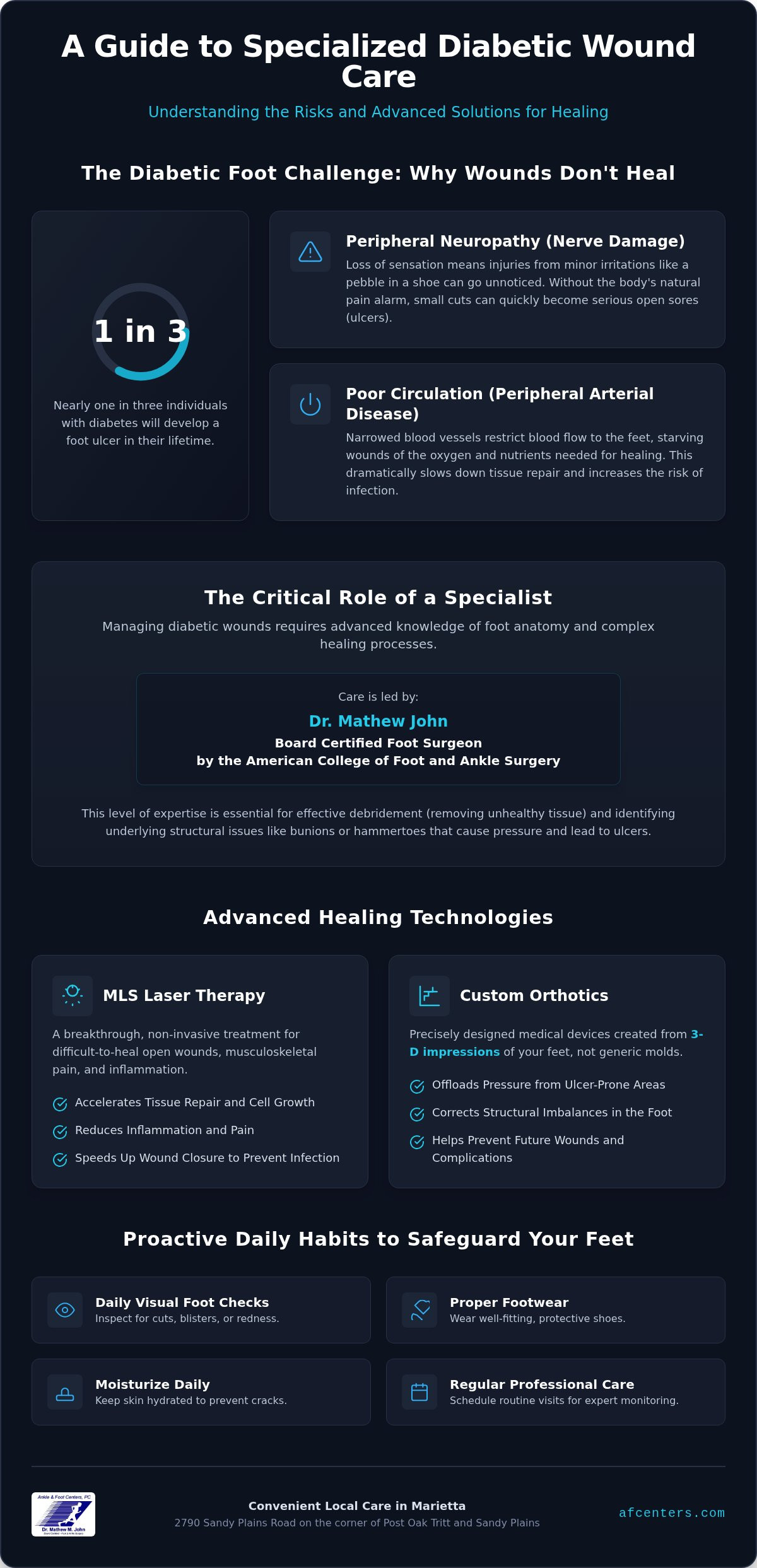
Specialized diabetic wound care focuses on the intricate process of healing ulcers of the lower extremities. For those living with diabetes in Georgia, finding effective diabetic wound care Marietta services is vital because small injuries can quickly become significant health challenges. This happens because the condition often results in a combination of poor circulation and peripheral neuropathy. When your blood flow is restricted, your body can't deliver the oxygen and nutrients required to heal damaged skin. Neuropathy makes this even more dangerous by numbing your feet; you might not notice a cut or blister until it has already become infected. Learn more about diabetic foot ulcers to see how these factors impact your daily health.
Left untreated, chronic diabetic wounds carry a high risk of severe infection that can ultimately lead to the loss of a limb through amputation. Dr. Mathew John, a Board Certified Foot Surgeon by the American College of Foot and Ankle Surgery, provides the expert diabetic wound care Marietta families rely on to prevent these outcomes. We're dedicated to acting as your health mentor, guiding you through a personalized recovery plan that prioritizes your mobility.
The Role of a Board Certified Foot Surgeon
Partnering with a specialist ensures you're receiving care from someone who understands the complex anatomy of the foot. Dr. Mathew John is a Board Certified Foot Surgeon by the American College of Foot and Ankle Surgery, which means he has the advanced training required to handle reconstructive needs and difficult complications. His surgical background is essential for effective debridement, the process of removing unhealthy tissue so healing can begin. He also identifies structural issues that might be causing the pressure leading to your ulcers, including:
- Bunions and hammertoes
- Flat feet or high arches
- Previous injury sites or scar tissue
You can see how we integrate these techniques by exploring our services online. Professional medical intervention is the most reliable way to manage chronic foot conditions and ensure long-term wellness.
Convenient Local Care in Marietta
Accessing top-tier medical expertise shouldn't feel like a chore. Our clinic is located at 2790 Sandy Plains Road on the corner of Post Oak Tritt and Sandy Plains, making it easy for local residents to get the care they need. We've created a welcoming, community-focused environment where you'll feel supported from the moment you walk through our doors. Our focus is on progress rather than perfection. We're here to help you return to a pain-free, active lifestyle so you can enjoy everything our community has to offer. By providing sophisticated resources in a friendly setting, we aim to lower the barrier for anyone seeking help with their foot health.
Understanding Diabetic Foot Ulcers and Related Complications
Peripheral neuropathy often acts as a silent thief of sensation. When you lose the ability to feel pain, a small pebble in your shoe or a tight seam on a sock can create a "silent" injury. Without your body's natural alarm system, these minor irritations quickly progress into open sores. When providing the diabetic wound care Marietta patients need, we often find that this lack of sensation is the primary hurdle to early detection. You might not realize a wound has formed until it has already reached a critical stage.
Peripheral arterial disease (PAD) further complicates this journey by narrowing the blood vessels in your legs and feet. This reduction in blood flow starves the wound of the oxygen and white blood cells required for repair, significantly extending your healing time. Following APMA guidelines on diabetic wound care is essential to manage these circulatory challenges effectively. When blood flow is compromised, even a tiny scrape can become a gateway for serious infection.
We also focus on the mechanical causes of ulcers that many general practitioners might overlook. Structural issues like bunions and hammertoes create abnormal pressure points. Every step you take can grind skin against the inside of a shoe, leading to tissue breakdown. If a diabetic foot sore is present, the risk of infection increases exponentially. Bacteria can easily enter the body through these breaks in the skin, potentially leading to bone infections or deep tissue damage.
Identifying the Warning Signs of an Ulcer
Because nerve damage can mask pain, you must rely on visual and sensory cues. Check your feet daily in a well-lit room. Look for these specific warning signs:
- Drainage or unusual stains on your socks.
- Localized redness or swelling that doesn't go away.
- Unusual odors coming from the feet.
- Skin that feels warmer than the surrounding area.
If you find any break in the skin, it's vital to seek professional help immediately. Even a small cut requires the specialized attention of a Board Certified Foot Surgeon by the American College of Foot and Ankle Surgery like Dr. Mathew John.
Managing Stubborn Warts and Lesions
Diabetic patients must also be vigilant about other lesions, such as plantar warts, which can become recalcitrant and lead to further skin breakdown. We offer Swift Treatment, an advanced solution for stubborn warts that utilizes microwave ablation technology. This system targets the root of the wart by stimulating a natural immune response. The protocol typically involves four sessions spaced one month apart. One of the greatest benefits is that there's absolutely no downtime, allowing you to stay active throughout your treatment. If you're noticing changes in your skin, scheduling a consultation can help protect your long-term mobility and health.
Advanced Healing Technologies: MLS Laser and 3-D Impressions
Healing a chronic ulcer requires more than traditional dressings; it demands a sophisticated approach that addresses the underlying cellular environment. In our practice, we utilize MLS Laser Therapy as a breakthrough treatment for difficult-to-heal open wounds and musculoskeletal pain. This technology uses a patented dual-wavelength system to penetrate deep into the tissue without generating heat. By reducing inflammation and swelling at the source, the laser creates the ideal conditions for your body to repair itself. For those seeking diabetic wound care Marietta services, this non-invasive option provides a supportive path toward rapid recovery and long-term vitality.
While the laser works to heal the wound from the inside out, we must also address the external forces that caused the injury in the first place. This is where "offloading" becomes critical. By using custom orthotics, we can redistribute your body weight away from the ulcer site, allowing the tissue to close without constant irritation. We utilize high-accuracy 3-D impressions to ensure these orthotics provide a perfect, comfortable fit. You can learn more about how these technologies integrate into our treatment plans by visiting our services page.
The Science of MLS Laser Therapy for Wounds
MLS Laser Therapy stimulates cellular repair by increasing metabolic activity within the damaged area. It's a painless, wellness-oriented treatment that fits seamlessly into your lifestyle. It's important to understand that we use specific lasers for specific conditions. While the MLS Laser is reserved for inflammation and open wounds, we utilize the Cutera Genesis Plus NDYag Laser for fungal laser therapy. This distinction ensures you receive the most effective wavelength for your specific health journey. Following a comprehensive guide to diabetic wound care means utilizing the right tool for the right complication, and our advanced laser options reflect that commitment to excellence.
Precision Offloading with 3-D Impressions
The transition from traditional plaster molds to 3-D impressions has revolutionized how we create durable medical equipment (DME). This sophisticated method captures the exact contours of your feet with incredible detail without the mess of old-fashioned casting. These precise impressions allow us to craft custom-molded orthotics that act as a protective barrier for your feet. By correcting structural imbalances and redistributing pressure, these orthotics don't just help heal current wounds; they are a vital tool in preventing future ulcers. Providing expert diabetic wound care Marietta means looking beyond the immediate sore to ensure your long-term mobility remains protected. Dr. Mathew John, a Board Certified Foot Surgeon by the American College of Foot and Ankle Surgery, oversees this entire process to ensure your orthotics meet the highest medical standards.
What to Expect During Your Marietta Wound Care Visit
Taking the first step toward professional medical help is a powerful choice for your long-term health. When you visit us for diabetic wound care Marietta, we prioritize your comfort and clarity from the moment you arrive. Our process begins with a comprehensive diagnostic evaluation that looks beyond the surface of the injury. We perform a detailed review of your medical history and a thorough physical exam to understand how your lifestyle and systemic health impact your recovery. This holistic approach ensures we aren't just treating a symptom, but supporting your entire well-being.
Your treatment plan is never a one-size-fits-all solution. We craft a personalized strategy tailored to your specific goals and activity level. We also emphasize the importance of regular follow-up appointments. These visits allow us to monitor your healing progress closely and make real-time adjustments to your care. You'll have the steady hand of professional guidance at every turn, helping you move toward a future defined by mobility rather than restriction.
The Initial Consultation and Assessment
Our clinic is located at 2790 Sandy Plains Road on the corner of Post Oak Tritt and Sandy Plains. Here, you'll find a welcoming atmosphere designed to lower the anxiety often associated with medical visits. Dr. Mathew John, a Board Certified Foot Surgeon by the American College of Foot and Ankle Surgery, leads our diagnostic team. He utilizes advanced tools such as digital X-rays to check for bone involvement and vascular testing to assess blood flow. These steps are essential because they reveal the underlying causes of slow healing. We welcome patients of all ages, ensuring every member of our community has access to expert podiatric care.
Integrated Treatment and Therapy Sessions
Once we have a clear picture of your condition, we may utilize advanced dressings or bioengineered materials to stimulate tissue repair. If your recovery requires specialized intervention, we'll integrate sessions for MLS Laser Therapy to manage inflammation and accelerate healing. For those also dealing with stubborn skin lesions, we provide Swift Treatment. This microwave ablation technology is specifically designed for recalcitrant warts and typically involves four sessions spaced one month apart. Because there's no downtime, you can stay focused on your daily routine while we work on your recovery. Take the next step in your healing journey by exploring our specialized diabetic services today to see how we can help you reclaim your active lifestyle.
Preventing Reoccurrence: Proactive Diabetic Foot Health
Healing an ulcer is a significant milestone, but maintaining that progress is a lifelong journey. We view your recovery as a partnership where we provide the tools and guidance you need to stay active. Proactive diabetic wound care Marietta patients practice isn't just about treating injuries; it's about preventing them before they start. This begins with understanding that your feet require specialized attention every single day. By establishing a routine and visiting our clinic at 2790 Sandy Plains Road on the corner of Post Oak Tritt and Sandy Plains, you ensure that small changes don't turn into big problems.
Annual diabetic foot exams are a critical part of this strategy. During these visits, Dr. Mathew John, a Board Certified Foot Surgeon by the American College of Foot and Ankle Surgery, performs a detailed assessment of your circulation and nerve function. These exams allow us to catch subtle shifts in your health that you might not notice at home. We act as your localized hub for sophisticated health resources, ensuring you never have to navigate your wellness journey alone. Choosing to prioritize these checkups is a powerful step toward long-term vitality.
Daily Habits for Foot Protection
Protecting your feet starts with simple, consistent actions at home. Because neuropathy can mask pain, you must become your own best advocate. Establish a routine that prioritizes your safety and keeps your skin healthy. Follow this daily checklist to stay ahead of potential issues:
- Wash your feet daily with lukewarm water and mild soap.
- Dry your feet thoroughly, especially between the toes, to prevent moisture buildup.
- Never walk barefoot, even inside your home, to avoid accidental cuts or punctures.
- Use a mirror to inspect the soles of your feet and other hard-to-see areas for redness or blisters.
Proper footwear is your first line of defense against friction and pressure. We recommend professional shoe fittings to avoid the irritation caused by ill-fitting footwear. Additionally, custom orthotics designed from 3-D impressions ensure your weight is distributed evenly across your foot. These devices are medical tools that prevent the high-pressure zones where ulcers typically form. When you use orthotics tailored to your unique anatomy, you're making a proactive choice for your future mobility.
Long-Term Wellness and Community Support
We believe that foot health is a holistic lifestyle choice rather than a series of chores. It's about preserving your ability to walk, play with your grandchildren, and enjoy our local Marietta parks. Our clinic is more than just a medical office; it's a destination for personal growth and social connection. We invite you to join the community of patients who have successfully reclaimed their mobility through expert care and dedicated prevention. Your journey toward lasting health is a rewarding opportunity to live your best life. Schedule your diabetic foot evaluation with Dr. Mathew John and take the next step in your wellness journey today.
Start Your Journey Toward Lasting Wellness
Your mobility is a vital part of your lifestyle, and protecting it starts with the right professional partnership. We've seen how specialized diabetic wound care Marietta patients receive combines expert surgical knowledge with advanced tools like MLS Laser Therapy and 3-D impressions. These technologies don't just treat the injury; they address the structural and physiological causes to ensure long-term success. By focusing on progress and utilizing sophisticated resources, you can prevent complications and keep your feet healthy for years to come.
Dr. Mathew John, a Board Certified Foot Surgeon by the American College of Foot and Ankle Surgery, provides a steady hand to guide you through every stage of recovery. Our welcoming facility at 2790 Sandy Plains Road on the corner of Post Oak Tritt and Sandy Plains serves as a localized hub for sophisticated healing resources. You don't have to navigate the complexities of diabetic health alone when expert support is available right in your community.
Reclaiming a pain-free, active life is within your reach. Book Your Appointment at our Marietta Clinic today and discover the difference that expert, community-focused care can make. We look forward to supporting you as you move toward your personal health goals with confidence and vitality.
Frequently Asked Questions
How do I know if my foot wound is serious enough to see a podiatrist?
You should consult a specialist for any skin break, redness, or unusual drainage found on your foot. Because diabetes often causes neuropathy, you may not feel the pain that typically accompanies a serious injury. Seeking expert diabetic wound care Marietta residents rely on ensures that minor issues don't escalate into dangerous infections. Early intervention is the most effective way to protect your long-term mobility and prevent the risk of limb loss or other severe complications.
Does MLS Laser Therapy hurt when treating an open wound?
No, MLS Laser Therapy is a completely painless and non-invasive treatment. Unlike some lasers that generate intense heat, this dual-wavelength system works at a cellular level to reduce inflammation and swelling without discomfort. Most patients describe the experience as relaxing. It's a sophisticated way to accelerate your body's natural healing process for difficult-to-heal open wounds, helping you return to your active lifestyle faster while keeping your comfort as a top priority.
How often do I need to visit the Marietta office for diabetic wound care?
The frequency of your visits depends on the severity of your condition and your personalized healing plan. Many patients require weekly appointments at our office at 2790 Sandy Plains Road on the corner of Post Oak Tritt and Sandy Plains for debridement and monitoring. These regular check-ins allow Dr. Mathew John to adjust your treatment in real-time. Consistent follow-up care is essential for ensuring rapid wound closure and preventing the reoccurrence of painful ulcers.
What makes Swift Treatment different from traditional wart removal?
Swift Treatment utilizes advanced microwave ablation technology to target the root of a wart rather than just the surface. Traditional methods often involve chemicals or cutting, which can be painful and require recovery time. With the Swift protocol, you'll typically have four sessions spaced one month apart. A major benefit for our active patients is that there's absolutely no downtime afterward. You can walk out of our clinic and immediately return to your daily activities.
Can custom orthotics really help heal an existing diabetic ulcer?
Yes, custom orthotics are a vital tool for healing because they provide offloading for the affected area. By redistributing your body weight, these devices take the pressure off an existing ulcer, allowing the delicate tissue to close and repair itself. We create these devices using precise 3-D impressions to ensure a perfect fit. This sophisticated approach to diabetic wound care Marietta helps manage current sores while also acting as a shield against future pressure-related injuries.
What are the first signs of a diabetic foot infection?
The first signs of infection often include localized redness, warmth, or swelling around a skin break. You might also notice an unusual odor or pus-like drainage on your socks. If the infection spreads, you could experience systemic symptoms like fever or chills. It's vital to inspect your feet daily using a mirror for hard-to-see areas. If you spot any of these warning signs, schedule a professional evaluation immediately to prevent deep tissue damage.
Is Dr. Mathew John a board-certified specialist?
Yes, Dr. Mathew John is a Board Certified Foot Surgeon by the American College of Foot and Ankle Surgery. This prestigious certification reflects his high-level expertise in both reconstructive surgery and specialized podiatric care. His advanced training ensures that you receive the most sophisticated treatments available for complex diabetic complications. Choosing a board-certified specialist means you're partnering with a mentor who has a deep understanding of foot anatomy and the latest healing technologies.
How do 3-D impressions help in creating better orthotics?
3-D impressions provide a high-accuracy digital model of your foot's unique contours. This modern method replaces traditional plaster molds, which can be messy and less precise. By capturing every detail of your foot's structure, we can craft custom-molded orthotics that provide superior comfort and support. This precision ensures that your durable medical equipment (DME) fits perfectly into your shoes, effectively redistributing weight and protecting vulnerable areas of your feet from excessive friction or pressure.


