Did you know that nearly 85% of diabetes-related amputations start with a single, stubborn foot ulcer? It's a staggering statistic that highlights why specialized diabetic wound care Kennesaw residents can rely on is so vital. If you're struggling with a slow-healing wound or the fear of what might happen next, you aren't alone in your frustration. Chronic pain and loss of sensation can make every step feel uncertain, but there's a clear path forward that prioritizes your long-term health and mobility.
We believe that your care should be as proactive as it is compassionate. You'll learn how advanced MLS Laser Therapy and expert podiatric guidance can accelerate the healing of even the most stubborn ulcers. Dr. Mathew John, a Board Certified Foot Surgeon by the American College of Foot and Ankle Surgery, provides sophisticated resources at our clinic located at 2790 Sandy Plains Road on the corner of Post Oak Tritt and Sandy Plains. We'll explore the latest 2026 standards for prevention and treatment to ensure you feel confident and supported throughout your recovery.
Key Takeaways
- Learn how peripheral neuropathy can hide the early signs of foot ulcers and why specialized care is essential for preventing serious complications.
- Discover the benefits of MLS Laser Therapy, a breakthrough treatment designed to reduce inflammation and stimulate healing in stubborn, open wounds.
- Understand the value of working with Dr. Mathew John, a Board Certified Foot Surgeon by the American College of Foot and Ankle Surgery, for expert diabetic wound care Kennesaw patients deserve.
- Explore a proactive strategy for daily foot health, including proper footwear choices and essential check-up routines to protect your long-term mobility.
- Gain access to advanced resources and compassionate support at our clinic located at 2790 Sandy Plains Road on the corner of Post Oak Tritt and Sandy Plains.
Understanding Diabetic Foot Ulcers and Why They Require Specialized Care
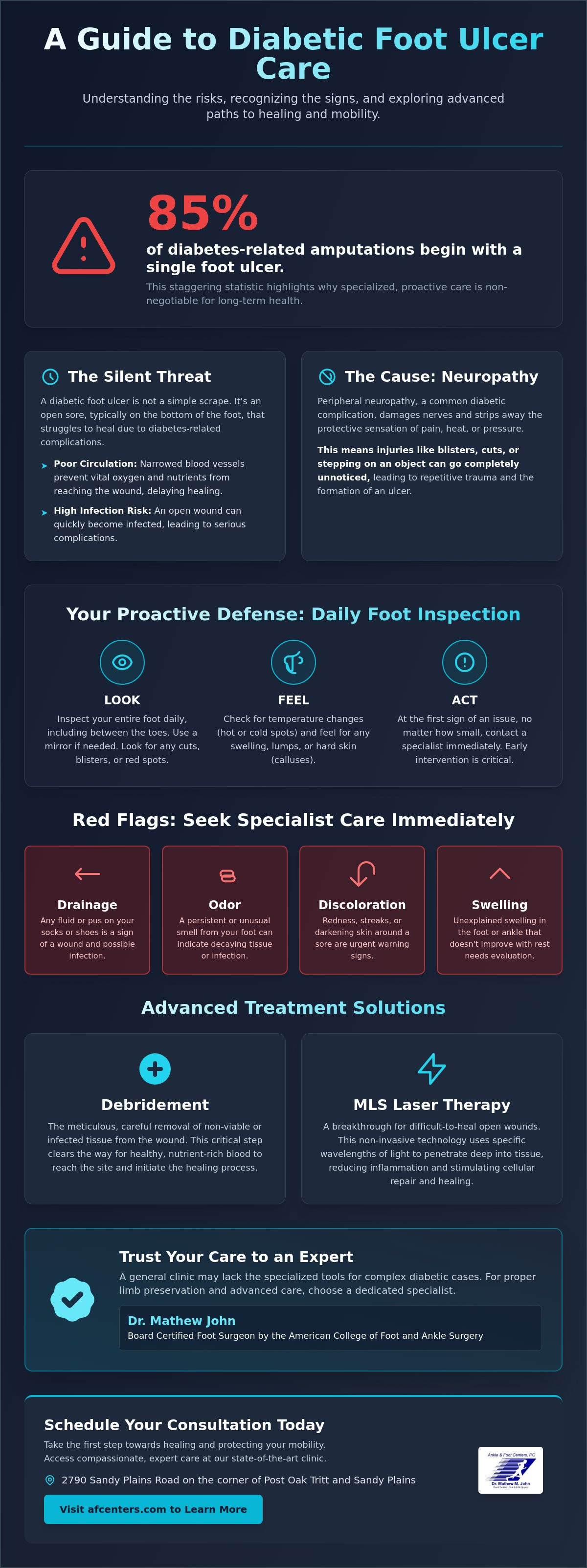
A Diabetic foot ulcer is more than just a simple cut or scrape. It's an open sore that typically develops on the bottom of the foot, often over bony areas like the ball or the heel. For those seeking diabetic wound care Kennesaw providers can offer, understanding the mechanics of these wounds is the first step toward recovery. Because diabetes often leads to narrowed blood vessels, the vital oxygen and nutrients your body needs to repair tissue don't reach the wound efficiently. This lack of circulation turns a minor blister into a persistent health challenge that requires professional intervention. This condition is a leading cause of hospitalizations for people with diabetes, making early detection a priority.
Small issues can escalate quickly. Without proper treatment, a small break in the skin can become a serious infection in just a matter of days. This is why specialized care is never something to delay. We believe that your care should be as proactive as it is compassionate, ensuring that every patient receives a comprehensive evaluation designed to protect their long-term health. You can find our specialized services at our clinic located at 2790 Sandy Plains Road on the corner of Post Oak Tritt and Sandy Plains.
The Role of Neuropathy in Wound Development
Peripheral neuropathy is a common complication of diabetes that causes nerve damage in the extremities. It’s often described as a "silent" threat because it strips away the protective sensations of pain or heat. You might step on a small pebble or develop a blister from tight shoes and not feel a thing. This leads to repetitive trauma as you continue to walk on the affected area without realizing there's a problem.
Daily foot checks are your most powerful tool for defense. We encourage Kennesaw residents to inspect their feet every evening, looking specifically at pressure points where the skin is most likely to break down. Finding a red spot early can be the difference between a quick fix and a months-long healing process.
When to See a Board Certified Foot Surgeon
Knowing when to step up your care is vital for limb preservation. While general urgent care centers provide valuable services, they often lack the specialized diagnostic tools and advanced therapies required for complex diabetic cases. It's time to see a specialist if you notice red flags such as:
- Drainage or fluid on your socks
- A persistent or unusual odor coming from the foot
- Skin discoloration like redness or darkening around a sore
- Swelling that doesn't go down with rest
Dr. Mathew John is a Board Certified Foot Surgeon by the American College of Foot and Ankle Surgery. His expertise goes beyond basic wound dressing; he focuses on the underlying structural and physiological factors that prevent healing. Whether you need precise care or advanced MLS Laser Therapy to reduce inflammation and stimulate tissue repair, working with a specialist ensures you access the highest standard of diabetic wound care Kennesaw has to offer.
Advanced Diabetic Wound Treatment Options in Kennesaw
Finding the right path to recovery often requires moving beyond basic bandages. For those seeking advanced diabetic wound care Kennesaw residents can trust, we utilize a combination of clinical precision and innovative technology. The goal is simple: heal the wound as quickly as possible to prevent complications. This starts with meticulous infection control and debridement. Debridement is the careful removal of non-viable or infected tissue. By clearing away this barrier, we allow healthy, nutrient-rich blood to reach the site, which is a fundamental principle of Diabetic Wound Care.
Dr. Mathew John, a Board Certified Foot Surgeon by the American College of Foot and Ankle Surgery, oversees every step of this process. He ensures that treatments are tailored to your specific needs, whether that involves systemic antibiotics or localized antimicrobial dressings. This high level of expertise is available at our office located at 2790 Sandy Plains Road on the corner of Post Oak Tritt and Sandy Plains. Our approach focuses on progress over perfection, guiding you through each stage of the healing journey with a steady hand.
MLS Laser Therapy for Wound Healing
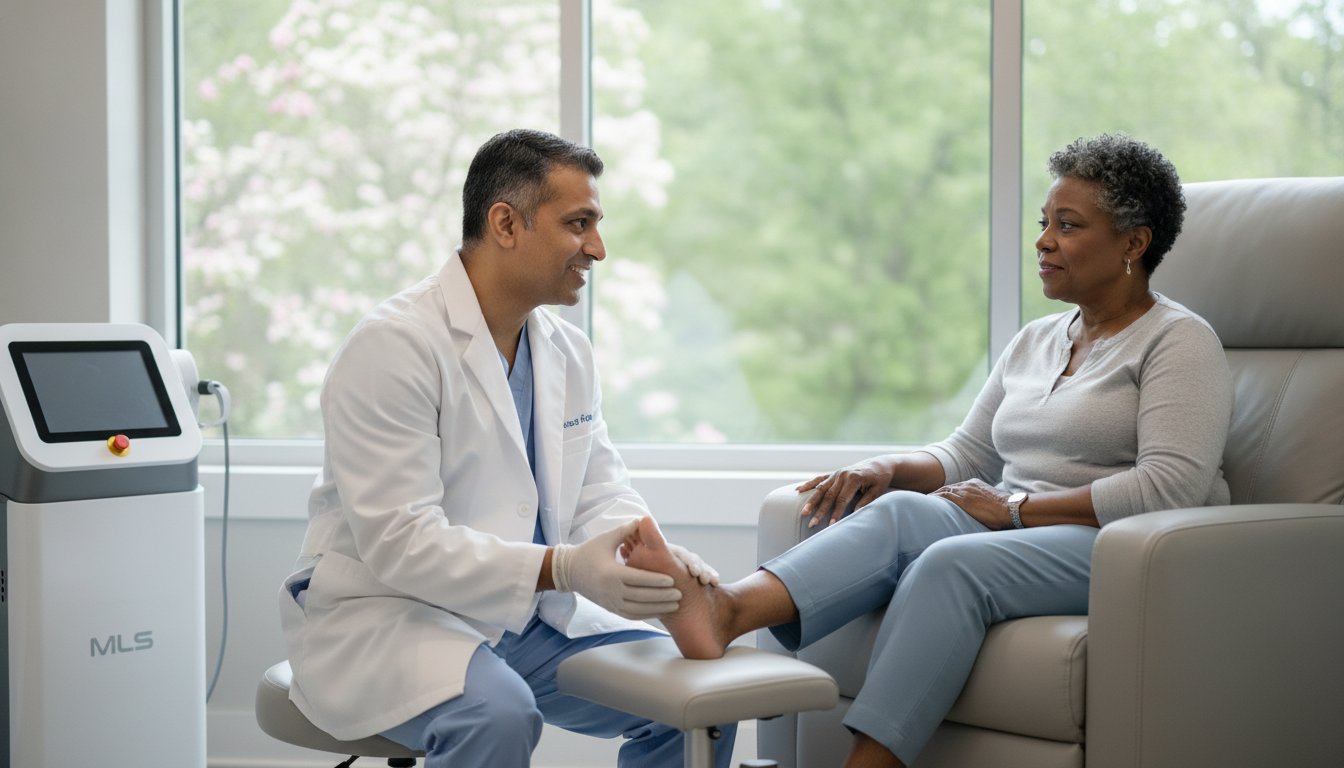
MLS Laser Therapy represents a major breakthrough for difficult-to-heal open wounds and chronic inflammation. This technology uses specific wavelengths of light to penetrate deep into the tissue. It works at a cellular level to reduce pain and swelling while significantly increasing metabolic activity. This boost in energy helps cells repair themselves faster, closing the wound more efficiently than traditional methods alone. It's a completely painless, non-invasive treatment that we perform right here in our office, making it an easy addition to your wellness routine.
Custom Orthotics and 3-D Impressions
Healing cannot happen if the wound is constantly under pressure from your own body weight. This is why "offloading" is so critical to our success. We use 3-D impressions to create a precise map of your foot. These 3-D impressions allow us to design custom orthotics that redistribute your weight away from the ulcer site. By removing the physical stress from the wound, we give your body the necessary space to mend. Combined with medical-grade footwear, these custom tools provide a long-term strategy for ulcer prevention and help you maintain your mobility.
The Importance of Choosing a Board Certified Specialist
Selecting a healthcare provider for complex conditions is a significant decision that shapes your recovery path. When you seek diabetic wound care Kennesaw, you aren't just looking for a clinic; you're looking for a partner who understands the high stakes of limb preservation. Dr. Mathew John is a Board Certified Foot Surgeon by the American College of Foot and Ankle Surgery. This specific credential isn't just a title. It represents a rigorous commitment to surgical excellence and a deep mastery of the foot's complex anatomy. It ensures that your care is backed by the highest standards recognized in the medical community today.
You might wonder why surgical expertise matters if you're hoping for non-invasive treatments. The reality is that a surgeon’s perspective is invaluable even for conservative care. Dr. John’s background allows him to identify structural issues that a general practitioner might overlook. He understands how a slight bone misalignment can create a pressure point, leading to a recurring ulcer. By combining this surgical knowledge with advanced tools like MLS Laser Therapy, he provides a comprehensive approach that addresses both the wound and its root cause. Our clinic, located at 2790 Sandy Plains Road on the corner of Post Oak Tritt and Sandy Plains, serves as a community-focused mentor for your long-term health.
Limb Preservation and Reconstructive Expertise
Structural deformities such as bunions or hammertoes often become the primary catalysts for diabetic ulcers. Dr. John uses his reconstructive expertise to correct these underlying issues, which is vital for preventing the cycle of wound recurrence. The goal is always to return you to a pain-free, active lifestyle where you don't have to live in fear of the next blister. We treat patients of all ages with a focus on vitality, ensuring that your mobility remains a top priority throughout your personal journey.
A Collaborative Approach to Diabetes Management
We believe that effective healing happens when your entire medical team is on the same page. Our staff takes a "steady hand" approach, guiding you through the complexities of wound management while maintaining open communication with your primary care physician. This collaboration ensures that your glycemic control and overall health are optimized to support tissue repair. We take immense local pride in serving the Kennesaw and Marietta communities, providing sophisticated resources in a welcoming, non-judgmental environment. You don't have to navigate this path alone; we're here to support every step of your progress. If you're ready to take the next step toward healing, explore our services to see how we can help.
Preventing Diabetic Wounds: A Proactive Strategy
Prevention isn't just a set of rules; it's a way of honoring your body's journey and protecting your future mobility. By making small, intentional changes to your daily routine, you can significantly reduce the risk of developing a serious ulcer. This proactive mindset is a cornerstone of effective diabetic wound care Kennesaw. We encourage you to view your foot health as a holistic lifestyle choice rather than a series of chores. Every decision you make, from the shoes you choose to the way you inspect your feet, contributes to your long-term vitality and independence.
One of the most important habits you can adopt is never walking barefoot, even inside your own home. Small objects or uneven surfaces can cause injuries that you might not feel due to neuropathy. Wearing well-fitted, supportive shoes at all times provides a necessary barrier against accidental cuts or bruises. We want you to feel empowered in your care, knowing that these simple steps are your strongest defense against complications. Our team is here to guide you with a steady hand, ensuring you have the resources and knowledge to thrive.
Your Daily Foot Care Checklist
Make it a habit to check your feet every evening as part of your winding-down routine. Consistency is key to catching small issues before they escalate. Follow these steps for a thorough inspection:
- Visual Inspection: Look closely for red spots, swelling, or tiny blisters. These are often the first signs of excessive pressure.
- Use a Mirror: If you find it difficult to see the bottom of your feet, place a hand-held mirror on the floor or ask a loved one to help.
- Hydrate Wisely: Keep your skin hydrated with a quality moisturizer to prevent cracks. Always avoid applying lotion between your toes, as trapped moisture can lead to fungal infections.
- Feel for Temperature: Use your hands to check for unusually warm areas, which can indicate underlying inflammation.
Professional Monitoring and Maintenance
Even when your feet look and feel healthy, regular professional consultations are essential for long-term wellness. These visits allow Dr. Mathew John, a Board Certified Foot Surgeon by the American College of Foot and Ankle Surgery, to identify subtle changes in your foot structure or circulation that might go unnoticed. During these exams, we can create 3-D impressions to design custom orthotics. These 3-D impressions allow us to build specialized inserts that redistribute weight and prevent "hot spots" from becoming open sores.
Clinical data shows that regular podiatric visits can reduce the risk of diabetes-related amputations by over 50 percent. This highlights why scheduling a routine exam at our clinic at 2790 Sandy Plains Road on the corner of Post Oak Tritt and Sandy Plains is such a powerful step for your health. If you're ready to build a stronger foundation for your mobility, schedule your diabetic foot care consultation today. We take pride in being your expert partner, providing sophisticated resources in a welcoming, community-focused environment.
Schedule Your Consultation at Our Kennesaw-Area Clinic
Taking the first step toward professional care is often the hardest part of the journey, but it's also the most rewarding. We want to make your path to recovery as smooth and stress-free as possible. Our clinic is conveniently located at 2790 Sandy Plains Road on the corner of Post Oak Tritt and Sandy Plains. This central location serves as a localized hub for those seeking expert diabetic wound care Kennesaw residents can rely on for both immediate treatment and long-term prevention. When you arrive, you'll find a welcoming environment designed to put you at ease from the moment you walk through the door.
Your first diagnostic evaluation is a comprehensive experience. We don't just look at the surface of a wound. Instead, we perform a deep dive into your foot health to understand the underlying causes of your condition. This involves checking your circulation, testing for nerve sensitivity, and assessing the structural alignment of your feet. We might use 3-D impressions to identify areas of excessive pressure that could lead to future ulcers. By the end of your visit, you'll have a clear, personalized roadmap for healing that prioritizes your comfort and mobility.
Convenient Care for Kennesaw and Marietta
We take great pride in being a dependable resource for our neighbors in Kennesaw, Roswell, and Woodstock. Our office on Sandy Plains Road is specifically designed to provide sophisticated medical resources without the cold, clinical feel of a large hospital system. We maintain a warm, non-judgmental atmosphere because we know that managing diabetes is a personal and sometimes difficult journey. If you have a sore that hasn't shown signs of improvement within a week, don't wait for the situation to escalate. Early intervention is the key to limb preservation and a faster return to the activities you love.
Ready to Heal? Contact Dr. Mathew John Today
Your health deserves the attention of a specialist who has dedicated their career to foot and ankle excellence. Dr. Mathew John is a Board Certified Foot Surgeon by the American College of Foot and Ankle Surgery. This high level of expertise ensures that whether you need advanced MLS Laser Therapy for a stubborn wound or a surgical correction for a structural deformity, you're in the best possible hands. We see ourselves as your expert partner, guiding you toward your health goals with a steady hand and a commitment to progress over perfection.
Reclaim Your Mobility and Peace of Mind
You don't have to navigate the complexities of diabetic foot health alone. By combining diligent daily checks with the clinical expertise of a specialist, you can protect your long-term mobility. Our clinic provides the sophisticated resources you need, from 3-D impressions for custom orthotics to advanced MLS Laser Therapy designed to heal stubborn wounds right here on-site. Choosing expert diabetic wound care Kennesaw ensures that your recovery is guided by a steady, experienced hand focused on progress and vitality.
Dr. Mathew John is a Board Certified Foot Surgeon by the American College of Foot and Ankle Surgery, bringing high-level surgical knowledge to every treatment plan. We're proud to serve our local community at 2790 Sandy Plains Road on the corner of Post Oak Tritt and Sandy Plains. It's time to prioritize your health and move forward with confidence. Schedule Your Diabetic Foot Evaluation with Dr. Mathew John today. Your journey toward lasting wellness and limb preservation starts with a single, proactive step. We look forward to being your partner in health.
Frequently Asked Questions
How long does it take for a diabetic foot ulcer to heal?
Healing times vary significantly based on the wound's depth and your overall health. While some minor ulcers may close in several weeks, deeper wounds can take months of dedicated care. Factors like blood sugar management and circulation play a major role in the timeline. By choosing specialized diabetic wound care Kennesaw patients can access advanced therapies that aim to speed up this natural recovery process and prevent complications.
Is MLS Laser Therapy painful for treating wounds?
MLS Laser Therapy is a completely painless and non-invasive treatment. Most patients feel no sensation at all during the procedure, while some report a very slight, comfortable warmth. It works by using specific wavelengths of light to reduce inflammation and stimulate tissue repair at a cellular level. Since there's no heat damage or cutting involved, you can return to your daily activities immediately after your session at our clinic.
What is the Swift Treatment for foot warts?
Swift Treatment is an advanced solution for stubborn or recalcitrant warts using microwave ablation technology. This precise treatment targets the root of the wart without the need for needles or messy acids. The process typically involves four sessions spaced exactly one month apart. One of the greatest benefits is that there's absolutely no downtime, allowing you to walk out of the office and stay active throughout the entire treatment period.
Do I need a referral to see a podiatrist in Kennesaw for a foot wound?
Whether you need a referral depends on your specific insurance provider and plan requirements. Many PPO plans allow you to book directly with a specialist like Dr. Mathew John, a Board Certified Foot Surgeon by the American College of Foot and Ankle Surgery. We recommend calling our office at 2790 Sandy Plains Road on the corner of Post Oak Tritt and Sandy Plains so we can help you verify your coverage.
Can I walk while I have a diabetic foot ulcer?
Walking directly on an active ulcer can prevent it from healing and may make the wound significantly deeper. We use offloading techniques to redistribute pressure away from the sore. This often involves using custom orthotics created from 3-D impressions or specialized medical footwear. Our goal is to keep you as mobile as possible while ensuring the wound remains protected from the physical stress of your body weight.
Does insurance cover custom orthotics and 3-D impressions?
Many insurance plans provide coverage for custom orthotics and the associated 3-D impressions when they're deemed medically necessary for diabetic foot protection. Since every policy is unique, our team will work with you to determine your specific benefits. Investing in professional orthotics is a proactive way to prevent the high-pressure areas that often lead to more costly and serious medical complications in the future.
What is the difference between a fungal laser and the MLS Laser?
These lasers serve very different purposes in podiatric medicine. We use MLS Laser Therapy specifically for musculoskeletal pain, inflammation, and difficult-to-heal open wounds. For the treatment of fungal toenails, we utilize fungal laser therapy or the Cutera Genesis Plus NDYag Laser. Using the right technology for your specific condition ensures the most effective results for your foot health journey and avoids unnecessary delays in healing.
What should I do if I notice a red spot on my foot today?
If you notice a red spot, you should treat it as an urgent matter and contact a specialist immediately. Because of neuropathy, a red spot can quickly transition into an open sore without you feeling any pain. Clean the area gently, avoid putting pressure on it, and schedule an evaluation for diabetic wound care Kennesaw. Early intervention is the most effective way to prevent a minor irritation from becoming a serious infection.


