
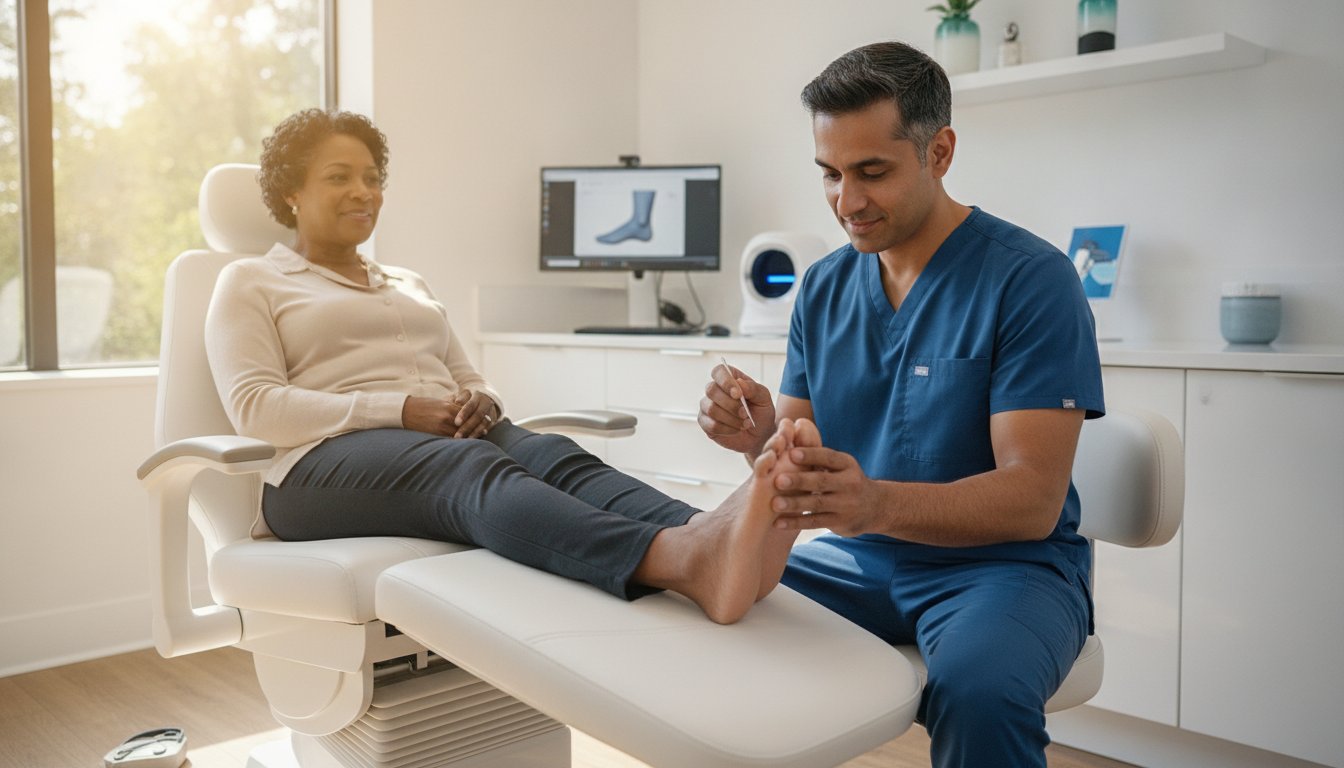
With over 1.1 million adults in Georgia currently living with diabetes, your foot health is a vital pillar of your overall vitality. You likely value your daily walks and the freedom to move without hesitation, yet the onset of numbness or a persistent tingling sensation can feel like a heavy burden. It’s completely normal to feel uncertain about how diabetes affects your feet or to worry about the risk of future complications. You deserve a clear path forward that prioritizes your comfort and your long-term independence.
Scheduling a routine diabetic foot exam in Woodstock is the most proactive step you can take to replace fear with a professional prevention plan. This article explores why these exams are essential for your mobility and how our local experts provide the sophisticated care you need to stay active. We’ll preview what to expect during your visit with Dr. Mathew John, who is a Board Certified Foot Surgeon by the American College of Foot and Ankle Surgery. From understanding your 2026 Medicare benefits to utilizing advanced 3-D impressions for custom support, you’ll find a supportive partner in your wellness journey at our office located at 2790 Sandy Plains Road on the corner of Post Oak Tritt and Sandy Plains.
Key Takeaways
- Understand how a professional screening identifies "silent" risks like neuropathy and circulation issues before they become serious complications.
- Discover how a routine diabetic foot exam Woodstock protects your mobility by thoroughly assessing skin integrity, nerve function, and blood flow.
- Learn about the specialized preventative care and surgical expertise provided by Dr. Mathew John, a Board Certified Foot Surgeon by the American College of Foot and Ankle Surgery.
- Explore advanced diagnostic tools and custom solutions, including 3-D impressions for orthotics, designed to support your unique foot structure.
- Establish a foolproof daily inspection routine to maintain your health between professional visits at our convenient office on Sandy Plains Road.
What is a Routine Diabetic Foot Exam and Why is it Necessary?
A routine diabetic foot exam Woodstock is far more than a simple checkup. It is a sophisticated, multi-point inspection of your skin, nerves, and vascular health. Think of it as a specialized wellness baseline that protects your future mobility. Since many Diabetic foot conditions develop without any physical pain, these professional screenings serve as your primary defense against "silent" complications. Dr. Mathew John, a Board Certified Foot Surgeon by the American College of Foot and Ankle Surgery, uses these exams to identify microscopic changes that might otherwise go unnoticed. This preventative approach is vital for Woodstock residents who want to maintain an active, independent lifestyle without the shadow of foot health concerns.
The Link Between Blood Sugar and Foot Health
High glucose levels can gradually weaken the walls of your small blood vessels and damage delicate nerve fibers. This process limits the essential oxygen and nutrients that reach your lower extremities. When blood flow is restricted, your body's natural ability to heal itself slows down significantly. A minor scratch or a small blister that would normally heal in a few days might linger for weeks, which opens the door for serious infections. Over time, damaged nerves may stop sending pain signals to your brain entirely. This loss of protective sensation is dangerous. You might not feel a sharp object or a shoe that rubs too tightly, allowing a small issue to progress into a life-altering ulcer.
Who Should Schedule an Appointment?
Whether you manage Type 1 or Type 2 diabetes, professional foot care is a cornerstone of your health strategy. Medical guidelines suggest that every person with diabetes should schedule an annual baseline exam to track changes over time. Don't wait for a visible wound to appear before seeking help. Early intervention is the key to avoiding long-term complications. If you experience persistent tingling, unusual numbness, or noticeable changes in the color and temperature of your feet, it's time for a professional evaluation. At our clinic located at 2790 Sandy Plains Road on the corner of Post Oak Tritt and Sandy Plains, we prioritize your comfort and clarity. We offer a wide range of specialized services to ensure your feet remain healthy and resilient for years to come.
Understanding the Risks: Neuropathy and Circulation Issues
Living with diabetes requires a heightened awareness of how your body communicates health signals. While you might feel perfectly fine today, two primary risks often work quietly beneath the surface: peripheral neuropathy and impaired circulation. These conditions are the central focus of a routine diabetic foot exam Woodstock. By understanding these risks, you can take control of your health journey and prevent minor issues from escalating into major hurdles. Dr. Mathew John, a Board Certified Foot Surgeon by the American College of Foot and Ankle Surgery, emphasizes that knowledge is your best tool for preserving long-term mobility.
Neuropathy: The Loss of Feeling
Neuropathy is a condition where nerve damage disrupts the signals between your feet and your brain. This often results in a loss of protective sensation, meaning you might not feel pain when it’s most needed. To assess this, we use specialized tools like monofilaments and tuning forks to measure your response to pressure and vibration. Without this sensation, a small pebble in your shoe or a minor blister can go completely unnoticed. These silent injuries are particularly dangerous because they can quickly lead to open wounds or infections. Additionally, nerve damage often weakens the small muscles in your feet. This imbalance causes the toes to curl into hammertoes or the joints to shift, creating new pressure points that are prone to ulceration. If you're experiencing tingling or burning, it's a signal that your nerves need professional attention.
Circulation and Vascular Health
Effective blood flow is your body’s delivery system for oxygen and healing cells. Peripheral Vascular Disease (PVD) occurs when arteries narrow, which limits this vital supply to your lower extremities. During your screening, we carefully check your pedal pulses to ensure your circulation is robust. You might notice signs like cold feet, thinning skin, or a lack of hair growth on your toes. These aren't just cosmetic changes; they indicate that your body may struggle to fight off infections or repair tissue. Learning What to Expect During Your Professional Foot Screening helps you understand how we monitor these vascular changes to keep you safe. When circulation is compromised, even a tiny nick can become a significant health risk.
If you've noticed any changes in how your feet feel or look, our team is here to help you navigate these risks with confidence. You can explore our comprehensive diabetic services to see how we tailor prevention plans to your specific needs at our clinic located at 2790 Sandy Plains Road on the corner of Post Oak Tritt and Sandy Plains. Don't let "silent" symptoms dictate your future; proactive care is the most rewarding choice you can make for your health.
What to Expect During Your Professional Foot Screening
Your routine diabetic foot exam Woodstock is a structured, five-step process designed to provide a complete picture of your lower extremity health. We view this appointment as a collaborative session where you gain a clear understanding of your current risk level and a professional plan to stay mobile. Dr. Mathew John, a Board Certified Foot Surgeon by the American College of Foot and Ankle Surgery, leads these screenings with a focus on precision and patient comfort. By the time you leave our office at 2790 Sandy Plains Road on the corner of Post Oak Tritt and Sandy Plains, you'll feel empowered with specific knowledge about your feet.
The screening begins with a thorough review of your medical history and current blood sugar management. This conversation helps us contextualize any symptoms you've noticed, such as tingling or coldness. Following this, we perform a dermatological inspection to check for skin breaks or infections. We then move into neurological testing to map any areas of numbness. A vascular assessment follows to measure blood flow, and we conclude with a musculoskeletal evaluation to identify any physical deformities that could cause future trouble. Understanding what to expect during a diabetic foot exam can help you feel more relaxed and prepared for this vital health milestone.
Skin and Nail Assessment
During the dermatological phase, we look for subtle signs that often go unnoticed during home checks. We pay close attention to calluses and corns, as these often indicate areas of high pressure where ulcers might develop. We also inspect the spaces between your toes for hidden fungal infections or skin maceration. If we identify fungal toenails, we can discuss advanced options like fungal laser therapy or the Cutera Genesis Plus NDYag Laser to restore nail health. Additionally, for patients dealing with stubborn or recalcitrant warts, we provide Swift Treatment. This is an advanced treatment that utilizes microwave ablation technology to resolve the infection. The procedure typically involves four sessions spaced one month apart, and because the technology is so precise, there is no downtime for patients following the visit. Our team also provides professional nail trimming to prevent the complications associated with ingrown toenails.
Structural and Gait Analysis
The way you walk significantly impacts your risk of developing diabetic complications. Dr. Mathew John evaluates your gait to identify areas of high friction or abnormal weight distribution. Structural issues like bunions or hammertoes can create dangerous pressure points that lead to skin breakdown if left unaddressed. To manage these risks, we often recommend custom orthotics. We use 3-D impressions to create a precise model of your feet, ensuring your orthotics provide the exact support needed to protect your mobility. You can learn more about our specialized diabetic care and how we use these diagnostic tools to keep you moving safely and comfortably.

Preventative Strategies: Daily Care and Custom Solutions
A routine diabetic foot exam Woodstock offers a professional snapshot of your health, but the choices you make every day at home sustain that vitality. Think of your daily foot care not as a chore, but as a vital investment in your continued independence and comfort. Proper hygiene and moisture control are essential components of this routine. Keeping the skin supple while ensuring no moisture lingers between the toes prevents many common infections and skin breakdowns. Dr. Mathew John, a Board Certified Foot Surgeon by the American College of Foot and Ankle Surgery, emphasizes that consistent home care paired with professional guidance creates the strongest possible safety net for your mobility.
Your Daily Foot Checkup Checklist
Consistency is the secret to identifying complications before they escalate. Each evening, take a few moments to inspect your feet in a well-lit room. If reaching your feet is a challenge, place a mirror on the floor to see the soles clearly. You should look for any new redness, swelling, or areas that feel unusually warm to the touch, as these can be early signs of inflammation. One of the most impactful habits you can adopt is the rule of never walking barefoot. Even inside your home, wearing supportive shoes or slippers protects you from small objects or uneven surfaces that could cause an injury you might not feel.
Precision Support with 3-D Impressions
When your foot structure requires extra protection, generic store-bought insoles often fall short. We utilize 3-D impressions to create a highly accurate map of your unique foot geometry. This advanced diagnostic tool allows us to design custom orthotics that redistribute weight away from high-pressure areas. By correcting your alignment and providing specific cushioning, these orthotics serve as a powerful preventative tool against diabetic ulcers. For many patients, specialized diabetic shoes are also a critical investment. These shoes provide extra depth and a seamless interior to minimize friction, ensuring your feet stay comfortable and safe during every activity. Our team at 2790 Sandy Plains Road on the corner of Post Oak Tritt and Sandy Plains is dedicated to providing these sophisticated resources to help you reach your health goals.
Taking proactive steps today ensures you can keep enjoying the activities you love most. Explore our custom preventative solutions and see how professional support makes your health journey easier and more rewarding.
Expert Diabetic Foot Care at Ankle & Foot Centers, PC
Choosing the right partner for your foot health is a decision that impacts your quality of life for years to come. At Ankle & Foot Centers, PC, we provide a sophisticated environment where advanced medical technology meets a warm, community-focused approach. Your routine diabetic foot exam Woodstock is conducted with the highest level of surgical and diagnostic expertise. Dr. Mathew John is a Board Certified Foot Surgeon by the American College of Foot and Ankle Surgery, ensuring that your care is rooted in the latest clinical standards. We invite you to visit our convenient office located at 2790 Sandy Plains Road on the corner of Post Oak Tritt and Sandy Plains to experience a higher standard of preventative care.
Our commitment to your wellness extends beyond simple screenings. We understand that living with diabetes can sometimes lead to complex challenges that require specialized intervention. By focusing on long-term results rather than short-term fixes, we help you navigate your health journey with confidence. Whether you're a beginner learning to manage a new diagnosis or someone seeking high-level expertise for a chronic issue, our team acts as a steady hand to guide you toward your personal goals.
Advanced Treatments for Diabetic Complications
When complications arise, we utilize cutting-edge therapies to accelerate your recovery and protect your mobility. For inflammation or difficult-to-heal open wounds, we offer MLS Laser Therapy. This advanced treatment uses specific wavelengths of light energy to stimulate cellular repair and reduce pain without invasive procedures. If you're struggling with persistent fungal infections, we provide fungal laser therapy using the Cutera Genesis Plus NDYag Laser to effectively clear the nail bed. Additionally, we address stubborn plantar warts with Swift Treatment. This microwave ablation technology is highly effective for recalcitrant warts. The process typically involves four sessions spaced exactly one month apart, and there's absolutely no downtime for patients following the procedure. You can learn more about these specialized services and how they fit into your comprehensive care plan.
Schedule Your Routine Exam Today
Transitioning from a general diagnosis to specialized podiatric care is a rewarding step for your future. To make your first visit at our Sandy Plains Road office as productive as possible, please bring a current list of your medications and your recent blood sugar logs. This information allows us to tailor your prevention plan to your specific physiological needs. Don't wait for discomfort to become a limitation. Taking the first step today ensures that you can continue to enjoy an active, vibrant lifestyle in Woodstock. We're here to provide the professional guidance and reliable support you need to walk with comfort and peace of mind.
Take Control of Your Foot Health Today
Your mobility is a vital gift that deserves the highest level of professional protection. Scheduling a routine diabetic foot exam Woodstock ensures that your personal wellness journey remains on a steady, pain-free track. You now understand how specialized screenings detect silent risks and how advanced technology keeps you moving forward with confidence. By choosing a path of prevention, you're making a rewarding choice for your long-term independence and quality of life.
At our facility, we provide sophisticated solutions like MLS Laser Therapy for inflammation and difficult-to-heal wounds. For those struggling with stubborn or recalcitrant warts, we offer Swift Treatment. This advanced microwave ablation technology typically involves four sessions spaced one month apart, and it's designed to be efficient with no downtime for patients after each visit. Dr. Mathew John, a Board Certified Foot Surgeon by the American College of Foot and Ankle Surgery, oversees every aspect of your care at 2790 Sandy Plains Road on the corner of Post Oak Tritt and Sandy Plains. We're here to ensure you never have to navigate your health journey alone.
Schedule your routine diabetic foot exam with Dr. Mathew John today. We're honored to serve as your dedicated partners in health and your local hub for expert podiatric care.
Frequently Asked Questions
How often should I have a professional diabetic foot exam?
You should schedule a routine diabetic foot exam Woodstock at least once every twelve months. This annual baseline allows Dr. Mathew John, a Board Certified Foot Surgeon by the American College of Foot and Ankle Surgery, to track subtle changes in your nerve sensitivity and circulation. If you have a history of ulcers or existing neuropathy, we may recommend more frequent visits to ensure your feet remain resilient and healthy.
Will a diabetic foot exam hurt?
A professional foot screening is completely painless and non-invasive. We use gentle tools like monofilaments and tuning forks to test your sensation and nerve response. These tests feel like a light touch or a mild vibration on your skin. Our goal is to provide a stress-free experience at our Sandy Plains Road office that gives you a clear and empowering understanding of your current health status.
What is the difference between a foot exam and a regular check-up?
A specialized foot exam focuses exclusively on the complex vascular, neurological, and musculoskeletal health of your lower extremities. While a general practitioner checks your overall wellness, a podiatrist looks for specific "silent" issues. We identify microscopic skin breaks, subtle structural shifts, and early vascular changes that general exams often overlook. This specialized focus is the most effective way to prevent long-term diabetic complications.
Can a podiatrist help with diabetic neuropathy pain?
We offer several advanced treatments to manage the tingling, burning, or numbness associated with peripheral neuropathy. For instance, MLS Laser Therapy uses specific light energy to reduce inflammation and promote healing in damaged tissues. We focus on improving your daily comfort so you can stay active in the Woodstock community. Our team works with you to create a personalized plan that prioritizes your long-term vitality and pain management.
What should I do if I find a small cut or blister on my foot?
You should clean the area with mild soap, apply a clean bandage, and contact our office immediately for an evaluation. Don't attempt to treat the wound yourself with over-the-counter tools or "bathroom surgery." Because diabetes can slow the healing process, even a minor nick requires professional attention. Prompt care at our clinic prevents small irritations from progressing into serious infections or difficult-to-heal open wounds.
Does insurance typically cover routine diabetic foot screenings?
Most insurance plans, including Medicare Part B, cover a yearly foot exam for individuals with documented diabetes-related nerve damage. In 2026, the Medicare Part B deductible is $283. After you meet this amount, Medicare typically pays 80% of the approved cost for the service. It's always a good idea to check with your specific provider to confirm the details of your individual coverage and any potential co-pays.
Are custom orthotics necessary if I do not have foot pain yet?
Custom orthotics are a powerful preventative tool even if you aren't currently experiencing discomfort. They work by redistributing pressure away from vulnerable areas where ulcers often form. By correcting your alignment early, we can prevent the structural shifts like hammertoes that often lead to future complications. Investing in professional support today is a proactive way to protect your mobility and avoid more invasive treatments later on.
How does Dr. Mathew John use 3-D impressions for my care?
Dr. Mathew John uses 3-D impressions to create a highly accurate model of your foot's unique structure. This sophisticated process replaces older methods and ensures your custom orthotics fit your specific anatomy perfectly. By using these precise models, we can design support that effectively redistributes pressure and corrects your gait. This is a vital step in preventing the skin breakdown that often leads to serious diabetic foot complications.


