

Did you know that up to one-third of individuals living with diabetes will develop a foot ulcer at some point in their lifetime? It's a sobering statistic that often brings up a lot of "what-ifs," especially when you're dealing with a loss of sensation that makes it hard to detect small injuries. If you've ever felt overwhelmed by the conflicting advice on footwear or worried about the long-term risks of a simple blister, you aren't alone. Learning how to prevent diabetic foot ulcers is one of the most proactive and empowering steps you can take to protect your health and keep your lifestyle active and independent.
You deserve to move through your day with total confidence, and we're here to guide you every step of the way. This article provides a clear, actionable path to foot health, covering the essential daily habits and professional treatments that make a real difference. We'll share a simple daily checklist for home care, explain how to choose shoes that actually protect you, and highlight when to seek the expertise of Dr. Mathew John, a Board Certified Foot Surgeon by the American College of Foot and Ankle Surgery. By the time you finish reading, you'll have a personalized plan to safeguard your feet and the professional support you need to stay moving forward.
Key Takeaways
- Master the "Golden Rule" of diabetic foot care by never walking barefoot to protect your feet from hidden injuries and irritation.
- Learn how to choose the right protective footwear, including shoes with deep toe boxes and moisture-wicking socks that prevent skin breakdown.
- Discover how to prevent diabetic foot ulcers through a simple five-minute daily inspection routine that helps you catch small issues before they escalate.
- Understand how advanced treatments like MLS Laser Therapy for open wounds and Swift Treatment for warts provide a sophisticated safety net for your health.
- Find out when to visit Dr. Mathew John, a Board Certified Foot Surgeon by the American College of Foot and Ankle Surgery, for professional risk assessments.
What is a Diabetic Foot Ulcer and Why is Prevention Critical?
Understanding the nature of a Diabetic Foot Ulcer is the first step toward maintaining your long-term mobility. These ulcers are open sores or wounds that typically develop on the bottom of the foot, often starting as a minor irritation that goes unnoticed. Because diabetes can cause nerve damage, known as neuropathy, many patients lose the ability to feel pain or temperature changes in their feet. This "silent" quality means a small blister can quickly evolve into a deep wound without you ever feeling a thing. Learning how to prevent diabetic foot ulcers begins with acknowledging that your feet require a specialized level of daily attention and professional care.
Early detection here in Marietta is your most powerful tool for avoiding serious complications like infections or hospital stays. When you identify a problem in its earliest stages, you have a much higher chance of successful treatment and a faster return to your favorite activities. Dr. Mathew John, a Board Certified Foot Surgeon by the American College of Foot and Ankle Surgery, specializes in managing high-risk diabetic feet at our facility located at 2790 Sandy Plains Road on the corner of Post Oak Tritt and Sandy Plains. Our team at Ankle & Foot Centers, PC provides the comprehensive services necessary to catch these issues early and keep your health on the right track.
The High Cost of Delayed Treatment
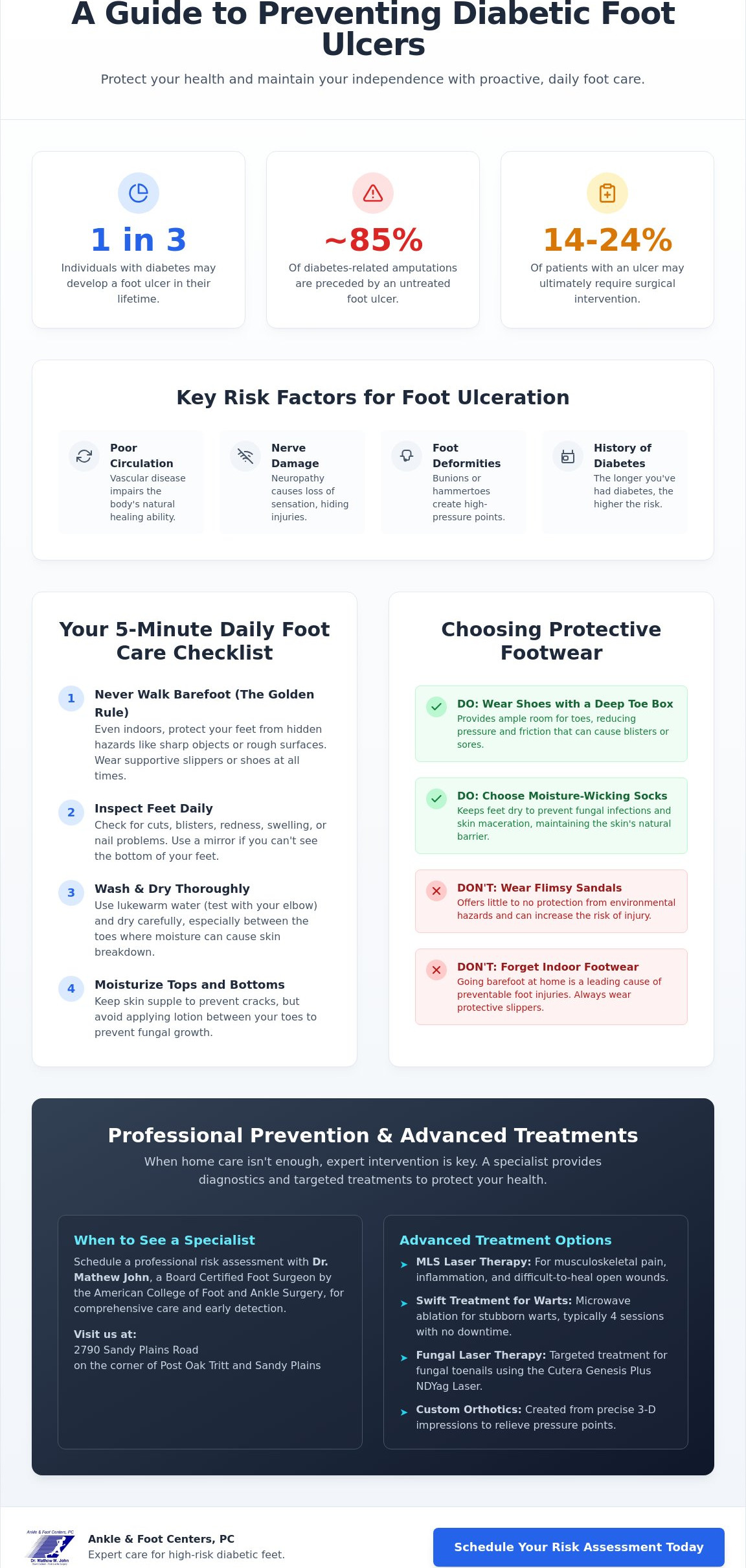
Ignoring a foot wound, even a small one, can lead to life-altering consequences. Statistics show that untreated ulcers are a primary precursor to approximately 85% of diabetes-related lower-extremity amputations. Research suggests that between 14% and 24% of patients who develop an ulcer may eventually require surgical intervention. While general primary care is important for your overall health, a specialized medical evaluation is essential for diabetic foot issues. A specialist provides the specific diagnostics and targeted treatments required to preserve the limb and ensure the skin heals correctly and stays resilient.
Who is Most at Risk for Foot Ulceration?
Several factors can increase your vulnerability to skin breakdown. Poor circulation, or vascular disease, significantly impairs your body's ability to heal even minor scratches. Additionally, the longer you've lived with diabetes, the higher the likelihood of developing the nerve damage that makes injuries hard to detect. Local environment also plays a role. During our humid Georgia summers, many people are tempted to wear flimsy sandals or go barefoot, which increases the risk of injury. Physical factors like bunions or hammertoes also create pressure points that are prime locations for ulcers to form. Understanding these risks is a vital part of knowing how to prevent diabetic foot ulcers and staying proactive about your foot health journey.
Daily Foot Care Habits to Stop Ulcers Before They Start
Your daily routine is your strongest defense against complications. The absolute "Golden Rule" for anyone living with diabetes is to never walk barefoot, even inside your own house. A stray needle, a sharp toy, or even a rough carpet edge can cause a wound you might not feel. By keeping your feet covered with supportive slippers or shoes at all times, you're taking a massive step in learning how to prevent diabetic foot ulcers. This simple habit creates a physical barrier between your skin and the hidden hazards of your home environment.
Keeping your feet clean and dry is equally vital for long-term health. Wash your feet every day in lukewarm water, but always test the temperature with your elbow first to avoid accidental burns. After washing, dry them thoroughly, paying special attention to the areas between your toes. Excess moisture trapped there can lead to fungal infections or skin maceration, which weakens the skin's natural defense. For more detailed Daily Foot Care Habits, you can refer to national health guidelines that emphasize this meticulous approach to hygiene.
The 5-Minute Daily Foot Inspection
Set aside five minutes every evening for a thorough check of your feet. If you find it hard to reach or see the bottom of your feet, use a long-handled mirror or ask a loved one to help. Look specifically for redness, swelling, blisters, or areas that feel unusually warm to the touch. Hot spots are areas of high friction or pressure that appear red or warm and often serve as the final warning sign before an ulcer develops. Catching these signs early is the primary way you can implement how to prevent diabetic foot ulcers before they require medical intervention.
Safe Hygiene and Grooming Practices
Proper grooming keeps your feet safe from self-inflicted injuries. Always trim your toenails straight across and gently file the edges; this prevents painful ingrown nails that can quickly become infected. Avoid "bathroom surgery" at all costs. Never try to cut off corns or calluses yourself with a razor or scissors, as this frequently leads to deep tissue damage. If you notice a stubborn callus or a wart, it's best to seek professional care. At our office at 2790 Sandy Plains Road on the corner of Post Oak Tritt and Sandy Plains, Dr. Mathew John, a Board Certified Foot Surgeon by the American College of Foot and Ankle Surgery, can safely manage these issues. You can explore our full range of diabetic foot care services to see how we help our Marietta neighbors stay healthy.
Choosing the Right Footwear and Protective Gear
While your daily inspection is critical, the gear you wear outside the house is your primary shield against injury. Selecting shoes specifically designed for diabetic needs is a major component of how to prevent diabetic foot ulcers. A proper diabetic shoe should feature a deep toe box to give your toes plenty of room and a seamless interior to eliminate friction points. When you combine these features with moisture-wicking socks, you create an environment that prevents skin maceration and keeps your feet dry and healthy.
Don't rush into wearing new shoes for an entire day. Even the best footwear requires a gradual breaking-in period to ensure your skin adapts to the new shape. Start by wearing them for just one or two hours at a time and check your feet for redness immediately after taking them off. This cautious approach is a vital part of how to prevent diabetic foot ulcers because it prevents minor irritations from becoming serious wounds. Also, be mindful of when your shoes have reached the end of their life. Worn-out shoes lose their structural integrity and can actually cause the pressure points we're trying to avoid.
The Importance of Professional Shoe Fitting
Your foot size isn't static; it can change over time due to age, weight fluctuations, or changes in foot structure. It's essential to have both feet measured every time you buy new shoes. We recommend shopping for footwear in the afternoon when your feet are most likely to be slightly swollen. This ensures the fit is comfortable throughout the entire day rather than just in the morning. During a comprehensive exam at our office at 2790 Sandy Plains Road on the corner of Post Oak Tritt and Sandy Plains, Dr. Mathew John, a Board Certified Foot Surgeon by the American College of Foot and Ankle Surgery, will evaluate your current footwear to ensure it provides the protection you need. For more information on Choosing the Right Footwear, you can explore resources that highlight the connection between fit and long-term health.
Socks as the First Line of Defense
Socks are more than just a layer of fabric; they're a diagnostic tool for your health. Opt for light-colored socks, like white or light gray, because they make it much easier to spot any blood or drainage from a hidden wound. Make sure your socks have elastic-free tops to avoid restricting your circulation or leaving deep indentations in your skin. You should also avoid socks with thick seams, which can create localized pressure and lead to skin breakdown. If you're looking for guidance on professional diabetic foot care and protective gear, our team is ready to help you make the best choices for your personal wellness journey.
Professional Prevention: When to See a Marietta Podiatrist
Professional oversight is the essential partner to your daily home routine. While checking your feet every night is a great start, a clinical assessment is necessary to identify risks you cannot see or feel. Knowing how to prevent diabetic foot ulcers involves understanding your specific risk level, which determines how often you should visit a specialist. For most patients, an annual visit is the baseline. If you have a history of neuropathy or poor circulation, Dr. Mathew John may recommend more frequent check-ups at our Marietta office. You can find us at 2790 Sandy Plains Road on the corner of Post Oak Tritt and Sandy Plains.
During these visits, we use specialized tools like the monofilament test. This simple, painless procedure involves a small, flexible fiber that helps us diagnose a loss of protective sensation. If you can't feel the fiber, it tells us that your nerves aren't providing the feedback you need to stay safe. As a Board Certified Foot Surgeon by the American College of Foot and Ankle Surgery, Dr. Mathew John uses these diagnostics to create a personalized strategy for how to prevent diabetic foot ulcers and keep you moving comfortably.
Advanced Offloading with Custom Orthotics
One of the most effective ways to protect vulnerable skin is through advanced offloading. Custom orthotics are designed to redistribute your body weight away from high-pressure "hot spots" that often lead to wounds. We achieve a perfect anatomical fit by taking detailed 3-D impressions of your feet. This process captures every unique contour without the need for invasive measures. At Ankle & Foot Centers of Georgia, these custom-molded orthotics are a core part of our durable medical equipment offerings. They ensure you leave with a solution tailored specifically to your unique foot structure and walking pattern.
The Annual Diabetic Foot Exam
Your annual exam is a comprehensive wellness check for your lower extremities. Dr. John meticulously evaluates your circulation, nerve function, and overall skin integrity. This professional evaluation is significantly safer than self-monitoring alone because it can catch subtle changes in blood flow or skin texture that are easy to miss. You can find more details about our clinical approach on our services page. Taking this hour once a year is a small investment that pays dividends in your long-term mobility and peace of mind. To ensure your feet remain healthy and resilient, schedule your annual diabetic foot exam with our expert team today.
Advanced Treatments for High-Risk Diabetic Feet in Marietta
When daily habits and proper footwear aren't enough to manage high-risk conditions, advanced clinical technology provides a vital safety net. Integrating these sophisticated treatments into your healthcare plan is a key part of how to prevent diabetic foot ulcers from becoming chronic issues. If you're dealing with persistent inflammation or wounds that won't close, you don't have to manage it alone. Our Marietta office offers modern solutions designed to accelerate healing and protect your long-term mobility.
Sometimes, the structure of your foot itself creates the risk. Deformities like bunions or hammertoes create localized pressure points that eventually break down the skin. In these cases, Dr. Mathew John can discuss surgical options to correct the underlying bone structure. By realigning the foot, we remove the source of friction and significantly improve your strategy for how to prevent diabetic foot ulcers in the future.
MLS Laser Therapy for Wound Healing
For patients facing difficult-to-heal open wounds or chronic inflammation, we utilize MLS Laser Therapy. This non-invasive tool uses specific wavelengths of light to penetrate deep into the tissue, stimulating cellular activity and speeding up the natural repair process. It's an excellent option for managing musculoskeletal pain and reducing the swelling that often complicates diabetic foot health. By promoting faster tissue repair, this therapy helps many patients avoid more invasive surgical procedures and keeps them on their feet.
Swift Treatment for Stubborn Warts
Warts might seem like a minor nuisance, but for a person with diabetes, they can lead to secondary skin breakdown and infection. We offer Swift Treatment, an advanced microwave ablation technology specifically for recalcitrant or stubborn warts. This protocol typically involves four sessions spaced exactly one month apart. One of the biggest benefits for our busy Marietta patients is that there's absolutely no downtime following the procedure. You can walk out of our office and resume your day immediately, making it a seamless addition to your preventative care routine.
Expert Care at Ankle & Foot Centers, PC
Your health journey deserves the guidance of a specialist who understands the complexities of diabetic complications. Dr. Mathew John is a Board Certified Foot Surgeon by the American College of Foot and Ankle Surgery, bringing years of expertise to every consultation. You can visit us at our convenient location at 2790 Sandy Plains Road on the corner of Post Oak Tritt and Sandy Plains. Beyond diabetic care, we provide comprehensive resources for all types of foot health, including our heel pain relief blog for those looking to stay active and pain-free. Our team is committed to providing a welcoming environment where your progress is our primary goal.
Step Into a Healthier Future
Protecting your feet is a lifelong journey that rewards consistency and proactive care. By combining your daily five-minute inspections with the right protective footwear, you've already mastered the most important steps in how to prevent diabetic foot ulcers. Remember that you don't have to navigate this path alone. From advanced 3-D impressions for custom orthotics to specialized wound care, modern technology offers powerful ways to maintain your independence and keep you moving comfortably through every season.
Take the next step in your wellness journey today. Schedule your diabetic foot exam with Dr. Mathew John today at our convenient Marietta location. As a Board Certified Foot Surgeon by the American College of Foot and Ankle Surgery, Dr. John provides the expert guidance and sophisticated resources you need to stay healthy. Visit us at 2790 Sandy Plains Road on the corner of Post Oak Tritt and Sandy Plains to start your personalized prevention plan. Your health is our priority, and we're honored to be your partner in achieving long-term vitality.
Frequently Asked Questions
How often should a person with diabetes see a podiatrist?
You should schedule a comprehensive foot exam at least once every calendar year. If you have existing risk factors like poor circulation or a loss of sensation, Dr. Mathew John may recommend visits every three to six months. Frequent check-ups are a cornerstone of how to prevent diabetic foot ulcers because they allow us to catch subtle changes in skin integrity or nerve function before they become serious medical issues.
Can I prevent a diabetic foot ulcer if I already have neuropathy?
You can absolutely prevent ulcers even with neuropathy by staying hyper-vigilant with your daily care. Since you can't rely on pain as a warning signal, you must use your eyes or a mirror to check for injuries every night. Pairing these home habits with professional 3-D impressions for custom orthotics helps redistribute pressure and keeps your skin intact even when you can't feel the friction.
What are the first signs of a diabetic foot ulcer forming?
The earliest warning signs include localized redness, swelling, or "hot spots" that feel warmer than the surrounding skin. You might also notice unusual drainage or staining on your socks, which indicates a hidden wound. Catching these signs immediately is essential for anyone learning how to prevent diabetic foot ulcers. If you see a blister that doesn't heal within 24 hours, it's time to seek professional evaluation.
Are custom orthotics covered by insurance for diabetic patients?
Many insurance providers, including Medicare Part B, provide coverage for therapeutic footwear and custom-molded inserts for eligible patients with severe foot disease. In 2026, Medicare covers one pair of custom-molded shoes with two additional pairs of inserts each calendar year when a physician certifies the need. A prescription from a specialist like Dr. Mathew John is required to ensure your gear meets the necessary medical standards for protection.
Is it safe to use a heating pad on my feet if I have diabetes?
It's never safe to use heating pads or electric blankets on your feet if you have diabetes. Neuropathy can make it impossible to feel when the skin is getting too hot, leading to severe burns without you realizing it. If your feet feel cold, it's much safer to wear loose, warm socks or use lukewarm water for a gentle soak, always testing the temperature with your elbow first to ensure safety.
What should I do if I find a blister or small cut on my foot?
If you discover a minor injury, you should clean the area with mild soap, apply a sterile bandage, and contact our Marietta office right away. Even a small blister can quickly escalate into a deep infection for someone with diabetes. Seeking professional care at 2790 Sandy Plains Road on the corner of Post Oak Tritt and Sandy Plains ensures the wound is managed correctly from day one to avoid complications.
Why is Dr. Mathew John’s board certification important for my care?
This certification signifies that Dr. Mathew John has met the highest standards of clinical excellence and surgical skill in his field. As a Board Certified Foot Surgeon by the American College of Foot and Ankle Surgery, he possesses the specialized training needed to manage complex diabetic cases. This expertise gives you confidence that your treatment plan is based on the latest medical advancements and proven surgical techniques for limb preservation.
Does the MLS Laser therapy hurt during treatment for foot wounds?
MLS Laser therapy is a completely painless, non-invasive treatment that most patients find quite relaxing. You won't feel any heat or discomfort during the session. The laser works at a cellular level to reduce inflammation and stimulate tissue repair for difficult-to-heal open wounds. It's a sophisticated way to support your body's natural healing process and manage musculoskeletal pain without the need for needles, incisions, or downtime.


