

Is that sore, swollen foot likely to settle on its own, or could waiting make it harder to get back to your routine? A foot injury doctor Woodstock residents can turn to can assess what may be causing pain, swelling, or bruising and help you understand your next steps. It’s understandable to feel unsure, especially when an injury affects walking, work, exercise, or everyday plans.
An evaluation can help clarify whether an injury needs focused care. Severe pain or difficulty bearing weight warrants prompt attention. At Ankle & Foot Centers, Dr. Mathew John is a Board Certified Foot Surgeon by the American College of Foot and Ankle Surgery. Care begins with learning how your symptoms started and affect you, followed by an examination and discussion of an individualized plan.
This guide explains when foot or ankle symptoms deserve evaluation, what an appointment may involve, and what details and questions can help you make the most of your visit. It also covers local care for Woodstock-area patients, so you can take an informed step toward comfortable mobility.
Key Takeaways
- A foot injury doctor Woodstock patients see can assess foot and ankle concerns and help clarify appropriate next steps.
- An evaluation may include a discussion of your health history and symptoms, followed by a physical examination.
- Examination findings can guide next steps, such as supportive care, monitoring, or further assessment.
- Prepare by noting your symptoms, avoiding activities that worsen them, and following existing clinician instructions.
- Ankle & Foot Centers, PC serves Woodstock-area patients, with care from Dr. Mathew John, a Board Certified Foot Surgeon by the American College of Foot and Ankle Surgery.
Foot Injury in Woodstock: When Is It Time to See a Doctor?
Pain after a misstep, a new workout, or a change in your usual activity can be difficult to assess on your own. You may wonder whether soreness will ease or whether the injury needs professional attention. A foot injury doctor evaluates foot and ankle concerns, considers how symptoms affect your movement, and helps determine appropriate next steps.
For Woodstock-area residents, arrange an evaluation when pain, swelling, or bruising persists, worsens, or makes everyday tasks harder. You don’t need to know exactly what caused the problem before seeking guidance. An assessment can help clarify what may be contributing to your symptoms and whether further evaluation is appropriate.
Which foot and ankle symptoms deserve an evaluation?
Notice how symptoms change and what you can comfortably do. Ongoing pain or swelling after an injury deserves individual assessment, particularly if it isn’t improving or returns when you walk or resume activity. Bruising, tenderness, and reduced range of motion are also useful details to share.
Difficulty bearing weight is a meaningful change. If you’re limping, avoiding pressure on one side, or struggling with stairs and routine walking, consider arranging an evaluation instead of pushing through. Symptoms may be less obvious, too. You might not have significant swelling but notice that you’ve changed your stride, cut back on exercise, or can’t complete a normal workday comfortably.
A foot injury doctor Woodstock patients visit can consider the full picture, including the activity or event that preceded your symptoms and how your movement has changed. One sign alone doesn’t tell the whole story. The aim is to understand your concerns and guide a suitable plan.
When should an injury be treated as urgent?
Some symptoms need emergency assessment rather than a routine podiatry appointment. Seek emergency care for severe pain after an injury, an obvious change in the shape of the foot or ankle, a deep or open wound, or bleeding that won’t stop. A foot that becomes unusually pale, blue, or cold, or sudden major numbness, also warrants urgent attention. If symptoms feel severe or you suspect an emergency, don’t wait for a scheduled visit.
Symptoms alone can’t confirm whether a bone or other structure is injured. Don’t try to diagnose the problem by appearance or by testing how much you can tolerate. Emergency clinicians can assess urgent concerns. Persistent pain, swelling, bruising, or reduced function without emergency warning signs may be appropriate for a scheduled podiatric evaluation.
- Arrange an evaluation: Symptoms continue, return with activity, or interfere with walking and daily tasks.
- Seek emergency assessment: Symptoms are severe, the foot looks markedly deformed, there’s a serious wound, or color, temperature, or sensation changes suddenly.
When severe symptoms leave you uncertain, prioritize prompt medical assessment. For less urgent concerns, a podiatric evaluation can help you move from uncertainty toward informed next steps.
What a Woodstock Foot Injury Doctor Evaluates at Your Visit
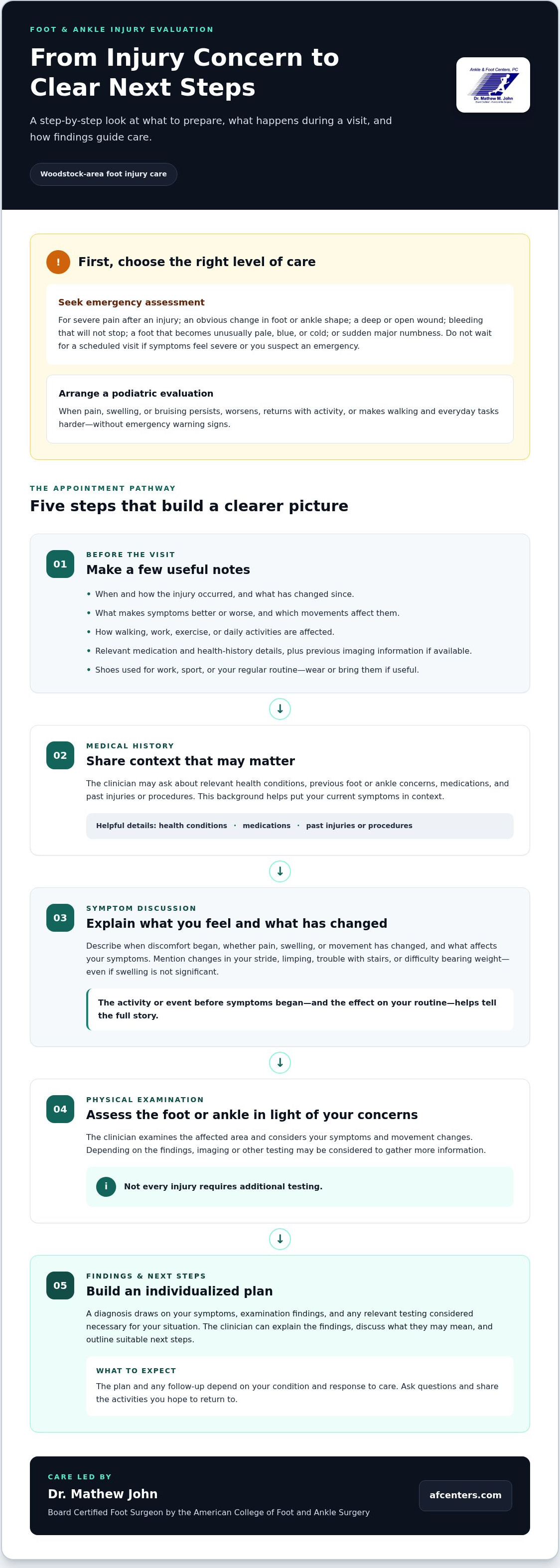
An appointment is a chance to understand more than just where it hurts. A foot injury doctor Woodstock patients see will typically ask about your health and the event or activity that may have led to symptoms. You’ll discuss how symptoms have changed, and the clinician will examine the affected area. These steps help shape the evaluation around your needs and daily activities.
- Medical history: You’ll be asked about relevant health conditions, previous foot or ankle concerns, medications, and past injuries or procedures. This information can help the clinician interpret your symptoms.
- Symptom discussion: Describe when discomfort began, what makes it better or worse, and whether pain, swelling, or movement has changed. Explain how the problem affects work, exercise, or walking.
- Physical examination: The clinician will assess the foot or ankle in light of your concerns. Depending on the findings, imaging or other testing may be considered to gather more information. Not every injury requires additional testing.
A diagnosis draws on your symptoms, examination findings, and any relevant testing considered necessary for your situation. These details are assessed together rather than relying on one symptom alone. If you’ve noticed weakness or difficulty lifting the front of your foot, mention it. The National Institute of Neurological Disorders and Stroke provides information about neurological foot conditions, including foot drop. A symptom like this needs individual clinical assessment and shouldn’t be self-diagnosed.
How to prepare for a foot injury appointment
A few notes can make it easier to explain what’s been happening. Write down when and how the injury occurred, what has changed since then, and which movements or activities affect your symptoms. Bring relevant medication and health-history information, along with details of prior imaging if you have them. If particular shoes are part of your work, sport, or regular routine, wear or bring them to help explain your usual activity context.
What happens after the examination?
After the assessment, the clinician can explain the findings, discuss what they may mean, and outline suitable next steps. The plan and any follow-up depend on your condition and response to care, so there isn’t one schedule that fits every injury. You can ask questions and describe the activities you hope to return to comfortably.
Depending on the evaluation, the conversation may cover different categories of foot and ankle care. Explore the practice’s foot and ankle services to learn about the concerns addressed. Sharing your symptoms and activity needs helps make the discussion relevant to your goals.
Foot Injury Care in Woodstock: Matching the Plan to the Problem
An evaluation doesn’t automatically lead to one particular treatment. The clinician considers the examination findings, how symptoms are changing, and what support may be appropriate. A foot injury doctor Woodstock patients visit can discuss possible next steps with you, so the plan reflects the injury and your day-to-day needs.
The table below offers a general guide to how evaluation findings may shape that conversation. These are possibilities, not diagnoses or instructions for self-treatment.
| Evaluation finding | Possible next-step category |
|---|---|
| Symptoms appear manageable, and movement is relatively comfortable | Discuss supportive care suited to the individual concern |
| Symptoms need observation as they change | Agree on monitoring and when to seek reassessment |
| Findings or symptom patterns need more clarification | Consider further evaluation or testing when clinically appropriate |
These categories are starting points for discussion. The clinician will explain how the findings apply to your situation and what changes should prompt follow-up. Use the table as a guide to the conversation, not as a substitute for individual assessment.
How injury type and daily activity shape care
A turned ankle, discomfort that builds with repeated activity, and pain after a sports-related movement can call for different evaluation and care discussions. Work that keeps you standing, exercise that involves impact, and the amount you walk each day may all matter when considering next steps. Be specific about your usual activities and what you’re currently finding difficult.
Your health history is part of the picture, too. Diabetes and other health concerns may affect what information the clinician considers and how your plan is individualized. Share relevant conditions and existing care instructions, even if they don’t seem directly connected to the injury.
When might a treatment plan change?
A plan may need to be revisited if symptoms persist, become more limiting, or change in a way that doesn’t match the course discussed with your clinician. New examination findings can also lead to a different recommendation or further evaluation. Keep track of meaningful changes and report them at follow-up instead of assuming the original plan should remain unchanged.
There’s no single recovery timeline or guaranteed outcome for every foot or ankle concern. Your next steps depend on the assessment, your health history, and how symptoms respond over time. If your concern is specifically heel pain, its location and pattern can help focus the evaluation and care discussion.
What to Do Before Seeing a Foot Injury Doctor in Woodstock
A little preparation can make your visit more focused and help the clinician understand how the injury affects your routine. Track what you notice, avoid activities that clearly aggravate symptoms, and arrange an evaluation suited to how you’re feeling. If symptoms become severe or worsen quickly, seek prompt medical assessment rather than waiting for a routine appointment.
Simple steps while arranging an appointment
Write down when symptoms began and what was happening at the time. Note changes in pain, swelling, or bruising, along with specific limitations, such as discomfort during a commute or difficulty walking through a work shift. Until assessed, pause activities that reliably increase pain. If a clinician has already given you instructions, follow them. Don’t add unverified home treatments or push through worsening symptoms.
Preparation helps you explain what’s changed; it isn’t a way to diagnose the injury yourself. Your notes provide useful context for the evaluation, not a substitute for professional assessment. Bring relevant health information and current care instructions, and be ready to describe which everyday movements feel different.
Pay attention to urgency as well. If the problem becomes severe, changes rapidly, or raises concern for an emergency, don’t wait for a scheduled visit. Seek prompt emergency assessment. For symptoms that remain concerning without an emergency change, arrange a suitable evaluation with a foot and ankle clinician.
Questions to bring to the appointment
Writing down questions can help you leave with a clearer understanding of the assessment and next steps. Ask what the examination findings suggest, whether additional evaluation may be appropriate, and what activities you may need to adjust while the plan is underway. You can also ask how progress will be reviewed and which changes should prompt earlier follow-up.
- What do the examination findings suggest about my symptoms?
- Is any further evaluation appropriate?
- Which work, exercise, or daily activities should I discuss adjusting?
- How will we review progress, and what symptoms should prompt earlier follow-up?
These questions keep the conversation connected to your goals, whether that means walking comfortably, meeting work demands, or returning to exercise. You don’t need to arrive with a suspected diagnosis. A clear account of your symptoms and priorities gives the clinician useful context for an individualized discussion.
If you’re ready to discuss a foot or ankle concern, explore foot and ankle care at Ankle & Foot Centers and arrange an evaluation that fits your needs.
Find Foot Injury Care Near Woodstock with Ankle & Foot Centers
If a foot or ankle concern is making walking, work, or exercise harder, a focused evaluation can help you understand what may be contributing to the problem and discuss suitable next steps. Ankle & Foot Centers, PC provides specialized foot and ankle evaluations and care for patients from Woodstock and the greater Atlanta area. The practice serves patients across Marietta, Roswell, Woodstock, Kennesaw, Atlanta, and Sandy Springs.
Local foot and ankle care for Woodstock patients
The practice sees patients with a range of foot and ankle concerns, including sports injuries. Whether symptoms began during a game, a workout, or another activity, an evaluation can consider how the issue affects your mobility and daily routine. The discussion focuses on your concerns and goals, helping you understand potential next steps rather than relying on a one-size-fits-all approach.
The office is at 2790 Sandy Plains Road on the corner of Post Oak Tritt and Sandy Plains. Knowing the location can help you plan a visit from Woodstock or elsewhere in the greater Atlanta area. Bring a clear account of what happened and how your movement has changed, so the clinician can connect your experience with the evaluation.
Meet the physician guiding your care
Dr. Mathew John is a Board Certified Foot Surgeon by the American College of Foot and Ankle Surgery. His specialized background supports evaluation of foot and ankle concerns, including sports injuries. During a visit, the discussion can take your health history, symptoms, and activity priorities into account as you consider an individualized path forward.
Your goals matter. You may want to walk more comfortably, manage the demands of a workday, or return to a favorite activity. Share what you hope to do and which movements currently feel difficult. That context helps make the conversation about care relevant to your daily life, while the evaluation guides appropriate next steps.
You don’t need to arrive with a diagnosis or a complete plan. Start with what you’ve noticed, ask questions, and work with the clinician to understand the findings and options. If symptoms are severe or suggest an emergency, seek prompt emergency assessment instead of waiting for a routine appointment.
If you’re ready to discuss a foot or ankle injury, you can schedule a foot injury evaluation with Ankle & Foot Centers and talk through your concerns and possible next steps.
Move Forward With a Clearer Plan
Getting help doesn’t require having all the answers first. Bring what you’ve noticed, explain what movement you want to return to, and use the visit to work through next steps with a clinician. A foot injury doctor Woodstock patients see can help turn those concerns into a focused conversation about your individual needs.
As you consider care, keep your goal in view. That might be walking through your day with greater comfort, returning to exercise thoughtfully, or understanding why a symptom is lingering. Progress begins with an informed evaluation, not with guessing or pushing through pain. If symptoms are severe or feel urgent, seek emergency assessment rather than waiting for a routine appointment.
When you’re ready to discuss a foot or ankle injury, schedule a foot injury evaluation and take a practical next step toward comfortable movement. You deserve guidance that respects your goals and supports your path forward.
Frequently Asked Questions
Can a podiatrist treat a foot injury?
Yes. A podiatrist evaluates foot and ankle concerns, including sports-related injuries, and can discuss next steps based on the findings. If your foot hurts after a run or a change in training, share what activity preceded the discomfort and how it affects your movement. A foot injury doctor Woodstock patients see can assess your individual situation. Severe symptoms may require emergency assessment instead of a routine office visit.
Should I see a doctor if I can still walk on an injured foot?
An evaluation may still make sense even if you can walk. Being able to get around doesn’t establish what caused the symptoms or whether they need attention. Notice whether you’re changing your stride, avoiding stairs, or cutting back on ordinary errands because of pain. If symptoms persist or limit normal activity, seek professional guidance. Severe or rapidly worsening symptoms call for prompt medical attention.
When should I go to the emergency room for a foot injury?
Seek emergency assessment if symptoms are severe or you believe immediate medical attention may be needed. Don’t use online information to rule out a serious injury or delay urgent help. If the concern isn’t severe but continues, gets worse, or interferes with walking, arrange a clinical evaluation. For urgent situations, follow guidance from local emergency medical services and describe what happened and how symptoms have changed.
What should I bring to a foot injury appointment?
Bring relevant health and injury information that can help make the visit more useful. A concise timeline, a medication list, and details about health conditions can give the clinician helpful context. If you have records or imaging from an earlier evaluation of the same concern, bring them too. Wear comfortable shoes, or bring the footwear you use for the activity connected to your symptoms, such as work shoes or running shoes.
Can a foot injury get worse if I keep exercising?
It can, particularly if the activity repeatedly increases discomfort. Pain during a run, for example, may make it difficult to judge whether symptoms are settling or becoming more limiting. Consider pausing or modifying the activity that aggravates your foot while you arrange professional guidance. Don’t assume that being able to finish a workout means continuing is appropriate. A clinician can discuss activity choices after assessing your symptoms and health history.
Do I need a referral to see a foot injury doctor in Woodstock?
Referral requirements can vary with your insurance plan and individual circumstances, so review your plan’s specialist-care rules if you’re unsure. Ankle & Foot Centers, PC serves patients in the greater Atlanta area, including Woodstock. Have your insurance details and relevant medical information available as you prepare to arrange an appointment. The practice is at 2790 Sandy Plains Road on the corner of Post Oak Tritt and Sandy Plains.


