

A little less pain doesn’t always mean an ingrown toenail is healing. If you’re wondering, “can an ingrown toenail heal on its own,” the answer depends on how mild the irritation is and whether it’s actually improving. A small, early problem may settle with gentle care, but an established or worsening ingrown nail often needs professional attention.
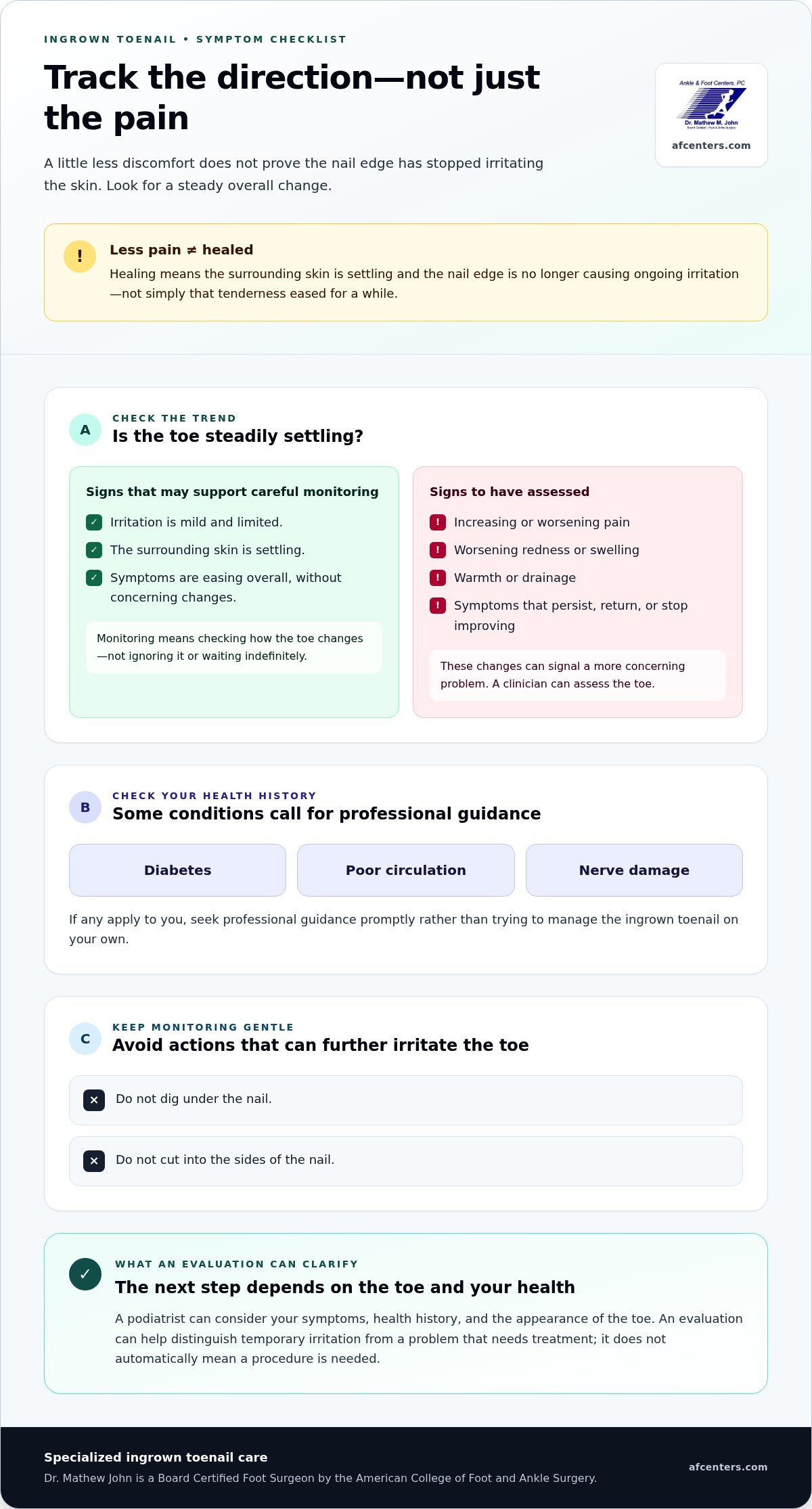
It’s understandable to hope the discomfort will pass, especially if you’re worried about infection or needing a procedure. The key is to watch for changes rather than wait without a plan. Increasing pain, redness, swelling, warmth, or drainage can signal that it’s time to seek care. If you have diabetes, poor circulation, or nerve damage, get professional guidance promptly instead of trying home treatment.
This article explains when monitoring may be reasonable, which warning signs deserve attention, and what safe next steps can look like. A podiatric evaluation can help clarify the severity without assuming a procedure is needed. Dr. Mathew John, a Board Certified Foot Surgeon by the American College of Foot and Ankle Surgery, provides specialized care for ingrown toenails.
Key Takeaways
- A mild ingrown toenail may improve, but less discomfort doesn’t always mean the nail edge has stopped pressing into the skin.
- Notice whether symptoms are truly easing or continuing to change. Worsening pain, redness, swelling, or drainage calls for professional assessment.
- If you’re asking “can an ingrown toenail heal on its own,” the answer depends on the symptoms and whether the irritation is resolving.
- Keep monitoring measures gentle, and avoid digging under the nail or cutting into its sides.
- A podiatrist can assess the toe, discuss your symptoms and health history, and help determine a suitable next step.
Can an ingrown toenail heal on its own? The short, honest answer
Sometimes, mild irritation around an ingrown toenail may improve. But the nail edge can keep pressing into the surrounding skin, so the problem may persist or worsen instead of resolving. If you’re asking, “can an ingrown toenail heal on its own,” look beyond whether it hurts less. Consider whether the skin is still being irritated and whether the toe is steadily getting better.
An ingrown toenail occurs when the side or corner of a nail presses into or grows against nearby skin. That pressure can cause tenderness and irritation. The Ingrown toenail overview describes the condition, its symptoms, prevention, and treatment. What’s causing your discomfort and how it may progress can differ from person to person.
What does it mean for an ingrown toenail to heal?
Healing means more than a temporary drop in tenderness. The surrounding skin should be settling, and the nail edge should no longer be causing ongoing irritation. If the toe feels better for a while but becomes sore again with pressure, the nail may still be aggravating the skin.
Less pain can be a welcome change, but it doesn’t prove the nail edge has stopped irritating the skin. How the problem develops depends on its severity and your overall health. There’s no single course or timeline that applies to everyone, so don’t treat a brief improvement as a guarantee that the issue has resolved.
When might watchful waiting be reasonable?
Careful monitoring may be reasonable when irritation is mild and limited, with no concerning changes such as increasing pain, worsening redness or swelling, or drainage. Watchful waiting means checking how the toe is changing, not ignoring discomfort or deciding to wait indefinitely. If the area worsens or stops improving, reassess rather than relying on hope alone.
Your health history matters, too. Diabetes, poor circulation, or nerve damage can make a foot problem more concerning. If you have any of these conditions, seek professional guidance rather than trying to manage an ingrown toenail on your own. If you’re unsure whether your symptoms are mild, an evaluation can clarify what’s happening without automatically meaning a procedure is needed.
This is general information, not an individual diagnosis. A podiatrist can consider your symptoms, health history, and the appearance of the toe to help determine an appropriate next step. Ankle & Foot Centers, PC provides podiatric care for ingrown toenails, with evaluations to distinguish temporary irritation from a problem that needs treatment.
Why an ingrown toenail can improve, or keep bothering you
The nail and the skin beside it sit close together, so a small change in pressure can affect how the toe feels. An ingrown toenail may become less tender as irritation settles, yet the nail edge can still contact the skin. That helps explain why improvement and complete resolution aren’t always the same thing.
How nail-edge irritation affects the surrounding skin
The nail fold is the strip of skin bordering the nail’s sides. If a nail edge presses against this fold, the contact can irritate the nearby tissue. Discomfort may vary with pressure on the toe, and symptoms can shift rather than follow one predictable pattern.
As long as a nail edge keeps pressing on the nail fold, irritation can continue. The area may look mildly red or feel tender, but those signs alone don’t show how deeply the nail is affecting the skin. A clinician can assess the toe if symptoms persist or you’re uncertain about what you’re seeing.
Why improvement can be temporary
Less soreness may reflect a change in irritation, not proof that the nail edge has stopped rubbing against the skin. You might feel more comfortable for a period, then notice tenderness again with pressure or contact. This is one reason the question “can an ingrown toenail heal on its own” can’t be answered from pain level alone.
Pay attention to the overall direction of symptoms. Tenderness easing while the surrounding skin settles is different from symptoms that keep returning or getting worse. Ongoing discomfort deserves attention, particularly if it interferes with comfortable footwear or normal activities.
Ordinary irritation and possible infection aren’t interchangeable. Increasing redness or swelling, warmth, worsening pain, or drainage may indicate a more concerning problem and should be assessed by a clinician. Don’t try to diagnose an infection by appearance alone. The Mayo Clinic’s guidance on ingrown toenails also covers care options and when medical attention may be needed.
Your health can affect how cautiously to approach a sore toe. Diabetes, poor circulation, or nerve damage are reasons to seek professional guidance rather than rely on watching symptoms at home. Even without these risk factors, persistent or worsening symptoms are a good reason to have the nail and surrounding skin assessed.
If the discomfort keeps returning, a podiatric evaluation can help clarify whether the nail edge is still irritating the skin and what care is appropriate. An assessment doesn’t automatically mean you’ll need a procedure. Ankle & Foot Centers provides care for ingrown toenails to help you understand what may be causing the symptoms and consider an appropriate next step.
Ingrown toenail warning signs: when waiting is not the right choice
Deciding whether to keep monitoring a sore toe can be difficult, especially when symptoms change gradually. The direction matters: mild irritation that is settling is different from pain or redness that’s getting worse. Warning signs can help you decide when to seek professional assessment, but they can’t confirm an infection or determine its severity on their own.
Symptoms that call for prompt professional assessment
Arrange an assessment if pain is worsening, the skin around the nail is becoming more swollen or red, or symptoms persist instead of improving. Redness that spreads beyond the nail edge, warmth, or fluid or pus draining from the area may signal infection and should be assessed promptly. Don’t wait for several signs to appear before seeking guidance.
Mild irritation that’s improving may be monitored carefully. Worsening pain, spreading redness, or drainage calls for professional assessment. If the toe is increasingly uncomfortable or changes are progressing, stop relying on watchful waiting and get clinical guidance. A professional can examine the toe and determine what care is appropriate.
For the question “can an ingrown toenail heal on its own,” a worsening toe is a reason not to base your next step on hope or pain level alone. Seek timely care if you notice concerning changes. If symptoms feel severe or are changing quickly, get prompt medical advice rather than trying to manage the nail yourself.
Who should be especially cautious?
Some health conditions can make foot problems more concerning or harder to judge. If you have diabetes, reduced circulation, or decreased sensation in your feet, seek professional guidance early rather than attempting home treatment. Reduced sensation can make it harder to notice worsening irritation, while circulation problems may affect how your feet respond to injury.
These risk factors don’t mean you have an infection. They do mean that waiting for pain to become severe may not be a safe way to decide what to do. If you have a condition that affects your immune system, ask a clinician how promptly a new or worsening toe problem should be assessed. A clinician can account for your health history and examine the toe.
Use this list as a guide, not as a way to diagnose yourself. Symptoms can have different causes, and a photo or self-check can’t reliably establish whether infection is present. If you’re unsure, a podiatric evaluation can clarify the toe’s condition and help you choose a suitable next step. At Ankle & Foot Centers, ingrown toenail care includes assessment to guide treatment.
What you can do safely while monitoring an ingrown toenail
If symptoms are mild and there are no concerning changes, keep any home care gentle. The goal is to avoid adding pressure or irritating the skin while you pay attention to how the toe is changing. These steps may support comfort, but they can’t guarantee that the nail edge will stop pressing into the skin.
A cautious approach to mild symptoms
Start by looking at the toe in good light and noting whether discomfort, redness, or swelling is improving, staying the same, or getting worse. Keep the area clean and dry, and choose footwear with enough room around the toes to reduce pressure. Avoid activities or shoes that noticeably aggravate the tender area, and reassess the toe as you go about your day.
Let symptoms guide your next step. If the toe is becoming more painful, red, swollen, or warm, or starts draining, stop home monitoring and seek professional assessment. Don’t wait for a set number of days if the problem is worsening. If you have diabetes, reduced circulation, or decreased sensation in your feet, seek professional guidance instead of relying on home care.
Home treatment mistakes to avoid
It can be tempting to cut away the nail corner or lift the edge to relieve pressure. Don’t dig beneath the nail with tweezers, scissors, or other sharp tools, and don’t try to pull out a nail edge that’s embedded in the skin. Painful manipulation can injure the surrounding tissue and may make irritation worse.
Be cautious with online remedies that involve forcing material under the nail, applying unverified substances, or attempting to remove part of the nail yourself. A method that sounds simple may not be appropriate for your toe, particularly if the skin is already inflamed or broken. If a step causes pain or bleeding, stop rather than pushing through it.
Home measures should remain gentle and easy to stop. They aren’t a substitute for assessment when symptoms worsen, keep returning, or concern you. A podiatrist can examine the nail and surrounding skin, consider your health history, and explain appropriate options. An evaluation doesn’t mean a procedure is automatically necessary.
If you’re uncertain whether it’s safe to keep monitoring the toe, an evaluation for ingrown toenail symptoms can help clarify a suitable next step.
When a podiatrist can help with an ingrown toenail
A podiatric evaluation can help you understand whether a sore nail edge is causing ongoing irritation, whether there are signs that need attention, and what next step fits your situation. Seeking an assessment doesn’t mean you’ve decided to have a procedure. It’s a way to get guidance based on what the clinician sees and what you’re experiencing.
What to expect from a podiatric evaluation
Your podiatrist will ask about your symptoms, how they’ve changed, and relevant health history, then examine the toe and surrounding skin. Share whether tenderness is easing, returning, or worsening, and mention any drainage or changes in redness and swelling. Health conditions that affect circulation or sensation are also important to discuss.
Care depends on the findings. The clinician can explain whether monitoring remains reasonable or whether treatment should be considered. An evaluation alone doesn’t mean a procedure is necessary. The goal is to understand the problem and choose an appropriate plan with professional guidance.
Ankle & Foot Centers, PC provides evaluation and care for ingrown toenails for patients in Marietta and the greater Atlanta area. The practice’s podiatric services include care to clarify the severity of nail irritation and guide a suitable next step. Patients in Marietta, Roswell, Woodstock, Kennesaw, Atlanta, and Sandy Springs can seek podiatric care through the practice.
A clear next step for persistent or worsening symptoms
If discomfort persists, keeps returning, or is getting worse, professional assessment can help you avoid guesswork. Seek guidance promptly if you notice signs such as spreading redness, increasing swelling, warmth, or drainage. If you have diabetes, reduced circulation, or decreased sensation, don’t rely on home monitoring alone to decide whether the toe needs attention.
You don’t need to know in advance whether treatment will involve a procedure. Bring your questions and describe what has changed. Your podiatrist can explain the findings and discuss appropriate care. Understanding what’s happening can make the next decision feel more manageable.
If you’re ready for guidance, schedule a podiatric evaluation with Ankle & Foot Centers, PC to discuss your ingrown toenail and a safe path forward.
Choose your next step with confidence
Deciding whether to wait can feel harder than the discomfort itself. Rather than looking for a guaranteed yes-or-no answer to “can an ingrown toenail heal on its own,” make a thoughtful choice based on how your toe is changing and your health needs. You don’t have to figure out the cause or choose a treatment by yourself.
A professional assessment can give you a clearer understanding of what’s happening and help you consider appropriate care. It also gives you space to ask questions and discuss your concerns, without assuming that a procedure is the next step. If your symptoms are persistent, worsening, or simply worrying you, taking action is a sensible way to care for your foot.
Schedule a podiatric evaluation with Ankle & Foot Centers, PC to discuss your ingrown toenail and find a suitable next step. The practice serves patients in Marietta, Roswell, Woodstock, Kennesaw, Atlanta, and Sandy Springs.
Frequently Asked Questions
Can an ingrown toenail go away without treatment?
Yes, very mild irritation may settle, but an ingrown nail may not fully resolve without care. People often ask, “can an ingrown toenail heal on its own?” The answer depends on whether the nail edge stops irritating the skin, not only whether soreness fades. If the corner remains pressed against the skin, discomfort can linger or return. Persistent tenderness, recurring redness, or difficulty wearing your usual shoes are reasons to seek an assessment.
How long should I wait for an ingrown toenail to improve?
There isn’t one waiting period that’s right for everyone. Base your next step on what the toe is doing: note whether tenderness and redness are easing, staying unchanged, or getting worse. You can jot down changes and whether certain shoes or activities aggravate the area. If symptoms worsen, drainage appears, or improvement stalls, seek clinical advice rather than extending the wait based on a set number of days.
Can an ingrown toenail become infected if I leave it alone?
It can become infected, although irritation doesn’t always mean infection is present. Watch for increasing pain, warmth, swelling, redness that spreads, or fluid or pus coming from beside the nail. These changes call for timely clinical assessment, especially if they’re progressing. Don’t try to confirm infection by appearance alone or wait for every warning sign to occur. A clinician can examine the toe and advise on appropriate care.
Should I cut out the corner of an ingrown toenail myself?
No, don’t dig under the nail or cut into its corner yourself. A blade or sharp tool can injure the nail fold, cause bleeding, or make the area more irritated. Cutting away only the visible edge may also leave the source of pressure in place. If the nail corner feels embedded or painful, avoid manipulating it and arrange an assessment so you can discuss a safer approach.
Are ingrown toenails more concerning if I have diabetes?
Yes, diabetes is a reason to seek professional guidance early for a new or worsening ingrown toenail. Changes in sensation or circulation can make it harder to notice irritation or may affect how your foot responds to a problem. This doesn’t mean an ingrown nail is automatically infected. Avoid trying to remove the nail edge yourself, and contact a clinician for advice about your symptoms and health history.
Can an ingrown toenail come back after it feels better?
Yes, symptoms can return after a period of relief. Feeling less sore doesn’t necessarily mean the nail edge has stopped contacting the skin. For example, a toe may feel comfortable at rest but become tender again inside a closed shoe. Notice whether the same spot repeatedly becomes irritated. Recurring discomfort is useful information to share during an assessment, even if the toe looks calmer on the day of your visit.
Does seeing a podiatrist for an ingrown toenail always mean surgery?
No, an appointment doesn’t automatically mean you’ll need surgery. A podiatrist can examine the nail and surrounding skin, ask about your symptoms and health, then explain care options based on the findings. Some visits may focus on guidance and monitoring; other situations may call for treatment. Ankle & Foot Centers, PC provides ingrown toenail evaluations for patients in Marietta, Roswell, Woodstock, Kennesaw, Atlanta, and Sandy Springs.


