

A sudden pop, pain, or trouble pushing off your foot can raise urgent questions: Is the Achilles tendon partially or fully torn, and does it need repair? The first step in achilles tendon rupture repair Roswell care is a specialist evaluation to assess the injury and discuss your options.
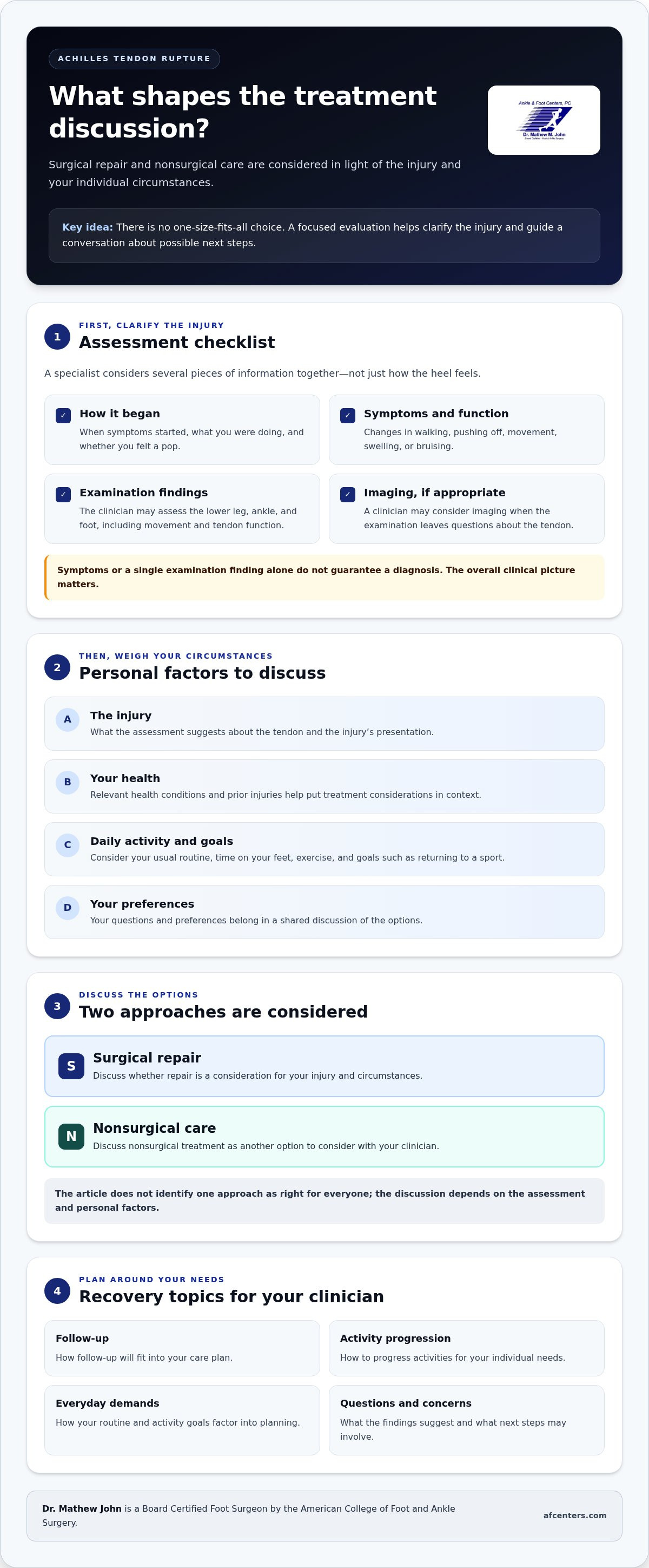
It’s understandable to feel uncertain about surgery, recovery, and when you might return to everyday activities. Treatment isn’t one-size-fits-all. Your injury, health, activity level, and goals all help shape the discussion. This guide explains how a suspected rupture is assessed, what can influence surgical and nonsurgical treatment decisions, and what to discuss with a foot and ankle specialist.
At Ankle & Foot Centers, PC, Dr. Mathew John is a Board Certified Foot Surgeon by the American College of Foot and Ankle Surgery. He provides specialized foot and ankle care for Roswell-area patients, including evaluation and treatment discussions for Achilles tendon rupture repair and the next steps toward recovery.
- A focused foot and ankle evaluation can help clarify whether the Achilles tendon is torn and guide next steps.
- Imaging may be considered when clinically appropriate to help assess the injury.
- Surgical repair and nonsurgical care each have considerations; treatment discussions account for your health, activity, injury, and preferences.
- Plan recovery with your clinician, including follow-up and how to progress activities for your individual needs.
- Discuss achilles tendon rupture repair Roswell options with a foot and ankle specialist.
Achilles Tendon Rupture in Roswell: What the Injury Means and Why Assessment Matters
A sudden pop near your heel, sharp pain, or trouble pushing off can bring immediate questions: Is the tendon torn, and what should you do next? A professional assessment can help determine whether the problem is a rupture, another tendon injury, or a different source of pain.
An Achilles tendon rupture is a partial or complete tear of the tendon that connects the calf muscles to the heel bone. It differs from general tendon pain, which may involve irritation or soreness without a tear. Symptoms can overlap, so how your foot feels alone can’t confirm the extent of an injury.
What happens when the Achilles tendon ruptures?
The Achilles tendon transfers force from your calf muscles to your heel, helping you push off when walking, running, or jumping. A rupture can interrupt that connection and make these movements painful or difficult. Some injuries happen during sports involving a sudden jump, sprint, or change of direction; others occur during a less demanding movement. A pop or sudden weakness can be a clue, but it doesn’t reveal whether the tear is partial or complete.
General Achilles tendon pain may develop gradually with activity, while a rupture can involve an abrupt change in pain or function. There’s no single pattern everyone experiences. Pain may vary, and being able to walk doesn’t rule out a tear. This Achilles Tendon Rupture Overview explains common symptoms and causes, but an online description can’t replace an individual examination.
When should a Roswell-area patient seek an evaluation?
Seek prompt professional assessment if you experience a sudden pop or snap around the heel or lower calf, new pain and swelling, unexpected weakness, or difficulty pushing off or walking after an injury. These signs warrant evaluation, but they don’t establish a diagnosis. Avoid trying to judge the tear’s severity by testing your strength or comparing symptoms with someone else’s experience.
A foot and ankle specialist considers how the injury happened, what you’re experiencing, and what the examination shows. If your symptoms began suddenly, explain when they started and which movements have become difficult. Share relevant health information and your usual activity goals, too. These details help make the care discussion specific to you.
Ankle & Foot Centers, PC provides specialized foot and ankle care in the greater Atlanta area, including Roswell. For patients exploring achilles tendon rupture repair Roswell, an individualized evaluation is a practical starting point for understanding the injury and discussing care. The practice’s foot and ankle services include reconstructive care.
Evaluating Achilles Tendon Rupture Before Repair
Understanding what’s causing your symptoms takes more than a quick look at the heel. A foot and ankle specialist considers how the injury began, your health history, examination findings, and what you need your foot to do. Together, these details help distinguish a suspected Achilles tear from other conditions and provide a clearer basis for discussing care.
What may a foot and ankle examination involve?
Your clinician may ask when symptoms began, what you were doing, whether you felt a pop, and how your ability to walk or push off has changed. Describe what you noticed as accurately as you can, including whether symptoms appeared suddenly or developed over time. Your account gives the clinician important context, but it’s only one part of the assessment.
The examination may include looking at your lower leg, ankle, and foot for changes such as swelling or bruising, and assessing movement and function. The clinician may perform specific physical checks to evaluate the tendon. No single symptom or examination finding should be treated as a guaranteed diagnosis. Your results are considered alongside your history and overall presentation.
How do imaging and personal goals inform the discussion?
If the examination leaves questions about the injury, a clinician may consider imaging to help clarify the tendon’s condition. Whether imaging is appropriate, and which method to use, depends on your individual assessment. Imaging supports the clinical picture; it doesn’t replace discussion of symptoms, examination findings, and relevant health factors.
Your broader health and daily demands matter, too. Share whether your routine involves extended periods on your feet, regular exercise, or a particular goal such as returning to a sport. Mention relevant health conditions and prior injuries. These details help shape a treatment conversation around both the injury and your circumstances, rather than relying on a one-size-fits-all approach.
Treatment planning follows an individualized assessment.
At Ankle & Foot Centers, PC, the evaluation connects to specialized foot and ankle care, including reconstructive foot and ankle surgery and care for sports injuries. Explore the practice’s foot and ankle services as you prepare for a focused discussion about your injury. For achilles tendon rupture repair Roswell, bring questions about what the examination suggests, whether imaging may clarify the findings, and how your health and activity goals factor into possible next steps.
Achilles Tendon Repair or Nonsurgical Care: How Treatment Choices Are Weighed
Learning that your Achilles tendon may be torn can make surgery feel like the only path, or the one you most want to avoid. Neither assumption should decide your care. Surgical repair and nonsurgical treatment are both considered in light of the injury and your personal circumstances. A thoughtful discussion gives you room to understand the options, their trade-offs, and how they relate to your priorities.
What factors can shape a repair recommendation?
Your clinician considers the tendon injury alongside your overall health, activity demands, and preferences. The examination and any relevant imaging help describe the injury, while your health history provides context for discussing possible approaches. Be open about what matters to you, whether that’s managing everyday mobility or working toward a return to a demanding activity. No single factor automatically determines the recommendation.
Consideration
Surgical repair
Nonsurgical care
Purpose
Repair the torn tendon through surgery.
Manage the injury without an operation.
Discussion points
Potential benefits of repair, surgical risks, and how your health may affect planning.
How the tendon and your goals inform care without surgery, along with potential risks such as re-rupture.
Clinician-guided considerations
Injury characteristics, overall health, activity needs, and your preferences.
The same individual factors, with a plan and follow-up guided by your clinician.
What should patients understand about possible trade-offs?
Each path has different considerations. Surgery may reduce the chance of the tendon rupturing again, but it also involves surgical risks, including infection or nerve injury. Nonsurgical care avoids the risks of an operation, but re-rupture remains a consideration. Your clinician can explain how these potential benefits and harms apply to your particular injury and health.
It’s reasonable to feel concerned about surgery. Ask what the recommendation is based on, what alternatives are appropriate to discuss, and what uncertainties remain. You can also ask how each option may affect the activities you hope to resume. Recovery and outcomes vary, and no approach can guarantee a particular result. The goal is an informed choice, not pressure to select a treatment before you understand it.
At Ankle & Foot Centers, reconstructive foot and ankle surgery is part of the care offered to patients considering achilles tendon rupture repair Roswell. A specialist evaluation connects the examination findings with your health, goals, and questions. Explore the practice’s foot and ankle care options as you prepare to discuss which approach may fit your needs.
Recovery After Achilles Tendon Rupture Repair: Questions to Plan With Your Clinician
Recovery is easier to plan when you know which instructions apply to you and what to expect at each step. Your treating clinician will guide care based on your procedure, healing, and individual needs. Rather than relying on a timeline you find online, use follow-up visits to understand what you can do now and what needs to wait.
What belongs in an individualized recovery plan?
Your care team should explain how to follow wound-care instructions, manage daily activity, and attend follow-up appointments. If rehabilitation is part of your plan, ask when and how it should begin, and which movements or activities you should avoid. Don’t change your activity level or follow a protocol intended for someone else without guidance from your clinician.
Recovery planning may develop in stages, with instructions adjusted as your clinician reviews your progress. At each check-in, make sure you understand any changes and whom to contact with questions about your care. Ask for clear guidance on:
- How to care for the surgical area and what changes to report.
- Which movements and everyday activities are appropriate at this stage.
- How follow-up appointments and any recommended rehabilitation fit into your plan.
- What signs or concerns should prompt you to reach out to your care team.
These are topics to discuss, not a substitute for instructions tailored to your treatment.
How can patients prepare for recovery at home?
Before treatment, consider how you’ll manage routines while following your clinician’s directions. Think through getting to appointments, preparing meals, moving around your home, and handling responsibilities at work. If you may need help with errands or household tasks, plan who you can ask. Your mobility needs depend on your care instructions, so discuss practical arrangements with your clinician rather than assuming what equipment or assistance you’ll need.
Bring a written list of questions to appointments. For example: What should I expect to manage at home? How might my work duties affect my recovery plan? What guidance should I follow for standing, walking, or driving? When should I ask about gradually returning to exercise? Specific answers can help you coordinate support and avoid guessing as your routine changes.
Returning to sport requires individualized clinical guidance. The demands of your activity, your progress, and your clinician’s assessment all matter, so a universal deadline may not fit your situation. Ask what milestones the care team will use to guide a gradual return and how to respond if an activity causes discomfort or feels too demanding.
For patients considering achilles tendon rupture repair Roswell, recovery planning is part of the treatment conversation, not an afterthought. Connect with Ankle & Foot Centers to discuss your foot and ankle care and the questions you’d like to address with a specialist.
Achilles Tendon Rupture Repair Near Roswell: Meet Your Foot and Ankle Surgeon
A suspected Achilles tendon rupture can leave you unsure where to turn or whether repair may be part of your care. A focused evaluation with a foot and ankle specialist can help clarify the injury, answer your questions, and guide a conversation about appropriate options. You don’t have to decide on a treatment path before you understand what the assessment shows.
Why consider a specialist evaluation for a suspected rupture?
The Achilles tendon affects how your foot and ankle work together during everyday movement. A specialist can assess the injury in that context, consider your symptoms and examination findings, and explain what they may mean. This gives you a clearer foundation for discussing possible care, including whether reconstructive surgery is relevant to your individual situation.
At Ankle & Foot Centers, PC, foot and ankle expertise supports individualized evaluation and treatment. The practice provides reconstructive foot and ankle surgery as part of its specialized care. Learn more about its foot and ankle services.
A useful evaluation is also a conversation. Bring questions about what the findings suggest, what options may be appropriate, and how your health and activity goals factor into planning. Sharing your concerns, including worries about surgery or getting back to daily routines, helps make the discussion more relevant to you. An assessment can guide decisions, but it can’t promise a particular outcome.
How can Roswell patients take the next step?
Ankle & Foot Centers serves patients in Roswell and the greater Atlanta area from its Marietta location at 2790 Sandy Plains Road on the corner of Post Oak Tritt and Sandy Plains. The practice also serves patients from Woodstock, Kennesaw, Atlanta, and Sandy Springs. If you’ve had sudden Achilles-area pain, weakness, or difficulty pushing off, arrange a professional evaluation to better understand what’s going on. A timely discussion can help you move from uncertainty toward clear, clinician-guided next steps.
Before your visit, note when your symptoms began, what you were doing, and which movements feel difficult. Write down your questions, too. You might ask what the examination indicates, whether further assessment is appropriate, and how treatment choices relate to your needs. These details help you make good use of the appointment and leave with a better understanding of the discussion.
If you’re looking for achilles tendon rupture repair Roswell, take the next step and schedule an evaluation with Ankle & Foot Centers, PC. Discuss your suspected injury, share your goals, and explore care options with a foot and ankle specialist.
Take the Next Step Toward Clarity
You don’t need to have every answer before seeking care. A focused conversation can help you understand what your symptoms may mean and what questions to consider as you weigh the next step. If you’re exploring achilles tendon rupture repair Roswell, bring your concerns and activity goals to an evaluation so the discussion can focus on what matters to you.
Ankle & Foot Centers, PC provides specialized foot and ankle care, including reconstructive surgery, for patients in the greater Atlanta area. Your evaluation is an opportunity to discuss your situation and learn about care options without assuming that one approach is right for everyone.
Schedule an Achilles tendon evaluation with Ankle & Foot Centers, PC to discuss your symptoms and care options with a foot and ankle specialist.
Frequently Asked Questions
Can you walk with a ruptured Achilles tendon?
Yes, some people can still walk, though walking may be painful or difficult and pushing off can feel weak. Being able to take steps doesn’t rule out a rupture or show how extensive it is. Avoid testing the tendon by repeatedly walking or trying to rise onto your toes. Arrange a professional evaluation, especially after a sudden change in movement. Patients in Marietta, Roswell, Woodstock, Kennesaw, Atlanta, and Sandy Springs can seek focused foot and ankle care.
Is surgery always needed for an Achilles tendon rupture?
No, surgery isn’t automatically required for every rupture. A clinician considers the injury and your overall health, daily demands, activity goals, and preferences when discussing surgical and nonsurgical approaches. Each option has potential benefits and risks, and the right conversation is specific to your circumstances. Ask the clinician to explain why an approach is being considered and what alternatives may be appropriate for your injury.
What happens if an Achilles tendon rupture is not treated promptly?
Without timely assessment, a rupture may go unrecognized, and the tendon can heal in a position that affects its function. Persistent weakness or difficulty pushing off may interfere with ordinary activities. This isn’t a prediction of what will happen in every case, but it’s a reason not to rely on rest or symptom changes alone. A foot and ankle clinician can assess the injury and discuss appropriate next steps.
Can an Achilles tendon rupture be partial rather than complete?
Yes, a rupture can be partial, meaning some tendon fibers remain intact, or complete, meaning the tendon has torn through. Pain level and walking ability don’t reliably tell you which type you have. The distinction matters because it helps inform the care discussion. A clinician considers your symptoms and examination findings, and may use imaging when appropriate to clarify the injury.
How soon can you return to sports after Achilles tendon repair?
There isn’t one return-to-sports date that applies to everyone. Your clinician considers how the tendon is healing, your strength and movement, and the demands of your sport before guiding progression. Don’t use a teammate’s timeline as a target. If you’re considering achilles tendon rupture repair Roswell care, ask what milestones your care team will use and how return to practice should be approached.
Does Achilles tendon repair have risks?
Yes. Surgery carries risks, which may include wound problems, infection, or nerve injury. Nonsurgical treatment avoids surgical risks but has its own considerations, including the possibility of another rupture. The relevance of these concerns depends on your health and injury. Ask your clinician to explain the potential benefits and risks of each option for you, including what symptoms or changes should prompt follow-up during care.
Will an Achilles tendon rupture heal completely on its own?
A torn tendon may heal without surgery, but that doesn’t guarantee it will heal in a way that restores the function you need. The tear’s characteristics and the care plan can affect healing and strength. Don’t assume that reduced pain means the tendon has recovered. A professional evaluation can help clarify the injury and whether clinician-guided nonsurgical care or another approach should be discussed.


