

Imagine waking up for a morning walk along the Vickery Creek trails, only to be stopped by a sharp, electric-shock sensation radiating through your toes. You know the frustration of leaving your favorite shoes in the closet because even a short stroll feels like walking on a hot pebble. It's exhausting when persistent pain prevents you from exercising or simply enjoying a day out in our community. If conservative treatments haven't provided the relief you deserve, foot neuroma surgery in Roswell can be the definitive solution that returns you to your active lifestyle.
At our practice located at 2790 Sandy Plains Road on the corner of Post Oak Tritt and Sandy Plains, we believe you shouldn't have to navigate this health journey alone. Dr. Mathew John is a Board Certified Foot Surgeon by the American College of Foot and Ankle Surgery who specializes in helping patients reclaim their mobility. In this guide, you'll discover how expert surgical intervention eliminates chronic nerve pain and what to expect during your recovery process. We'll also look at how advanced tools, like 3-D impressions for custom orthotics and MLS Laser therapy for post-op inflammation, ensure your path to wellness is smooth and successful.
Key Takeaways
- Learn to identify the "pebble in your shoe" sensation and understand when surgical intervention becomes the most effective path to lasting comfort.
- Compare the primary surgical approaches, including neurectomy and decompression, to understand how each method addresses nerve thickening.
- Discover the role of custom orthotics designed with 3-D impressions in offloading pressure and supporting your feet after treatment.
- View a realistic recovery timeline for foot neuroma surgery Roswell so you can plan your return to running and daily activities with confidence.
- Understand why choosing a Board Certified Foot Surgeon by the American College of Foot and Ankle Surgery, like Dr. Mathew John, ensures you receive high-level expert care.
Understanding Morton's Neuroma and When Surgery is Necessary
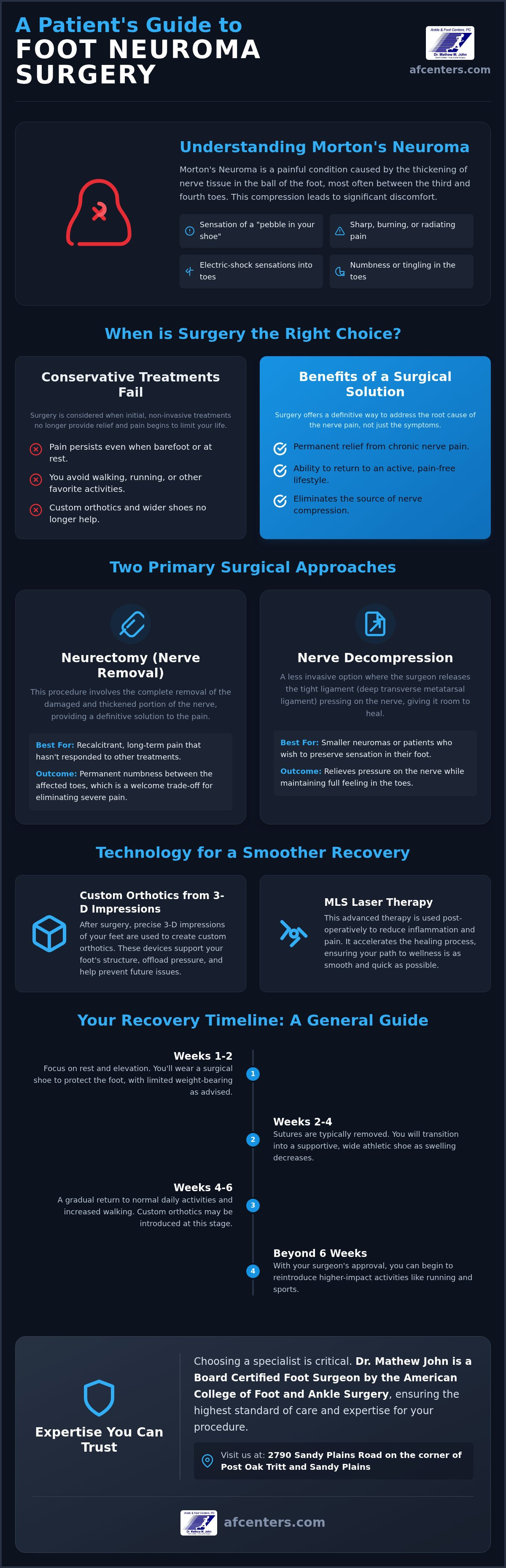
Morton's Neuroma is a painful condition that affects the ball of your foot. It involves a benign thickening of the nerve tissue, most commonly between the third and fourth toes. When this tissue expands, it compresses the nerve, leading to sensations that many describe as having a permanent pebble stuck in their shoe. Gaining a clear Understanding Morton's Neuroma helps you recognize that this isn't just a temporary ache; it's a structural change that often requires professional intervention. When you feel that sharp, burning pain, your body is signaling that the nerve is under significant stress.
Our diagnostic process at Ankle & Foot Centers, PC is comprehensive and focused on your comfort. We begin with a physical examination to pinpoint the exact location of the nerve irritation. We may also perform a diagnostic nerve block. This involves a small injection of anesthetic to see if the pain disappears temporarily. If the pain stops, we know we've found the culprit. For many in our community, foot neuroma surgery Roswell becomes the most reliable path to permanent relief when these symptoms start dictating your daily schedule and limiting your freedom.
Signs Conservative Treatment Has Failed
Many patients start their journey with conservative care. You might have tried switching to wider shoes or using metatarsal pads to relieve pressure. We often recommend custom orthotics made from 3-D impressions to provide the best possible support for your foot structure. However, surgery becomes necessary when these tools no longer provide comfort. If you experience radiating pain even while barefoot or find yourself avoiding the walking trails in Roswell because of foot distress, it's time to consider a surgical solution. Chronic nerve inflammation that limits your activity level is a clear sign that conservative measures have reached their limit. Foot neuroma surgery Roswell offers a way to address the root cause rather than just managing the symptoms.
The Benefits of Seeking a Board-Certified Surgeon
Your feet are complex structures, and nerve procedures require a high degree of accuracy and care. Dr. Mathew John is a Board Certified Foot Surgeon by the American College of Foot and Ankle Surgery. This certification ensures that your surgeon has met the highest standards of the profession through rigorous training and evaluation. We provide specialized reconstructive foot and ankle surgery at our office located at 2790 Sandy Plains Road on the corner of Post Oak Tritt and Sandy Plains. By choosing a board-certified expert, you're choosing a partner who understands the delicate balance of foot mechanics and nerve health. Our goal is to provide a steady hand that guides you back to a life of vitality and movement without the constant shadow of pain.
Types of Foot Neuroma Surgery: Neurectomy vs. Decompression
Selecting the right surgical path is a collaborative process between you and your specialist. The primary goal of foot neuroma surgery Roswell is to either remove the damaged nerve tissue or create enough physical space so the nerve is no longer compressed. Your surgeon will choose a technique based on the size of the neuroma and how long you've been experiencing the symptoms of Morton's neuroma. Most procedures use a dorsal approach, meaning the incision is made on the top of the foot. This allows for a smoother recovery and lets you begin weight-bearing activities much sooner than a plantar approach, which involves an incision on the sole of the foot.
Nerve Resection (Neurectomy)
A neurectomy involves the complete removal of the inflamed portion of the nerve. This is often the preferred choice for recalcitrant pain that hasn't responded to injections or orthotics. Because the nerve is physically removed, the primary side effect is permanent numbness in the web space between the toes. For most patients, this loss of sensation is a welcome trade for the elimination of electric-shock sensations and burning pain. It's a highly successful procedure that helps you return to high-impact activities like running or hiking without the fear of a sudden flare-up.
Nerve Decompression
Nerve decompression is a less invasive alternative that focuses on preservation. Instead of removing the nerve, the surgeon cuts the deep transverse metatarsal ligament that's pressing against it. This creates immediate "breathing room" for the nerve to heal. Decompression is often ideal for patients with smaller neuromas or those who wish to maintain full sensation in their feet. It's a precise technique that requires an expert hand to ensure the pressure is fully relieved without compromising the foot's structural integrity.
Dr. Mathew John is a Board Certified Foot Surgeon by the American College of Foot and Ankle Surgery who understands that every foot is unique. At our facility located at 2790 Sandy Plains Road on the corner of Post Oak Tritt and Sandy Plains, we take the time to explain which method fits your lifestyle goals. If you're tired of managing pain and want a permanent solution through foot neuroma surgery Roswell, we invite you to explore our specialized foot care services to see how we can help you get back on your feet.
Comparing Surgery with Non-Surgical Treatment Options
Deciding between surgical and non-surgical treatments is a pivotal step in your recovery journey. For many, the first line of defense involves conservative measures designed to reduce pressure on the interdigital nerve. Corticosteroid injections are a frequent choice, offering a powerful anti-inflammatory effect that can shrink the swollen nerve tissue. While these injections provide significant relief for several months, they often serve as a temporary bridge rather than a permanent fix. If you find that the pain returns once the medication wears off, it's a signal that the underlying structural issue remains. When these initial efforts don't provide the lasting comfort you need, foot neuroma surgery Roswell stands as the most effective path toward a pain-free life.
The Role of MLS Laser Therapy
We utilize MLS Laser Therapy as a sophisticated, non-invasive tool to manage musculoskeletal pain and inflammation. This technology uses specific wavelengths of light to penetrate deep into the tissue, stimulating cellular repair and increasing local circulation. It's an excellent option for patients who aren't ready for surgery or those who want to accelerate their healing after a procedure. Because it targets inflammation directly at the source, it helps soothe the irritated nerve without the need for needles or downtime. It's a key part of our commitment to providing advanced, wellness-oriented care at our facility located at 2790 Sandy Plains Road on the corner of Post Oak Tritt and Sandy Plains.
Custom Orthotics and 3-D Impressions
Structural support is essential for both preventing and managing neuromas. Unlike generic, store-bought inserts, our custom orthotics are crafted using precise 3-D impressions of your feet. This ensures the device perfectly contours to your unique arch and metatarsal structure, effectively offloading pressure from the sensitive nerve area. Following foot neuroma surgery Roswell, these orthotics play a vital role in maintaining your results. They help realign the foot mechanics, which significantly reduces the risk of the neuroma recurring in the future. Dr. Mathew John is a Board Certified Foot Surgeon by the American College of Foot and Ankle Surgery who understands how these structural supports integrate into a long-term health plan.
Occasionally, patients may deal with other foot complications alongside a neuroma, such as stubborn plantar warts. For these cases, we offer Swift Treatment. This advanced technology uses microwave ablation to target the HPV virus directly. The process typically involves four sessions spaced one month apart. It's a highly effective solution for recalcitrant warts, and because there's no downtime, you can stay active throughout the entire treatment cycle. Whether we're addressing a complex nerve issue or a persistent skin condition, our goal is to provide the most effective, modern solutions available.
Recovery Timeline: What to Expect After Neuroma Surgery
The journey to lasting relief continues through a structured, supportive recovery process. While the procedure itself addresses the nerve damage, the weeks following your surgery are when your body rebuilds its strength. During the first 48 hours, your primary focus should be on rest and elevation. Keeping your foot above the level of your heart reduces swelling and minimizes initial discomfort. Most patients find that they can manage this early stage effectively with the personalized pain management plan provided by our team. If you've chosen foot neuroma surgery Roswell, you'll find that our local presence makes these early check-ins convenient and stress-free.
The First Two Weeks
During the initial fourteen days, protecting the surgical site is your top priority. You'll likely wear a specialized surgical boot that allows for limited weight-bearing while keeping the incision stable. It's vital to keep your dressings completely dry and intact until your first follow-up appointment. We schedule these visits at our office, located at 2790 Sandy Plains Road on the corner of Post Oak Tritt and Sandy Plains, to monitor your healing progress. Signs of healthy healing include a gradual reduction in swelling and a decrease in localized bruising. If you notice any unusual redness or a sudden increase in pain, our professional staff is just a phone call away to provide guidance and reassurance.
Weeks 3 Through 6: Returning to Activity
As you enter the third week, you'll begin the transition from the surgical boot back into supportive athletic shoes. This is an exciting phase where you'll start to regain your independence. We often recommend a gradual increase in walking distance to help your foot adjust to normal mechanics. For many patients, we utilize MLS Laser therapy during these sessions to target any lingering post-operative inflammation and speed up the cellular repair process. This non-invasive technology is particularly effective at soothing the tissues around the former neuroma site.
By the end of the sixth week, most individuals are ready to resume light exercise and daily chores without hesitation. We'll perform a final assessment to ensure the nerve area is stable and that you're moving with a natural, pain-free gait. To support your long-term success, we may finalize your custom orthotics using 3-D impressions to ensure your feet have the structural foundation they need for the years ahead. Dr. Mathew John is a Board Certified Foot Surgeon by the American College of Foot and Ankle Surgery who remains your partner throughout this entire progression. If you're ready to start your path toward a more active lifestyle, we invite you to schedule a consultation for reconstructive foot surgery today.
Expert Neuroma Care at Ankle & Foot Centers, PC
Dr. Mathew John leads our team with a focus on precision and compassionate care. As a Board Certified Foot Surgeon by the American College of Foot and Ankle Surgery, Dr. John brings decades of specialized experience to every procedure. We understand that the decision to undergo surgery is significant. That's why we prioritize clear communication and a non-judgmental atmosphere. You aren't just another appointment on a calendar; you're a neighbor seeking a return to health. Our team is dedicated to guiding you through every step of the process, from the initial diagnosis to the final follow-up.
A Specialized Approach to Foot Health
We believe that the best outcomes happen when we combine traditional surgical excellence with modern technology. For patients undergoing foot neuroma surgery Roswell, this means access to a suite of advanced resources. We utilize MLS Laser therapy to target post-surgical inflammation and help your tissues heal more efficiently. This focus on cellular repair reduces your downtime and helps you get back to your favorite trails sooner. Additionally, we look beyond the surgery itself to ensure long-term stability. By using 3-D impressions, we craft custom orthotics that provide a perfect fit for your unique foot structure. This structural support is essential for maintaining the results of your surgery and preventing future nerve irritation.
Visit Our Clinic Near Roswell
Convenience is a key part of a stress-free recovery. Our clinic is located at 2790 Sandy Plains Road on the corner of Post Oak Tritt and Sandy Plains. This central location makes it easy for residents in Roswell, Marietta, and North Atlanta to access high-level expert care without a long commute. We've designed our environment to be welcoming and professional, ensuring you feel comfortable from the moment you walk through our doors. To see how we address everything from sports injuries to complex nerve issues, feel free to browse Our Services for more information.
Your journey to lasting relief is a partnership. We invite you to reach out and schedule your initial diagnostic consultation today. Let's work together to eliminate your chronic pain and restore your active lifestyle. With the right guidance and a personalized plan, you'll be back to walking, running, and enjoying everything our community has to offer. We're here to help you move forward with confidence and vitality.
Take the First Step Toward Lasting Foot Health
You've learned that chronic nerve pain doesn't have to be your permanent reality. Whether you require nerve decompression or a neurectomy, foot neuroma surgery Roswell offers a definitive path to reclaim your mobility and comfort. By integrating advanced tools like 3-D impressions for custom orthotics and MLS Laser therapy to manage post-operative inflammation, we ensure your recovery is as efficient as possible. You've spent enough time managing symptoms; it's finally time to address the root cause with expert care.
Dr. Mathew John is a Board Certified Foot Surgeon by the American College of Foot and Ankle Surgery who is ready to partner with you at our clinic located at 2790 Sandy Plains Road on the corner of Post Oak Tritt and Sandy Plains. Our team provides the sophisticated resources of a high-end medical hub with the approachable touch of a local mentor. Don't let persistent pain keep you from the local trails or your favorite daily routines. Schedule Your Neuroma Consultation with Dr. Mathew John today and rediscover the joy of moving without limits. We're here to help you walk with confidence again.
Frequently Asked Questions
Is foot neuroma surgery painful?
Most patients experience very little discomfort during the procedure due to advanced local anesthetics. While some soreness is natural during the first 48 hours, it's typically well-managed with rest and the personalized pain management plan we provide. Dr. Mathew John, a Board Certified Foot Surgeon by the American College of Foot and Ankle Surgery, uses precise techniques to minimize tissue trauma, ensuring your surgical experience at our Roswell-area clinic is as gentle and stress-free as possible.
How long is the recovery period for Morton’s neuroma surgery?
The initial healing phase generally lasts about two weeks, during which you'll wear a surgical boot to protect the incision. Most Roswell patients transition back into supportive athletic shoes between weeks three and six. Full recovery and a return to high-impact activities like running can take slightly longer, depending on your individual healing rate. We often use MLS Laser therapy at our Sandy Plains Road facility to help reduce post-op inflammation and accelerate this process.
Will my toes be permanently numb after a neurectomy?
Yes, permanent numbness in the web space between the affected toes is a common and expected result of a neurectomy. This occurs because the inflamed section of the sensory nerve is physically removed to stop the chronic pain. Most individuals in the North Atlanta community find this trade-off very beneficial. The loss of sensation is a small price to pay for the total elimination of the sharp, electric-shock sensations that previously prevented them from walking comfortably.
Can Morton’s neuroma come back after it is surgically removed?
While it's rare, a recurrent or stump neuroma can sometimes develop if the nerve tissue begins to thicken again at the surgical site. To minimize this risk, Dr. Mathew John emphasizes the importance of structural support following foot neuroma surgery Roswell. We frequently utilize 3-D impressions to create custom orthotics. These devices help realign your foot mechanics and offload pressure from the sensitive area, ensuring your results remain stable and your feet stay healthy for the long term.
What are the risks associated with foot neuroma surgery?
As with any surgical procedure, potential risks include infection, delayed wound healing, or the formation of scar tissue. Some patients may also experience a stump neuroma if the nerve regrows abnormally. However, choosing a Board Certified Foot Surgeon by the American College of Foot and Ankle Surgery significantly reduces these risks. Our team at 2790 Sandy Plains Road monitors your progress closely during follow-up appointments to ensure your foot heals correctly and any complications are addressed immediately.
How soon can I wear regular shoes after the procedure?
Most patients begin the transition into wide, supportive athletic shoes around three to four weeks after their procedure. It's important to avoid narrow or high-heeled footwear during the early months of recovery to prevent unnecessary pressure on the healing tissues. During your follow-up visits near Roswell, we'll assess your gait and provide specific footwear recommendations. We often suggest integrating custom orthotics made from 3-D impressions to provide the best structural foundation for your daily activities.
Is surgery the only way to cure a neuroma?
Surgery is typically considered when conservative treatments fail to provide relief. Non-surgical options include corticosteroid injections, wider footwear, and custom orthotics. We also offer advanced MLS Laser therapy to reduce musculoskeletal pain and inflammation without invasive measures. However, for many Roswell residents dealing with severe nerve thickening, foot neuroma surgery Roswell remains the most effective and definitive way to permanently eliminate the "pebble in the shoe" sensation and return to an active, pain-free lifestyle.


