

What if the most daunting part of your upcoming podiatric procedure isn't the surgery itself, but the weeks that follow? It's completely natural to feel a bit anxious about how long you'll be off your feet or how you'll manage your daily routine. Understanding your foot surgery recovery time 2026 is the first step toward a confident and successful healing journey. You want to get back to your life in Marietta without feeling like you're stuck on the sidelines, and we're here to ensure you have a clear, supportive roadmap for every step of the way.
In this guide, you'll discover exactly what to expect during each phase of your recovery, from the initial days of rest to your eventual return to work. We'll explore how advanced options like the MLS Laser help manage post-operative inflammation and how the May 18, 2026, FDA reclassification of bone growth stimulators is making advanced healing technology more accessible than ever. You will find actionable tips to reduce swelling and a realistic timeline that helps you plan your path back to vitality and community connection right here at 2790 Sandy Plains Road on the corner of Post Oak Tritt and Sandy Plains.
Key Takeaways
- Learn the crucial difference between clinical bone healing and functional recovery to set realistic expectations for your personal journey.
- Discover how advanced MLS Laser Therapy can significantly reduce inflammation and accelerate the healing of musculoskeletal tissues after your procedure.
- Map out your specific foot surgery recovery time 2026 with a milestone guide that covers everything from the initial inflammatory peak to your return to full activity.
- Identify how biological factors like your nutrition and pre-existing conditions influence how quickly your body can repair itself.
- Gain confidence by partnering with a local Marietta specialist who provides professional guidance and high-quality care right in your community.
Understanding Foot Surgery Recovery Time in 2026
Healing is a biological process, but recovery is a deeply personal journey. When you start Understanding Foot and Ankle Surgery, it's vital to distinguish between clinical healing and functional recovery. Clinical healing is when your bones and tissues physically knit back together; functional recovery is when you can finally enjoy a morning walk through Marietta without hesitation. Your foot surgery recovery time 2026 is often shorter than in years past, as modern techniques prioritize stability and earlier mobility.
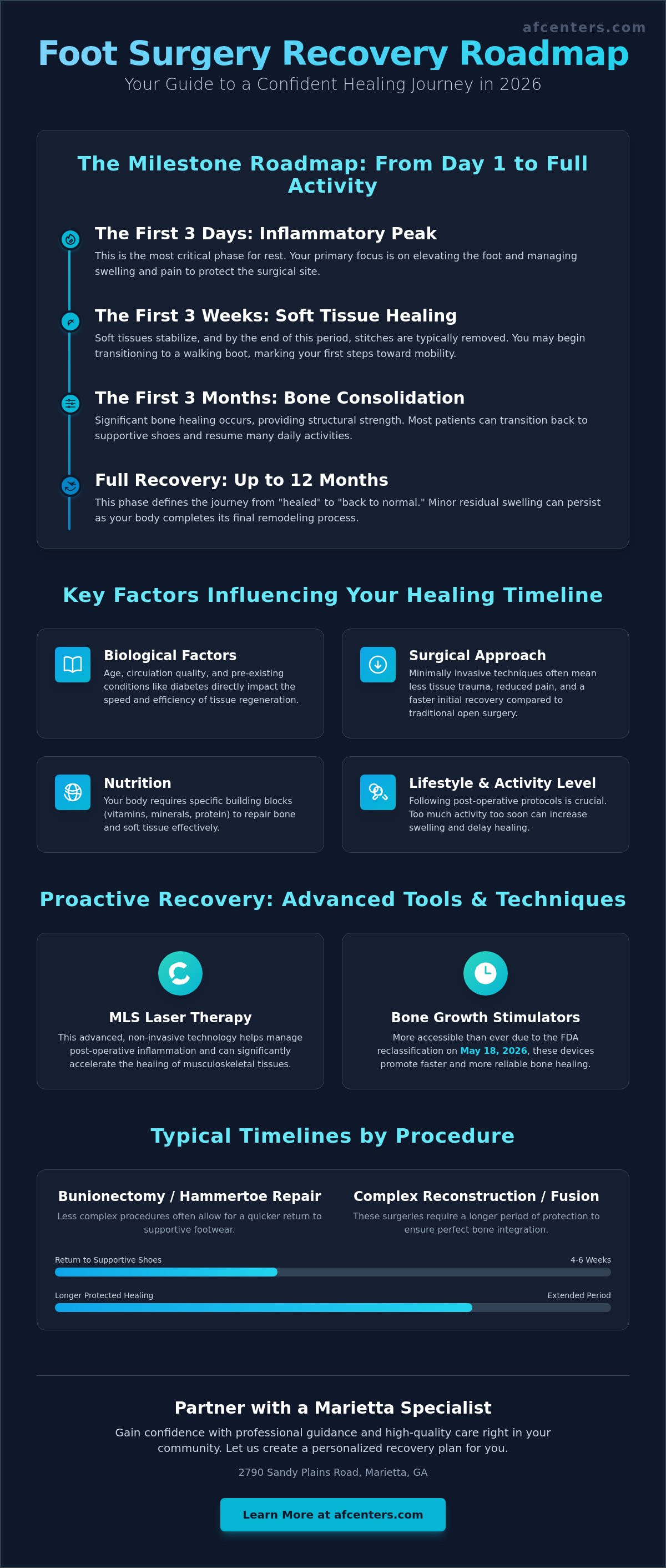
We often guide our patients using the "Rule of Three" to help set realistic expectations. The first three days are about managing the inflammatory peak. By three weeks, your soft tissues have typically stabilized enough for stitch removal. At three months, most patients achieve significant bone consolidation and structural strength. This framework helps you focus on steady progress rather than rushing the process, ensuring your long-term health remains the priority.
Typical Timelines by Procedure Type
The nature of your surgery dictates the length of your runway. For common corrections like a bunionectomy or hammertoe repair, you can usually expect a transition toward supportive shoes within four to six weeks. More complex reconstructive surgeries or fusions require a longer period of protection to ensure the bone integrates perfectly. However, the 2026 shift toward minimally invasive procedures has changed the math for many patients. These techniques involve smaller incisions and less tissue disruption, which often translates to reduced pain and a faster return to your Marietta lifestyle. You can explore our specific podiatric services to see how these advancements apply to your needs.
Defining 'Off Your Feet' vs. 'Back to Normal'
Understanding the different phases of activity is key to a frustration-free recovery. "Off your feet" typically refers to the non-weight-bearing phase, a critical window where you protect the surgical site at all costs. This phase is essential for preventing hardware failure or bone displacement. Transitioning into a walking boot marks your first taste of renewed mobility, but it isn't the finish line. While you'll be back to work and daily chores relatively quickly, "back to normal" is a gradual slope. Minor swelling can persist until the 12-month mark as your body completes its final remodeling. We're here at 2790 Sandy Plains Road on the corner of Post Oak Tritt and Sandy Plains to monitor every milestone, ensuring you feel supported from your first step to your full return to vitality.
Key Factors Influencing Your Healing Timeline
Your body is a unique biological engine. While we can provide a general roadmap for your foot surgery recovery time 2026, several individual variables influence how quickly you cross the finish line. Age and circulation are primary drivers; younger tissues often regenerate faster, while conditions like diabetes require a more meticulous approach to wound care. Nutrition also plays a silent but vital role. Fueling your body with the right building blocks ensures your bones and ligaments have the resources they need to knit back together effectively.
Surgical complexity is another major factor. A single-digit hammertoe correction involves a much smaller healing footprint than a total foot reconstruction. For those living the active Marietta lifestyle, managing expectations around daily movement is essential. Swelling is often a direct reflection of your activity level. If you're out and about too soon, your body will let you know. Following the specific protocols set by Dr. John is your most reliable path toward a swift and uncomplicated return to health.
The Impact of Surgical Approach
The method used during your procedure significantly dictates your immediate post-operative experience. Traditional open surgery provides excellent visibility for complex reconstructions but involves more tissue trauma. In contrast, minimally invasive techniques use smaller incisions, which typically results in less bruising and a shorter initial downtime. Modern anesthesia choices also allow for a smoother transition out of the operating room, helping you feel more alert and comfortable as you begin your journey. Advanced fixation methods, such as specialized screws and plates, often provide enough stability to allow for earlier weight-bearing than was possible in previous decades. We also utilize technologies like MLS Laser Therapy to address musculoskeletal inflammation early on, which can be a deciding factor in how comfortably you navigate those first few weeks.
Patient Health and Lifestyle Choices
Your daily habits are just as important as the surgery itself. Smoking is perhaps the greatest hurdle to a successful outcome because it severely restricts the blood flow necessary for tissue repair. To give yourself the best chance, focus on Proactive Recovery Tips like maintaining an anti-inflammatory diet rich in leafy greens and lean proteins. Keeping your foot elevated above your heart is not just a suggestion; it's a physiological necessity to drain fluid and manage pain.
Whether you're recovering from bunion correction or managing a sports injury, staying dedicated to your personalized plan is key. If you have questions about which procedure best fits your lifestyle, you can explore our full range of podiatric services to learn more. We're committed to being your partner in health at 2790 Sandy Plains Road on the corner of Post Oak Tritt and Sandy Plains. Don't hesitate to reach out to our team for guidance tailored to your specific healing needs.
The Milestone Roadmap: From Day 1 to Full Activity
Recovery isn't a race, but having a clear map makes the distance feel much shorter. Your foot surgery recovery time 2026 involves distinct phases that prioritize both safety and progress. The first three days focus entirely on managing the inflammatory peak. This is the window when swelling is most aggressive, and your primary job is to rest. You'll spend most of your time with your foot elevated, keeping it higher than your heart to encourage fluid drainage and control post-operative pain effectively.
Phase 1: The Protection Phase (Weeks 0-2)
During this initial window, you are the guardian of your surgical site. Follow your foot surgery recovery guide closely by monitoring your bandages for any unexpected drainage or signs of irritation. Most Marietta residents find it helpful to set up a recovery station on the ground floor to avoid unnecessary stairs. Use knee scooters or crutches as directed to keep weight off the foot. This ensures the delicate internal repairs remain undisturbed while your body begins the essential work of tissue knitting.
Phase 2: The Transition Phase (Weeks 2-8)
Once your stitches are removed, you'll likely graduate from a heavy cast or bulky dressing to a surgical shoe or walking boot. This is an exciting milestone as you get your first taste of renewed mobility. We'll begin gentle range-of-motion exercises to prevent your joints from becoming stiff or restricted. If you're a GA driver, remember that you cannot legally or safely drive while wearing a surgical boot on your right foot or while taking prescription pain medication. Always consult with our team before getting back behind the wheel to ensure you're physically ready for the road.
Phase 3: The Functional Phase (Month 3+)
Adapting to a corrected foot structure takes time, and your gait may feel slightly different at first. This is a normal part of your body finding its new, healthier balance. Stay patient as you rediscover your vitality and move past the initial windows of your foot surgery recovery time 2026. We're here to guide you through every milestone until you're back to the activities you love most.
Proactive Recovery: Advanced Tools and Techniques
Healing is no longer a passive process of just waiting it out. In our Marietta facility, we use a sophisticated suite of tools to help you actively manage your foot surgery recovery time 2026. By addressing inflammation and structural alignment from day one, we help you bridge the gap between the operating room and your favorite local activities. These technologies focus on reducing the hurdles that often slow down your progress, such as persistent swelling and localized pain.
MLS Laser Therapy for Surgical Recovery
We utilize MLS Laser Therapy as a cornerstone of our proactive recovery plans. This sophisticated technology uses specific wavelengths of light to penetrate deep into the tissue, stimulating cellular repair and significantly reducing post-operative edema. Because it's completely non-invasive, you won't feel any heat or pain during the session. It's a gentle yet powerful way to address musculoskeletal inflammation, helping you feel more comfortable as you move through your healing milestones. For patients with difficult-to-heal surgical wounds, this laser provides the necessary energy to kickstart the body's natural regenerative processes without adding any stress to the surgical site.
Supportive Care: From Orthotics to Ablation
Long-term success often depends on how your foot is supported once you return to regular shoes. We move beyond old-fashioned molds by using custom orthotics created through precision 3-D impressions. This ensures your foot maintains the exact alignment achieved during surgery, preventing secondary strain on your joints and ligaments as you increase your activity levels. These devices are tailored to your unique anatomy, providing a level of comfort that generic inserts simply can't match.
Preparing your feet before a procedure is just as important as the care you receive afterward. If you struggle with recalcitrant warts, we may recommend Swift Treatment using microwave ablation technology to ensure a sterile and healthy surgical field. This advanced approach is highly effective for stubborn cases that haven't responded to traditional methods. Swift treatment typically requires four treatments separated by one month each, and there is absolutely no downtime for patients after receiving the microwave ablation. Addressing these issues early prevents them from complicating your surgical site or slowing down your overall progress.
We invite you to experience this high-level care at our localized hub at 2790 Sandy Plains Road on the corner of Post Oak Tritt and Sandy Plains. Taking these proactive steps ensures you aren't just recovering; you're thriving. Schedule a consultation today to discuss your personalized recovery roadmap and see how our advanced tools can support your journey back to vitality.
Your Recovery Partner in Marietta: Why Local Expertise Matters
Choosing the right environment for your healing is just as important as the surgery itself. Dr. Mathew M. John acts as a dedicated mentor throughout your entire journey; providing the professional guidance you need to navigate every milestone with confidence. Our localized hub is designed to offer high-level resources in a welcoming, community-focused setting. This approach ensures you never feel like just another patient; but rather a valued member of our local health community.
Convenience and Accessibility for Atlanta Patients
Having a local office makes the logistical side of healing much simpler for those in Marietta, Roswell, and Woodstock. Regular follow-up appointments are essential for monitoring your progress through digital imaging and physical assessments. You can find us at 2790 Sandy Plains Road on the corner of Post Oak Tritt and Sandy Plains; where we provide a sophisticated environment for your post-operative checkups. This local access is especially helpful when scheduling your physical therapy or MLS Laser sessions; as it keeps your travel time to a minimum while you're in the transition phase of your recovery.
Taking the Next Step Toward Pain-Free Living
We're ready to help you rediscover your vitality and return to the activities that make our Georgia community so vibrant. Whether you're dealing with a sports injury or a chronic deformity; we provide the steady hand you need to reach your goals. Schedule your consultation at Ankle & Foot Centers, PC today and start your journey toward a more active, fulfilling future.
Step Into Your Future with Confidence
Your healing journey is a proactive partnership built on clear expectations and advanced medical care. By understanding your foot surgery recovery time 2026 and utilizing sophisticated tools like MLS Laser Therapy or precision 3-D impressions, you're setting the stage for long-term success. We focus on steady, meaningful progress; ensuring that every milestone brings you closer to the active Marietta lifestyle you love.
Dr. Mathew M. John brings over 20 years of reconstructive expertise to our community. Our facility features advanced Swift microwave ablation technology and is conveniently located at 2790 Sandy Plains Road on the corner of Post Oak Tritt and Sandy Plains. We're here to provide the professional guidance and warm encouragement you need for a comfortable and confident recovery. You deserve to move through life without the burden of chronic pain.
Start your journey to pain-free movement; Schedule with Dr. John today. You don't have to navigate this path alone. We're honored to be your partner in health and look forward to seeing you back on your feet and thriving.
Frequently Asked Questions
How long after foot surgery can I drive in Georgia?
You can typically return to driving in Georgia once you are off all narcotic pain medications and can safely operate the vehicle pedals. If your surgery was on your right foot, you may need to wait until you have transitioned out of a surgical boot, which often occurs around the six week mark. Always perform a dry run in a parked car to ensure you have the necessary reaction speed and strength before hitting the road.
Can I shower with a surgical boot or cast on my foot?
You must keep your surgical dressing, cast, or boot completely dry until your sutures are removed and the incision is fully closed. Most patients use a specialized waterproof limb protector or a heavy duty plastic bag sealed with medical tape while showering. If your dressing accidentally gets wet, contact our office at 2790 Sandy Plains Road on the corner of Post Oak Tritt and Sandy Plains immediately. Moisture trapped against an incision can significantly increase the risk of infection.
When is the pain worst after foot surgery, and how do I manage it?
Post operative pain typically peaks during the first 48 to 72 hours as the local anesthetic wears off and the inflammatory response reaches its height. You can manage this effectively by keeping your foot elevated above your heart and using ice packs behind the knee to cool the blood flowing to the surgical site. Staying ahead of the discomfort by taking your prescribed medications on a strict schedule is much more effective than trying to catch up once pain becomes severe.
How soon can I return to a desk job in Marietta after my procedure?
Many patients return to a desk job in Marietta within one to two weeks, provided they have a way to keep their foot elevated throughout the day. If your role requires standing or walking, your foot surgery recovery time 2026 may involve a longer absence of six to eight weeks. We'll work with you to provide the necessary documentation for your employer to ensure a safe and supportive transition back to your professional routine.
Why is my foot still swollen six months after my surgery?
It is normal for minor swelling to persist for six to twelve months after a procedure because the foot is the most dependent part of your body. Gravity naturally pulls fluid downward, and your lymphatic system takes time to fully recalibrate after tissues have been altered. Wearing compression socks or using 3-D impressions for custom orthotics can help manage this late stage edema by providing consistent structural support and improving your overall gait as you heal.
Will I need physical therapy after my foot or ankle surgery?
Most reconstructive procedures require some form of physical therapy to restore your range of motion and rebuild muscle strength. Your body naturally compensates for injury, so therapy helps retrain your brain and feet to move correctly again. We often integrate these sessions with MLS Laser Therapy to address musculoskeletal inflammation, helping you progress through your exercises with less discomfort and greater confidence in your new, corrected foot structure.
What are the signs of a complication during my recovery?
You should watch for warning signs such as a fever over 101 degrees, persistent calf pain, or redness that spreads away from the incision site. While some bruising and swelling are expected, a foul odor or sudden, sharp pain that isn't relieved by elevation should be reported to our team immediately. Early intervention is the best way to keep your foot surgery recovery time 2026 on the right track and prevent minor issues from becoming major setbacks.
How does MLS Laser Therapy help with post-surgical pain?
MLS Laser Therapy helps by using specific wavelengths of light to reduce swelling and stimulate cellular repair in the musculoskeletal tissues. It's a non invasive way to manage pain without the side effects of traditional medications. By increasing local circulation and reducing edema, the laser helps your body move through the initial phases of healing more comfortably. This technology is a vital part of our commitment to providing high quality, professional guidance for every patient.


