
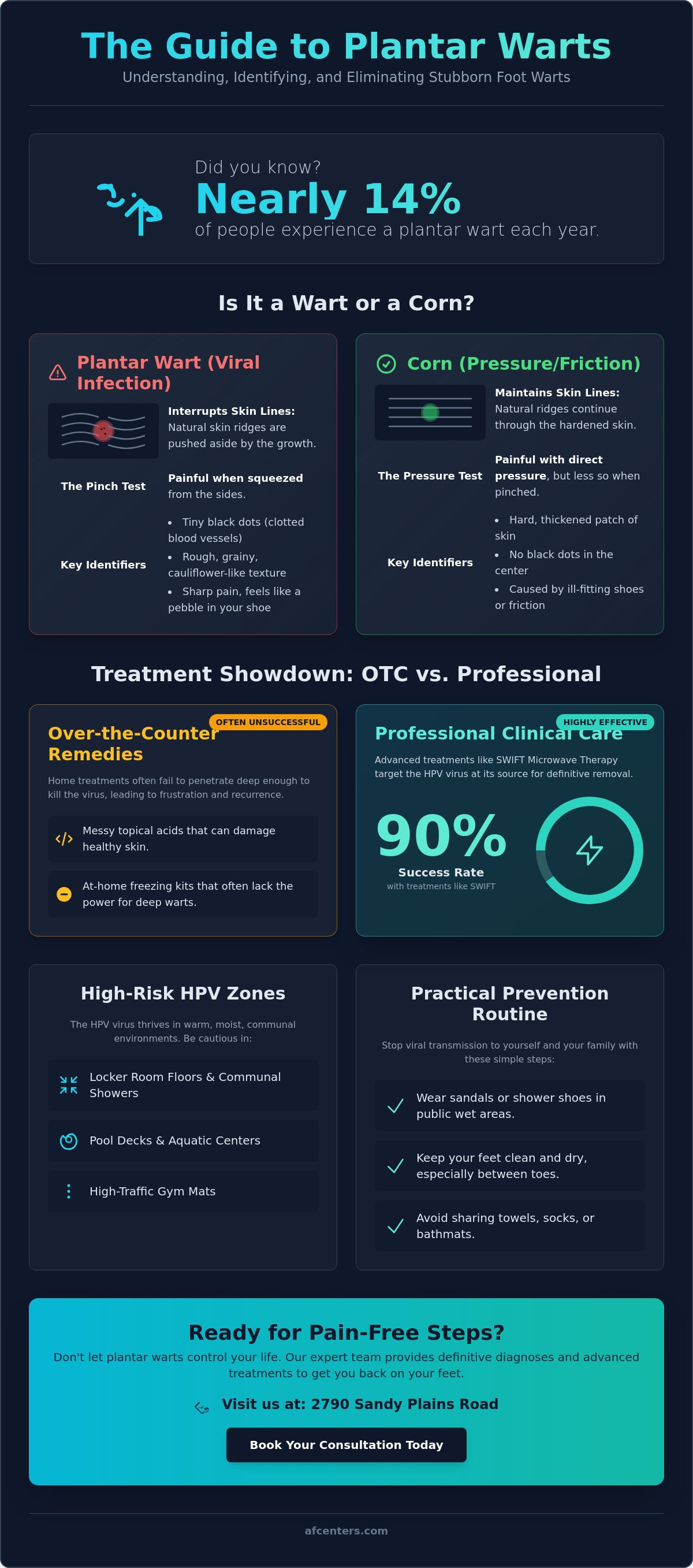
Did you know that nearly 14% of people experience the sharp, pebble-in-your-shoe sensation of a plantar wart every single year? If you've spent weeks applying messy drugstore acids or struggled with failed freezing kits, you know how stubborn a foot wart can be. It's exhausting to deal with that constant sting on the ball of your foot or the embarrassment of hiding your feet during your wellness routine.
We understand that you're looking for more than a temporary fix; you want your clear skin and active lifestyle back. At our clinic located at 2790 Sandy Plains Road on the corner of Post Oak Tritt and Sandy Plains, we empower you with professional solutions that target the virus at its source. You'll learn how to accurately identify your condition, explore the 90% success rate of advanced treatments like SWIFT microwave therapy, and discover the exact steps to stop viral transmission to your family. Let's start your journey toward pain-free steps and total foot health today.
Key Takeaways
- Learn how to distinguish a painful plantar wart from a corn or callus to ensure you're using the correct treatment for your needs.
- Identify the common Marietta environments where the HPV virus spreads and how to protect your feet in high-traffic public spaces.
- Discover why professional clinical care offers a more reliable path to clear skin than failed over-the-counter foot wart kits.
- Explore specialized removal options and expert guidance available at 2790 Sandy Plains Road on the corner of Post Oak Tritt and Sandy Plains.
- Gain a practical hygiene routine to prevent spreading the virus to your family members and maintain long-term foot health.
What is a Foot Wart? Identifying Plantar Warts in Marietta
A What is a Foot Wart? search often reveals that these growths are benign skin lesions caused by the Human Papillomavirus (HPV). With an annual incidence rate of nearly 14%, these lesions are a common hurdle for many in our community. While there are over 200 types of HPV, only a few specific strains cause these lesions on the feet. Unlike common warts found on your hands, a foot wart develops on the weight-bearing areas of your feet like the heels or the balls of the feet.
Because you're constantly walking on them, the pressure from your body weight pushes these warts inward, often beneath a thick layer of callus. This is especially true if you're active on Marietta's hilly terrain or hiking the trails at Kennesaw Mountain. You might notice tiny black pinpoints in the center of the growth. These aren't actually seeds; they're small, clotted blood vessels that have grown into the wart tissue. This inward growth is what makes them so much more painful than warts on other parts of the body.
To better understand this concept, watch this helpful video:
Signs and Symptoms You Should Not Ignore
A foot wart typically feels rough and grainy, similar to a cauliflower. You'll likely feel a sharp, stabbing pain when you're walking through local shopping centers like The Avenue at East Cobb or strolling around Marietta Square. If you notice a group of multiple small warts clustered together, you're looking at what we call mosaic warts. These clusters can be more difficult to treat because they cover a larger surface area on the sole of your foot, requiring a more patient and strategic wellness journey.
Plantar Wart vs. Corn: How to Tell the Difference
Many people confuse warts with corns, but there's a vital difference in how they affect your skin's anatomy. Look closely at the ridges and lines on your sole. A wart will interrupt these natural "fingerprint" lines, causing them to deviate around the lesion. In contrast, a corn allows the lines to continue right through the thickened skin. Corns are simply the result of friction and pressure, whereas a plantar wart is a viral infection that requires a specialized clinical approach to eliminate the underlying virus.
Try the "pinch test" to get more clarity. Most warts hurt more when you squeeze them from the sides than when you press directly on them. This is because the virus affects the nerves differently than a simple corn would. If you're unsure, our team at 2790 Sandy Plains Road on the corner of Post Oak Tritt and Sandy Plains can provide a definitive diagnosis. Explore our comprehensive podiatry services to see how we help our community stay active and healthy.
How Did I Get a Wart? Transmission and Local Risk Factors
You didn't just wake up with a foot wart by accident. It's the result of a viral encounter with Human Papillomavirus (HPV) that likely happened weeks or even months ago. This virus is remarkably resilient. It thrives in the warm, humid climate we experience here in Georgia, especially in places where moisture lingers on the floor. HPV isn't picky about its host; it simply waits for the right environment to spread from person to person or from a contaminated surface to your skin.
If you frequent fitness centers along Johnson Ferry Road or spend your summer weekends at the Sewell Park Pool, you're entering high-traffic zones for HPV. The virus doesn't need a large wound to take hold. It enters through microscopic abrasions on your sole, often so small you can't even see them. Children and teenagers are particularly vulnerable because their immune systems are still learning how to recognize and fight off these specific viral strains. In Marietta, high-traffic zones include the busy locker rooms at local high school athletic departments and the humid environments of indoor aquatic centers.
Common Exposure Sites in the Atlanta Metro Area
Communal environments are the most frequent culprits for transmission. When you walk barefoot in these areas, you're significantly increasing your risk of infection. Within your own home, sharing towels or bathmats after a workout can also lead to cross-contamination among family members. Primary "hot zones" include:
- Locker room floors and communal showers at local athletic clubs.
- High-traffic gym mats during yoga or martial arts classes.
- Damp hotel carpets or pool decks during family vacations.
We always encourage our neighbors to wear "shower shoes" or flip-flops in these spaces. It's a simple habit that protects your foot health and keeps your wellness journey on track.
The Role of the Immune System
Have you ever wondered why two people can walk across the same damp floor, but only one develops a foot wart? Your immune system plays the lead role in this story. Some people have a natural resistance, while others might be more susceptible due to high stress levels or temporary health dips. There is also a notable incubation period. According to research on Professional Wart Removal in Marietta, the virus can stay dormant for one to six months before a visible growth appears. This delay often makes it hard to pinpoint exactly where the exposure occurred.
Understanding these risks is the first step toward prevention. If you've already noticed a suspicious growth, don't wait for it to spread or cause more discomfort. Our team at 2790 Sandy Plains Road on the corner of Post Oak Tritt and Sandy Plains is here to help you identify the best path forward. You can explore our specialized podiatry services to get a professional assessment and start your path to clear skin today.
Home Remedies vs. Professional Wart Removal in Marietta
It's natural to reach for a quick fix when you first discover a foot wart. Drugstore shelves in Marietta are packed with salicylic acid patches and freezing kits that promise instant results. While these over-the-counter (OTC) options are accessible, they often fall short of providing a permanent solution. According to FDA regulations reaffirmed in October 2021, salicylic acid is the only approved active ingredient for OTC removal, but its effectiveness depends heavily on consistency and the depth of the lesion.
Please resist the urge to perform "bathroom surgery." Attempting to cut or scrape away a growth with unsterilized tools is a recipe for infection and pain. Even worse, you risk spreading the virus to other areas of your sole. When you pick at a wart, you can inadvertently create "satellite warts," which are a cluster of new growths that appear around the original site. Professional care ensures the lesion is addressed without compromising the surrounding healthy tissue. When exploring Plantar Wart Treatments, you'll see that clinical intervention offers a much higher success rate for stubborn or painful cases.
Why OTC Treatments Often Fail
Most OTC acids are designed to peel away layers of skin slowly. However, because plantar warts are pushed inward by the pressure of your weight, they often sit deep within the dermis. If the treatment doesn't reach the viral source, the wart will likely return. Data shows that while salicylic acid is effective in 70% to 80% of cases, it typically requires 8 to 12 weeks of daily, perfect application. Many people find this timeline frustrating and stop treatment early. Professional evaluation by Dr. Mathew M. John allows for more concentrated, precise treatments that work faster than home kits.
Critical Warning for Marietta Diabetics
For our neighbors living with diabetes, home wart removal is never a safe option. OTC acids are caustic and can cause significant damage to skin that already has compromised circulation or sensation. This leads to a high risk of non-healing ulcers and severe infections. If you have diabetes and notice a foot wart, skip the pharmacy aisle and come see us at 2790 Sandy Plains Road on the corner of Post Oak Tritt and Sandy Plains. Protecting your long-term mobility is our primary goal. You can view our full range of podiatry services to see how we prioritize safe, expert care for high-risk patients.
Prevention Strategies: Keeping Your Feet Wart-Free
Staying active in Marietta means your feet work hard every day. Prevention isn't just about avoiding a virus; it's about maintaining your momentum and overall wellness. Georgia's humid summer days, where relative humidity levels frequently exceed 70%, create a perfect breeding ground for the virus that causes a foot wart. Keeping your feet dry and clean is your first and most effective line of defense against infection.
If you've already noticed a suspicious growth, keep your hands away from it. Picking or scratching a lesion triggers auto-inoculation, which is the process of transferring the virus from your foot to your hands or even other parts of your body. This can turn a single localized problem into a much larger challenge. We suggest making a quick foot inspection a part of your weekly self-care routine. Catching a small viral growth early prevents it from spreading to your family or becoming a painful barrier to your daily walk.
Footwear and Protection Tips
Damp shoes are a playground for pathogens. We recommend wearing moisture-wicking socks made of synthetic blends or merino wool rather than standard cotton. These materials pull sweat away from your skin, keeping the surface of your foot dry and less vulnerable. It's also a great idea to alternate your shoes daily. Giving your footwear a full 24-hour break allows the interior materials to dry out completely. For those who experience high-pressure points or structural imbalances, custom orthotics created with 3-D impressions can provide significant relief. By redistributing your weight, these devices reduce the specific pressures that often make a foot wart feel so much worse during exercise.
Protecting Your Family at Home
Your home should be a safe haven, but it's also a common place for the virus to spread among loved ones. HPV is easily shared through communal items. Don't share towels, razors, or pumice stones with anyone in your household. If a family member has an active infection, disinfect shower floors and bath mats with a bleach-based cleaner at least once a week to kill lingering viral particles. Treating even a minor lesion early is a responsible way to protect your entire family from the cycle of transmission. If you're ready to clear your skin and get back to your favorite activities, explore our specialized treatment options at our Marietta office located at 2790 Sandy Plains Road on the corner of Post Oak Tritt and Sandy Plains.
Professional Solutions at Ankle & Foot Centers, PC
When home remedies fail or the pain of a foot wart begins to limit your morning run, it's time to seek the expertise of a professional. Dr. Mathew M. John provides a specialized clinical approach here in Marietta that goes beyond the surface. We don't just treat the symptom; we focus on the complete resolution of the viral infection to ensure you stay active. Our team acts as a steady mentor, guiding you through each step of the treatment process with quiet confidence and high-level expertise.
Our clinical treatments are designed for precision and results. Prescription-strength topicals offer a higher concentration of active ingredients than any OTC alternative, allowing for deeper penetration into the viral root. For more persistent cases, we utilize cryotherapy. This method has a documented success rate of 75% to 90%, typically clearing the lesion within 2 to 6 sessions. This professional precision protects your healthy skin while effectively targeting the virus, ensuring a much lower recurrence rate than at-home freezing kits.
Advanced Recovery with MLS Laser Therapy
Recovery is just as important as the removal itself. We utilize MLS Laser Therapy to manage post-procedural inflammation or any associated musculoskeletal pain. This technology empowers your body's natural healing process by reducing swelling and accelerating tissue repair at the cellular level. We make sure to distinguish this from other laser treatments to ensure you receive the right care for your needs. If your journey involves fungal toenail concerns alongside your viral issues, we provide specialized fungal laser therapy using the Cutera Genesis Plus NDYag Laser. This ensures every aspect of your foot health is addressed with the most appropriate, state-of-the-art technology available.
Your Journey to Pain-Free Living
Your path to wellness starts with a comprehensive consultation at our facility. During your initial visit, Dr. John performs a thorough evaluation to confirm the diagnosis and assess the depth of the lesion. We believe in a collaborative approach where you're an active participant in your recovery. Whether you're a seasoned athlete or just starting your wellness journey, we tailor our clinical treatments to match your specific goals and activity level. Our goal is to return you to a life where every step is comfortable and confident.
You can learn more about our comprehensive services to see how we support our community's health. We invite you to visit our Marietta location at 2790 Sandy Plains Road on the corner of Post Oak Tritt and Sandy Plains. Let's work together to transform your foot health and get you back to the activities you love without the distraction of foot pain.
Take Your First Step Toward Clear Skin and Pain-Free Walking
Don't let a stubborn foot wart keep you on the sidelines of your active life. You've learned how to tell a viral growth apart from a simple corn and why professional clinical care offers a 90% success rate compared to the long, uncertain road of home kits. By choosing an expert partner for your care, you're protecting your family from viral transmission and ensuring your own wellness journey stays on track. We're here to help you regain your comfort and your confidence.
Our team, led by Dr. Mathew M. John, DPM, FACFAS, is ready to empower your recovery. We combine precise clinical removal with advanced MLS Laser Therapy to manage any post-procedural inflammation, helping you return to your favorite Marietta trails faster. Visit us at 2790 Sandy Plains Road on the corner of Post Oak Tritt and Sandy Plains to experience professional care in a welcoming, neighborhood environment. Your path to healthy, clear skin is just one appointment away.
Schedule Your Consultation at AF Centers Today and transform your foot health. You deserve to walk with total confidence and comfort every single day.
Frequently Asked Questions
How can I tell if I have a foot wart or just a callus?
Look closely at the skin's natural ridges and lines. A foot wart interrupts these lines; while a callus allows them to continue straight through the thickened skin. You might also notice tiny black dots; which are actually clotted blood vessels. If the growth hurts more when you pinch it from the sides than when you press it directly; it is likely a viral infection rather than a simple callus.
Are plantar warts contagious to other people in my house?
Yes; they're highly contagious because they're caused by the Human Papillomavirus (HPV). The virus spreads through direct contact or by touching contaminated surfaces like bathmats and shower floors. To protect your family; don't share towels or razors. Disinfecting your home shower once a week with a bleach-based cleaner can reduce the risk of transmission among your loved ones significantly.
Is professional wart removal painful for children?
We prioritize a gentle experience for our younger patients. While some treatments like cryotherapy cause a brief stinging sensation; we use specialized techniques to minimize any discomfort. For children who are anxious; we offer topical numbing agents to ensure the process is as stress-free as possible. Our goal is to empower your child to return to their favorite activities without any fear or lingering pain.
How long does it take for a plantar wart to go away after treatment?
Recovery time varies based on the specific clinical method used. Professional cryotherapy often clears the lesion in 2 to 6 sessions; while prescription-strength topicals might take several weeks of consistent application. According to 2026 clinical data; professional care significantly accelerates the healing timeline compared to the two-year period it often takes for warts to resolve on their own without medical intervention.
Can I walk or exercise immediately after a wart removal procedure?
Most patients can resume their normal walking and light activities immediately after their appointment. If your procedure involves deeper removal; we might suggest a 24-hour break from high-impact sports like running or jumping. For any post-procedural soreness; we utilize MLS Laser Therapy at our office at 2790 Sandy Plains Road on the corner of Post Oak Tritt and Sandy Plains to manage inflammation and speed up your healing.
Why does my foot wart keep coming back after using duct tape?
Duct tape often fails because it doesn't address the underlying viral infection deep within the skin. It might peel away the top layers of dead skin; but if the viral root remains; the foot wart will simply regrow. This is why professional clinical evaluation is essential. We target the virus at its source; which leads to a much lower recurrence rate than inconsistent home remedies or tape.
Does insurance typically cover professional wart removal in Georgia?
Many insurance plans in Georgia do cover wart removal; especially if the growth is causing pain or interfering with your daily movement. However; some providers consider it a cosmetic procedure if there is no documented discomfort. It is best to check with your specific insurance provider. Our team can help provide the necessary documentation to show that treatment is a medical necessity for your long-term foot health.
What happens if I leave a plantar wart untreated for too long?
Leaving a wart untreated can lead to significant pain that eventually alters your natural gait. This often causes secondary issues in your knees or hips due to compensation. Over time; a single lesion can also spread into a cluster known as mosaic warts; which are much harder to eliminate. Early intervention at our Marietta location ensures the infection remains localized and much easier to treat for permanent relief.


