

Imagine planning a beautiful Saturday morning hike at Kennesaw Mountain, only to have a sharp, throbbing pain in your big toe joint force you back to the car. If you're searching for effective bunion pain relief Marietta offers several paths to comfort that don't always require an operating room. It's frustrating when your favorite shoes sit in the closet because they've become too painful to wear. You deserve to move through our community without constant discomfort or the worry that a long surgical recovery is your only option.
We understand that your goal is to reduce daily inflammation and find footwear that actually fits your life. This guide provides the professional insights you need to manage symptoms at home while exploring advanced treatments. Dr. Mathew John is a Board Certified Foot Surgeon by the American College of Foot and Ankle Surgery, and he helps patients at 2790 Sandy Plains Road on the corner of Post Oak Tritt and Sandy Plains regain their mobility. You'll learn how 3-D impressions for custom orthotics and MLS Laser therapy can alleviate pain. We'll also preview how professional guidance helps you choose the right path toward lasting health.
Key Takeaways
- Identify the structural causes of hallux valgus and why simple padding can provide immediate relief during your daily activities.
- Explore non-invasive options for bunion pain relief Marietta experts recommend, including MLS Laser Therapy to reduce musculoskeletal inflammation.
- Learn how 3-D impressions allow for precision-fit custom orthotics that correct mechanical pressure and prevent further joint misalignment.
- Recognize the clinical benchmarks that suggest minimally invasive surgery might be the best step for achieving lasting comfort and mobility.
- Gain confidence in your health journey by working with Dr. Mathew John, a Board Certified Foot Surgeon by the American College of Foot and Ankle Surgery.
Understanding Bunion Pain: Why Your Foot Hurts
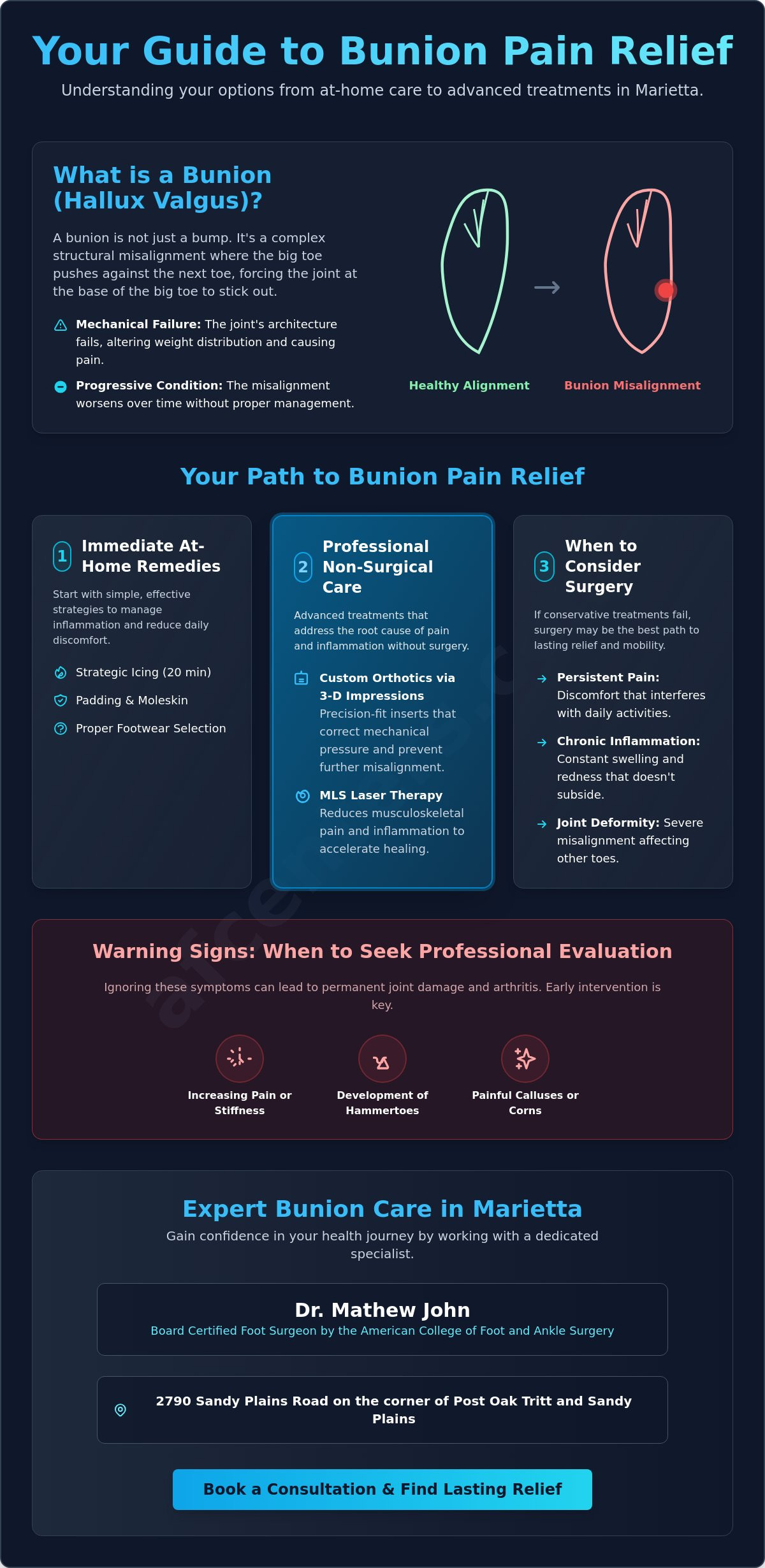
Many people think a bunion is just an unsightly growth on the side of the foot. In reality, it's a complex structural misalignment of the bone. To understand What is a bunion?, you have to look at the mechanics of the forefoot. This condition, known medically as hallux valgus, occurs when your big toe begins to lean toward the second toe. This shift forces the first metatarsal bone to protrude outward, creating the characteristic bump that rubs against your shoes. It's a progressive issue where the joint's architecture slowly fails over time.
To better understand this concept, watch this helpful video:
Common Triggers for Bunion Flare-ups
When Bunion Discomfort Becomes a Medical Concern
It's easy to ignore a bunion when it only hurts occasionally, but waiting too long can lead to permanent joint damage. If you notice the big toe joint is becoming stiff or if you're developing secondary issues like hammertoes or painful calluses, it's time for a professional evaluation. Early intervention is vital to prevent the joint from becoming arthritic. Dr. Mathew John is a Board Certified Foot Surgeon by the American College of Foot and Ankle Surgery who helps patients at 2790 Sandy Plains Road on the corner of Post Oak Tritt and Sandy Plains. He utilizes advanced diagnostic tools, including 3-D impressions for custom orthotics, to address the root cause of your pain. You can explore our comprehensive foot care services to see how we help our neighbors stay active and comfortable.
Immediate Home Remedies for Bunion Pain Relief
Managing a flare-up doesn't always require an immediate trip to the clinic. When you're looking for bunion pain relief Marietta residents can start with simple, effective protocols at home to calm inflammation. Strategic icing is one of the most powerful tools in your arsenal. Apply an ice pack to the affected joint for 20 minutes several times a day, especially after a long afternoon walking around the Marietta Square. This helps constrict blood vessels and numbs the sharp aching sensation. Pair this with over the counter gel padding or moleskin to prevent your shoes from rubbing against the sensitive protrusion.
Toe spacers can also provide temporary comfort by gently pushing the big toe back into a more natural alignment while you're resting. While these devices won't permanently fix the bone structure, they reduce the mechanical strain on the surrounding ligaments. You might also consider non-steroidal anti-inflammatory drugs (NSAIDs) to manage swelling; however, you should always consult with your primary care physician before starting new medications. These home methods serve as a supportive bridge while you explore more permanent bunion treatments with a professional.
Choosing the Right Footwear in Marietta
Your shoes are often the biggest factor in how much your bunion hurts during the day. Georgia's warm climate might tempt you toward flimsy flip-flops, but these often lack the necessary support. Look for footwear with a wide, deep toe box that allows your toes to wiggle freely. Avoid high heels or narrow, pointed shoes that squeeze the metatarsals together, as these actively accelerate the deformity. Proper arch support is just as vital as toe room because it prevents your foot from collapsing inward, a movement that puts direct pressure on the big toe joint. If you're unsure if your current shoes are helping or hurting, exploring our comprehensive foot care services can help you find the right path forward.
Topical and Mechanical Relief Techniques
At the end of a long day, an Epsom salt soak can do wonders for tired, aching joints. The magnesium in the salts helps relax the muscles around the big toe, providing a soothing sensation. Some patients find success with night splints, which hold the toe in a straighter position while you sleep. While they don't realign the bone permanently, they can help maintain flexibility in the joint capsule. You can also use athletic tape to create a supportive "sling" for the toe, which provides extra stability during physical activity. Combine these techniques with simple exercises like towel scrunches or toe curls to keep the intrinsic muscles of your foot strong and balanced.
If these home remedies aren't providing enough comfort, it's time to seek expert guidance. Dr. Mathew John is a Board Certified Foot Surgeon by the American College of Foot and Ankle Surgery who can provide a detailed assessment at 2790 Sandy Plains Road on the corner of Post Oak Tritt and Sandy Plains. He can help you determine if custom orthotics created from 3-D impressions are the next logical step in your journey toward lasting comfort.
Professional Non-Surgical Treatments in Marietta
Home remedies provide a wonderful foundation for daily comfort, but professional intervention is often necessary to address the structural root of your discomfort. When you're seeking advanced bunion pain relief Marietta specialists like Dr. Mathew John offer sophisticated, non-invasive solutions. Dr. John is a Board Certified Foot Surgeon by the American College of Foot and Ankle Surgery. He works with patients at 2790 Sandy Plains Road on the corner of Post Oak Tritt and Sandy Plains to develop personalized care plans. These treatments focus on reducing inflammation and correcting the mechanical imbalances that cause the big toe joint to shift in the first place.
Professional care goes beyond what you can find in a local pharmacy. While drugstore pads might provide a few hours of ease, professional-grade materials are designed with higher-density medical foams and gels. These materials don't compress under your body weight, ensuring consistent protection throughout a long day of activity. When combined with advanced diagnostic tools, these conservative options can significantly delay or even eliminate the need for more invasive procedures. You can explore how these tools fit into your wellness plan by reviewing our comprehensive foot care services.
MLS Laser Therapy for Bunion Inflammation
One of the most effective ways to relieve bunion pain and swelling is through MLS Laser Therapy. This advanced technology uses specific wavelengths of light to penetrate deep into the soft tissues surrounding the big toe joint. It targets musculoskeletal pain and inflammation at a cellular level, stimulating the body's natural healing processes without any heat or discomfort. Patients often choose this path because it's entirely non-invasive and requires no downtime. It's an excellent option for Marietta residents who want to recover quickly from an inflammatory flare-up after a weekend of hiking or community events.
Custom Orthotics and 3-D Impressions
Custom orthotics are much more than just arch supports; they're precise medical devices designed to change how your foot interacts with the ground. To ensure a perfect fit, we take detailed 3-D impressions of your feet. This process captures the unique geometry of your foot structure while it's in a corrected position. By using these 3-D impressions, we can create orthotics that redistribute weight away from the sensitive big toe joint. This reduces the mechanical pressure that drives the bunion further out of alignment. For active individuals in our community, these custom devices provide the stability needed to maintain a high level of physical activity without constant joint strain. They represent a long-term investment in your mobility and joint health.
When to Consider Minimally Invasive Bunion Surgery
You should consider a surgical consultation if you experience:
- Persistent pain that limits walking or exercise, even in supportive shoes.
- Chronic big toe inflammation and swelling that doesn't improve with rest or icing.
- A toe deformity so severe it causes your toes to cross over or creates painful hammertoes.
- Inability to find any footwear that fits comfortably without significant rubbing.
Modern techniques have transformed the surgical experience. Minimally invasive bunion surgery utilizes smaller incisions, which results in less trauma to the surrounding soft tissue. This approach often leads to faster healing and a more comfortable recovery period than traditional open procedures. Dr. Mathew John is a Board Certified Foot Surgeon by the American College of Foot and Ankle Surgery who specializes in these advanced techniques. He sees patients at 2790 Sandy Plains Road on the corner of Post Oak Tritt and Sandy Plains, providing a clear path toward lasting comfort and mobility.
The Benefits of Modern Reconstructive Surgery
Choosing reconstructive surgery isn't just about removing a bump; it's about restoring the mechanical alignment of your foot. By correcting the structural cause of hallux valgus, we help prevent the condition from returning. Waiting too long can allow the joint to become arthritic, which makes the eventual correction more complex. The goal is to return you to your favorite activities, whether that's a long walk at Kennesaw Mountain or simply wearing your favorite shoes without fear of pain.
Preparing for Your Consultation in Marietta
Expert Bunion Care at Ankle & Foot Centers, PC
Comprehensive Services for Every Stage
Visit Our Marietta Office Today
Our office is conveniently located at 2790 Sandy Plains Road on the corner of Post Oak Tritt and Sandy Plains. This central location provides easy access for our neighbors in Roswell, Woodstock, and Kennesaw. We believe that professional guidance should be approachable and local. Our team projects a sense of quiet confidence, relying on the quality of our environment and the results we achieve for our patients. Scheduling your initial diagnostic evaluation is a simple, rewarding step toward regaining your mobility. Don't let bunion pain keep you on the sidelines. Expert care is just around the corner, and we're ready to help you thrive. We look forward to being a part of your success story.
Step Toward a More Active, Pain-Free Future
Dr. Mathew John is a Board Certified Foot Surgeon by the American College of Foot and Ankle Surgery who's ready to partner with you in this journey. Our team at 2790 Sandy Plains Road on the corner of Post Oak Tritt and Sandy Plains provides the sophisticated resources you need in a welcoming, community-focused environment. Don't let foot pain dictate your schedule or keep you from the local activities you love. We're here to help you move with confidence and ease.
Schedule Your Bunion Consultation with Dr. Mathew John today to begin your path toward lasting comfort. Your health is a lifelong journey, and we're here to ensure every step feels light and rewarding.
Frequently Asked Questions about Bunion Care
Can bunions go away without surgery?
No, a bunion is a structural bone deformity that won't resolve on its own. While non-surgical treatments like custom orthotics and padding effectively manage discomfort, they don't realign the bone. These conservative options focus on providing bunion pain relief Marietta residents need to stay active without the immediate necessity of an operation. If the deformity is caught early, you can often successfully manage the symptoms for years.
How much does MLS Laser therapy cost for bunion pain?
The cost for MLS Laser therapy depends on the number of sessions required to achieve your health goals. Since every patient's level of inflammation is different, we recommend a personalized evaluation to determine the right treatment plan. You should check with your insurance provider to see if they cover laser treatments for musculoskeletal pain. Our team is happy to help you understand your options during your visit to our Marietta office.
Will custom orthotics fit in my regular shoes?
Yes, modern custom orthotics are designed to fit into most athletic and casual footwear. Because we use 3-D impressions to capture the exact geometry of your foot, the resulting devices are precise and low-profile. You won't need to buy oversized shoes to accommodate them. These devices work by redistributing pressure away from your big toe joint, which is a key component of long-term bunion pain relief Marietta patients trust.
How do I know if my bunion pain is serious enough for a doctor?
You should schedule an appointment if your foot pain prevents you from completing daily tasks or enjoying local activities. Redness, persistent swelling, or a visible shift in your big toe are clear signs that you need a professional evaluation. Dr. Mathew John is a Board Certified Foot Surgeon by the American College of Foot and Ankle Surgery who can assess the severity of your condition. Early intervention often prevents the joint from becoming arthritic or stiff.
Is minimally invasive bunion surgery covered by insurance?
Most insurance providers cover bunion surgery when it's deemed medically necessary to restore function or relieve chronic pain. For example, Medicare Part B typically covers 80% of the cost once you've met your annual deductible. It's important to note that surgery performed for purely cosmetic reasons is rarely covered. We recommend contacting your insurance carrier to confirm the specifics of your plan's coverage for reconstructive procedures.
What is the recovery time for bunion surgery in 2026?
Recovery times vary based on the specific surgical technique used to correct the joint. Minimally invasive procedures generally allow for a faster return to daily life because they involve smaller incisions and less tissue trauma. Many patients can transition into supportive athletic shoes within a few weeks. However, full bone healing and a return to high-impact sports can take several months. Your recovery plan will be tailored to your specific health needs and activity goals.
Can wearing wider shoes actually stop a bunion from growing?
Wider shoes can significantly slow the progression of a bunion by removing the external pressure that pushes the big toe out of place. While footwear alone won't stop the internal mechanical forces caused by your foot structure, it prevents the inflammation that often accelerates the deformity. Choosing shoes with a spacious toe box is a simple way to maintain comfort. This habit is especially helpful for those who spend a lot of time walking on hard surfaces.
Are bunions genetic or caused by bad shoes?
Bunions are typically caused by a combination of inherited foot structure and footwear choices. You don't inherit the bunion itself, but you do inherit the foot type, such as flat feet or low arches, that makes you prone to developing one. Narrow shoes or high heels then act as a catalyst that pushes the joint into a deformed position. Understanding this link helps you make better choices for your long-term foot health at 2790 Sandy Plains Road on the corner of Post Oak Tritt and Sandy Plains.


