
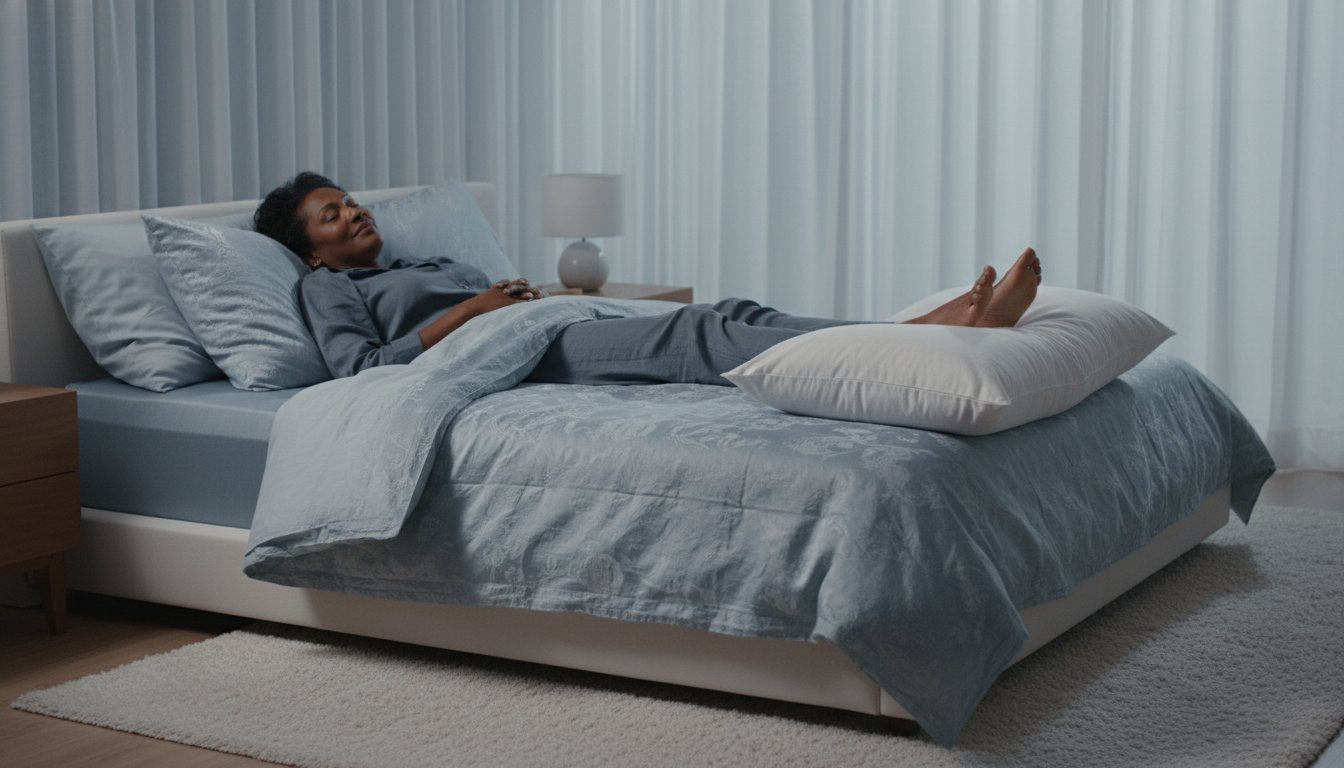
What if the throbbing in your foot tonight isn't just a sign of a long day, but an "inflammatory hangover" that you can actually silence before your head hits the pillow? If you're searching for how to stop bunion pain at night, you've likely realized that interrupted sleep cycles and burning sensations make every morning feel like a struggle. It's exhausting to deal with the frustration of drugstore pads that don't deliver, but you deserve a night of rest that isn't dictated by joint discomfort.
We're here to help you reclaim your sleep by combining immediate at-home soothing strategies with professional insights into biomechanical correction. This article provides effective remedies to ease your pain tonight while explaining the underlying causes of nighttime flare-ups. You'll discover how to move toward a more vibrant, pain-free lifestyle with the right expert support and guidance.
For those near Marietta, Dr. Mathew John, a Board Certified Foot Surgeon by the American College of Foot and Ankle Surgery, provides expert care at 2790 Sandy Plains Road on the corner of Post Oak Tritt and Sandy Plains. From custom orthotics using 3-D impressions to MLS Laser therapy for inflammation, we offer the sophisticated resources you need to wake up feeling refreshed. Explore your options and start your journey toward better health today.
Key Takeaways
- Understand why your body's natural inflammatory rebound causes joint throbbing to peak while you're trying to rest.
- Apply immediate relief techniques like the "Ice and Elevate" method to reduce heat and blood pooling in the big toe joint.
- Learn how to stop bunion pain at night by adjusting your daytime footwear choices and utilizing professional arch support.
- Explore sophisticated treatments like MLS Laser Therapy and precision orthotics designed from 3-D impressions for lasting comfort.
- Connect with Dr. Mathew John, a Board Certified Foot Surgeon by the American College of Foot and Ankle Surgery, for specialized care in Marietta.
Why Does Bunion Pain Get Worse at Night?
Many people find that the quiet of the night brings the loudest pain. When you're finally lying in bed, you have the chance to listen to what your body is telling you. If you're wondering what a bunion is exactly, it's much more than just a cosmetic bump on the side of your foot. It's a structural misalignment known as Hallux Valgus. This condition shifts the bones of your big toe toward your smaller toes, causing the joint to protrude and become chronically irritated.
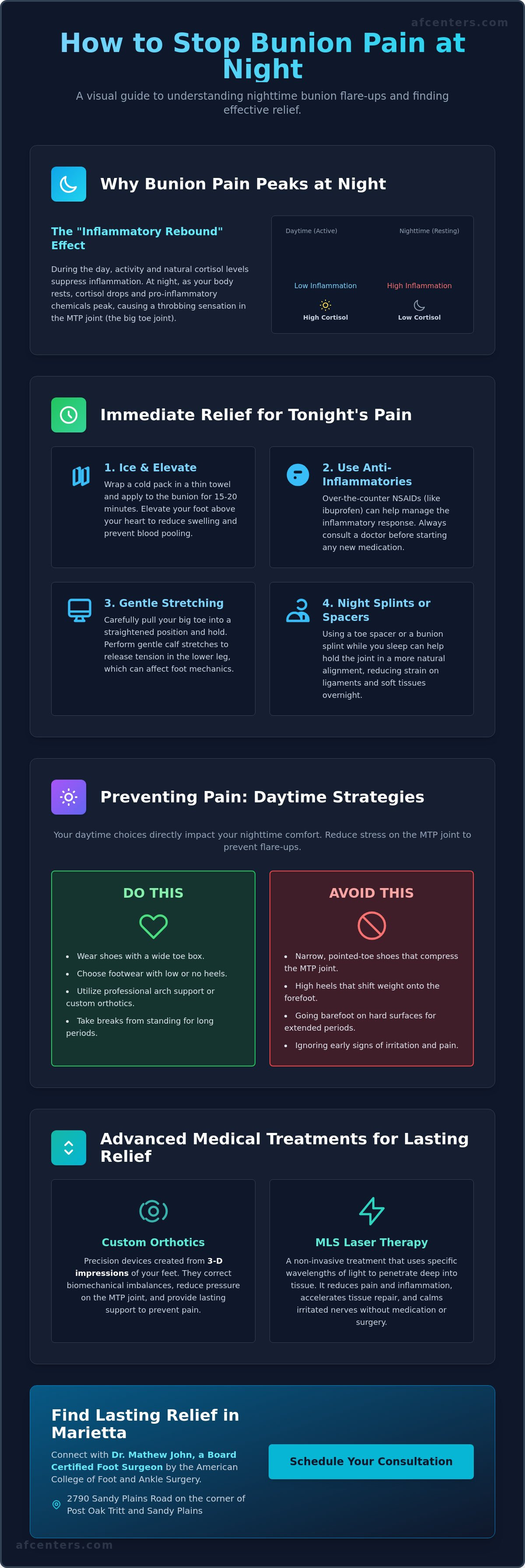
The reason you're searching for how to stop bunion pain at night often comes down to a physiological process called "inflammatory rebound." During the day, your body is active and your natural cortisol levels help suppress some inflammation. Once you lie down to rest, your body enters a recovery phase. This is when pro-inflammatory chemicals peak in your bloodstream, leading to that intense, burning sensation in the joint. If you're struggling with how to stop bunion pain at night, understanding this chemical shift is the first step toward finding relief.
To better understand this concept, watch this helpful video:
The Role of the MTP Joint
Daytime Activity vs. Nighttime Recovery
Your choices during the day directly dictate your comfort at night. If you spend your afternoon standing for long periods on the corner of Sandy Plains, the stress on your forefoot accumulates. Narrow shoes or high heels prime the nerves for a flare-up by compressing the MTP joint for hours. You should remember that Hallux Valgus is a progressive bone deformity, not just a simple bump on the skin. This means the structural change continues to worsen without professional intervention.
Circulatory changes also play a significant role in your discomfort. As you settle into bed, your heart rate slows and blood flow to your extremities can actually increase as your body regulates its core temperature. This influx of blood can cause the already inflamed joint to feel tighter and more painful. Without the distractions of your daily routine, your brain focuses entirely on this localized distress. If you're looking for professional guidance to address these triggers, exploring our services can help you find a path to long-term relief. Dr. Mathew John, a Board Certified Foot Surgeon by the American College of Foot and Ankle Surgery, works with patients at 2790 Sandy Plains Road on the corner of Post Oak Tritt and Sandy Plains to restore their quality of life.
5 Immediate Ways to Relieve Bunion Throbbing Before Bed
Silencing the throb of a bunion requires a proactive routine before you ever pull back the covers. While the structural changes of Hallux Valgus are permanent without surgery, the acute inflammation that keeps you awake is manageable. If you're struggling with how to stop bunion pain at night, focus on calming the nerves and reducing the internal pressure that built up throughout your day. These five strategies offer a steady hand in your journey toward a more restful night.
The Cold Therapy Protocol
Reducing the temperature of the MTP joint is one of the most effective ways to quiet a flare-up. Use the "Ice and Elevate" method by placing a cold pack on the side of your foot for 15 to 20 minutes. You should always wrap the ice in a thin towel to protect your skin from damage. While icing, elevate your foot so it's positioned above the level of your heart. This encourages fluid to drain away from the extremity and prevents blood pooling. Essentially, ice restricts blood vessels to dull the throbbing and provides a natural numbing effect that prepares you for sleep.
Nighttime Alignment Tools
Alignment aids can help keep your big toe in a more neutral position while you rest. You can choose between rigid night splints, which provide a firm pull, or soft gel toe spacers that fit comfortably between the first and second toes. Toe spacers are a simple way to reduce friction and prevent the toes from overlapping during the night. If you use a splint, ensure it isn't too tight; an overly restrictive brace can actually worsen circulation and increase discomfort. Consistency is the key here. Using these tools every night helps maintain the space in the joint and reduces the strain on the surrounding ligaments.
Beyond alignment, consider these additional steps to release tension:
- Release the Muscle: Perform gentle foot stretches to release tension in the abductor hallucis muscle, which often becomes tight and pulls the toe out of place.
- Topical Relief: Apply a localized anti-inflammatory cream. When considering non-surgical treatments, topicals are often preferred for nighttime use because they target the joint directly without the systemic side effects of oral pills.
- Hydrate the Skin: Use a thick moisturizer to prevent the skin over the bunion from becoming dry and cracked, which can add a stinging sensation to the deep bone ache.
If these at-home methods only provide temporary relief, it may be time to seek a more sophisticated solution. You can explore our services to see how professional care can address the root cause of your discomfort. Dr. Mathew John, a Board Certified Foot Surgeon by the American College of Foot and Ankle Surgery, provides personalized care at 2790 Sandy Plains Road on the corner of Post Oak Tritt and Sandy Plains. Taking this step ensures you don't have to navigate your path to wellness alone.
Preventing Nighttime Pain Through Daytime Foot Care
Your sleep quality starts the moment you put on your shoes in the morning. If you spend your day compressing your MTP joint, you're essentially setting a timer for an inflammatory flare-up later tonight. Learning how to stop bunion pain at night requires a shift in how you treat your feet during your waking hours. By reducing the mechanical stress on your big toe joint while you're active, you prevent the accumulation of pain chemicals that lead to that midnight throb. Think of daytime care as a way to lower the "volume" of the discomfort before you ever lie down.
Footwear Selection for Bunion Sufferers
Give your feet the space they need to move naturally. The "Wide Toe Box" rule is your best defense against nighttime agony. Look for shoes that offer significant depth and width, specifically in the forefoot area. Flexible materials like soft leather or high-quality mesh are ideal because they stretch over the joint rather than pressing against it. You should avoid high heels whenever possible; they're the primary enemy of a restful night because they force your entire body weight onto the already stressed big toe joint. Getting a professional fitting can help you identify hidden pressure points that might be contributing to your chronic discomfort. While Bunion surgery is a definitive path for many, changing your footwear is a rewarding opportunity to find immediate relief.
The Importance of Custom Orthotics
Many people turn to drugstore inserts for help, but over-the-counter options often fail to provide specific relief because they aren't designed for your unique anatomy. Custom orthotics are a sophisticated resource that corrects the biomechanical imbalance causing the bunion. By redistributing pressure away from the big toe and supporting the arch, they stop the joint from being overworked during the day. This proactive approach is a key part of the strategy for how to stop bunion pain at night. At our office, we create these devices using precise 3-D impressions to ensure a perfect fit for your lifestyle.
Don't overlook the value of padding and taping during your work hours. These professional techniques create a protective barrier that reduces friction and stabilizes the joint. If your routine involves high-impact stress on your feet, consider modifying those activities to give your joints a chance to recover. If you're ready to move toward long-term health, you should consult with a foot specialist who can guide you. Dr. Mathew John is a Board Certified Foot Surgeon by the American College of Foot and Ankle Surgery. You can find his expert care at 2790 Sandy Plains Road on the corner of Post Oak Tritt and Sandy Plains, where we take pride in being a localized hub for advanced foot health.
Advanced Medical Treatments for Chronic Bunion Discomfort
MLS Laser: A Non-Invasive Solution
Precision Orthotics with 3-D Impressions
Old-fashioned plaster molds are a thing of the past. Today, we utilize 3-D impressions to create a precision map of your foot's unique architecture. This gold standard for precision alignment ensures that your custom orthotic supports your specific arch and redistributes weight away from the MTP joint. Dr. Mathew John uses this technology to ensure optimal patient outcomes, providing a level of accuracy that over-the-counter inserts simply cannot match. When your foot is properly aligned during the day, you'll find that the answer to how to stop bunion pain at night becomes much clearer as the joint is no longer under constant mechanical stress.
When localized anti-inflammatories are necessary, we may discuss the use of cortisone injections. These provide targeted relief for acute flare-ups that don't respond to other conservative methods. However, if your pain is stubborn or recalcitrant, a professional diagnostic workup is essential to identify the exact stage of your condition. Dr. Mathew John, a Board Certified Foot Surgeon by the American College of Foot and Ankle Surgery, provides this specialized care at 2790 Sandy Plains Road on the corner of Post Oak Tritt and Sandy Plains. You don't have to navigate this journey alone. You can view our full list of treatments to learn how we can restore your comfort and vitality.
Expert Bunion Care in Marietta: Restoring Your Quality of Life
Surgical Excellence and Recovery
Dr. Mathew John, a Board Certified Foot Surgeon by the American College of Foot and Ankle Surgery, specializes in reconstructive foot and ankle surgery designed for long-term results. Modern surgical techniques have transformed the patient experience by focusing on the underlying bone structure. Rather than simply shaving down the visible bump, these procedures correct the actual bone misalignment. This structural correction is often the most reliable answer for how to stop bunion pain at night when the deformity has progressed. Our primary goal is to return you to an active, pain-free lifestyle where you don't have to think twice about your next step.
Visit Us in Marietta
You'll find our office conveniently located at 2790 Sandy Plains Road on the corner of Post Oak Tritt and Sandy Plains. We've built our practice on a foundation of local pride and dependability, serving the Atlanta Metro community with a blend of professional authority and warm encouragement. Don't let another night of interrupted sleep hold you back from your personal goals. Take a proactive step toward wellness and Schedule your bunion evaluation with Dr. Mathew John today. To learn more about the full range of treatments we offer, feel free to explore our services and see how we can help you reclaim your quality of life.
Reclaim Your Sleep and Your Lifestyle
You don't have to navigate this path alone. Dr. Mathew John is a Board Certified Foot Surgeon by the American College of Foot and Ankle Surgery who specializes in restoring your quality of life. At our Marietta office, located at 2790 Sandy Plains Road on the corner of Post Oak Tritt and Sandy Plains, we provide high-end resources like custom orthotics designed with precision 3-D impressions. We focus on your personal journey, ensuring you feel supported at every stage of your recovery.
Take control of your comfort today. Schedule a Consultation with Dr. Mathew John to begin your personalized health journey. We're here to guide you toward a future filled with vitality and restful nights. You deserve to move through the world without pain holding you back.
Frequently Asked Questions
Is it okay to wear a bunion splint every night?
It's perfectly fine to wear a bunion splint every night, as consistency is vital for maintaining joint alignment. These devices work by gently stretching tight ligaments and keeping your big toe in a more neutral position while you rest. Just ensure the splint isn't so tight that it restricts your circulation. If you notice any numbness or skin irritation, you should adjust the fit or consult an expert for professional guidance.
Can bunions go away without surgery if I manage the pain at night?
Bunions cannot go away without surgery because they are structural bone misalignments, not just temporary swellings. While knowing how to stop bunion pain at night improves your quality of life, only reconstructive surgery can correct the underlying bone deformity. Managing your symptoms helps you stay comfortable and active, but it won't reverse the shift of the MTP joint. Dr. Mathew John can help you decide when a permanent solution is the best choice.
What is the best sleeping position for bunion pain?
The best sleeping position for bunion pain is on your back with your feet slightly elevated by a wedge pillow. This encourages better circulation and reduces the swelling that often peaks at the end of the day. If you prefer sleeping on your side, place a small pillow between your knees and ankles. This simple adjustment prevents your top foot from pressing against the bottom one, which protects the sensitive joint from unnecessary pressure.
Why does my bunion throb even when I'm not wearing shoes?
Your bunion often throbs at night because of a physiological process called inflammatory rebound. Once you're at rest, your body's natural anti-inflammatory chemicals shift, and blood flow to your extremities can increase. This is why many people search for how to stop bunion pain at night even after a day of being barefoot. The internal misalignment causes chronic bursitis, keeping the nerves on high alert regardless of whether you're wearing shoes or not.
How do I know if my nighttime bunion pain is actually arthritis?
You can distinguish bunion pain from arthritis by looking for specific symptoms like joint stiffness or a grinding sensation when moving the toe. While bunion pain is often a burning or throbbing ache, arthritis tends to feel deeper and more restrictive. A professional evaluation is the only way to be certain. Dr. Mathew John uses clinical exams and 3-D impressions to differentiate between simple bunion inflammation and degenerative joint changes in the foot.
Can MLS Laser therapy permanently stop my bunion pain?
MLS Laser therapy is highly effective for reducing pain and inflammation, but it's not a permanent cure for the underlying bone structure. It provides significant relief by using specific light wavelengths to accelerate tissue repair and reduce swelling in the joint. While it can silence the pain for long periods, it won't remove the physical bunion bump. It's a sophisticated, non-invasive option for those who want to manage musculoskeletal pain without surgery or downtime.
How many sessions of laser therapy are typically needed for foot pain?
Most patients require 6 to 10 sessions of MLS Laser therapy to achieve significant and lasting relief from musculoskeletal pain. These treatments are usually scheduled a few times per week to build a cumulative healing effect in the tissue. Because the process is painless and requires no downtime, it's a rewarding opportunity to address chronic inflammation. We'll work with you to develop a personalized schedule that fits your lifestyle and your health goals.
When should I stop home remedies and see a Board Certified Foot Surgeon?
You should seek professional care when your pain interferes with your sleep or limits your ability to stay active. If at-home tips and drugstore cures aren't helping you find relief, it's time for expert guidance. Dr. Mathew John is a Board Certified Foot Surgeon by the American College of Foot and Ankle Surgery. He provides specialized care at 2790 Sandy Plains Road on the corner of Post Oak Tritt and Sandy Plains to help you find a long-term path to health.


