
Did you know that while over 70% of elective procedures now happen in outpatient settings, many patients still feel they're stepping into the operating room with more questions than answers? It's natural to feel a mix of hope and hesitation when you're considering a procedure to regain your mobility. You want to ensure you're making the best choice for your long-term health, but the fear of complications or a long recovery can be overwhelming. We believe that a well-informed patient is a successful patient. By preparing specific questions to ask your podiatrist before surgery, you can transform that uncertainty into a clear, confident roadmap for your healing journey.
In this guide, we'll empower you with a comprehensive checklist to use during your next consultation. Whether you're visiting our office at 2790 Sandy Plains Road on the corner of Post Oak Tritt and Sandy Plains or consulting with another professional, these insights are vital. You'll learn how to verify that Dr. Mathew John is a Board Certified Foot Surgeon by the American College of Foot and Ankle Surgery and understand everything from 3-D impressions for orthotics to advanced non-surgical options like Swift Treatment or MLS Laser Therapy. We'll outline exactly what you need to know to ensure a safe, successful, and stress-free recovery.
Key Takeaways
- Understand why being an active partner in your healthcare journey reduces surgical anxiety and improves your overall recovery results.
- Discover the essential questions to ask your podiatrist before surgery to confirm your diagnosis and explore non-surgical alternatives like 3-D impressions for custom orthotics.
- Gain a clear understanding of technical details, including the differences between minimally invasive techniques and the specific anesthesia plan for your procedure.
- Prepare for life after the procedure with a realistic timeline for weight-bearing, driving, and returning to your favorite activities.
- Learn the value of choosing a Board Certified Foot Surgeon by the American College of Foot and Ankle Surgery to ensure high-level expertise and professional support.
Why Preparation is Critical for Foot and Ankle Surgery
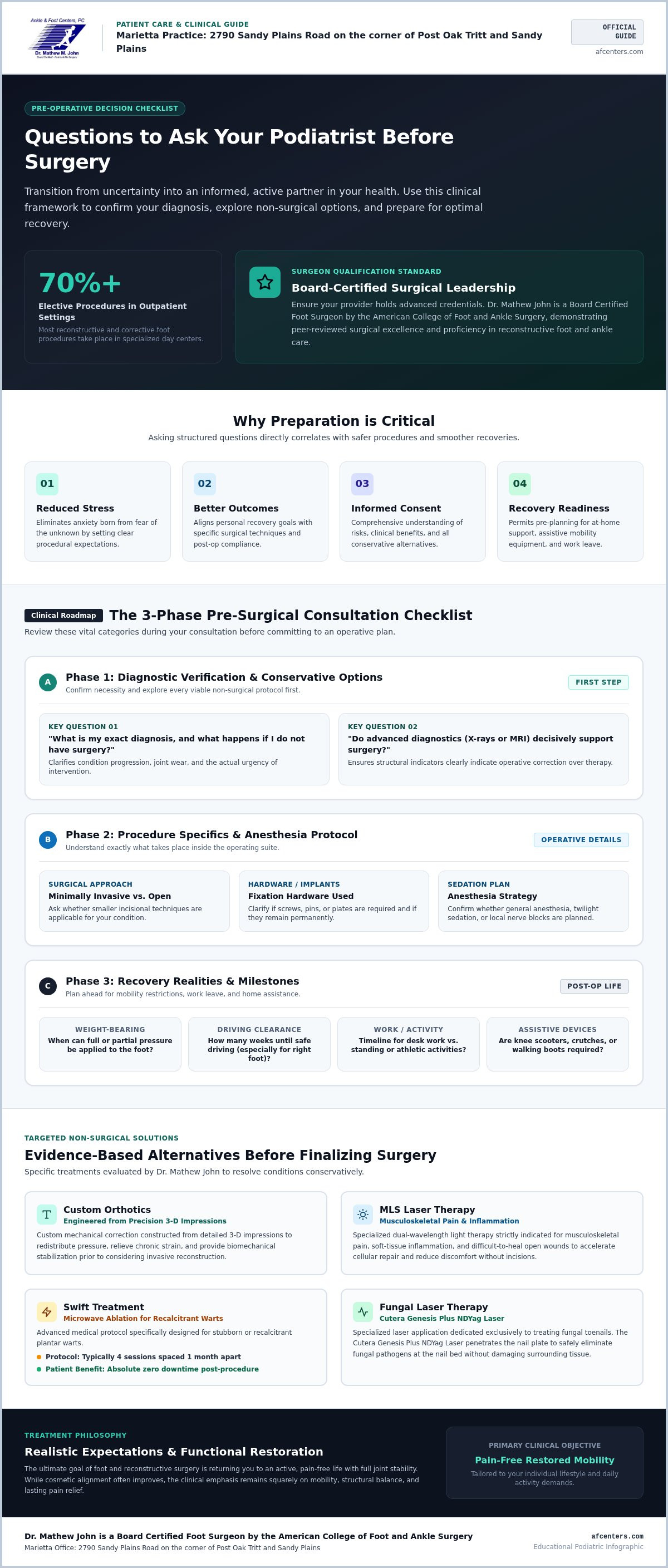
Entering a surgical consultation shouldn't feel like a one-sided lecture. It's a professional partnership where your input is just as valuable as the clinical data. When you come prepared with specific questions to ask your podiatrist before surgery, you move from being a passive recipient of care to an active participant in your own healing. This proactive approach does more than just provide information; it significantly reduces the pre-operative anxiety that often stems from the unknown. You deserve to feel confident in your care plan before you ever set foot in an operating room.
Understanding the "why" and "how" of your procedure ensures you're mentally and physically ready for the road ahead. Patients who clearly grasp their surgical plan are much more likely to follow post-operative instructions accurately. This leads to fewer complications and faster recovery times. View your visit to our office at 2790 Sandy Plains Road on the corner of Post Oak Tritt and Sandy Plains as a two-way interview. You're choosing a partner for your health journey, and qualifying their expertise is the first step toward a successful outcome. Preparation offers several key benefits:
- Reduced Stress: Knowing what to expect on the day of surgery eliminates the fear of the unknown.
- Better Outcomes: Clear communication helps align your surgical goals with your surgeon's techniques.
- Informed Consent: You can't truly agree to a procedure until you understand the risks, benefits, and alternatives.
- Recovery Readiness: Asking the right questions helps you arrange for help at home and necessary equipment in advance.
The Value of a Board Certified Foot Surgeon
Not all surgical credentials are created equal. When you see that Dr. Mathew John is a Board Certified Foot Surgeon by the American College of Foot and Ankle Surgery, it signifies a rigorous level of training and peer-reviewed excellence. This certification means your surgeon has demonstrated advanced proficiency in reconstructive procedures, ranging from correcting hammertoes to managing complex sports injuries. For you, this translates to a higher standard of safety and a commitment to utilizing the most effective surgical techniques available. Choosing a specialist who holds this specific board certification ensures that your care is grounded in the latest evidence-based practices.
Setting Realistic Expectations for Your Results
Success in foot surgery is defined by how well the outcome aligns with your personal lifestyle goals. While aesthetic improvements often occur, the primary focus is always on restoring your ability to move without pain. Whether you want to return to high-impact sports or simply walk through the park comfortably, your surgical plan should reflect those priorities. In some cases, conservative options like custom orthotics made from 3-D impressions may be discussed before finalizing a surgical path. The ultimate goal of reconstructive surgery is to provide you with the stability and comfort needed to return to a pain-free, active life.
Diagnostic Questions: Confirming the Need for Surgery
Before you commit to a surgical procedure, you need to feel entirely confident that it's the right choice for your lifestyle. One of the most vital questions to ask your podiatrist before surgery is: "What is my exact diagnosis, and what happens if I choose not to have surgery?" Understanding the long-term progression of your condition helps you weigh the benefits of intervention against the risks of waiting. You should also confirm that advanced diagnostics, such as X-rays or an MRI, clearly support the recommendation for a surgical path.
It's equally important to inquire about the success rates of conservative treatments for your specific issue. In many cases, surgery is a final resort after other methods have been exhausted. If you're visiting us at 2790 Sandy Plains Road on the corner of Post Oak Tritt and Sandy Plains, our team will review your history to ensure every non-invasive option has been explored. Dr. Mathew John is a Board Certified Foot Surgeon by the American College of Foot and Ankle Surgery, and he prioritizes finding the most effective, least invasive path for every patient. You can explore our full range of services to see how these alternatives might fit into your personal health plan.
Exploring Non-Surgical Alternatives
Modern podiatry offers sophisticated tools that can often resolve pain without an incision. For chronic musculoskeletal pain or difficult inflammation, MLS Laser Therapy provides a powerful, non-invasive solution. This technology uses specific wavelengths of light to stimulate tissue repair and reduce swelling. It's an excellent alternative for patients hoping to avoid the recovery time associated with surgery.
If you're dealing with stubborn or recalcitrant plantar warts, we often recommend Swift Treatment. This advanced approach uses microwave ablation technology to target the root of the wart. The protocol typically involves four sessions, each spaced one month apart. Because there is no downtime following the procedure, it's a popular choice for active Marietta residents. Similarly, for those struggling with fungal toenails, the Cutera Genesis Plus NDYag Laser or fungal laser therapy can effectively treat the infection without the need for surgical nail removal.
The Role of 3-D Impressions in Your Treatment Plan
Precision is key when aligning the foot to prevent future issues. We utilize 3-D impressions to create custom orthotics that provide a far superior fit compared to traditional methods. These orthotics can often delay or even prevent the need for hammertoe or bunion surgery by correcting the biomechanical imbalances that cause these conditions in the first place. This physical modeling approach ensures the most accurate diagnostic profile possible by capturing the exact contours of your feet. You might use these custom orthotics as a standalone treatment or as a post-surgical tool to maintain your results and prevent recurrence.
Technical Questions: Understanding the Surgical Procedure
Once you've confirmed that surgery is the best path forward, it's time to dive into the technical details of the operation itself. These specific questions to ask your podiatrist before surgery help you visualize the day of the procedure and prepare your mind for the experience. You should start by asking whether the approach will be minimally invasive or a traditional open surgery. Each method has specific advantages depending on the complexity of your case, and understanding the choice helps you manage your expectations for scarring and initial healing. Don't hesitate to ask how many times the surgeon has performed this exact reconstructive procedure. Dr. Mathew John is a Board Certified Foot Surgeon by the American College of Foot and Ankle Surgery, which reflects a high level of specialized expertise in these technical maneuvers.
Anesthesia is another critical topic for your consultation. Inquire about the type of anesthesia recommended; many foot surgeries utilize a local block combined with intravenous sedation rather than general anesthesia. You'll also want to know who will be administering the anesthesia and monitoring your vitals throughout the process. If your procedure involves hardware like screws, plates, or pins to stabilize the bone, ask what they're made of and if they'll ever need to be removed. While most hardware is designed to stay in place permanently, knowing the plan for your specific anatomy provides peace of mind.
Minimally Invasive vs. Reconstructive Surgery
Minimally invasive techniques allow for smaller incisions, which can lead to less soft tissue trauma and a faster return to daily activities for certain bunion or hammertoe corrections. However, more complex reconstructions may require traditional incisions to ensure the structural integrity of the foot. You should discuss how your personal medical history, particularly conditions like diabetes, might influence surgical risks or the choice of technique. Ask about the expected duration of the procedure; most routine reconstructive foot surgeries are completed within one to two hours, allowing you to return home the same day.
Surgical Facility and Safety Protocols
Where your surgery takes place is just as important as the procedure itself. Most elective foot surgeries are performed in accredited outpatient surgery centers, which offer a streamlined experience and often a lower risk of certain infections compared to large hospitals. Ask about the surgical team's specific protocols for preventing surgical site infections. It's also a good idea to confirm that your surgeon maintains active hospital privileges in the Marietta or Atlanta area. This ensures that even if you're having an outpatient procedure, your doctor is held to the highest standards of professional peer review and institutional safety.
Recovery Questions: Planning Your Path to Mobility
Recovery is where the real work of transformation happens. While the surgery corrects the physical structure, your adherence to the post-operative plan determines the quality of your results. Essential questions to ask your podiatrist before surgery should focus on the specific milestones of your mobility. For instance, you must know exactly how soon you can bear weight on your foot. Depending on the procedure, you might be non-weight-bearing for several weeks. This requires planning for specific medical equipment to help you navigate your home safely:
- Walking boots: These provide stability once you're cleared for partial weight-bearing.
- Crutches or walkers: Essential for maintaining balance during the initial healing phase.
- Knee scooters: A popular and efficient way to stay mobile while keeping weight off your foot.
Your return to daily routines like work and driving depends heavily on which foot is involved and the type of procedure performed. If your right foot is the one being treated, you'll naturally need more time away from the driver's seat. You should also inquire about the necessity and frequency of physical therapy. These sessions are vital for restoring range of motion and strength after a period of immobilization. At our office at 2790 Sandy Plains Road on the corner of Post Oak Tritt and Sandy Plains, we guide you through every step of this timeline. Dr. Mathew John is a Board Certified Foot Surgeon by the American College of Foot and Ankle Surgery, and he ensures each patient has a customized recovery map that prioritizes long-term health over a rushed return.
Managing Pain and Inflammation Post-Op
Managing discomfort is a top priority during the first few days of healing. Ask your surgeon about a multimodal pain management plan that minimizes reliance on heavy narcotics. We often utilize MLS Laser Therapy to manage post-operative swelling and promote the healing of difficult-to-heal open wounds. This non-invasive treatment can significantly accelerate the tissue repair process, helping you feel better faster. You'll also want to establish a clear schedule for follow-up appointments to ensure your healing is progressing as expected. To see how we support your journey back to health, view our full list of surgical and non-surgical services.
Home Care and Lifestyle Adjustments
Preparing your home before your surgery date makes a world of difference for your peace of mind. Clear wide paths for a walker or knee scooter and set up a "recovery station" on the ground floor to avoid unnecessary trips up the stairs. Ask about bathing restrictions during your consultation; you'll need to keep surgical dressings completely dry, which often requires a specialized waterproof cast cover. Most patients can expect to transition from a surgical boot back into supportive, normal footwear around the six to eight-week mark, provided healing is on track. This milestone is a rewarding opportunity to resume your active lifestyle with renewed comfort.
Choosing Your Surgeon in Marietta: The Ankle & Foot Centers, PC Difference
Selecting the right surgical partner is the final, most crucial step in your journey toward recovery. While you've gathered your list of questions to ask your podiatrist before surgery, the quality of the answers you receive depends on the expertise and philosophy of the specialist you choose. At Ankle & Foot Centers, PC, we don't just see patients; we mentor individuals through their unique health transitions. We believe that surgery should be a carefully considered choice made only after exploring advanced non-invasive options that align with your lifestyle.
Our commitment to your vitality means we prioritize treatments like Swift microwave ablation for recalcitrant warts or MLS Laser Therapy for musculoskeletal inflammation whenever possible. Swift Treatment is a sophisticated option for stubborn warts, utilizing microwave technology over four sessions spaced one month apart with absolutely no downtime for the patient. If surgery remains the best path, you can rest assured that our reconstructive plans are designed with your long-term mobility in mind. We view every procedure as a rewarding opportunity to help you reclaim your active life.
Expertize You Can Trust: Dr. Mathew M. John
Dr. Mathew John is a Board Certified Foot Surgeon by the American College of Foot and Ankle Surgery. This specific credential represents a standard of excellence that goes beyond general podiatric care, ensuring you're in the hands of a specialist who has mastered complex reconstructive techniques. His approach focuses on progress over perfection, aiming to restore your health through a plan tailored to your specific anatomy and goals. Whether you're managing a sports injury or a chronic deformity, you'll receive professional guidance that makes you feel supported rather than rushed. This personalized attention ensures you never feel like you're navigating your path alone.
Visit Our Marietta Office
We invite you to experience our welcoming, non-judgmental atmosphere at our Marietta location. Our office is conveniently situated at 2790 Sandy Plains Road on the corner of Post Oak Tritt and Sandy Plains, making it a localized hub for residents in Roswell and Kennesaw. We take pride in providing a professional environment where sophisticated resources meet a friendly, human touch. Contact us today to schedule a comprehensive diagnostic evaluation and take the first step toward a pain-free future. You can explore our full range of services to learn more about how we can help you reach your personal health goals.
Empower Your Path to Pain-Free Living
Taking the time to prepare specific questions to ask your podiatrist before surgery is the best way to ensure your recovery is as smooth as possible. You've learned how to qualify your surgeon's expertise and verify the need for a procedure through advanced diagnostics like 3-D impressions. Whether you're considering reconstructive surgery or exploring non-invasive options like Swift microwave ablation for warts, being an active partner in your care is essential for long-term success. Understanding your recovery timeline and pain management plan helps you approach your procedure with confidence rather than hesitation.
Dr. Mathew John is a Board Certified Foot Surgeon by the American College of Foot and Ankle Surgery, and he's dedicated to providing expert care right here in Marietta. Our team at 2790 Sandy Plains Road on the corner of Post Oak Tritt and Sandy Plains is ready to help you navigate every milestone of your journey. We prioritize your comfort and mobility, ensuring you have the professional support needed to reach your personal health goals.
Schedule Your Surgical Consultation with Dr. Mathew John Today
You don't have to navigate your health journey alone. Let's work together to get you back on your feet and back to the vibrant, active lifestyle you deserve.
Frequently Asked Questions
What is the most important question to ask a podiatrist before surgery?
The most critical question is asking about the expected outcome and what happens if you choose to delay the procedure. This helps you weigh the benefits of intervention against the risks of progression. When preparing your list of questions to ask your podiatrist before surgery, prioritize understanding the long-term impact on your mobility. Our team in Marietta ensures you have a clear vision of how the procedure aligns with your personal health goals.
How do I know if my foot surgeon is properly qualified?
You can verify a surgeon's qualifications by checking their board certification status with the American College of Foot and Ankle Surgery (ACFAS). Dr. Mathew John is a Board Certified Foot Surgeon by the American College of Foot and Ankle Surgery; this credential signifies the highest level of specialized training and peer-reviewed excellence. Residents in Marietta and Roswell should always confirm this certification to ensure their surgeon is held to the most rigorous professional safety standards.
Is foot surgery always the only option for bunions or hammertoes?
Surgery is rarely the first step for bunions or hammertoes unless the deformity is severe or causing significant pain. We often recommend conservative treatments first, such as custom orthotics made from 3-D impressions. These devices correct biomechanical imbalances to slow progression and improve comfort. By utilizing precise 3-D impressions rather than outdated methods, we can often delay or entirely prevent the need for reconstructive surgery for many of our patients in Kennesaw.
What is Swift Treatment for warts and does it require surgery?
Swift Treatment is a non-surgical, advanced solution for stubborn or recalcitrant plantar warts that uses microwave ablation technology. It does not require any incisions or anesthesia. The protocol typically involves four sessions spaced one month apart; it's highly effective for patients who haven't found success with traditional freezing. One of the biggest benefits for our active Marietta community is that there is absolutely no downtime for patients following the procedure.
How long is the typical recovery for reconstructive foot surgery?
Recovery timelines vary based on the specific procedure, but most reconstructive surgeries involve a healing period of six to twelve weeks. You might be non-weight-bearing for the first few weeks, requiring a knee scooter or crutches. Returning to work or driving usually happens between four and eight weeks, depending on which foot was treated. We provide a detailed recovery map at our office on 2790 Sandy Plains Road on the corner of Post Oak Tritt and Sandy Plains.
Can MLS Laser Therapy help me avoid surgery for heel pain?
MLS Laser Therapy is an excellent non-invasive option for managing musculoskeletal pain and inflammation associated with heel pain. It utilizes specific light wavelengths to stimulate cellular repair and reduce swelling without the need for an incision. While it doesn't correct structural deformities, it often resolves the pain of plantar fasciitis, allowing patients in Woodstock and Sandy Springs to avoid surgery. We prioritize these advanced therapies to help you return to your active lifestyle.
Will I need physical therapy after my ankle surgery?
Most reconstructive ankle or foot surgeries benefit significantly from a structured physical therapy program. These sessions are vital for restoring your range of motion, improving balance, and rebuilding strength in the muscles that were immobilized during early healing. Your therapist works as a partner in your recovery, guiding you through exercises that ensure your long-term results are stable. We coordinate closely with local specialists in Marietta to ensure your post-operative transition is smooth.
What should I bring to my surgical consultation in Marietta?
Please bring any recent imaging results, a list of your current medications, and the shoes you wear most frequently. It's also helpful to have your written list of questions to ask your podiatrist before surgery ready for discussion. Having these items on hand during your visit to 2790 Sandy Plains Road on the corner of Post Oak Tritt and Sandy Plains allows Dr. Mathew John to provide a more accurate diagnostic evaluation tailored to your needs.


