
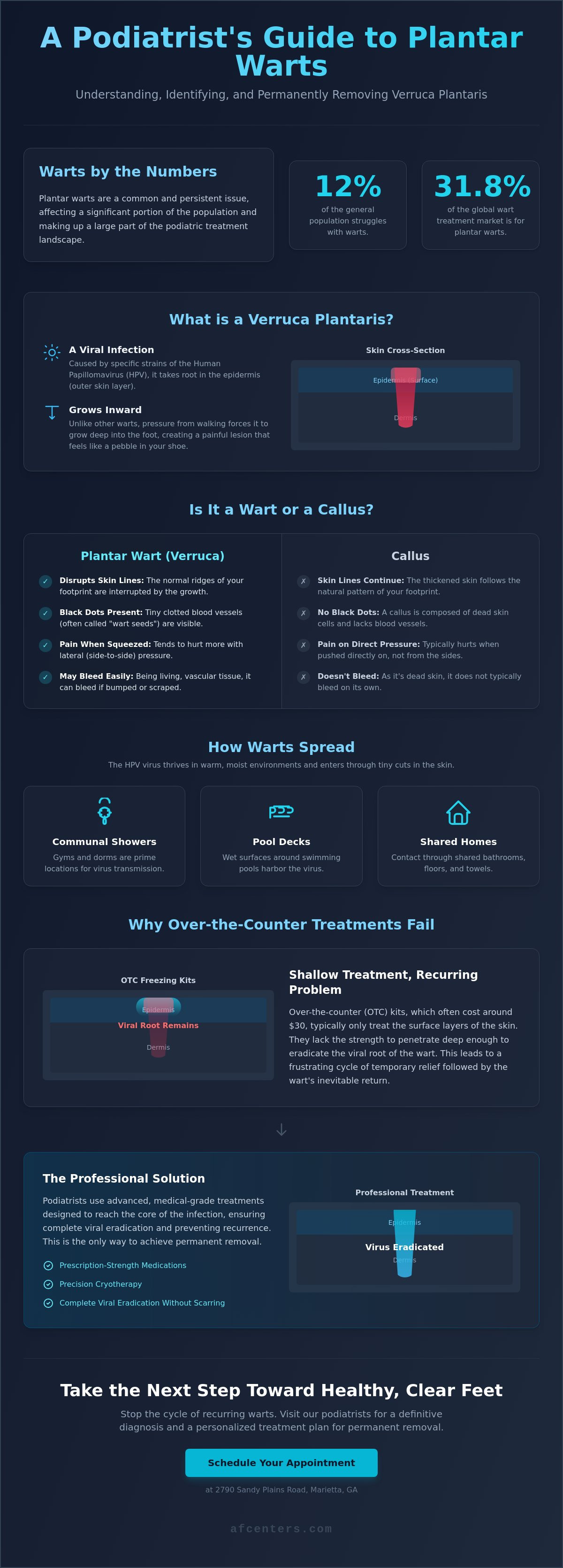
Did you know that nearly 12% of the general population struggles with the persistent discomfort of warts, with plantar warts accounting for 31.8% of the global treatment market in 2025? If you've felt that sharp, pebble-in-your-shoe sensation while walking through Marietta, you're likely dealing with verruca plantaris. It's a common viral infection that can turn a simple stroll into a painful ordeal.
We understand how frustrating it is to spend $30 on over-the-counter kits only to have the same painful bump return a few weeks later. You want to walk without wincing and feel confident about the appearance of your feet again. This article shows you how to identify these stubborn growths and explore professional podiatric care that targets the root of the virus for permanent removal. You'll learn about the latest treatment options available at our office at 2790 Sandy Plains Road on the corner of Post Oak Tritt and Sandy Plains. We'll guide you through the journey from initial diagnosis to pain-free steps, ensuring you never have to navigate your foot health alone.
Key Takeaways
- Learn how to distinguish a viral verruca plantaris from a simple callus by understanding how pressure forces these growths deep into the skin.
- Identify the specific HPV strains responsible for foot warts and how they easily spread through shared local environments like gym showers or pool decks.
- Discover the limitations of over-the-counter freezing kits and why professional-grade treatments are necessary to reach the root of the infection.
- Explore expert removal methods including prescription-strength medications and precision cryotherapy designed for complete viral eradication without scarring.
- Get clear instructions on post-procedure care and prevention strategies at our Marietta clinic located at 2790 Sandy Plains Road on the corner of Post Oak Tritt and Sandy Plains.
Understanding Verruca Plantaris (Plantar Warts) in Marietta
A verruca plantaris isn't just a surface-level skin growth. It's a viral infection that takes root in the epidermis, the outer layer of your skin. Unlike warts on your hands that grow outward, the constant pressure of walking and standing in Marietta forces these growths to develop inward. This creates a deep, painful lesion that feels like you're stepping on a sharp pebble with every move. While many people refer to these as common warts, a Plantar wart is unique because of its location on the weight-bearing areas of the foot. Current data from 2025 shows that these growths represent 31.8% of the global wart treatment market, highlighting how common this struggle is for local residents.
You might notice a single wart or a cluster of several growths grouped together. When they congregate, we call them mosaic warts. These clusters are often more difficult to treat because the virus has spread across a larger surface area. You've probably seen small black dots within the growth and heard them called wart seeds. They aren't seeds at all. They're actually tiny, clotted blood vessels that have grown into the wart to supply it with nutrients. Because verruca plantaris is highly vascular, it can bleed easily if it's bumped or scratched during your daily activities.
To better understand how these growths develop and how we can help you find relief, watch this helpful video:
Identifying Symptoms on the Sole of Your Foot
It's easy to mistake a wart for a simple callus. Both involve hard, thickened skin, but a wart has distinct markers that reveal its viral nature. If you look closely, you'll see that the normal ridges and lines of your footprint are interrupted by the growth. While a callus is just dead skin, a wart is living tissue. This is why you'll see pinpoint bleeding if the surface is gently debrided. The pain is also quite specific. Warts usually hurt more when you squeeze them from the sides rather than pushing directly on top of them. This lateral pressure test is a quick way to differentiate them from corns or calluses.
When a Foot Bump Requires a Marietta Podiatrist
Home treatments often fail because they don't reach the viral root deep within the skin. You should visit our clinic at 2790 Sandy Plains Road on the corner of Post Oak Tritt and Sandy Plains if your foot bump starts to change your gait. When you walk differently to avoid pain, you risk developing secondary issues in your ankles, knees, or hips. Watch for signs of infection like redness, warmth, or drainage. If your warts keep coming back after using drugstore kits, it's time for professional intervention to stop the viral cycle. You can explore our full range of podiatric care on our services page to see how we empower our patients toward long-term wellness.
Causes and Transmission: How Warts Spread in Atlanta Metro Gyms
The primary cause of verruca plantaris is the Human Papillomavirus (HPV), specifically strains 1, 2, and 4. These viruses thrive in the warm, humid climate we experience throughout Georgia. Moisture allows the virus to survive on surfaces for longer periods than it would in drier regions. This makes our local environments prime territory for the virus to linger and wait for a new host. It's a persistent invader that requires a proactive approach to keep your feet healthy and clear.
The virus doesn't need a large wound to take hold. It enters through microscopic cuts or abrasions on the sole of your foot. Once inside, it hijacks the skin cells in the epidermis. Because it's a virus, it's highly contagious. If one person in a Marietta household has a wart, the risk for others increases. This often happens through shared bathrooms or towels. Understanding the Causes and risk factors for plantar warts helps you protect your family from this persistent issue. Statistics from May 2026 show that warts affect an estimated 7% to 12% of the general population, making this a widespread community concern.
High-Risk Local Environments in Marietta and Roswell
Individual Risk Factors for Persistent Warts
Certain groups are more susceptible to infection. The prevalence of warts in school-aged children sits between 10% and 20% as of 2026. This is often due to developing immune systems and frequent activity in group settings. Seniors may also face higher risks if their immune response has weakened over time. If you struggle with hyperhidrosis, or excessively sweaty feet, the constant moisture can soften the skin and make it easier for the verruca plantaris virus to penetrate. If you suspect you've picked up a virus at the gym, our experts at Ankle & Foot Centers, PC can provide a clear diagnosis and start your treatment journey at 2790 Sandy Plains Road on the corner of Post Oak Tritt and Sandy Plains.
Protecting your foot health starts with awareness. You don't have to navigate these risks alone. Explore our preventative care options to keep your family active and safe.
Why Over-the-Counter Wart Treatments Often Fail
Many patients start their treatment journey in the pharmacy aisle, spending between $10 and $30 on what looks like a quick fix. While these kits are accessible, they often lead to a cycle of frustration. The primary issue lies in the concentration of active ingredients. Most drugstore acids contain salicylic acid at levels between 5% and 40%, which is the only FDA-approved over-the-counter ingredient for this purpose. However, the skin on the bottom of your foot is significantly thicker than skin elsewhere. This protective barrier often prevents the medication from reaching the deep-seated verruca plantaris virus.
Attempting "bathroom surgery" is another common mistake that can set back your progress. Using non-sterile tools to cut or scrape a wart at home frequently leads to secondary bacterial infections. Because warts are highly vascular, they bleed easily when disturbed. This creates a messy entry point for bacteria and can actually spread the virus to other parts of your foot. You risk damaging the healthy surrounding tissue, which can lead to permanent scarring. This scar tissue can eventually make walking just as painful as the original wart itself.
The Limitations of Drugstore Freezing Kits
Retail freezing kits use aerosol sprays that typically reach temperatures around -55°C. While this sounds cold, it pales in comparison to the clinical liquid nitrogen used by a professional podiatrist, which sits at -196°C. The thick calluses that form over a verruca plantaris act as an insulator. The drugstore spray simply cannot penetrate deep enough to kill the viral root. This often results in months of failed self-care and unnecessary pain. It's discouraging to see the growth return just as you thought it was finally fading.
The Risk of Misdiagnosis: Is It Really a Wart?
Applying harsh acids to your foot is dangerous if you aren't 100% sure what you're treating. Corns and calluses are frequently mistaken for warts because they also present as hard, thickened skin. Even more concerning is the possibility of a malignant lesion, such as amelanotic melanoma, masquerading as a simple growth. Treating a skin cancer with over-the-counter wart acid can delay a life-saving diagnosis. Our team at 2790 Sandy Plains Road on the corner of Post Oak Tritt and Sandy Plains provides the high-level expertise needed to confirm your diagnosis. In stubborn cases, a professional biopsy ensures we are targeting the right issue, giving you the clear skin and peace of mind you deserve.
Professional Wart Removal Options at Ankle & Foot Centers, PC
Professional care at Ankle & Foot Centers, PC is about more than just removing a visible growth. It's a journey toward total foot health and clear skin. We use prescription-strength topical medications and blistering agents that go far beyond the 40% salicylic acid limits found in drugstore products. These advanced treatments target the verruca plantaris virus precisely. We focus on minimizing damage to the surrounding healthy skin while ensuring the medication reaches the viral root deep within the epidermis.
Clinical cryotherapy remains a cornerstone of our practice for its precision and effectiveness. Unlike home kits that struggle to reach therapeutic temperatures, our liquid nitrogen application provides deep, controlled viral destruction. For deep-rooted or recalcitrant warts that have resisted other methods, we may recommend surgical curettage. This procedure involves carefully removing the viral tissue under local anesthesia. To ensure your recovery is as smooth as possible, we implement custom offloading strategies. By using specialized padding or orthotics designed from 3-D impressions, we shift pressure away from the healing site so you can stay mobile and comfortable throughout the process.
Advanced Clinical Interventions
Professional debridement is essential for a successful outcome. We carefully remove the overlying callus so medications can penetrate the virus directly. We also utilize specialized acids and immunotherapy to trigger your body's own immune response against the HPV virus. This approach helps prevent the high recurrence rates that frustrate so many patients who try DIY methods. You can learn more about our comprehensive foot care services to see how we tailor each treatment plan to your unique lifestyle and health goals.
Managing Secondary Pain with MLS Laser Therapy
A painful wart often forces you to change the way you walk. When you favor one side of your foot to avoid a verruca plantaris, it creates an unnatural gait. This compensation frequently leads to musculoskeletal inflammation in your arch, ankle, or even your knees. We address this secondary discomfort using MLS Laser Therapy. This non-invasive treatment is specifically intended for musculoskeletal pain and inflammation. It's also highly effective for managing difficult-to-heal open wounds that may occur during the recovery phase. This ensures that while we treat the virus, we also address the physical strain your body has endured. It helps you return to your fitness routine without the lingering aches caused by months of limping.
Don't let a stubborn wart dictate your activity level. Schedule your consultation at our Marietta clinic at 2790 Sandy Plains Road on the corner of Post Oak Tritt and Sandy Plains today to start your path toward pain-free movement.
Recovery is the final chapter in your wellness journey toward clear skin. Once your treatment at 2790 Sandy Plains Road on the corner of Post Oak Tritt and Sandy Plains is complete, our team focuses on long-term success. We carefully monitor the treatment site for the restoration of healthy skin lines. These natural ridges resemble a fingerprint; their return is the most reliable sign that the verruca plantaris virus has been fully eradicated. If the skin lines remain interrupted, it suggests the virus is still present and requires further attention to prevent a recurrence.
Your footwear plays a massive role in preventing viral re-entry. Shoes that are too tight or lack proper support create friction and pressure points that make your skin more vulnerable to HPV. To address this, we may use 3-D impressions to craft custom orthotics. These devices are designed to offload pressure from sensitive areas, providing a stable foundation for your daily activities. This proactive approach ensures that your gait remains balanced and your skin stays protected from future infections. With the plantar warts market expected to grow at a 6.7% CAGR through 2034, it's clear that more people are seeking these professional, long-term solutions for foot health.
5 Steps to Prevent Future Verruca Plantaris Infections
Protecting your feet in the Atlanta Metro area requires simple but consistent habits. Follow these steps to stay healthy:
- Wear flip-flops or shower shoes in all Marietta gym showers and public pool decks.
- Disinfect your home shower floors and bath mats weekly if a family member is currently infected.
- Practice daily foot hygiene by washing with soap and drying thoroughly, especially between the toes.
- Avoid sharing towels, socks, or shoes with others to stop the spread of the virus.
- Change your socks immediately after a workout to keep your feet dry and less hospitable to viral growth.
Your Journey to Pain-Free Walking in Georgia
We believe that professional guidance makes the difference between a temporary fix and a permanent solution. Scheduling follow-up exams is a vital part of this process to confirm the virus is gone for good. Dr. Mathew M. John provides expert local care that prioritizes your comfort and long-term vitality. Whether you live in Marietta, Roswell, or Woodstock, our clinic is your neighborhood hub for world-class podiatric support. We're here to guide you every step of the way and ensure you don't have to navigate this path alone. Contact us today to keep your feet strong and ready for your next adventure.
Take the Next Step Toward Healthy, Clear Feet
Living with the persistent pain of a verruca plantaris doesn't have to be your daily reality. You've learned how these viral infections hide beneath calluses and why professional-grade treatments succeed where drugstore kits fail. By choosing expert care, you're prioritizing a permanent solution that restores your natural skin lines and protects your long-term mobility. It's time to move past the frustration of recurrence and embrace a path toward total foot wellness.
Our team has served the Marietta, Roswell, and Woodstock communities for over 20 years. Led by Dr. Mathew M. John, DPM, FACFAS, we're dedicated to guiding you through every stage of your recovery. We're conveniently located at 2790 Sandy Plains Road on the corner of Post Oak Tritt and Sandy Plains. Don't let foot pain hold you back from the Georgia trails or gym sessions you enjoy most. Schedule your expert wart removal at our Marietta office today and reclaim your comfort. We're ready to partner with you on this journey and help you walk with confidence again.
Frequently Asked Questions
Is verruca plantaris the same as a regular wart?
Yes, a verruca plantaris is a common wart caused by the Human Papillomavirus that specifically affects the weight-bearing surfaces of your feet. While it shares the same viral origin as warts found on your hands, the pressure from standing in Marietta forces it to grow deep into the skin layers. This creates a callus-like covering that makes it much more painful and difficult to treat than a standard wart found elsewhere on the body.
Can I go to work or school after professional wart removal in Marietta?
You can typically resume your daily routine immediately after your visit to our office at 2790 Sandy Plains Road on the corner of Post Oak Tritt and Sandy Plains. Most of our clinical treatments allow for immediate weight-bearing. We often use specialized padding or custom orthotics designed from 3-D impressions to ensure you stay comfortable during your shift or school day. Our goal is to keep you mobile and active throughout your entire recovery process.
How long does it take for a plantar wart to disappear after clinical treatment?
Most patients require three to four sessions to fully eradicate the virus and see the growth disappear. While the surface might look better after one visit, the viral root needs consistent targeting to prevent it from coming back. We look for the return of your natural skin ridges as a signal that the treatment is successful. This patient approach ensures the virus is completely gone rather than just temporarily hidden under the surface.
Why does my plantar wart hurt more when I squeeze the sides of it?
This happens because the virus causes tiny nerves and blood vessels to grow vertically into the lesion. When you apply lateral pressure by squeezing the sides, you're compressing these sensitive structures. This is a primary way our experts distinguish a wart from a standard callus or corn. A callus usually only hurts when you press directly on top of it, while a wart reacts sharply to being pinched from the sides.
Are plantar warts contagious to other parts of my body?
The virus can spread to other areas of your skin through a process called autoinoculation. If you scratch the wart or use the same pumice stone on different parts of your foot, you can accidentally transport the virus to new microscopic cuts. This is why professional debridement in a sterile environment is so much safer than trying to treat the growth yourself at home. Keeping the area covered during your journey to clear skin helps contain the infection.
Will my insurance cover professional wart removal at Ankle & Foot Centers, PC?
Most major health insurance plans in Georgia cover the treatment of a verruca plantaris because it's a painful viral infection. Unlike cosmetic pedicures, which we don't provide, professional wart removal is a medical necessity that prevents gait changes and secondary infections. Our team at Ankle & Foot Centers, PC will help you navigate your coverage details. We'll ensure you understand your benefits before we begin your personalized treatment plan at our Sandy Plains location.
What happens if I leave a verruca plantaris untreated?
An untreated wart can grow into a large mosaic cluster that becomes increasingly difficult to remove as the viral load increases. The persistent pain often forces you to walk differently, which can lead to musculoskeletal inflammation in your ankles or knees. If you've developed these secondary aches, we may use MLS Laser Therapy to treat the inflammation while we work on eradicating the wart. Early intervention prevents these complex physical complications from developing.
Can I exercise with a plantar wart on the ball of my foot?
You can stay active, but it's important to use proper offloading techniques to protect the area during high-impact movements. We can create custom orthotics using 3-D impressions that shift your weight away from the painful growth. This allows you to continue your fitness routine without making the infection worse or causing a secondary injury. Always wear moisture-wicking socks and clean your gym shoes regularly to prevent the virus from lingering in your athletic gear.


