

What if the spot where your foot hurts is only a clue, not the cause? Pain in the ball of your foot can make walking, standing, or exercise uncomfortable. It’s natural to wonder whether the problem is metatarsalgia, a nerve issue, or something else. Ball of foot pain treatment Kennesaw starts with understanding what may be behind your symptoms rather than guessing from the location alone.
This guide explains common causes of forefoot pain, symptoms that deserve professional attention, and how care may be selected. A burning sensation or the feeling of a pebble in your shoe can be useful details to report, but an evaluation is needed to determine what is causing the pain. Treatment is guided by your assessment, and an appointment doesn’t automatically mean surgery.
Ankle & Foot Centers, PC provides foot and ankle care from its Marietta location for patients in Kennesaw, Roswell, Woodstock, Atlanta, Sandy Springs, and nearby communities. Dr. Mathew M. John is board certified by the American Board of Foot and Ankle Surgery. Here’s what to know as you consider your next step toward comfortable movement.
Key Takeaways
- Pain beneath your toes can have several possible causes. Treat symptoms as clues, not a diagnosis.
- Footwear, repeated pressure, nerve irritation, foot structure, or an injury may contribute to forefoot pain.
- Ball of foot pain treatment Kennesaw is guided by an evaluation to help match care to the likely cause and your needs.
- Note what aggravates the pain, ease up on those activities, and arrange an evaluation if symptoms persist or worsen.
- Seek prompt assessment for severe or worsening pain, swelling, numbness, an open wound, deformity, or difficulty bearing weight.
Ball of Foot Pain in Kennesaw: What the Pain May Mean
Pain beneath your toes can make an ordinary walk, a day at work, or an exercise routine difficult. Even standing for a while may become uncomfortable. The location is a helpful starting point, but it doesn’t identify the cause on its own.
Metatarsalgia is a general term for pain in the ball-of-foot area. It describes where you hurt, not a complete diagnosis or a single condition. The metatarsals are the long bones in your foot that extend toward your toes. Irritation or pressure in this region can feel similar even when the underlying causes differ. A focused evaluation helps guide ball of foot pain treatment Kennesaw patients may receive.
Where is the ball of the foot?
The ball of your foot is the padded area on the underside of the forefoot, just behind the bases of your toes. You may notice discomfort as your weight moves forward during a step, or when you push off to climb stairs or begin walking. That location helps describe the symptom, but it doesn’t prove which structure is involved.
How can ball-of-foot pain feel?
People describe forefoot discomfort in different ways. It may feel like an ache, a sharp twinge, tenderness when you press the area, or pain that becomes more noticeable when a shoe or the ground puts pressure on it. These sensations can affect walking or exercise, but none confirms a particular cause. An overview of Metatarsalgia also describes pain associated with this region.
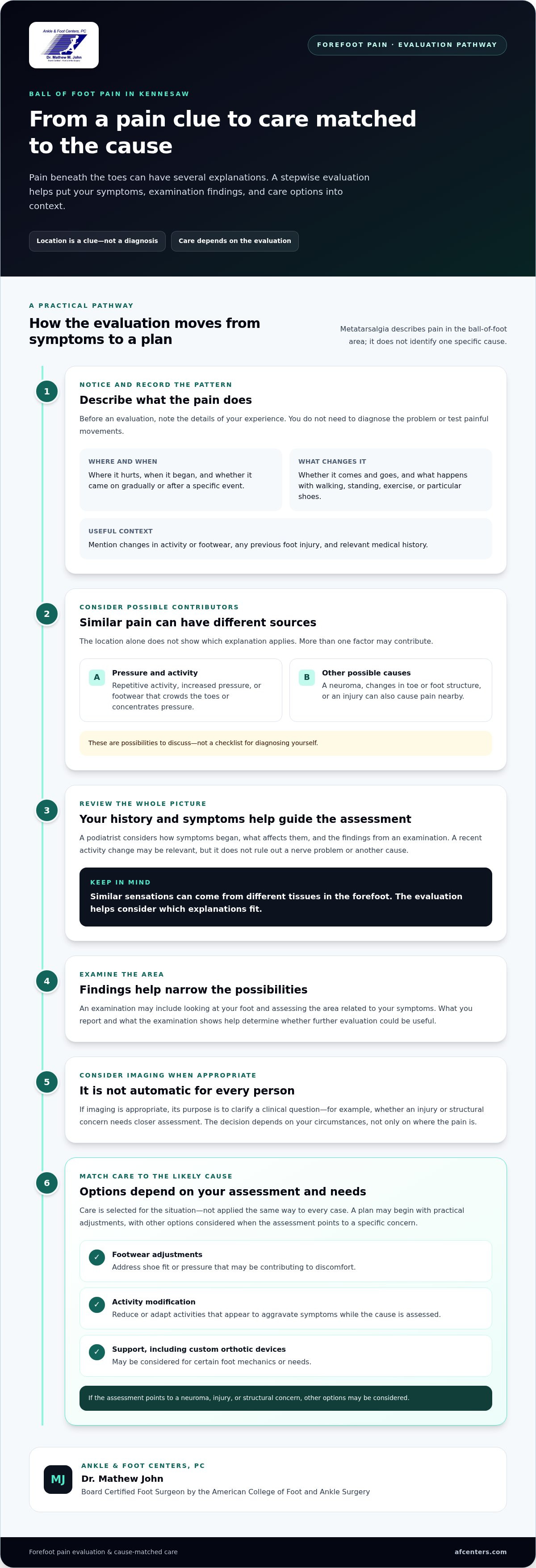
Pay attention to the pattern rather than trying to label the problem yourself. Note when the discomfort began, whether it came on gradually or after a specific event, and what you were doing at the time. Consider whether it changes with walking, standing, exercise, or particular shoes. These details can help you explain your symptoms during an evaluation.
Similar pain can arise from different tissues in the forefoot, and more than one factor may contribute. For example, symptoms that begin after a change in activity still need to be considered alongside your foot’s structure and any other signs. The location is a clue, not a conclusion. A podiatrist can assess your symptoms, consider possible explanations, and discuss care suited to your needs.
Possible Causes and How a Podiatrist Evaluates Forefoot Pain
Pain beneath the forefoot can develop for several reasons, and its location alone doesn’t reveal which one applies. Repetitive activity or increased pressure may irritate the area, while footwear that crowds the toes or concentrates pressure may contribute. A neuroma, changes in toe or foot structure, or an injury can also cause pain nearby. These are possibilities to discuss, not a checklist for diagnosing yourself.
A recent change in exercise, for example, may be relevant, but it doesn’t rule out a nerve problem or another source of pain. A podiatrist considers the whole picture, including how symptoms began, what affects them, and the findings from an examination. That helps guide a discussion about appropriate ball of foot pain treatment Kennesaw patients may need, rather than assuming every case has the same explanation.
What details help explain the pain?
Before your visit, note where the pain is, when it started, whether it comes and goes, and which activities seem to worsen or ease it. Mention changes in footwear or activity, any previous foot injury, and relevant medical history. You don’t need to test painful movements or decide what condition you have. A clear account of your experience is useful on its own.
Why can different conditions feel similar?
Nerve irritation, pressure-related discomfort, structural changes, and injury can overlap in how they feel. A clinician weighs your history alongside examination findings to consider which explanations fit. Imaging may be considered if it’s appropriate for your evaluation, but it isn’t automatically needed for every person with forefoot pain.
An examination may include looking at your foot and assessing the area related to your symptoms. The clinician can use what you report and what the examination shows to decide whether further evaluation could help. If imaging is appropriate, its purpose is to clarify a clinical question, such as whether an injury or structural concern needs closer assessment. The decision depends on your circumstances, not simply on the location of the pain.
This stepwise approach makes the conversation about care more specific. Options depend on the likely cause and your needs; a diagnosis shouldn’t be assumed from a symptom description alone. For general background, Mayo Clinic’s Metatarsalgia treatment options page discusses diagnosis and care. Ankle & Foot Centers, PC provides foot and ankle services, including care for neuromas and custom orthotic devices.
Ball of Foot Pain Treatment Options: Match Care to the Cause
Care for pain beneath the toes depends on what an evaluation suggests is contributing to it. A plan may begin with practical adjustments, such as changing footwear or temporarily modifying activities that aggravate symptoms. Other options may be considered if the assessment points to a neuroma, injury, or structural concern. The goal is to choose care that fits your situation, not to apply the same approach to every case.
| Option | Purpose |
|---|---|
| Footwear adjustments | Address shoe fit or pressure that may be contributing to discomfort. |
| Activity modification | Reduce or adapt activities that appear to aggravate symptoms while the cause is assessed. |
| Support, including custom orthotic devices | Provide support tailored to certain foot mechanics or pressure patterns. |
| Condition-specific care | Address an identified issue, such as a neuroma or foot injury, with an appropriate plan. |
| Procedural or surgical care | Consider when the evaluation indicates it may be suitable for the underlying problem. |
When may footwear changes or orthotics be considered?
If pressure or shoe fit appears relevant, your clinician may discuss footwear adjustments and ways to modify aggravating activity. Custom orthotic devices can provide individualized support for some conditions, but they aren’t a universal solution. Ankle & Foot Centers, PC provides custom orthotic devices as part of its foot and ankle care.
When might treatment involve a specific condition?
If an evaluation points to a neuroma, fracture, or another condition, the care plan may differ from one focused on pressure or shoe fit. Your clinician can explain which nonsurgical or procedural options may be appropriate and why. For general background on foot disorders and care, see MedlinePlus’s Foot pain causes and care.
Surgery isn’t an automatic step in ball of foot pain treatment Kennesaw. It may be discussed when the identified cause and your circumstances make it a suitable option, but any recommendation follows an evaluation and a conversation about care. An assessment helps clarify your choices; it doesn’t mean you’ve committed to a procedure.
Ask how each option relates to the suspected cause, what it involves, and how your plan could be adjusted as your needs become clearer. This keeps the focus on informed, personalized care rather than treating the location of pain alone.
When to Seek Care for Ball-of-Foot Pain in Kennesaw
It can be tempting to wait for forefoot pain to settle, especially if it began after a busy day or a change in activity. If it persists, gets worse, or interferes with walking and daily routines, arrange a professional evaluation. Adjusting activities that aggravate the area may help you avoid adding pressure, but it doesn’t replace an assessment when symptoms continue.
Start by noting what you’re experiencing and easing back from activities that make it worse. Seek care if the problem persists or progresses. You don’t need to identify the cause before making an appointment. An evaluation can help determine what may be contributing to your pain and what next steps are appropriate.
Which symptoms should prompt an appointment?
Persistent or worsening pain, swelling, numbness, weakness, or a noticeable change in your foot’s appearance are reasons to arrange an assessment. Difficulty walking or bearing weight deserves attention, particularly if it follows an injury. An open wound or visible deformity should also be assessed promptly. These signs don’t identify the diagnosis, but they are reasons not to delay professional care.
Seek timely assessment for symptoms that are severe or worsening rather than trying to push through them. Until you’re evaluated, avoid activities that clearly aggravate the pain and pay attention to changes. If symptoms interfere with ordinary tasks, such as getting around at work or moving comfortably at home, share that with the clinician.
What can you prepare before an evaluation?
Before your visit, jot down when the pain began, where you feel it, and what seems to affect it. Include recent activity or footwear changes, previous injuries, relevant medical history, and medication information. Bring prior imaging or related records if available. You don’t need a perfect symptom log; a few clear details can help guide the conversation.
Your first visit may include discussing your symptoms and health history, examining your foot, and considering imaging if appropriate. The clinician can then explain possible causes and discuss care options that fit the findings. Imaging isn’t part of every assessment, and an appointment doesn’t mean surgery is planned. Understanding the source of pain makes the conversation about ball of foot pain treatment Kennesaw more specific to you.
If forefoot pain is persisting, worsening, or making daily movement difficult, arrange an evaluation for your foot pain and take a thoughtful next step toward care.
Ball of Foot Pain Treatment Near Kennesaw: What to Expect
A visit is a chance to take an active role in decisions about your foot health. Describe what you’d like to return to, whether that’s a comfortable walk, a workday on your feet, or an exercise routine. Sharing your priorities helps shape a useful conversation about care that fits your everyday life.
How does a first evaluation help?
Use the appointment to ask how the findings relate to your symptoms and what each recommended option is intended to address. If you’re unsure about a suggested next step, ask about its purpose and alternatives that may suit your situation. You can take time to understand the plan before moving forward. Care should be guided by your evaluation and discussed with you, not assumed in advance.
It may also help to mention what you’ve already tried and whether it changed your symptoms. That gives the clinician more context and can help identify questions that still need answers. The goal is a clear, collaborative next step rather than a one-size-fits-all approach.
Where can Kennesaw-area patients find foot care?
Ankle & Foot Centers, PC provides foot and ankle care for people dealing with concerns such as neuromas, fractures, plantar fasciitis, and pressure-related support needs. The practice is located in Marietta and serves patients from Kennesaw, Roswell, Woodstock, Atlanta, and Sandy Springs. You can review the practice’s foot and ankle services and prepare questions for an evaluation.
As you plan your next step, focus on guidance that reflects your symptoms and personal goals. An open conversation can help you understand your options and decide how to proceed.
Take the Next Step Toward Comfortable Movement
You don’t have to wait until foot pain reshapes your routine before asking for guidance. An evaluation can help turn uncertainty into a clearer plan, with care shaped around your symptoms, priorities, and daily activities. Taking that step doesn’t mean committing to surgery or a specific treatment. It gives you a chance to discuss what may be contributing to the discomfort and which options could make sense for you.
If pain is limiting the way you walk, work, or stay active, explore ball of foot pain treatment Kennesaw with a podiatric evaluation. Bring your questions and share what you hope to get back to doing. A practical plan can begin with a conversation and develop around your needs.
Schedule an evaluation for your foot pain with Ankle & Foot Centers, PC in Marietta.
Frequently Asked Questions
Is pain in the ball of my foot always metatarsalgia?
No. Metatarsalgia is a term for pain in the forefoot area, not a specific cause. A neuroma, pressure, changes in toe or foot structure, or an injury may also contribute. Discomfort that starts after an injury, for example, may need a different evaluation than pain that develops over time. A podiatrist considers your symptoms and examination findings rather than diagnosing from location alone.
Can shoes cause pain in the ball of the foot?
Yes, shoes may contribute if they crowd your toes or put concentrated pressure beneath the forefoot. Notice whether symptoms change with different footwear or after time spent walking or standing. That pattern can be helpful to share at an evaluation, but it doesn’t establish the cause by itself. A clinician can consider shoe fit alongside other factors and discuss whether footwear adjustments may be appropriate.
When should I see a podiatrist for ball-of-foot pain?
Arrange an evaluation if the pain persists, worsens, or makes daily activities difficult. Swelling, numbness, an open wound, a visible change in foot shape, or difficulty bearing weight are also reasons to seek timely assessment, especially after an injury. Make a note of when symptoms began and how they affect you. Share any relevant health conditions during your appointment.
Can custom orthotics help with pain under the toes?
They may help in some situations, depending on the findings from your evaluation. Custom orthotic devices provide individualized support and may be considered if foot mechanics or pressure patterns are relevant. They aren’t a universal solution, and whether they’re suitable depends on what’s contributing to your symptoms. A podiatrist can discuss how orthotics may fit into your care plan and whether other options should also be considered.
Does ball-of-foot pain always require surgery?
No. Ball of foot pain treatment Kennesaw depends on the suspected cause and your individual assessment. Nonsurgical care may be appropriate, while other options may be considered for specific findings. Surgery isn’t automatic just because you seek an evaluation. If a procedure is discussed, ask why it may be relevant to your situation and what alternatives could be suitable. Understanding the reasoning can help you make an informed decision about next steps.
What happens during a podiatrist’s first evaluation for forefoot pain?
Your first visit generally includes discussing your symptoms and medical history, an examination, and a conversation about possible care. Imaging may be considered if it would help assess your particular concern, but it isn’t necessary for everyone. A medication list or relevant prior imaging can provide useful context. You can also mention what you’ve already tried and what questions you’d like answered.
Can a neuroma cause pain in the ball of the foot?
Yes, a neuroma is one possible source of forefoot pain. Some people notice burning or tingling, though symptoms vary and those sensations don’t confirm a neuroma. Other conditions can feel similar, so a symptom description alone isn’t enough to identify the cause. A podiatrist can consider your history and examination findings to determine whether neuroma care or a different approach may fit your needs.
Where can Kennesaw residents get treatment for ball-of-foot pain?
Ankle & Foot Centers, PC provides foot and ankle evaluations and care at its Marietta location for patients in Kennesaw and surrounding communities. You can arrange an appointment to discuss your symptoms, get an assessment, and learn which care options may suit your situation. Write down what affects your pain and bring relevant medical information to help focus the conversation on your needs and priorities.


