

What if the safest answer to how to shower after foot surgery isn’t a set number of hours, but the instructions for your specific incision and dressing? It’s understandable to want a clear timeline, especially when you’re worried that water could loosen a bandage or that standing in the bathroom could affect your balance. Showering may be allowed at different times depending on your procedure, how the incision was closed, and whether your dressing is waterproof. Your surgical team’s instructions come first.
This guide explains how to prepare a safer bathing setup, protect a dressing that needs to stay dry, and decide when a sponge bath is the better option. You’ll also learn why being cleared to shower doesn’t necessarily mean you can soak your foot, what to do if a dressing gets wet, and which changes around the incision to report. Take it one careful step at a time, and follow the plan made for your recovery.
Key Takeaways
- For how to shower after foot surgery, use the bathing plan provided by your surgical team rather than relying on a general timeline.
- Before bathing, find out whether your boot can be removed and whether your dressing or splint must stay dry.
- Choose a shower with approved protection or a sponge bath based on your care instructions, and set up what you need before you begin.
- If your dressing or splint gets wet, or you notice concerning changes around your incision, contact your surgical team for guidance.
How to Shower After Foot Surgery Starts With Your Surgeon’s Instructions
There isn’t one shower schedule that fits every foot operation. The incision, how it was closed, and the dressing or support around your foot all affect your care instructions. Follow the written or verbal guidance from your surgical team rather than general online advice. It reflects your procedure and recovery plan.
Start by confirming exactly what must stay dry. That might be the incision, a dressing, a splint, or a walking boot. These items serve different purposes, so find out how each one should be handled before bathing.
Why showering instructions differ after foot surgery
Foot and ankle surgery includes different procedures, and postoperative care varies with the operation and the materials used to protect or support your foot. A dressing covers the surgical area, while a splint supports the foot and may limit movement. A walking boot is a separate support device. Your instructions should explain what to do with each item during bathing.
Use the guidance you received from your surgical team, whether it was explained verbally or provided in writing. Don’t assume advice for a different operation applies to yours. If an instruction is unclear, pause and get clarification instead of guessing or changing your care plan.
What to clarify before getting in the shower
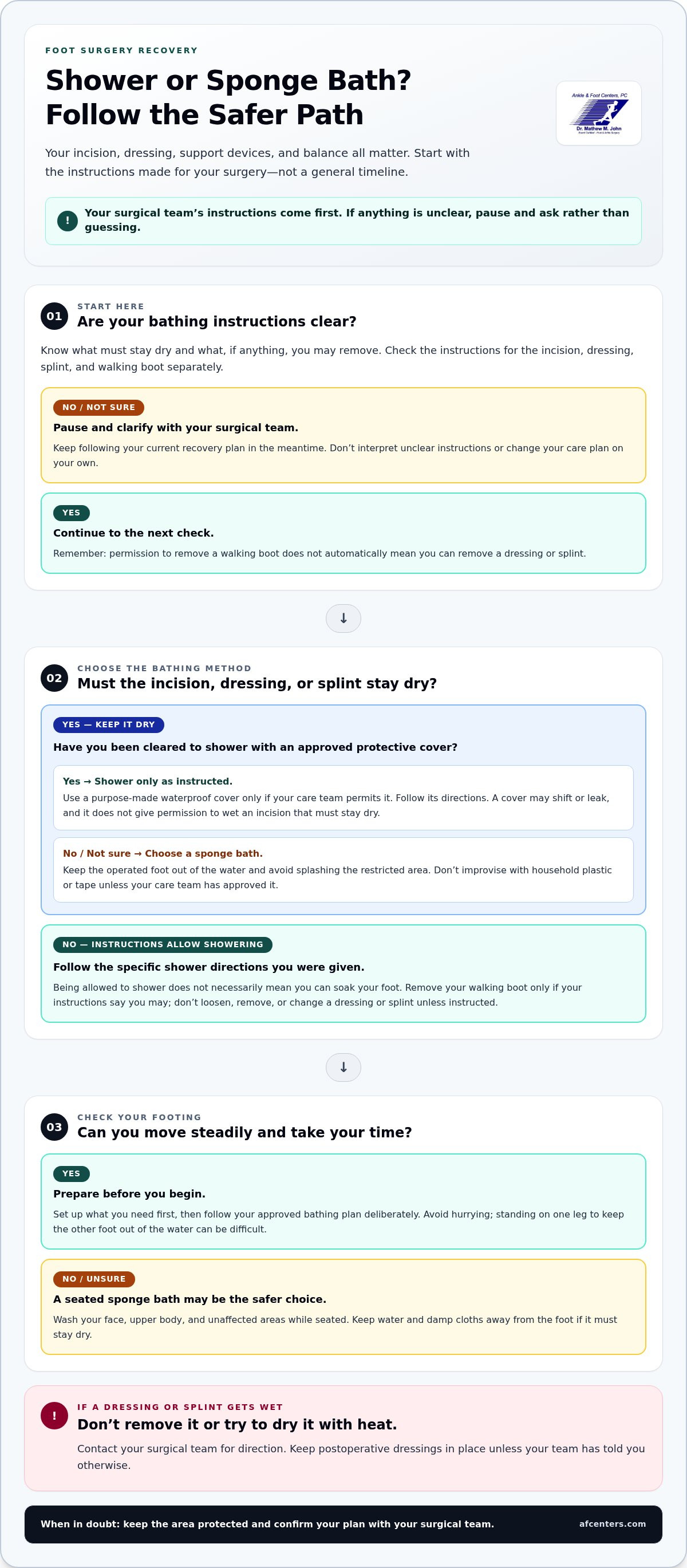
Before bathing, identify which parts of your postoperative setup need protection and what, if anything, you’re allowed to remove. Permission to remove a boot doesn’t automatically mean it’s safe to remove a dressing or splint. If you’re unsure, get clear guidance and follow your recovery plan in the meantime.
- Does the incision need to stay dry?
- Must the dressing or splint remain dry and in place?
- Can you remove your walking boot for bathing, or should it stay on?
- Are you permitted to use a protective cover?
These questions make “Can I shower?” a more specific conversation about your care. If showering depends on a follow-up visit or another part of your plan, don’t treat that as automatic clearance to get the area wet. Keep your instructions handy so you can refer to them when preparing to bathe.
Once you know what needs to stay dry and what may be removed, choose the bathing approach that fits your instructions. If you’re still uncertain how to shower after foot surgery, contact your surgical team for clarification rather than interpreting the plan on your own or changing a scheduled postoperative appointment.
Keep Your Foot Surgery Dressing, Incision, or Boot Dry
Protecting your foot after surgery starts with knowing what you’re protecting. A walking boot is a support device, a dressing covers the surgical area, and a splint provides support or limits movement. They serve different purposes, so permission to remove a boot doesn’t mean you can remove a dressing or splint. Follow your surgical team’s directions for each item, and don’t loosen, remove, or change postoperative dressings unless you’ve been told to do so.
Keep two questions separate: whether a cover can protect an item from shower water, and whether you’ve been cleared to get the incision wet. A waterproof cover may help protect an approved dressing or boot, but it doesn’t give permission to wet an incision that must stay dry.
When a waterproof cover may help
If your care team permits a cover, a purpose-made waterproof protector may help shield the dressing or boot while you bathe. Choose and use it according to its directions, along with any instructions from your surgical team about its fit and what it can protect.
A cover can’t guarantee that everything underneath will stay dry. If it shifts, leaks, or doesn’t fit as intended, water may reach the protected area. Don’t use a cover to override instructions to keep the incision or dressing dry. After bathing, don’t remove a dressing just to check underneath unless your team has instructed you to do so.
When to choose a sponge bath instead
If your instructions say the operated area must stay dry and you haven’t been cleared to shower with protection, a sponge bath lets you wash without exposing the dressing to shower water. Keep the foot out of the water and avoid splashing the restricted area. If you’re unsure how to do this safely, ask your surgical team which bathing alternative fits your care plan.
For example, wash your face, upper body, and unaffected areas while seated, keeping water and damp cloths away from the foot. Don’t improvise by wrapping a dressing in household plastic or tape unless your care team has approved that approach. A makeshift barrier can shift or leave gaps, and it doesn’t change your incision instructions.
Use this simple decision point: if your instructions prohibit getting the dressing or incision wet, keep it dry and choose a bathing method that avoids water exposure. If a splint or dressing gets wet despite your precautions, don’t take it off or try to dry it with heat. Contact your surgical team for direction.
If you have questions about foot surgery recovery or need guidance for a foot or ankle concern, explore our foot and ankle care services.
Shower or Sponge Bath After Foot Surgery: Choose the Safer Option
The safer bathing choice depends on what your surgical team allows and whether you can move through the bathroom steadily. If showering is permitted, an approved cover may help keep a dressing or boot dry. If your incision or dressing must not get wet, a sponge bath can help you wash without bringing the operated foot into the shower. Neither option replaces your care team’s instructions.
Balance matters, too. Standing on one leg while keeping the other foot out of the water can be difficult, particularly if you’re tired, uncomfortable, or trying to hurry. Choose the approach that lets you move deliberately and follow your postoperative plan.
| Situation | Safer option | Instruction to follow |
|---|---|---|
| Your team permits showering and approves protection for the dressing or boot. | Shower with the permitted cover, taking care as you get in and out. | Use the cover as directed, and keep any area that must stay dry protected. |
| Your incision or dressing must remain dry, or showering isn’t cleared. | Choose a sponge bath and keep the operated foot away from water. | Follow your care team’s directions and ask about suitable alternatives if unsure. |
| You feel unsteady or getting into the shower feels difficult. | Choose a bathing setup you can manage without rushing, and consider having someone nearby. | Don’t attempt a shower if you can’t do so safely within your restrictions. |
When a seated shower setup may be appropriate
If your care team has permitted showering, sitting may help you avoid prolonged standing. A stable shower seat, clear floor space, and steady handholds can make it easier to move carefully, but no particular device is right for everyone. Arrange for a helper nearby if getting in or out feels difficult, and don’t rely on a towel bar or other unstable object for support.
When a sponge bath is the better temporary choice
Choose a sponge bath if your instructions say the dressing or incision must stay dry. Wash in sections while seated or otherwise steady, and keep the operated foot away from water and damp cloths. Avoid soaking in a tub unless your surgical team has explicitly cleared it. If you’re unsure how to keep clean without wetting the foot, ask your team about a safe alternative.
When deciding how to shower after foot surgery, don’t treat a cover or seated setup as clearance to expose the incision to water. Your instructions set that boundary. If your balance feels uncertain, choose the safer temporary option and get guidance before trying a shower.
How to Prepare for a Safer Shower After Foot Surgery
Preparation can make bathing more manageable and help you avoid unnecessary steps while your foot heals. Before deciding how to shower after foot surgery, follow your surgical team’s instructions about whether showering is permitted and what needs to stay dry. If you’re unsteady or have limited mobility, plan for help before entering the bathroom.
- Confirm your bathing plan. Review your written instructions or the guidance you received from your surgical team. Know whether you’re cleared to shower, whether a cover is permitted, and what to do with your boot. If any part of the plan is unclear, get guidance before starting.
- Gather everything first. Set out towels, clean clothes, and any protective equipment your team has permitted. Keep toiletries and other supplies within easy reach so you won’t need to stretch or move around unnecessarily while bathing.
- Clear your route. Move loose items out of the way between where you are and the bathing area. Check that the floor is clear and that you can reach any stable handhold you plan to use. A clear path lets you focus on each movement.
- Set up your bathing position. If your care team allows showering and a stable shower seat is appropriate and available, place it securely before you begin. Arrange for someone to assist with getting in or out if you feel unsteady or need support. Don’t attempt a difficult transfer alone.
- Bathe without rushing. Follow your instructions for keeping the incision, dressing, or splint dry. Move deliberately, and avoid standing on one leg to reach something or adjust a cover. If you feel unstable, stop and get help.
- Dry off and get dressed carefully. Keep towels and clothing close so you can dry and dress without crossing the room unnecessarily. Once you’re safely out, check that the dressing appears dry without removing, loosening, or adjusting it.
If the dressing gets wet
If you notice that your dressing or splint is wet, don’t remove it or try to change it unless your instructions specifically tell you to. The right next step depends on your surgical plan and the type of dressing, so contact your surgical team for individualized advice. Avoid applying heat or making changes while you wait for their direction.
Clear instructions can make recovery steps easier to manage. Explore our foot and ankle care services for professional support with foot and ankle concerns.
When to Contact Your Foot Surgeon About Showering or Your Dressing
Some questions are routine, such as whether your care plan allows a shower or what kind of cover is permitted. Your written instructions may answer them. If they don’t, contact your surgical team for clarification before bathing. A wet or damaged dressing or splint, or a change around your incision, calls for prompt clinical guidance rather than guesswork.
There isn’t one response that fits every dressing or procedure. Don’t remove, replace, or adjust a dressing to address a problem unless your instructions tell you to. Describe what happened and follow the next steps your surgical team gives you.
Signs that need a call to your surgical team
Contact your surgical team if you notice a concerning change or if your dressing is no longer intact. These signs don’t establish a diagnosis, but they are useful details to report so your team can advise you in the context of your operation and recovery plan.
- Worsening pain or new or increasing swelling
- Redness or warmth around the incision
- Unusual drainage, including pus or drainage with an unpleasant smell
- A dressing or splint that has become wet, loose, or damaged
When you call, describe what you noticed, when it happened, and whether the dressing or splint is wet or damaged. Avoid peeling it back to inspect the incision unless your instructions specifically direct you to do so. Follow the guidance you receive rather than applying a general online rule to your individual situation.
Getting personalized foot and ankle care in Marietta
Questions about how to shower after foot surgery are best answered with details about your procedure and the dressing or support you’re wearing. If your postoperative instructions don’t give a clear answer, ask your surgical team for guidance. Ankle & Foot Centers, PC provides specialized foot and ankle care in Marietta and the Atlanta Metro area, including for patients in Roswell, Woodstock, Kennesaw, Atlanta, and Sandy Springs.
Dr. Mathew John is a Board Certified Foot Surgeon by the American Board of Foot and Ankle Surgery. Learn about our foot and ankle services for concerns that need professional evaluation. A clear, individualized conversation can help you understand what to do next without changing your care plan on your own.
Move Forward With Confidence
As you continue healing, let your care plan guide each bathing decision rather than trying to work it out alone. If you’re still unsure how to shower after foot surgery, or something about your incision or dressing concerns you, get personalized guidance. A clear answer can help you feel prepared as you move through recovery.
Contact Ankle & Foot Centers, PC for foot and ankle care if you need professional support. Keep taking recovery one careful step at a time, and give yourself room to heal.
Frequently Asked Questions
When can I shower after foot surgery?
There isn’t one shower date that applies to every foot operation. Timing depends on the procedure, incision, and dressing instructions. Follow the written or verbal guidance from your surgeon rather than using a general schedule or someone else’s experience. If you can’t tell whether your plan allows water near the operated area, contact your surgical team before showering and explain what dressing or support you have.
Can I get my foot surgery bandage wet in the shower?
Don’t assume your bandage can get wet. Your postoperative instructions explain whether it must stay dry and how to protect it during bathing. A cover may be appropriate in some situations, but it can’t guarantee that no water will get through. If your bandage becomes wet, contact your surgical team for advice specific to your procedure. Don’t remove or change it unless your instructions tell you to.
How do I keep my foot dry while showering after surgery?
First confirm that showering is allowed and whether your team approves a cover for your dressing or boot. Gather the permitted protective equipment, towels, and clothing before entering the bathroom so you won’t need to reach or move around unnecessarily. If your instructions require the operated area to stay dry, a sponge bath may be a better choice. Don’t assume any cover is suitable for your situation.
Is a shower chair safe to use after foot surgery?
A shower chair may reduce the time you need to stand, but it doesn’t replace your mobility or weight-bearing instructions. Use a stable seat only if it suits your situation and showering is permitted. Keep the route to the shower clear, and arrange help if getting in or out feels unsafe. If you’re unsure whether sitting or transferring is appropriate for your restrictions, ask your care team first.
What should I do if my foot surgery dressing gets wet?
Contact your surgical team for instructions if your dressing gets wet. The right response depends on the dressing and procedure, so don’t assume it needs the same treatment as another person’s bandage. Leave the dressing or splint in place unless your care instructions say otherwise. When you call, describe how it got wet and whether it appears loose or damaged, and report any new changes you’ve noticed.
Can I take a bath instead of showering after foot surgery?
A bath isn’t automatically safer than a shower, since water may still reach the surgical area. Your instructions may describe a way to bathe while keeping the operated leg out of the water, but don’t assume that applies to your recovery plan. Avoid soaking the foot unless your surgical team has clearly allowed it. If your guidance doesn’t address baths, ask before bathing or immersing the operated area.
What symptoms should I report after showering following foot surgery?
Contact your surgical team about a wet or damaged dressing, worsening pain, increasing swelling, redness, warmth, or unusual drainage. These changes need professional assessment, but they don’t by themselves establish a diagnosis. Describe what you noticed and when it began. If symptoms feel severe or worsen quickly, seek prompt medical guidance rather than waiting for a routine follow-up. Patients in Marietta, Roswell, Woodstock, Kennesaw, Atlanta, and Sandy Springs can seek local foot and ankle care.


