

A stubborn callus may be more than a patch of rough skin. If thickened skin makes shoes uncomfortable or gets in the way of your activities, it’s understandable to want relief. Repeated pressure may be contributing to the problem, and the spot may not be a callus at all. Professional callus removal Marietta care can start with an evaluation to identify what you’re seeing and what may be causing it.
Calluses often develop where repeated friction or pressure causes skin to thicken. A podiatrist can assess the area, consider your overall foot health, and discuss an appropriate next step. This is especially important if you have diabetes, reduced sensation, or circulation concerns, since even minor foot problems may need individualized attention.
In this article, you’ll learn why calluses form, how an assessment can distinguish them from other skin concerns, and when it may make sense to seek care. At Ankle & Foot Centers, PC in Marietta, Dr. Mathew M. John is a Board Certified Foot Surgeon by the American College of Foot and Ankle Surgery. The practice serves patients in Marietta and the Atlanta Metro area, including Roswell, Woodstock, Kennesaw, Atlanta, and Sandy Springs, with care focused on foot and ankle health.
Key Takeaways
- Notice when a callus hurts, changes, or keeps returning, and consider whether footwear or activity may be contributing to pressure.
- A podiatry appointment can take your symptoms, medical history, footwear, and activities into account when assessing the area.
- Professional callus removal Marietta care considers foot-health concerns, while cosmetic smoothing focuses on appearance. Use caution with at-home care.
- Prepare for an appointment by noting when discomfort began and bringing relevant medication details and orthotics, if you use them.
- Ankle & Foot Centers, PC provides podiatric care in Marietta with Dr. Mathew M. John, a Board Certified Foot Surgeon by the American College of Foot and Ankle Surgery.
Professional Callus Removal in Marietta: What a Callus Can Tell You
Thick, hardened skin can make shoes uncomfortable or distract you during a walk, workout, or everyday activity. If a rough area keeps returning, it’s reasonable to wonder whether it’s simply a callus or a sign that pressure is repeatedly affecting the same part of your foot. When it appears and how it feels during different activities can offer useful clues to discuss with a podiatrist.
A callus is an area of thickened skin that develops when repeated pressure or friction prompts the skin to protect itself. Calluses may form on weight-bearing areas such as the heels or balls of the feet, though their location and appearance vary. The general overview of Callus (skin) also describes how calluses develop and how they differ from corns.
Why do calluses form on the feet?
Repeated rubbing or pressure is a common contributor. For example, a shoe that fits tightly in one area may repeatedly press against the foot. Walking, standing, or another activity that puts recurring pressure on a particular spot may also play a role. These are common possibilities, not a diagnosis of what’s causing your callus.
Notice whether the thickened skin returns in the same place after it’s been smoothed, or becomes more noticeable in particular shoes or during certain activities. That pattern can help you describe the concern and discuss possible sources of pressure. An assessment can consider the callus alongside its location, your symptoms, footwear, and relevant foot-health concerns, rather than focusing only on how the skin looks.
When is a callus more than a cosmetic concern?
A callus doesn’t automatically signal a medical problem. Comfort and function matter: soreness, cracking, or other skin changes deserve attention if they make it hard to wear shoes or take part in usual activities. If symptoms persist, worsen, or keep returning, a professional evaluation can help clarify what’s happening and whether another foot concern should be considered.
Consider arranging an assessment if you notice:
- Pain or tenderness that affects walking, exercise, or shoe comfort.
- Cracks or changes in the skin around the thickened area.
- A recurring spot that seems connected to pressure in the same place.
- Symptoms that are becoming more persistent or interfering with daily routines.
Appearance alone can’t determine the cause or the right next step. If you’re considering professional callus removal Marietta care, an appointment with a podiatrist can help you understand the area and discuss factors that may be contributing to it. For patients with diabetes, reduced sensation, or circulation concerns, individualized foot-care guidance is especially important. A recurring callus is a reason to ask questions, not a reason to feel embarrassed.
How a Marietta Podiatrist Evaluates a Painful or Recurring Callus
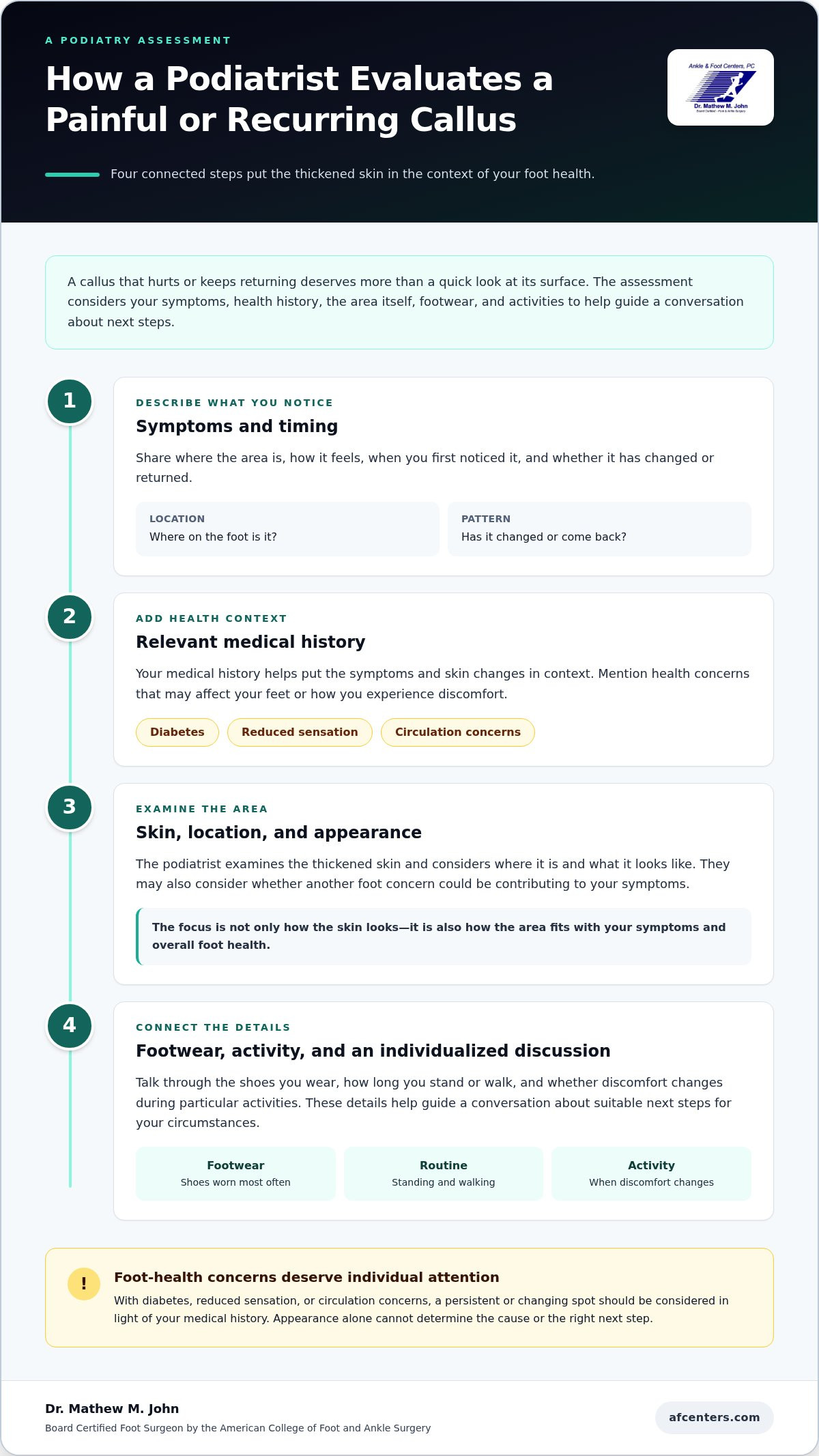
A callus that hurts or keeps coming back deserves more than a quick look at its surface. A podiatrist can consider your symptoms, medical history, and the area itself to understand what may be contributing to the concern and whether another foot issue needs attention. The purpose is to have an informed conversation about next steps, based on your circumstances.
At a callus assessment, the podiatrist discusses your symptoms and health history, examines the area, considers footwear and activity, and uses those findings to guide an individualized discussion. Connecting these details helps put what you’re experiencing in the context of your overall foot health.
What happens during a callus assessment?
You’ll be invited to describe where the area is, how it feels, when you first noticed it, and whether it has changed or returned. Relevant medical history helps put those details in context. The clinician examines the skin and considers its location and appearance, along with your footwear and activities. They may also consider whether another foot concern could be contributing to your symptoms.
It can help to describe a typical day: how long you stand or walk, which shoes you wear most often, and whether discomfort changes during a particular activity. These details give the clinician useful context without assuming that one shoe or activity is the sole cause. The assessment informs a conversation about suitable next steps. It doesn’t mean that one treatment is automatically appropriate for everyone or that a specific result can be guaranteed.
For general information about clinical assessment and care for corns and calluses, see the Mayo Clinic: Corns and Calluses Treatment. A podiatrist can relate general guidance to your symptoms and personal health circumstances.
Why diabetes changes the importance of foot care
With diabetes, changes to the feet merit individualized attention, particularly if sensation or circulation is a concern. Don’t rely on appearance alone to decide whether a persistent or changing spot needs care. A podiatrist can discuss the callus in light of your medical history and help you understand an appropriate next step. Ankle & Foot Centers, PC provides diabetic foot care, including diabetic wound care and prevention.
Professional callus removal Marietta care begins with understanding the person as well as the thickened skin. Before your appointment, note when the area bothers you, whether it has changed, and what shoes or activities seem relevant. That information can help keep the discussion focused. To learn more about the practice’s podiatric care services, explore the services offered.
Professional Callus Care vs. Home Smoothing or a Cosmetic Pedicure
Callus care can mean different things depending on your needs. A cosmetic approach generally aims to smooth the skin’s appearance, while a podiatrist’s assessment also considers symptoms and overall foot health. Home care may be a cautious option for some people, but it can’t clarify the cause of a painful or recurring spot. This comparison highlights the different goals and considerations.
Approach
Main focus
What to keep in mind
Clinical assessment
Symptoms, skin changes, and foot health
A podiatrist considers your circumstances before discussing appropriate options.
Cosmetic smoothing
The appearance and feel of the skin
It isn’t the same as an evaluation of recurring discomfort or other foot concerns.
Cautious home care
General, conservative skin care
Avoid cutting or aggressively scraping thickened skin, and seek guidance if symptoms persist or the cause is unclear.
If you want care that considers more than surface appearance, you can explore podiatric services and the foot-health concerns they address.
What can home care reasonably address?
Home care is best approached conservatively. Pay attention to whether the area becomes uncomfortable with particular shoes or activities, and consider whether recurring pressure may be part of the picture. Reducing that pressure can be part of a prevention discussion, but the right approach depends on what’s causing the irritation. Avoid trying to cut away thickened skin or scrape it aggressively. If discomfort continues, the skin changes, or you’re unsure what the spot is, arrange a professional assessment.
When should you choose professional evaluation?
Consider an appointment if pain persists, the area repeatedly returns, the skin cracks, or you have diabetes and notice a foot change. A clinician can assess the area in context and discuss options suited to your foot-health needs. That conversation is individualized and doesn’t guarantee a particular removal technique or result. For professional callus removal Marietta care, the useful first step is understanding what may be contributing to the concern and what guidance fits your situation.
Cosmetic smoothing may address how skin looks or feels, but it isn’t a substitute for clinical evaluation when symptoms raise questions about your foot health. If you’re uncertain which kind of care makes sense, consider your symptoms, medical history, and how the callus affects daily activities when deciding whether to seek professional advice.
Preparing for a Callus Appointment in Marietta
A little preparation can make a podiatry visit more focused. Before your appointment, think about when you first noticed the thickened area, how it feels now, and whether it affects your shoes, walking, or other activities. You don’t need to arrive with a diagnosis. Sharing what you’ve observed gives the clinician useful context for discussing your foot health.
What should you tell the podiatrist?
Be ready to describe when the callus appeared and any changes, such as new discomfort or cracking. Mention what you’ve tried before and whether the area improved or returned. Your usual footwear and daily routines can also help frame a conversation about recurring pressure.
- Symptoms and timing: When you noticed the area, how it feels, and whether symptoms have changed.
- Footwear and activity: Shoes you wear often, plus activities that seem to affect comfort.
- Relevant health history: Conditions such as diabetes or circulation concerns, along with other foot-health information you think may matter.
- Current care details: Relevant medication information and any orthotics you use. Bring existing orthotics if you have them.
These details don’t establish the cause on their own, but they can help the clinician understand the pattern. For example, noting that discomfort tends to appear after a particular activity may help guide questions about repeated pressure. If you have diabetes or circulation-related concerns, share that information clearly so your foot-care discussion can take your health history into account.
How can you reduce repeat pressure after the visit?
Prevention starts with understanding what may be placing repeated pressure on the area. Your footwear, how it fits, and your usual activity patterns can all be topics for individualized guidance. Rather than assuming one shoe change or adjustment will prevent future calluses, use the appointment to discuss what seems relevant in your case.
After an assessment, you can ask which everyday factors are worth paying attention to and what changes may fit your routine. If a spot returns, note where it reappears and what you were doing around that time. This information may help shape a future conversation, though no single change can be promised to prevent recurrence.
For professional callus removal Marietta guidance, bringing your observations, medication information, and orthotics can help make your visit more useful. Ankle & Foot Centers, PC provides podiatric care in Marietta. Explore the practice’s services to learn about the foot and ankle concerns addressed.
Get Professional Callus Guidance from a Marietta Foot Surgeon
A persistent or concerning callus can be a good reason to seek an individualized foot-health assessment, especially if it’s painful, keeps returning, or makes everyday activities less comfortable. An appointment gives you a chance to describe what you’ve noticed and have the area considered in the context of your overall foot health. You don’t need to know the cause before asking for guidance.
Ankle & Foot Centers, PC is a podiatry practice in Marietta serving the Atlanta Metro area. Dr. Mathew M. John is a Board Certified Foot Surgeon by the American College of Foot and Ankle Surgery. Patients visit the practice from Marietta, Roswell, Woodstock, Kennesaw, Atlanta, and Sandy Springs. The office is at 2790 Sandy Plains Road on the corner of Post Oak Tritt and Sandy Plains.
What makes a podiatric evaluation useful?
A professional foot examination can connect your symptoms with the location and condition of the callus, then help guide a discussion about appropriate next steps. That perspective may be useful if the area recurs or you have other foot-health concerns. Ankle & Foot Centers, PC provides care for a range of foot and ankle conditions. Explore the practice’s foot and ankle services if you’re also managing a related concern.
Evaluation doesn’t mean every callus needs the same approach. Your symptoms, health history, and the clinician’s assessment all matter. The aim is to understand what may be contributing to the problem and discuss options that fit your circumstances, without assuming a particular treatment or outcome in advance.
When callus discomfort may involve another foot concern
Discomfort near a callus, including around the heel, may have more than one possible explanation. A podiatrist can assess persistent symptoms rather than assuming the thickened skin is the only source. If heel discomfort is part of what you’re experiencing, the practice’s heel pain guide offers related information.
Seek an evaluation if pain is severe, persists, or worsens, or if the area changes or continues to interfere with walking and daily activities. For people with diabetes, prompt, individualized guidance about foot changes is especially important. Ankle & Foot Centers, PC also provides diabetic foot care, including diabetic wound care and prevention. Sharing your concerns and relevant medical history can help make the appointment more useful.
To discuss a callus that concerns you, visit Ankle & Foot Centers, PC online for appointment information.
Take the Next Step Toward More Comfortable Feet
A callus that keeps bothering you doesn’t have to remain an unanswered question. Paying attention to changes in comfort and how the area affects your routine can help you decide when it’s time for professional guidance. If you have diabetes or another health concern that affects your feet, an individualized conversation can help you make a thoughtful plan for your care.
Choosing professional callus removal Marietta care is an opportunity to look beyond the thickened skin and discuss what may be contributing to it. Bring your questions, share what you’ve noticed, and work with your podiatrist to understand suitable next steps. A clearer picture of your foot health can help you make informed decisions about care.
Schedule a foot-care appointment with Ankle & Foot Centers, PC to discuss a persistent or concerning callus.
Frequently Asked Questions
What is professional callus removal?
Professional callus care starts with a podiatrist assessing the thickened area and considering its location, your symptoms, and relevant foot-health factors. The discussion can help clarify what may be contributing to the concern and what options are appropriate for you. Professional callus removal Marietta care isn’t simply about changing the skin’s appearance. Ask what the assessment suggests and what changes to monitor afterward.
Why do calluses keep coming back on my feet?
Calluses may return if the pressure or friction that contributed to them continues. Notice whether the same area becomes uncomfortable in particular shoes or after certain activities, and share that pattern with your podiatrist. The location, your footwear, and your routine can help frame the discussion. An assessment can help you consider possible ways to address repeated pressure, though no single change can guarantee a callus won’t recur.
Can I remove a foot callus at home?
Avoid cutting or aggressively scraping a foot callus yourself, especially if you have diabetes or another condition affecting foot health. Home care may not address why the thickened area developed, and what’s appropriate depends on your symptoms and medical history. If the skin is painful, cracked, changing, or repeatedly thickening, arrange an assessment rather than trying more forceful self-treatment.
When should I see a podiatrist for a callus?
Consider seeing a podiatrist if the area remains painful, repeatedly returns, cracks or changes, or makes shoes and ordinary activities uncomfortable. Don’t rely on appearance alone to tell you what’s happening. Note how the discomfort affects your day and whether it’s changing. If you have diabetes, seek individualized guidance about new or concerning foot changes instead of attempting aggressive care on your own.
Is professional callus removal the same as a pedicure?
No. Cosmetic foot care generally focuses on appearance, while a podiatric appointment considers your symptoms, health history, and foot health. That difference matters if a thickened area hurts, keeps returning, or changes. A clinical assessment can help determine whether the spot needs further attention and let you discuss suitable options for your circumstances. A cosmetic service shouldn’t be treated as a substitute for medical evaluation of a concerning foot problem.
Does professional callus removal hurt?
The experience can vary based on the area, your symptoms, and the approach discussed after an assessment, so it isn’t possible to promise how it will feel beforehand. Tell the podiatrist if the spot is tender or if you’ve had an uncomfortable experience with foot care in the past. You can also ask what to expect from any option discussed before deciding how to proceed.
Should someone with diabetes have a foot callus checked?
Yes, people with diabetes should seek individualized guidance about a foot callus, particularly if it’s painful, cracked, changing, or not improving. Avoid aggressive self-treatment and share relevant changes with a podiatrist. Ankle & Foot Centers, PC provides diabetic foot care and prevention. A clinician can consider your health history and examine the area to help you understand appropriate next steps.


