

Imagine waking up and immediately dreading the simple act of putting on your favorite shoes because of a sharp, stabbing sensation in your big toe. You aren't alone in this struggle. Many people in our community find themselves caught in a cycle of temporary fixes and recurring discomfort. If you've been searching for effective ingrown toenail treatment Marietta, you know that a simple trim often isn't enough to stop the throbbing or the fear of a developing infection.
It's exhausting to deal with a problem that seems to return no matter how careful you are. We understand that you want more than just a quick fix; you want to know if your nail shape is the problem and how to find a permanent solution. In this guide, we'll uncover the biological and lifestyle triggers that cause these painful issues. You'll also learn how the expertise of Dr. Mathew John, a Board Certified Foot Surgeon by the American College of Foot and Ankle Surgery, can help you achieve long-term health. From our office at 2790 Sandy Plains Road on the corner of Post Oak Tritt and Sandy Plains, we'll show you how professional care can finally stop the pain and get you back on your feet with confidence.
Key Takeaways
- Understand why your body reacts to a nail edge as a foreign object, leading to the painful inflammation and swelling known as onychocryptosis.
- Discover how professional ingrown toenail treatment Marietta can correct structural issues and provide permanent relief where home care often fails.
- Learn to identify the lifestyle triggers, such as improper trimming and tight footwear, that cause your nails to grow into the surrounding skin.
- Recognize the "red flags" of infection that make it essential to consult a Board Certified Foot Surgeon for safe and effective care.
- Explore advanced solutions, including the Partial Nail Avulsion procedure, designed to stop the cycle of recurring nail pain for good.
Understanding Onychocryptosis: What Is an Ingrown Toenail?
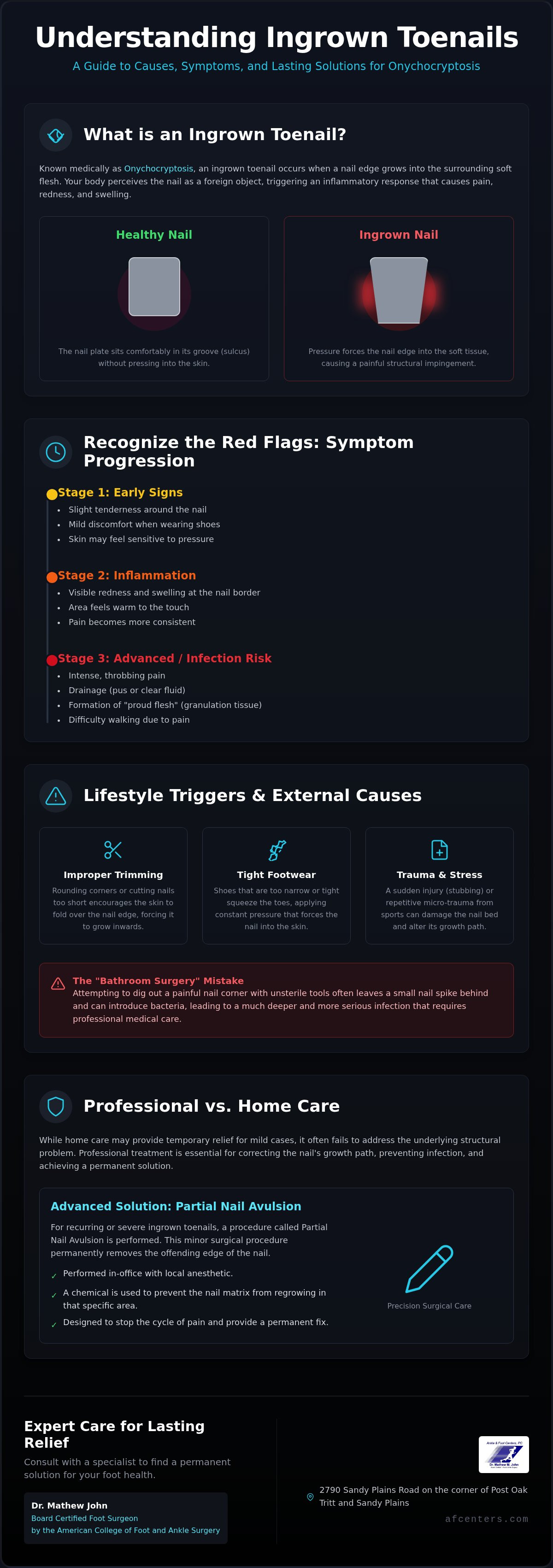
Onychocryptosis is the medical term for what we commonly call an ingrown toenail. It occurs when the edge or corner of your nail plate grows into the surrounding soft flesh. This isn't just a minor annoyance; your body actually identifies the encroaching nail as a foreign object. This triggers a defensive inflammatory response. The immune system rushes white blood cells to the area to fight the perceived threat, leading to the redness and swelling you feel. While the big toe is the most frequent victim, any of your toes can experience this painful condition.
Finding the right ingrown toenail treatment Marietta starts with understanding that your feet deserve specialized care. Dr. Mathew John is a Board Certified Foot Surgeon by the American College of Foot and Ankle Surgery. He treats every case with the precision of a surgeon and the warmth of a community mentor. At our office, located at 2790 Sandy Plains Road on the corner of Post Oak Tritt and Sandy Plains, we focus on long-term health rather than just temporary relief. We believe that professional guidance ensures you never have to navigate your health journey alone.
The Anatomy of a Healthy vs. Ingrown Nail
A healthy nail sits comfortably on the nail bed, with its edges resting in the grooves called the sulcus. In a healthy state, the nail plate and the surrounding skin coexist without friction. However, when excess pressure is applied from tight shoes or improper trimming, the nail plate is forced into the soft tissue of the sulcus. You might wonder What Is an Ingrown Toenail? compared to a simple irritation. A temporary irritation might fade after you change your shoes, but a chronic structural impingement means the nail is physically wedged. This requires professional intervention to correct the path of growth and prevent recurring pain.
Symptoms That Signal a Developing Problem
Recognizing the early signs can save you from significant discomfort. Initially, you might only feel a slight tenderness when you put on your shoes or apply light pressure. As the condition progresses, you'll notice redness, swelling, and a distinct warmth around the nail border. These are clear indicators that your body is fighting the "intrusion" of the nail edge. Advanced symptoms are more concerning and include drainage, the formation of granulation tissue, and an intense throbbing that can make walking difficult. Granulation tissue, often called "proud flesh," is the body's attempt to heal, but it often becomes part of the problem by creating more bulk and pressure. If you are noticing these changes, seeking ingrown toenail treatment Marietta early can prevent the need for more invasive procedures later.
Common Lifestyle Triggers and External Causes
While the structure of your feet provides the foundation, your daily habits often determine how your nails behave. Many patients visiting Ankle & Foot Centers, PC at 2790 Sandy Plains Road on the corner of Post Oak Tritt and Sandy Plains discover that their routines are the primary culprits. Whether it's the way you trim your nails or the shoes you choose for a morning run through Marietta, external factors can easily turn a healthy nail into a painful medical issue. Understanding these triggers is essential for anyone seeking ingrown toenail treatment Marietta.
Beyond simple habits, sudden trauma or repetitive stress can alter how your nail plate grows. Stubbing your toe against a piece of furniture might seem like a fleeting pain, but the impact can shift the nail's position or damage the underlying bed. This often results in the nail growing back at an angle that penetrates the skin. For active residents participating in local sports, this repetitive micro-trauma is even more common. Every time your foot slides forward in a soccer cleat or a running shoe, the nail jams into the surrounding tissue. If you're tired of the cycle, seeking expert care is the first step toward lasting comfort.
The "Bathroom Surgery" Mistake: Improper Trimming
The most common avoidable cause of onychocryptosis is improper trimming. You might think rounding the corners of your nails makes them look better or feel smoother, but this actually encourages the skin to fold over the nail edge. When the nail grows out, it has nowhere to go but into the flesh. Cutting your nails too short, especially below the hyponychium, creates a similar problem. The biggest danger occurs when people attempt "bathroom surgery" by digging out a painful corner with unsterile tweezers or clippers. This often leaves behind a small spike of nail and introduces bacteria deep into the tissue. This often leads to deeper infections that require professional intervention.
Footwear and Mechanical Pressure
Your choice of footwear is a major contributor to toe box pressure. Narrow-toed shoes and high heels crowd your toes together, forcing the nail plate directly into the soft sulcus. This mechanical pressure is particularly problematic for athletes who experience constant impact. To address these structural imbalances, Dr. Mathew John, a Board Certified Foot Surgeon by the American College of Foot and Ankle Surgery, often recommends Professional Solutions for Ingrown Toenails. These can include custom orthotics designed using precise 3-D impressions. By redistributing your weight and relieving pressure on the toes, we can stop the cycle of inflammation before it starts. Professional guidance ensures that your footwear supports your health rather than hindering it.
Biological and Medical Factors You Cannot Control
Sometimes, the most meticulous foot care routine isn't enough to fight your own biology. While lifestyle choices certainly matter, your DNA often dictates the shape and structural health of your feet. If you find yourself constantly battling recurring pain, it's likely due to factors beyond your control. Seeking professional ingrown toenail treatment Marietta is the most effective way to address these underlying biological challenges and find a path toward permanent relief.
Our team understands that biological predispositions can feel frustrating. We approach every patient with a blend of professional authority and warm encouragement. We see our role as your expert partner in this health journey. Whether your issues stem from your genetics or a secondary medical condition, we provide the sophisticated resources needed to correct the problem at its source. You don't have to settle for "managing" pain when a long-term solution is available.
Genetic Predisposition and Nail Shape
Your genetics determine if you have "pincer nails" or "involuted nails," which naturally curve inward as they grow. Some individuals are born with nail beds that are simply too narrow for the width of their nail plate. This mismatch creates constant, unavoidable pressure on the surrounding skin. Additionally, conditions like hyperhidrosis, or excessive sweating, can soften the skin around the nail. This makes it much easier for even a properly trimmed nail edge to pierce the skin and trigger an inflammatory response. Understanding these inherited traits helps us tailor a plan that works for your unique anatomy.
Medical Risks: Diabetes and Poor Circulation
For those managing chronic health issues, nail care is a critical component of diabetic foot care. Diabetes often leads to poor circulation and neuropathy, which is a loss of sensation in the feet. You might not feel the sharp, stabbing pain of an ingrown nail until the area is already severely infected. Dr. Mathew John, a Board Certified Foot Surgeon by the American College of Foot and Ankle Surgery, emphasizes the importance of regular professional exams for patients with compromised healing. Our office at 2790 Sandy Plains Road on the corner of Post Oak Tritt and Sandy Plains serves as a reliable local hub for protecting your vitality.
Secondary Issues: Fungus and Warts
Other common foot conditions can also force your nails out of alignment. Fungal infections, known as onychomycosis, often cause the nail plate to become thick, brittle, and distorted. This increased thickness puts extra pressure on the nail bed and sulcus. We offer specialized fungal laser therapy using the Cutera Genesis Plus NDYag Laser to clear the infection and restore nail health. Similarly, recalcitrant warts located near the nail can physically push the nail plate into the skin. We treat these stubborn growths with Swift Treatment. This advanced microwave ablation technology typically involves four sessions spaced one month apart. There is no downtime for patients following the procedure, making it a rewarding opportunity to reclaim your comfort without interrupting your busy life.
When to See a Marietta Podiatrist for Your Toenail
It's tempting to hope that a painful toe will simply get better on its own. You might try to adjust your shoes or use over-the-counter cushions, but waiting too long can turn a manageable irritation into a serious medical concern. Knowing exactly when to seek professional ingrown toenail treatment Marietta is the key to avoiding unnecessary complications. Don't wait until you're limping or unable to wear your favorite shoes to get the help you need.
Dr. Mathew John, a Board Certified Foot Surgeon by the American College of Foot and Ankle Surgery, evaluates each case to determine if a conservative approach or a more precise surgical intervention is necessary. His goal is to provide a steady hand that guides you toward long-term health. By choosing professional care early, you often avoid the need for more complex reconstructive foot and ankle surgery later. We believe in progress over perfection, ensuring you feel supported at every step of your recovery.
Signs of Infection You Should Not Ignore
An infected toenail is more than just a source of pain; it's a doorway for bacteria to enter your system. You should look for specific "red flags" that indicate a worsening condition. Yellow or green drainage, commonly known as pus, is a clear sign that an infection has taken hold. If you notice red streaks extending from your toe toward your foot, consider this a medical emergency. This suggests the infection may be spreading through your lymphatic system. Constant, intense throbbing that keeps you awake at night or prevents normal walking is another signal that your body needs expert intervention immediately.
The Professional Diagnostic Process
When you visit our office at 2790 Sandy Plains Road on the corner of Post Oak Tritt and Sandy Plains, you'll experience an organized and professional evaluation. We don't just look at the nail; we look at the health of your entire foot. Our team assesses your blood flow and nerve function to ensure your body has the resources it needs to heal properly. This is especially vital for residents with underlying health issues who are at a higher risk for complications. As part of our sophisticated resource toolkit, we may use 3-D impressions to create custom orthotics. These devices help redistribute pressure away from your toes, addressing the mechanical causes of your discomfort. Schedule your evaluation for ingrown toenail treatment Marietta today to ensure your feet receive the high-quality care they deserve.
Professional Solutions and Permanent Prevention
Once we've identified the root cause of your discomfort, we move toward the most rewarding part of the journey: finding a lasting solution. While conservative options like professional trimming or bracing can offer relief for minor irritations, many residents seeking ingrown toenail treatment Marietta look for a way to stop the cycle of pain for good. At our office, located at 2790 Sandy Plains Road on the corner of Post Oak Tritt and Sandy Plains, we provide the sophisticated resources needed to reclaim your active lifestyle. Whether you're a beginner to podiatric care or have dealt with foot issues for years, we're here to guide you with a steady, expert hand.
Dr. Mathew John is a Board Certified Foot Surgeon by the American College of Foot and Ankle Surgery. He specializes in both immediate relief and long-term correction. For many, a Partial Nail Avulsion (PNA) provides instant comfort by removing the specific piece of nail that's piercing the skin. However, when a nail is structurally inclined to grow incorrectly, we look toward more permanent, specialized solutions that address the problem at its biological source.
Matrixectomy: Stopping the Cycle for Good
For those who suffer from chronic, recurring ingrown nails, a matrixectomy is often the most effective path forward. During this in-office procedure, we remove the offending nail edge and treat the underlying nail matrix, which is the area where the nail starts to grow. We use chemical cauterization to gently prevent that specific edge from growing back. This doesn't change the overall appearance of your toe; it simply ensures the nail plate is narrow enough to fit comfortably within the sulcus. Most patients find the recovery surprisingly quick and appreciate the high success rate that finally ends their frustration with recurring infections.
The Role of Laser and Advanced Therapy
We believe in using the latest technology to support your healing process. Following a corrective procedure, we often utilize MLS Laser Therapy. This advanced tool is highly effective at reducing post-surgical pain and inflammation, helping you get back to your favorite activities sooner. If your nail thickness or shape is being compromised by a fungal infection, we may also recommend fungal laser therapy using the Cutera Genesis Plus NDYag Laser. This holistic approach ensures your feet stay healthy and vibrant. For more information on how we treat various foot conditions, you can explore our guide on Heel Pain Relief in Marietta to see how we manage musculoskeletal health throughout the entire foot.
A Proactive Prevention Checklist
Maintaining long-term health is a partnership between you and your podiatrist. Use this checklist to keep your toes feeling their best:
- The "Straight Across" Rule: Always trim your nails straight across. Don't round the corners or cut them too short, as this encourages the skin to fold over the nail edge.
- The Thumb Test: When buying shoes, ensure there's a thumb’s width of space between your longest toe and the end of the shoe box.
- Redistribute Pressure: If your foot structure causes constant rubbing, consider custom orthotics designed from 3-D impressions to provide better alignment.
- Prioritize Check-ups: If you have underlying conditions like diabetes, regular professional exams are vital for preventing minor issues from becoming serious complications.
Step Into a Pain-Free Future
Living with the constant threat of a throbbing toe shouldn't be your "new normal." We've explored how professional ingrown toenail treatment Marietta goes beyond temporary home remedies by addressing the biological and lifestyle triggers at their source. Whether you're dealing with structural pincer nails or the aftermath of "bathroom surgery," there's a clear path to recovery. You don't have to navigate the fear of infection or the frustration of recurring pain alone when expert help is within reach.
You deserve a partner who understands your personal health journey and provides sophisticated resources for lasting relief. Dr. Mathew John is a Board Certified Foot Surgeon by the American College of Foot and Ankle Surgery, providing dependable care for chronic and infected nails at 2790 Sandy Plains Road on the corner of Post Oak Tritt and Sandy Plains. It's time to prioritize your long-term wellness. Schedule a consultation with Board Certified Foot Surgeon Dr. Mathew John today and reclaim your comfort. We're ready to help you walk with confidence again.
Frequently Asked Questions
Can an ingrown toenail go away on its own?
An ingrown toenail rarely resolves on its own once the nail edge has penetrated the skin. Because the nail is a hard structure and the skin is soft, the nail will continue to grow deeper into the tissue. This often leads to increased inflammation and a higher risk of infection. Professional intervention is the safest way to remove the pressure and allow the area to heal properly.
Is ingrown toenail surgery painful?
We prioritize your comfort during every procedure. While the idea of surgery can be intimidating, the area is thoroughly numbed with a local anesthetic before we begin. You might feel a small pinch during the numbing process, but the actual removal is pain-free. Dr. Mathew John, a Board Certified Foot Surgeon by the American College of Foot and Ankle Surgery, ensures a steady and reassuring experience.
How long is the recovery after a professional nail removal?
Most patients are back to their daily routines within 24 hours. You can typically wear comfortable shoes the following day, though we recommend avoiding tight footwear for a short period. The site where the nail was removed will continue to heal over the next few weeks. We provide clear post-care instructions at our office at 2790 Sandy Plains Road on the corner of Post Oak Tritt and Sandy Plains to ensure your progress is smooth.
Why does my toenail keep getting ingrown even after I cut it?
If your nail keeps growing into the skin, it's likely due to the natural curvature of your nail plate or your trimming habits. Cutting the nail doesn't change the shape of the nail matrix. This is why many residents seek permanent ingrown toenail treatment Marietta. We can treat the matrix to ensure the offending edge never returns, providing a long-term solution rather than a temporary fix.
What is Swift Treatment and can it help my foot issues?
Swift Treatment is an advanced technology for stubborn or recalcitrant warts that utilizes microwave ablation. This treatment typically involves four sessions spaced one month apart. It's a fantastic option for our community because there is no downtime for patients following the procedure. While it doesn't treat ingrown nails directly, many patients visit us for multiple foot health concerns. We are here to support your entire wellness journey.
Do I need a referral to see Dr. Mathew John in Marietta?
Whether you need a referral depends on your specific insurance plan. Most PPO and Medicare plans allow you to schedule an appointment directly without a referral from a primary care physician. However, HMO plans typically require a referral for the visit to be covered by insurance. It's always a good idea to check with your provider to understand your benefits before visiting us for ingrown toenail treatment Marietta.
Can wearing high heels cause permanent nail damage?
Wearing high heels frequently can lead to long-term changes in your nail health. The narrow toe box and steep angle force your toes forward, creating constant mechanical pressure on the nail plate. Over time, this repetitive stress can damage the nail bed or matrix. This results in nails that are permanently thickened or curved, making them more prone to becoming ingrown. We can help you find a balance between style and health.
Is it safe to use over-the-counter ingrown toenail kits?
Over-the-counter kits are generally not recommended for treating a true ingrown toenail. These products often focus on softening the nail or providing a temporary cushion, but they don't address the structural impingement. Attempting to fix the problem at home can lead to deeper infections or accidental injury. This is particularly dangerous for patients with diabetes or poor circulation who require professional medical oversight to maintain their vitality.


